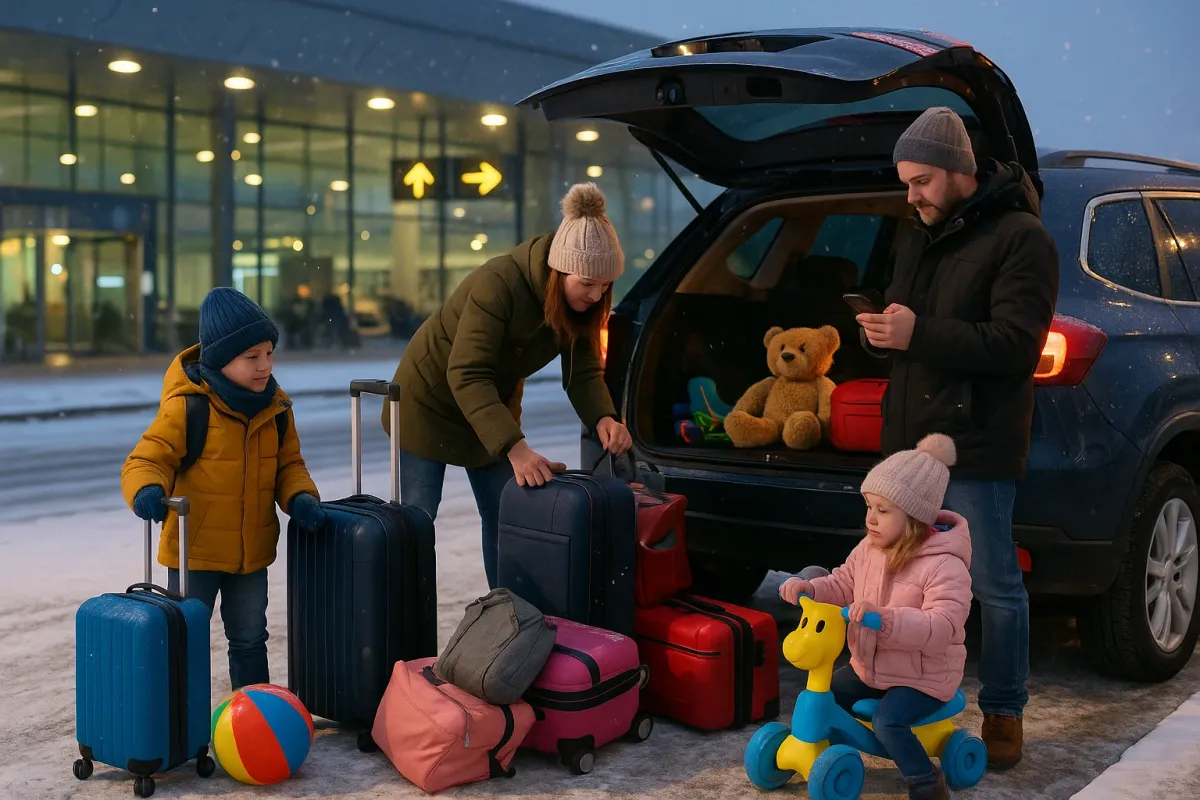
As holiday travel ramps up, social media is packed with “must-have” gadgets and hacks promising to make airport chaos a little more bearable. Viral lists like “25 Travel Gadgets For Anyone Who Is Already Mentally Preparing For The Chaos Of Holiday Travel” are trending because they tap into something very real right now: people are planning for crowded roads, packed parking garages, and long highway runs with the family.
That same mindset—surviving stress, maximizing space, and staying sane—should be front and center when you’re comparing SUVs in late 2025 and into 2026. Instead of impulse‑buying clever gadgets, buyers are realizing the SUV itself can (and should) be the ultimate travel “tool.” Below, we break down how the logic behind today’s holiday travel gadgets maps directly onto key SUV comparison points that matter right now.
1. Packing Cubes vs. Cargo Systems: How Smart Is Your SUV’s Space?
Holiday gadget lists are full of packing cubes, compression bags, and modular organizers that promise to turn a chaotic suitcase into a neat, grid-based system. The SUV equivalent is how effectively the vehicle’s cargo area is designed and how flexible it is for real-world loading.
When cross‑shopping SUVs today, look past raw cargo volume numbers and focus on how that space behaves. For example, a midsize two‑row SUV with 37–40 cu ft behind the second row and a wide, low lift‑in height can be more practical than a three‑row with bigger numbers on paper but a high bumper and intrusive wheel wells. Split‑folding rear seats (40/20/40 or 60/40) are crucial if you travel with skis, strollers, or pets alongside passengers. Some models now add sliding second rows with up to 6 inches of fore‑aft adjustment, letting you “move space around” just like rearranging cubes in a suitcase. Built‑in cargo rails, under‑floor storage, hooks, and side bins function like travel organizers: they keep fragile gifts, food, and electronics separated instead of piled up. For heavy‑use travelers, also compare maximum cargo depth with seats folded flat, and check for a perfectly flat load floor—anything resembling a “hump” will become a problem when you’re sliding boxes in at midnight after a long drive.
2. Noise‑Canceling Headphones vs. Cabin Refinement: Who Protects Your Sanity?
The same holiday lists that hype portable white‑noise machines and noise‑canceling headphones reflect a real pain point: long stretches of high‑stress noise. On the road, that translates into tire roar, wind rush around the mirrors, and the constant hum of traffic and winter‑tire tread.
When comparing SUVs, cabin refinement is one of the most overlooked but crucial “quality of life” metrics. Buyers should evaluate three key elements: sound insulation, powertrain smoothness, and ride tuning. Look for laminated front glass (and increasingly side glass) that limits wind noise, extra body‑sealing around doors, and acoustic insulation in the firewall and floor. On test drives, pay attention to how the SUV sounds and feels at 70 mph on imperfect pavement, not just in a smooth, low‑speed city loop. From a technical standpoint, long wheelbase and a stiffer unibody structure reduce vibration, while multi‑link rear suspensions generally offer better isolation than simpler torsion‑beam setups. Electrified powertrains add another dimension: plug‑in hybrids and EVs are near‑silent at low speeds, which makes tire and wind noise more noticeable, so automakers have started using active noise cancellation and specially tuned tires to maintain a “calm cabin.” For families gearing up for 6–10 hour holiday drives, this matters as much as any entertainment feature: a quieter SUV is the rolling equivalent of good ear protection at a noisy airport.
3. Power Banks vs. On‑Board Energy: Charging Ports, Inverters, and Battery Strategy
Today’s travel gadget lists are full of high‑capacity power banks and multi‑port hubs because every traveler carries multiple devices—phones, tablets, laptops, portable gaming systems, and more. In SUVs, the same dynamic is pushing brands to rethink in‑cabin power.
When comparing models, don’t just count USB ports—analyze what they can actually do. Newer SUVs increasingly move to USB‑C with higher output (up to 45W on some models) that can fast‑charge modern tablets and laptops. Rear‑row USB ports are now essential, not optional, if you routinely travel with kids, and a third‑row pair should be mandatory if you ever use those seats for adults on long trips. Pay attention to the presence and rating of household‑style 110V/120V outlets; a 150W outlet can handle small electronics, but a 400–1,500W inverter opens the door to powering coolers, air pumps, or even camping gear. For plug‑in hybrid and EV SUVs, battery management is a critical comparison point: many allow you to precondition the cabin while plugged in (warming or cooling before departure), preserving battery range for driving instead of climate control. Some EVs now offer vehicle‑to‑load (V2L) capability, turning the SUV into a large power bank able to run tools, campsite setups, or tailgate parties. If holiday travel for you includes remote cabins or long winter outages, an SUV with robust exportable power can replace a suitcase full of power banks—and do it more safely and comfortably.
4. Smart Trackers vs. Driver Assistance: Managing Stress, Not Just Stuff
Holiday travelers are increasingly attaching AirTags and other trackers to bags, keys, and even kids’ backpacks. Underneath, the theme is clear: people want technology to lower cognitive load during chaotic journeys. The SUV parallel is modern driver‑assistance and safety tech that actively helps manage risk.
When comparing SUVs, separate marketing buzzwords from capabilities. Core systems like adaptive cruise control (ACC), lane‑keeping assist (LKA), and blind‑spot monitoring (BSM) can turn a grinding highway slog into a more controlled, less exhausting experience when tuned well. Look for systems that work smoothly in stop‑and‑go traffic, not just at highway speed—full‑speed adaptive cruise with stop‑and‑go and traffic‑jam assist keeps the vehicle moving in congestion, easing the foot‑on‑brake fatigue many drivers dread around the holidays. High‑resolution surround‑view camera systems (with multiple angles and transparent‑trailer views on some models) are a huge asset in crowded mall garages and tight street parking. Cross‑traffic alert is particularly valuable backing out of blind parking spaces when everyone else is also rushing. From a technical perspective, pay attention to sensor suites: radar plus camera systems generally offer more robust performance in bad weather than camera‑only setups. As automakers roll out over‑the‑air (OTA) updates, certain brands can refine driver‑assist behavior after you buy the vehicle, much like firmware updates improve the reliability of your smart trackers over time.
5. Compact Strollers vs. Packaging Efficiency: Size on the Outside vs. Space on the Inside
Travel gear companies love ultra‑compact strollers and fold‑flat seats because they solve a classic problem: airports and trains punish bulk. SUVs face a similar challenge. Shoppers often assume “bigger on the outside” always means “bigger on the inside,” but current designs show that packaging efficiency can change that equation.
When cross‑shopping, compare exterior dimensions (length, width, and height) versus usable interior volume and ergonomics. Some of the most compelling 2025–2026 SUVs maximize interior space with upright seating positions, thinner‑shell front seats, and low, flat floors—delivering legroom comparable to a longer, bulkier rival. This matters when holiday travel includes tight urban garages, narrow residential streets, or older driveways. The turning radius and steering ratio are worth examining here; a tighter turning circle makes U‑turns and last‑minute detours in unfamiliar cities less stressful. Third‑row usability is another key test: a spec sheet can claim “seven passengers,” but real‑world comfort depends on step‑in height, the angle and length of the seat cushion, and knee space once the second row is adjusted for adults. Fold‑flat mechanisms and one‑touch tumble seats also determine how quickly you can transform your layout at a rest stop. In essence, the best SUVs behave like well‑designed compact travel gear: they minimize the penalty for their footprint while maximizing versatility once you’re on the move.
Conclusion
As holiday‑travel gadget lists go viral, they reveal what travelers are truly worried about in December 2025: space, sanity, power, safety, and maneuverability. Those same priorities should drive how you compare SUVs right now. Instead of treating your vehicle as a fixed “box” you fill with clever accessories, think of it as your primary travel platform—the master system into which all your gadgets and habits have to fit.
If you’re test‑driving this season, bring your real life with you: strollers, suitcases, coolers, and devices. Try every row, test every port, and listen closely at highway speed. In a year when everyone is preparing for chaos, the right SUV can quietly become the one travel upgrade that matters long after the decorations are packed away.
Key Takeaway
The most important thing to remember from this article is that this information can change how you think about Comparisons.