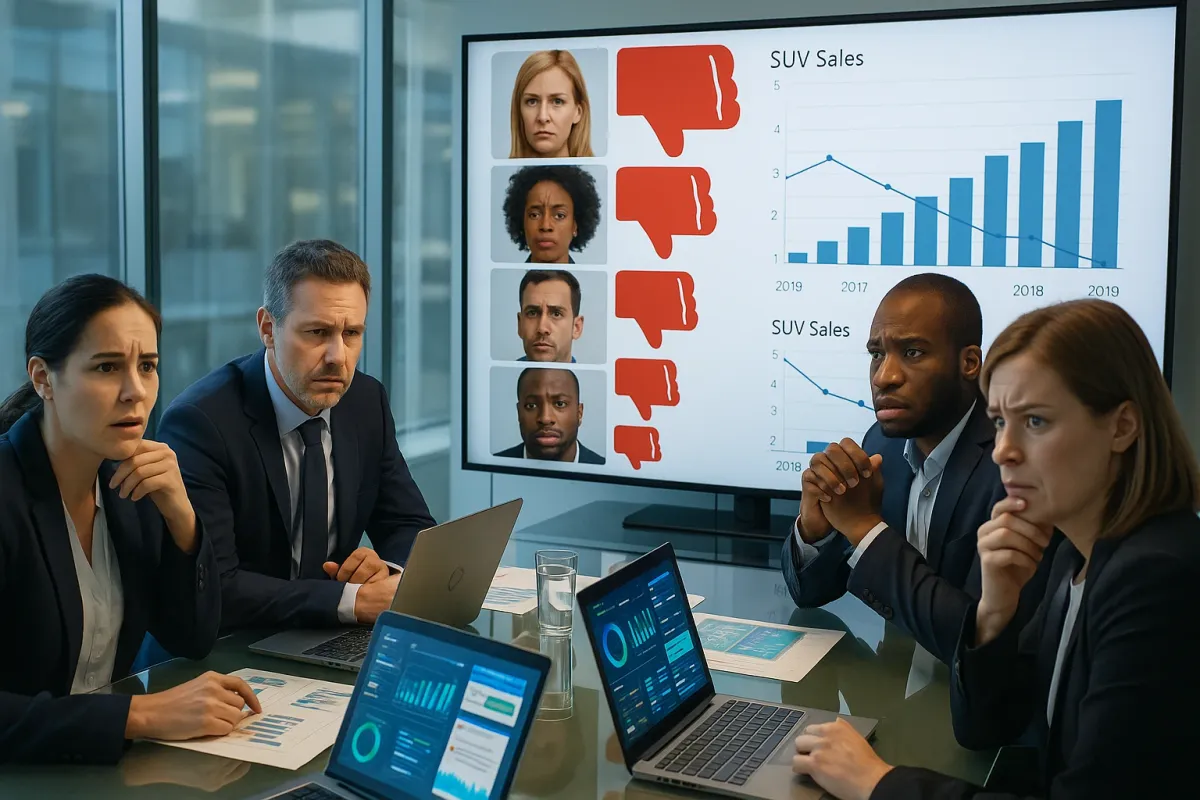
The entertainment world’s latest obsession with “most disliked stars” rankings is more than just gossip—it’s a warning shot for every major SUV brand. When Ranker’s data-driven list of the 47 most disliked stars of the year started circulating, it wasn’t just publicists and studios paying attention. Auto executives, agency planners, and product strategists were watching just as closely, because the same viral sentiment swings that can tank a celebrity’s reputation can damage an SUV nameplate, a trim line, or an entire brand image overnight.
In an era when a single misaligned celebrity partnership can trigger a backlash across X, TikTok, and Reddit, the SUV industry is quietly rethinking how it uses star power, social proof, and brand ambassadors. For shoppers, that has real consequences: from the kinds of special editions you’ll see on dealer lots to how much tech, sustainability, and authenticity brands need to build in to remain “likeable” in a brutally judgmental online culture.
Below, we break down how this new wave of public “dislike” is reshaping SUV industry strategy right now—and what it means if you’re shopping for your next vehicle.
1. From Celebrity Endorsements to “Reputation Risk Management”
Ranker’s “Most Disliked Stars” list is a stark reminder that public favor is volatile. A celebrity can be universally admired one year and widely criticized the next. Automakers have taken note—and they’re treating endorsement deals more like high-risk financial instruments than feel‑good marketing plays.
Over the past 24 months, several OEMs have quietly de‑emphasized traditional “face of the brand” campaigns in favor of modular, low‑lock‑in partnerships: shorter contracts, more outs for “values violations,” and far more stringent social-media behavior clauses. You see it in how brands like Hyundai (with Ioniq) and Ford (with the Bronco and Mach‑E) lean on owner communities, adventure influencers, and motorsport connections rather than a single A‑list front person. Internally, marketing teams now build “reputational risk budgets” the same way they once modeled incentive spend, carefully deciding how much polarizing exposure they’re willing to tolerate for incremental reach.
For SUV buyers, this shift shows up in the messaging. Expect fewer big-name faces and more campaigns built around real‑world use cases—towing, family life, off‑road trips—often anchored by creators whose fame is niche but credibility is high. That makes it easier for brands to walk away if a partner ends up on the wrong kind of viral list, without having to rebuild their entire identity around a new spokesperson.
2. Social Sentiment Is Now a Core KPI in SUV Product Planning
Lists of “most disliked stars” don’t just entertain; they quantify sentiment at scale. Automakers are applying the same data logic to models and trims. Where they once relied primarily on sales charts and JD Power scores, they now add real-time social sentiment analysis to track whether an SUV is quietly sliding into “disliked” territory long before the sales data shows it.
Major groups like Stellantis, GM, and VW now run dashboards that aggregate Twitter/X, Reddit, TikTok, and forum discussions around specific models—Wrangler 4xe, Blazer EV, ID.4, Telluride, and so on. They track not just volume, but emotion descriptors: words like “overpriced,” “cheap interior,” “laggy infotainment,” or “unreliable electronics.” When negative descriptors spike, product teams respond, sometimes faster than they’d move for conventional survey data. Recent examples include:
- Infotainment and HVAC backlash: After widespread online criticism of touch‑only HVAC controls (especially on VW Group products), brands began reinstating physical knobs and buttons on refreshed SUVs. This wasn’t driven purely by focus groups; it was fueled by social scorn that resembled the way audiences “downvote” disliked celebrities.
- EV charging anxiety: Social chatter around broken public chargers and slow charging curves has forced manufacturers to adjust thermal management, charging profiles, and route‑planning software, as well as announce partnerships like the NACS (Tesla connector) transition. It’s very similar to a studio pivoting casting based on audience sentiment.
For shoppers, this means mid‑cycle updates now respond more directly to what you complain about online. If a feature becomes the SUV equivalent of a “career-killing tweet,” there’s a decent chance it gets quietly fixed or removed in a refresh.
3. “Dislike-Proofing” SUVs: Practical Tech Over Flashy Vanity Features
Just as certain behaviors reliably propel celebrities onto “most disliked” lists (tone‑deaf comments, performative activism, or obvious inauthenticity), certain vehicle traits are emerging as consistent triggers for SUV backlash. Automakers are starting to “dislike‑proof” their products by prioritizing substance over show.
Key areas where this is happening:
- Infotainment usability vs. screen size hype
Huge screens photograph beautifully but can crater satisfaction if they’re laggy, unintuitive, or overburdened with submenus. In response to early owner gripes, brands are shifting from “biggest screen” bragging rights to low-latency, high-refresh, simplified UIs with robust over‑the‑air (OTA) update support. Tesla pioneered OTA, but now Ford, Hyundai/Kia, GM, and Mercedes are designing systems to fix bugs and refine interfaces quickly—long before a UI becomes a meme.
- Real fuel economy vs. EPA window‑sticker promise
In a social environment that loves calling out anything “fake” or “overhyped,” SUVs that consistently miss their advertised mpg or kWh/100 miles attract Reddit threads and YouTube breakdowns that live forever. Brands are adjusting calibration strategies: more realistic EPA cycles, adaptive cylinder deactivation, and smarter hybrid control logic to align real‑world results with expectations. Toyota’s latest hybrid SUVs and Kia/Hyundai HEVs show this thoughtfulness in their fairly repeatable real‑world figures.
- Build quality and “rattle optics”
Owner videos of dashboard rattles, panel gaps, or peeling trim have become the automotive equivalent of viral “paparazzi disaster” moments. In response, several brands have tightened end‑of‑line inspection standards, especially for high‑margin SUVs. That includes automated gap and flushness scanning, upgraded clip designs for interior panels, and revised seal geometries to avoid wind noise complaints making the rounds online.
For buyers, “dislike‑proofing” means the features that actually matter over five years of ownership—NVH control, HVAC effectiveness, user interface stability, battery durability—are starting to get as much engineering attention as LED ambient lighting and cinematic startup animations.
4. Authenticity Over Glamour: How SUV Image Is Being Rebuilt
The backlash against inauthentic celebrities—those who appear overly scripted, opportunistic, or disconnected from reality—has a mirror image in the SUV world. Models that lean too hard into manufactured ruggedness or faux‑luxury without backing it up now get punished quickly in comment sections and ownership forums.
So brands are rewriting how they signal identity:
- Capability that matches the marketing
If you market a midsize SUV as an “off-road warrior” and owners discover it overheats on moderate trails or the AWD system is tuned primarily for on‑road understeer, that discrepancy will surface in humiliating fashion on YouTube and TikTok. Automakers have taken note: expect more genuine hardware in “adventure” trims—dual‑range transfer cases, locking differentials, all‑terrain tires, and robust underbody protection—or more restrained marketing if the vehicle is really tuned for urban utility.
- Sustainability with receipts, not slogans
In a culture hypersensitive to greenwashing, EV and hybrid SUVs are judged on battery sourcing, lifecycle impact, and charging transparency—not just “zero emissions” taglines. This is why you’re seeing more detailed communication from brands on battery chemistries (NMC vs. LFP), recyclability, cobalt sourcing, and even factory energy usage (e.g., carbon‑neutral plants). OEMs know that getting called out for hypocrisy online can undermine entire electrification strategies.
- Interior materials that feel honest
The equivalent of a celebrity’s “filtered vs. unfiltered” photo is the gap between press‑car interiors and what customers actually get. Synthetic leather and soft‑touch plastics are acceptable if they’re presented honestly and wear well; what triggers dislike is the sense of bait‑and‑switch. Some premium brands are now specifying higher‑grade coatings, scratch‑resistant finishes, and more honest descriptions of materials (e.g., “bio‑based vinyl” vs. “eco‑leather”) to avoid that reputational hit.
The net effect for shoppers: you’re more likely to see SUVs whose personality and capabilities align—off‑roaders that really can go off‑road, luxury trims that genuinely isolate and refine, and electrified models that are clear about their strengths and limits.
5. The New Power of Online Communities: Owners as “Co‑Stars,” Not Extras
Celebrity ranking platforms like Ranker demonstrate that audiences now expect to participate in reputational scoring, not just consume it. In the SUV space, owner communities have moved from fringe forums to central, strategic assets that brands can’t ignore and increasingly court.
Here’s how that looks in practice:
- Community‑driven feature roadmaps
Automakers are mining forums, Discord servers, subreddit threads (e.g., r/Telluride, r/MachE, r/TeslaModelY), and brand‑hosted feedback portals for specific, technically detailed asks. These range from enabling battery preconditioning for DC fast charging, to revising throttle mapping in off‑road modes, to adding wired CarPlay alongside wireless to eliminate latency complaints. When enough credible owners align on a request, it can end up on an OTA roadmap or in a mid‑cycle refresh spec.
- Beta‑testing software with real owners
Much like TV shows now soft‑test characters or plot lines with fanbases, automakers are increasingly using early-access firmware programs with select owners. They’ll roll out new driver‑assist tuning, revised user‑interface flows, or new energy‑management strategies to small, engaged groups, then refine before broad release. This allows them to avoid “patch day disasters” that could quickly nudge a model into “actively disliked” status online.
- Strategic listening to “fan editorials”
Long‑form owner reviews on YouTube and Substack—sometimes from people with engineering or dealership backgrounds—have become a powerful counterweight to official marketing. Brands that respond thoughtfully to these critiques, either with technical explanations or visible product changes, earn credibility. Those that ignore or dismiss them risk the same fate as celebrities who attack their critics and end up further down the “most disliked” rankings.
For buyers, this dynamic is good news: it means your real‑world experiences and complaints carry more weight. The more detailed and specific the feedback—range behavior in winter, transmission shift logic under load, lane‑keep assist performance in heavy rain—the more likely it is to shape software updates and the next revision of your preferred SUV.
Conclusion
Public “most disliked stars” lists may look like pure entertainment, but the underlying mechanics—real‑time sentiment scoring, reputational volatility, and ruthless social transparency—are now embedded in how the SUV industry operates. From recalibrated endorsement strategies and dislike‑proof product planning to more authentic branding and community‑driven updates, automakers are behaving less like old‑school manufacturers and more like agile media brands trying to stay off the internet’s bad side.
For enthusiasts and buyers, the takeaway is simple but powerful: what you say, share, and critique about SUVs online has more influence than ever. A model that generates quiet, consistent goodwill can gain resources and updates; one that becomes a running joke can lose momentum, marketing muscle, or even its spot in the lineup. In a world where reputation travels at the speed of a share button, the next generation of SUVs won’t just be engineered in wind tunnels and CAD software—they’ll be shaped, in real time, by the same public judgment that’s now ranking the world’s most disliked stars.
Key Takeaway
The most important thing to remember from this article is that this information can change how you think about Industry News.