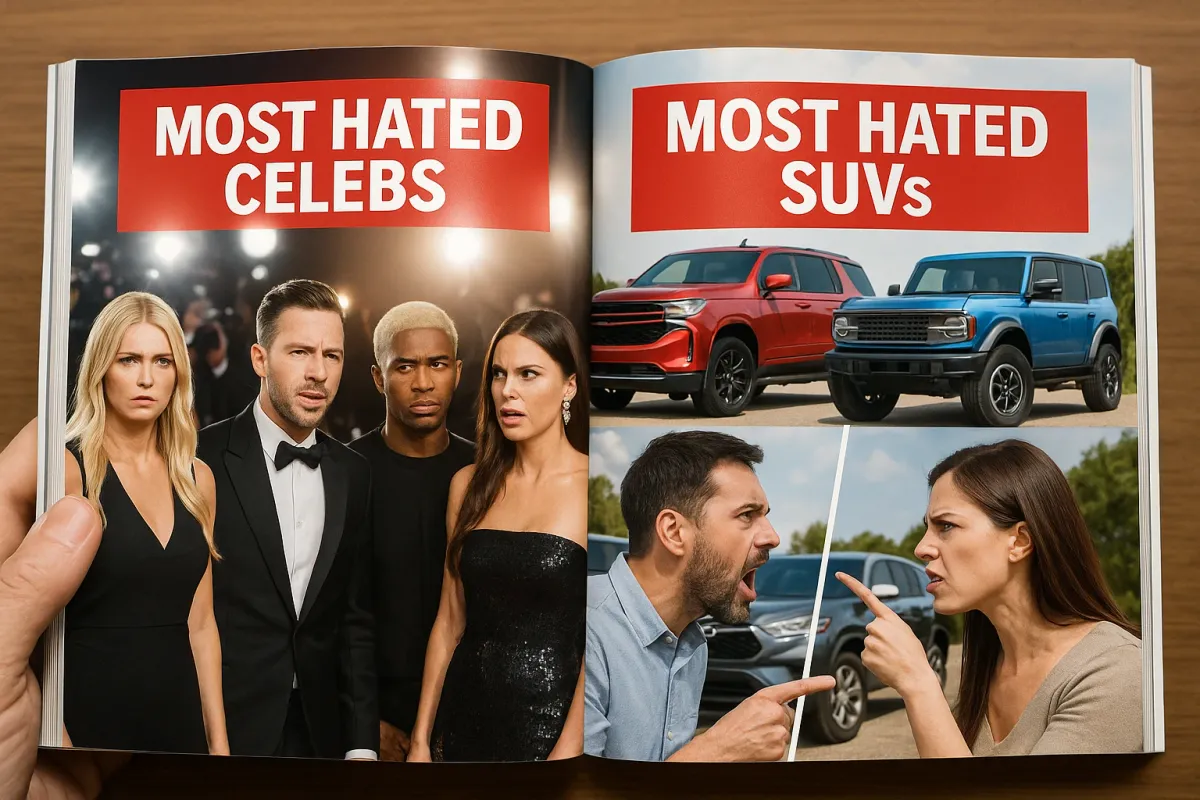
Online “most disliked” rankings aren’t just for celebrities anymore. This week’s viral Ranker list of the “Most Disliked Stars of the Year” is a reminder of how quickly public opinion hardens—and how brutally the internet compares people side‑by‑side. The SUV world is living through a similar moment: models are no longer judged in isolation, but pitted directly against rivals in social feeds, YouTube reviews, Reddit threads, and TikTok breakdowns.
When fans rank celebrities, they’re really comparing expectations versus reality—how much hype, how much delivery, and how much drama. SUV shoppers are doing the same thing, just with torque, tech, and total cost of ownership. In both cases, “most disliked” doesn’t always mean “objectively bad”; it often means “most polarizing.” That’s exactly how many of today’s headline‑grabbing SUVs function in the market.
Below, we break down five key comparison angles that are shaping which SUVs become internet darlings—and which risk becoming the automotive equivalent of this year’s most disliked star.
1. Hype vs. Reality: When Flagship SUVs Turn Polarizing
Celebrity rankings are driven by expectations. A controversial A‑list actor attracts more scrutiny than a little‑known supporting player. The same is now happening in the SUV space: high‑profile flagship models get judged far more harshly than mainstream workhorses.
Think about how the internet treats:
- Tesla Model X vs. more conventional three‑row crossovers like the Hyundai Palisade or Toyota Highlander
- Mercedes‑Benz GLS vs. BMW X7 in luxury family haulers
- Ford Explorer EV (coming) vs. stalwarts like the Honda Pilot
The more ambitious the promise (wild doors, “ludicrous” acceleration, full self‑driving, six‑figure luxury), the more unforgiving the comparisons become when flaws surface. Owners are quick to post side‑by‑side content showing:
- Real‑world range vs. EPA numbers
- Actual cargo space vs. brochure claims
- Ride comfort vs. marketing speak about “sporty” tuning
- Infotainment stability vs. promised “seamless connectivity”
This creates a new dynamic: flagship SUVs are increasingly judged as much on how they manage expectations as on raw specs. A model that over‑promises and under‑delivers becomes the automotive equivalent of a celebrity who talks a big game but bombs on screen.
What to do as a buyer:
When cross‑shopping, separate promise from performance. Look beyond launch hype and social media buzz:
- Compare independent test results (range, 0–60 mph, braking distance).
- Look for long‑term owner reviews, not just early influencer content.
- Prioritize consistency (reliability, software stability) over headline features that may be half‑baked at launch.
2. Design “Love It or Hate It”: Styling That Splits the Audience
The Ranker “most disliked stars” list isn’t just about behavior; it’s also about image. Outfits, haircuts, even Instagram filters can instantly polarize followers. SUV design is going through the same kind of visual extremism—and it’s starting to heavily influence buying decisions.
Consider these styling battlegrounds:
- Hyundai Ioniq 5 / Kia EV9 with their pixelated, concept‑car look vs. more conservative bodies like the Subaru Outback or Volkswagen Tiguan
- The sharp, aggressive front ends on the latest Toyota Tacoma / 4Runner (spilling into their SUV siblings) vs. the soft, rounded language of Mazda CX‑5 / CX‑50
- Oversized grilles and lighting signatures on BMW X7 and Lexus GX vs. the understated approach of the Volvo XC90
On social media, these designs are treated like red‑carpet outfits: instantly memed, praised, or roasted. A bold, blocky EV SUV might be called “futuristic” in one thread and “trying too hard” in another. And just as stylists know certain looks age quickly, some SUV exteriors are already feeling 2020‑ish in 2025.
From a technical standpoint, design choices also affect:
- Aerodynamics: Blunt front ends and roof rails add drag, cutting EV range and fuel economy.
- Packaging: Thick D‑pillars and sloping rooflines can kill third‑row space and rear visibility.
- Wheel/tire combos: Huge 22" or 23" wheels look good in photos but can worsen ride quality, impact acceleration, and increase replacement costs.
What to do as a buyer:
Treat SUV styling like a celebrity’s image makeover: ask what it costs you behind the scenes.
- Check drag coefficient (Cd) and compare highway EPA ratings or EV range.
- Sit in the third row and cargo area with the seats up; bring actual luggage if possible.
- Test drive on bad pavement with the largest wheel option—see how “Instagram spec” drives in real life.
3. Substance vs. Persona: Spec Sheets Aren’t the Whole Story
Celebrities often build a brand persona—outspoken, wholesome, edgy—then struggle when their actual work doesn’t back it up. SUVs now carry similar “personas” in marketing materials: rugged adventurer, tech visionary, eco‑warrior, family guardian. The danger is that shoppers compare the persona first, and only later discover where the hardware falls short.
Common mismatches include:
- Off‑road branding on soft‑road hardware
Plastic cladding, black wheels, and “Adventure” trims on vehicles that still ride on basic all‑season tires, have no low‑range gearing, and limited suspension travel. Example: some “ruggedized” compact crossovers position themselves as trail‑ready yet lack real mechanical upgrades beyond drive modes and cosmetic tweaks.
- Performance labels on modest powertrains
Sport‑themed trims with stiffer suspensions but only a marginal power increase—or sometimes no power increase at all—compared with the base engine. The result is harsher ride without meaningful gains in acceleration.
- Luxury claims with mid‑grade materials
Panoramic roofs, big screens, and ambient lighting can create a premium first impression, but close inspection reveals hard plastics at knee level, thin door cards, and basic seat frames under flashy upholstery.
Key technical comparisons that cut through the persona:
- Chassis & suspension:
Multi‑link rear suspension vs. torsion beam, adaptive dampers vs. fixed, ground clearance specs, approach/departure angles.
- Drivetrain:
True AWD systems with torque vectoring or dual‑motor setups vs. on‑demand units that mainly improve traction from a stop, not handling.
- NVH (Noise, Vibration, Harshness):
Laminated glass, subframe bushings, body‑in‑white stiffness, and sound‑deadening material make a bigger difference to perceived “luxury” than a giant center screen.
What to do as a buyer:
Compare under the skin, not just in the brochure:
- Look for cutaway diagrams or technical PDFs from the manufacturer (often in fleet or press sections).
- Compare suspension type, curb weight, and wheelbase length; these heavily influence comfort and stability.
- Test drive on the worst roads nearby, not just a smooth dealer route.
4. Reliability Reputation vs. Real‑World Data
When a celebrity lands on a “most disliked” list, sometimes it’s deserved; sometimes it’s a few very loud voices. SUVs carry similar reputational baggage: names like Jeep, Land Rover, Tesla, Toyota, Lexus, and Subaru trigger strong reactions long before anyone looks at actual data.
In 2025, the reliability conversation is getting more nuanced:
- EVs:
Drivetrains can be simple and robust, but software glitches, infotainment failures, charging component issues, and early‑generation battery packs complicate the picture. Early Model X and Model Y owners, for instance, reported door hardware and panel alignment issues that still color perceptions today.
- Turbocharged vs. naturally aspirated engines:
Modern turbo fours often deliver more power and better efficiency, but long‑term worries (carbon buildup, high‑pressure fuel systems) persist. At the same time, several naturally aspirated V6s have proven bulletproof over hundreds of thousands of miles—but may be phased out under tightening emissions rules.
- Luxury vs. mainstream brands:
High‑feature luxury SUVs pack more sensors, motors, and complex electronics—everything from air suspension to massaging seats—that can fail outside warranty and inflate repair bills.
Where to look for real comparisons:
- Long‑term test fleets from publications that run SUVs for 40,000–100,000 miles.
- Owner forums and Facebook groups with multi‑year ownership logs, not just first‑month impressions.
- Third‑party reliability surveys (J.D. Power, Consumer Reports, Warranty providers) that break down issues by system (engine, drivetrain, infotainment, body hardware).
What to do as a buyer:
Treat brand reputation like a celebrity’s PR: informative, but not the whole story.
- Compare specific model years and powertrain combos, not just the badge.
- Factor in warranty length, extended coverage pricing, and dealer network strength.
- Ask local independent mechanics what they’re actually seeing in the shop.
5. Total Cost of Ownership vs. “Sticker Shock” Comparisons
Just as some celebrities seem overpaid for their box office results, certain SUVs look wildly expensive at first glance—until you factor in what they cost to run over 5–10 years. The internet loves to put MSRPs side‑by‑side in memes, but long‑term cost comparisons tell a more important story.
Key components of real‑world ownership cost:
- Depreciation:
Two similarly priced SUVs can diverge dramatically five years later. Models with strong brand equity and broad demand—think Toyota RAV4, Honda CR‑V, Lexus RX, Porsche Macan—often retain a much higher percentage of their value than niche or fleet‑heavy competitors.
- Fuel or electricity costs:
- Plug‑in hybrid SUVs can be extremely cost‑effective if you mostly drive short distances and charge at home, but less so if you rarely plug in.
- Fast‑charging EVs can be cheap to run on home electricity but far less so on expensive DC fast chargers.
- Maintenance and repairs:
- Non‑premium brands with simple, widely used engines often benefit from cheaper parts and more independent shops able to service them.
- Performance‑oriented models with larger brakes and tires can cost substantially more to keep in peak condition.
- Insurance:
Advanced driver assistance systems (ADAS) can reduce accident risk—but cameras, radar units, and sensors in bumpers and windshields are costly to replace after even minor impacts.
What to do as a buyer:
Compare SUVs on five‑year total cost, not just MSRP:
- Use calculators that factor in insurance, fuel/electricity, depreciation, and maintenance.
- Request insurance quotes for specific VINs or at least for the exact trim and options.
- Balance high initial price against proven resale value and lower running costs; a more expensive SUV today might be cheaper per mile over a decade.
Conclusion
The same forces pushing celebrities onto “most disliked” lists—high expectations, bold personas, polarizing looks, and messy reputations—are quietly reshaping how SUVs are judged and compared in 2025. In a world where every new model is instantly ranked, reviewed, and roasted online, the winners aren’t always the loudest or flashiest; they’re the ones whose real‑world performance matches their promise.
For buyers, the smartest move is to think like a skeptical fan: don’t fall for the persona, question the hype, and look for hard data. Compare design not just for style but for its impact on space and efficiency. Dig into chassis and drivetrain details rather than settling for marketing labels. And always extend the comparison beyond the purchase price to the full lifetime cost of ownership.
In an era when both celebrities and SUVs live and die by side‑by‑side comparisons, the vehicles that age well—like the stars who quietly deliver year after year—are the ones worth betting on.
Key Takeaway
The most important thing to remember from this article is that this information can change how you think about Comparisons.