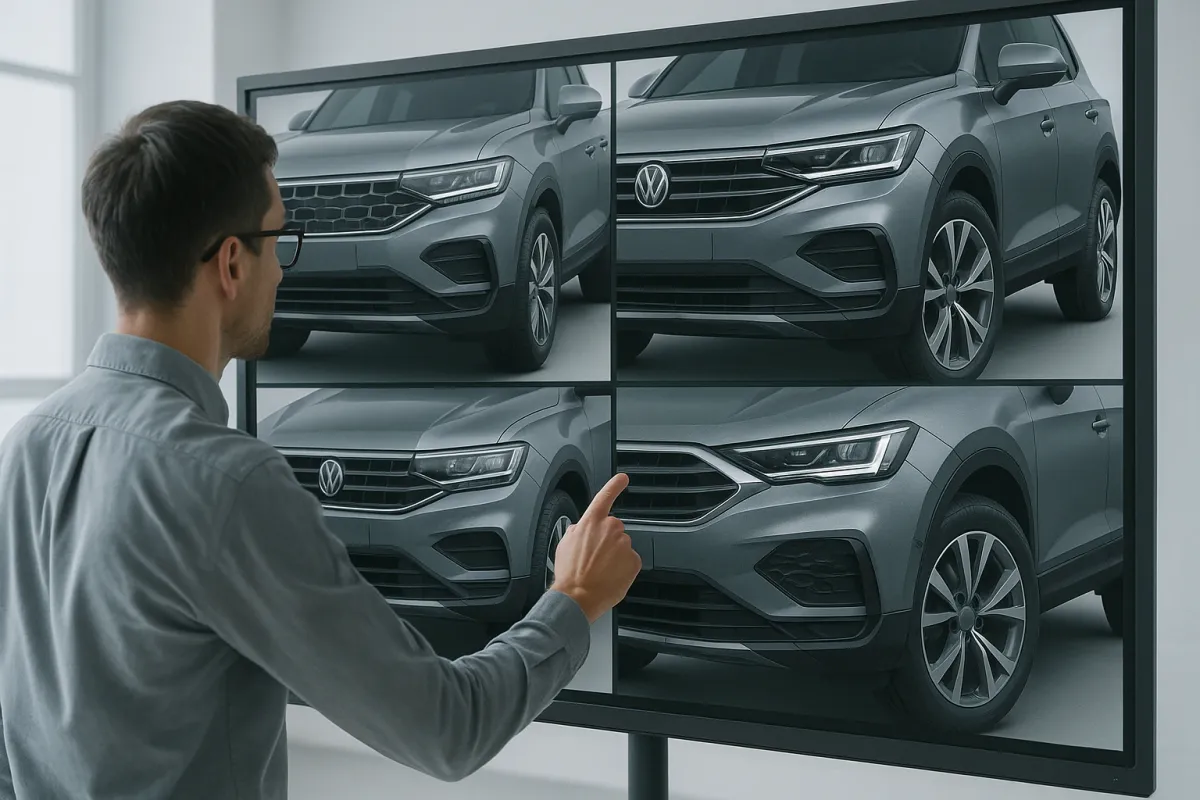
Scroll through today’s viral feeds and you’ll see it everywhere: posts celebrating perfectly aligned tiles, doors that close with an oddly soothing “thunk,” or color matches so precise they feel fake. Articles like “Very Satisfying: 48 Times Random Things Matched Up So Well It Felt Staged” are exploding in popularity because they tap into something deep in our brains—our craving for precision, harmony, and fit-and-finish.
That same instinct is reshaping how shoppers judge new SUVs in 2025–2026. The bar has quietly moved. It’s no longer enough for an SUV to be big, powerful, and packed with screens. Buyers—especially those who live on Instagram, TikTok, and YouTube—are demanding that everything line up, click, glide, and integrate with the same “this just fits” satisfaction that goes viral online.
Below, we break down how this visual and tactile “perfection culture” is redefining modern SUV reviews, and what you should be looking for if you’re shopping right now.
1. Panel Gaps, Seams, and Shut Lines: The New “Oddly Satisfying” Benchmark
Once upon a time, panel gaps were the kind of thing only engineers and obsessive enthusiasts cared about. Today, any buyer with a smartphone can zoom in on a fender seam or tailgate alignment and share it with millions. The rise of oddly satisfying content—where precision is the star—has made panel alignment and shut quality part of mainstream SUV critique.
When reviewers look at current models like the Lexus TX, Hyundai Ioniq 7 (concept previewing production), or the latest BMW X5, they’re not just talking about styling. They’re checking if the hood-to-fender gaps are consistent, if the doors sit flush with the body, and if the tailgate closes without stepping out of line even by a few millimeters. Brands like Toyota/Lexus and BMW traditionally score well here; newer EV entrants are under increasing scrutiny after some early production missteps went viral.
What to look for at the dealership:
- Walk the vehicle and follow every major seam with your eyes. Gaps should be consistent left-to-right.
- Inspect where plastic bumper covers meet metal body panels—this is where cost-cutting shows first.
- Close each door slowly. It should latch cleanly with minimal wobble, no visible “bounce” or misalignment at the moment of closure.
- Check that the liftgate lines up evenly with the taillights and rear quarter panels; misaligned lamps are a dead giveaway.
In 2025, reviewers are harsh on SUVs that get this wrong because it breaks the illusion of quality—and because, in the age of zoomed-in photos, every flaw is permanently documented.
2. Cabin Symmetry and Material Transitions: When Design Feels Like It “Snaps Together”
Those viral images of floor tiles lining up perfectly with wall patterns or objects that “click” into place visually have raised expectations for interior design. SUV cabins are being judged the same way: buyers expect symmetrical layouts, clean lines, and material transitions that feel intentional rather than improvised.
Look at recent premium SUVs like the Mercedes‑Benz GLC, the refreshed Volvo XC90, or the Genesis GV80. Reviewers praise them not just for luxury, but for how their elements meet:
- The way the dash trim flows seamlessly into the door panels, without an awkward step or color mismatch.
- Symmetrical air vent designs that mirror left and right, avoiding “off-center” visually noisy layouts.
- Consistent grain and gloss levels across plastics, leather, and metal trim, so nothing looks like an aftermarket replacement.
On the flip side, several mainstream models are getting called out this year for “Frankenstein” cabins: glossy plastic abruptly meeting matte surfaces, fake stitching that doesn’t line up panel to panel, or center consoles that look like they were dropped in at the last minute. In detailed reviews, this now directly affects perceived value—even if the SUV is otherwise comfortable and well-equipped.
What to test in person:
- Run your hand along trim transitions—from soft-touch dash to door card, from center console to lower dash. You should not feel sharp edges, height steps, or loose points.
- Sit in both front seats and compare sightlines. Vents, screens, and switches should be visually balanced, not obviously skewed toward one side.
- Step into the second row and check whether the design language continues, or if it abruptly downgrades to hard plastics and mismatched textures.
If you’ve ever been satisfied by two textures lining up perfectly in a viral clip, you already know what to look for. Interiors that “click together” visually will also age better—and tend to rattle less over time.
3. Switchgear, Knobs, and Haptics: The Tactile Satisfaction Test
The “very satisfying” genre isn’t just visual; it’s also deeply tactile. People film close-ups of latches, lids, and mechanisms because a crisp, damped motion is innately rewarding. SUV reviewers have caught up, and tactile feel is now front-and-center in serious evaluations.
With more manufacturers (from Ford and GM to Hyundai and Volkswagen) experimenting with capacitive touch buttons and touch-only climate controls, there’s an emerging backlash—mirroring the online love for precise, mechanical interfaces. VW’s pivot back to physical buttons on the updated Tiguan and Golf ranges, after heavy criticism of its touch sliders, is a perfect example of this trend in real time.
What reviewers are testing now:
- Rotary knobs for volume or drive modes: Is there distinct detent feedback, or are they mushy and vague?
- Stalks and toggles: Do they move with a clear mechanical “click,” or do they feel brittle and fragile?
- Window switches and door handles: Do they operate in one smooth motion, with predictable resistance, or do they stick and “pop” free at the end?
Several recent SUV launches—especially in the electric and tech-forward space—have been criticized for replacing satisfying physical interfaces with flat screens and cheap-feeling stalks. Meanwhile, vehicles like the latest Mazda CX‑70 and CX‑90 are earning praise for old-school, high-quality knobs and switches that could star in a macro “satisfying” clip.
When you test-drive:
- Turn every knob and press every button you can. You’ll immediately notice which ones feel premium.
- Adjust climate controls while driving at low speed. If you have to look away from the road to use them, that’s a usability and safety downgrade.
- Try all seat and steering wheel adjustments; smooth, quiet motion is a quiet indicator of good engineering and better long-term reliability.
If it feels good to interact with, you’ll be happier living with the SUV day-to-day. Reviewers are right to call this out, because tactile satisfaction is often what separates “this is fine” from “I love driving this.”
4. Infotainment Layouts That Line Up: Visual Harmony on the Screen, Not Just the Dash
Social media is saturated with screenshots of flawless home screens, app grids, and desktop setups that align perfectly. That expectation is now bleeding directly into how buyers judge in-car tech. The days when laggy, cluttered infotainment systems were “just part of owning a car” are over; people are comparing their dashboards to their phones and tablets—and they are not lowering their standards.
Recent systems from Hyundai/Kia (ccNC software in vehicles like the 2025 Santa Fe), GM’s Google-based platforms, and BMW’s iDrive 9 are being praised by reviewers for cleaner iconography, logical layout, and smoother animations. Meanwhile, SUVs with confusing menu hierarchies, inconsistent fonts, or jittery map rendering are getting punished in reviews, even when their hardware is objectively powerful.
Key “satisfying” traits to watch for:
- Grid alignment and icon consistency: Apps and tiles should align in a clean, evenly spaced grid with consistent sizing and typography.
- Animation smoothness: Transitions between menus should be fluid, not jerky; poor frame rates subconsciously signal “cheap” and quickly become irritating.
- Theme coherence: Colors, shapes, and fonts across the instrument cluster and main screen should look like they belong to the same design language.
The integration with Apple CarPlay and Android Auto is crucial here. Many buyers live in those interfaces; if the vehicle’s native UI looks sloppy next to CarPlay’s clean grid, it will be noticed. Some new EVs, including select GM models moving away from CarPlay, are under extra scrutiny because their in-house systems must now match or exceed the polish of the smartphone experience.
At the dealership:
- Spend time customizing the home screen—drag widgets, reorder apps, change themes if available. Does the interface respond cleanly and predictably?
- Watch the map rendering while you drive around the block or simulate route planning. You’re looking for smooth zooming and panning.
- Check how the digital gauge cluster and center screen coordinate; information should not be duplicated sloppily or misaligned visually.
An infotainment system that looks and moves like a carefully curated home screen will be satisfying every day, and it is a key differentiator in 2025 SUV reviews.
5. Real-World “Fit” of Features: How Your Life Clicks Into the Cabin
The core of those “very satisfying” posts is a simple idea: things that fit together better than expected feel great. That principle applies directly to how well an SUV integrates with your daily life. Reviewers are now paying far more attention to this practical “fit,” not just feature lists and brochure specs.
Examples from recent reviews:
- Phone and device storage: Wireless charging pads that actually fit large phones in cases (including the latest iPhones and Galaxy Ultras) without blocking cupholders or shifters. Some recent SUVs have been criticized because their pads are too small, too shallow, or too slippery.
- Child seat and cargo integration: Three-row SUVs like the Kia Telluride, Honda Pilot, and Toyota Grand Highlander are being evaluated not just for passenger volume, but for how easily they accept two or three child seats, how accessible the third row remains, and whether strollers or cargo modules “slot in” without Tetris-level effort.
- Modular storage systems: Split-level trunks, under-floor storage, and configurable cargo rails or hooks are increasingly seen as “life-satisfying” features when they actually secure everyday items—groceries, sports gear, work equipment—without drama.
In 2025, reviewers are filming this more often: dropping suitcases into the trunk, fitting coolers behind a raised third row, plugging in multiple devices, and showing exactly how the cabin configures for real families. It’s the practical equivalent of that viral clip where everything fits into its place with millimeter precision.
When you evaluate an SUV:
- Bring your largest daily-use items to the test drive—stroller, cooler, golf bag, work toolbox, instrument cases—and see how they load in practice.
- Check whether rear USB ports, vents, and seat adjustments remain accessible when child seats are installed.
- Test all seat-folding mechanisms from multiple positions (rear doors and tailgate). They should operate in one smooth motion, without requiring two people or a special technique.
An SUV that “just fits” your life will feel satisfying every time you use it—and that’s exactly what thorough, modern reviews are trying to uncover.
Conclusion
The viral fascination with things that line up, click, and match perfectly is more than an online distraction; it’s quietly shaping the standards by which SUVs are judged in 2025 and beyond. From millimeter-perfect panel gaps to symmetrical cabins, crisp switchgear, polished infotainment layouts, and cargo spaces that accept your life with zero drama, today’s best SUVs succeed because they deliver that same oddly soothing sense of harmony.
When you read SUV reviews—or step into a showroom—shift your focus from spec sheets alone to how well everything fits, both physically and visually. If an SUV feels like one of those “it’s almost too perfect” clips in everyday use, you’re not just buying a vehicle with good numbers. You’re buying daily satisfaction, engineered into every seam, switch, and screen.
Key Takeaway
The most important thing to remember from this article is that this information can change how you think about Reviews.