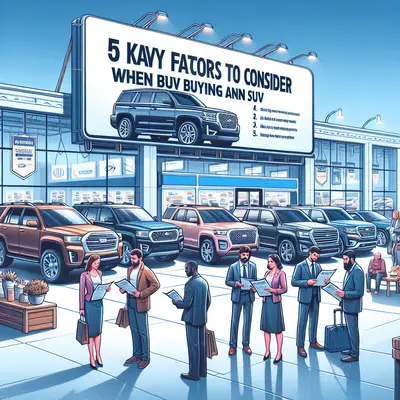
Cyber Monday has evolved into a full “Cyber Weekend,” and the auto world has jumped in with both feet. Inspired by this year’s wave of “weekend-long” online discounts (think of the viral “Cyber Monday Weekend Deals That Will Make You Forget Black Friday Even Happened” headlines), major automakers and dealers are now mirroring the same playbook for SUVs: extended online-only offers, click‑to‑buy tools, and time‑limited finance incentives that live almost entirely on your screen.
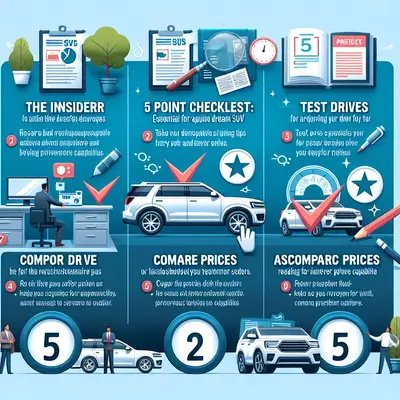
For SUV shoppers, this is both a huge opportunity and a minefield. Aggressive lease specials, hidden add‑ons, and fast‑expiring APR offers can make it difficult to tell which deal actually delivers long‑term value. Below is a focused guide to navigating holiday‑style and Cyber Monday–style SUV promotions right now, with five key factors you should evaluate before you click, sign, or put down a deposit.
1. Decode “Cyber” Pricing vs. Real Market Value
The same way many “doorbuster” electronics deals are just average discounts dressed up with flashy banners, some SUV Cyber Monday promotions simply repackage existing incentives.
Start by establishing true market value before you look at the holiday ads:
- Use pricing tools (like Kelley Blue Book Fair Purchase Price, Edmunds True Market Value, Cars.com, Autotrader, or local marketplace listings) to see what buyers near you are actually paying for the SUV you want.
- Cross‑check MSRP vs. advertised price. A typical 2025 compact SUV (e.g., Honda CR‑V, Toyota RAV4, Hyundai Tucson) may see genuine discounts of 3–8% off MSRP in a competitive metro market; anything less during a “big event” may not be special.
- Plug the out‑the‑door price (vehicle price plus destination, doc fee, dealer fees, taxes, and registration) into an auto loan calculator. An “extra $1,000 Cyber rebate” can be completely erased by a padded doc fee or marked‑up accessories.
- Watch for “from” pricing. A banner might show “From $299/mo” for a lease, but that usually assumes the base trim, minimal options, 10,000 miles/year, and substantial cash due at signing.
Treat the Cyber label as a marketing flag, not a guarantee of value. The real question is: How does that advertised number compare to what similar vehicles are actually selling for in your ZIP code today?
2. Separate Flashy Payment Offers From the Underlying Finance Terms
Cyber events this year are heavily focused on monthly payment marketing: ultra‑low leases, teaser APRs, or “no payments for 90 days.” These can be solid tools—if you understand the underlying math.
Key points to analyze:
APR vs. rebate trade‑offs
- Automakers often pair 0.9% or 1.9% APR offers with smaller cash rebates, or standard APR with larger rebates.
- Run both scenarios: On a $40,000 midsize SUV financed for 60 months, a $1,500 rebate at 5.5% APR may beat 1.9% APR with no rebate, depending on your credit tier.
Lease program details
When a Cyber lease looks attractive, dig into:
- Money factor (MF) – The lease’s interest component, often quoted as a decimal (e.g., 0.00125 ≈ ~3% APR when multiplied by 2,400).
- Residual value – A higher residual lowers your payment, but if it’s artificially high, buying the SUV at lease end might not be smart.
- Annual mileage – 10,000 vs. 12,000 vs. 15,000 miles/year can change payments substantially; excess mileage penalties typically run $0.15–$0.30 per mile.
- Drive‑off costs – That headline $299/month may hide $4,000 due at signing.
“No payments for 90 days”
- Interest often starts accruing immediately, even while you’re not making payments.
- Make sure your budget accommodates the payment once it begins; don’t commit to more SUV than you can comfortably afford just because the first payment is delayed.
If you’re comfortable with numbers, ask the dealer to email or text you a full finance/lease breakdown (itemized selling price, fees, MF or APR, residual, term, and drive‑off). If they won’t, treat that as a warning sign.
3. Prioritize Tech and Safety That Will Matter Over the Life of the SUV
Online promotions tend to emphasize monthly cost or “limited‑time” bonuses, not the long‑term ownership value of what’s actually in the SUV. For a vehicle you’ll likely own or lease for 3–8 years, the right equipment matters more than a short‑term discount.
On 2024–2025 SUVs, focus on these high‑impact features:
Advanced driver assistance systems (ADAS)
Most major brands now bundle:
- Adaptive cruise control with stop‑and‑go
- Lane keeping assist / lane centering
- Automatic emergency braking with pedestrian detection
- Blind‑spot monitoring and rear cross‑traffic alert
Check whether the system includes lane centering (actively keeps you in the center of the lane) or just lane departure warning (only beeps if you drift). Full lane centering plus adaptive cruise can dramatically reduce fatigue on highway drives.
Powertrain and efficiency
Given current fuel costs and tighter emissions rules, look at:
- Hybrid SUVs (e.g., Toyota RAV4 Hybrid, Honda CR‑V Hybrid, Hyundai Tucson Hybrid) that routinely deliver 35–40+ mpg combined.
- Plug‑in hybrids (PHEVs) (e.g., Toyota RAV4 Prime, Hyundai Tucson PHEV) offering 25–40 miles of EV range—ideal if most of your driving is local.
- For traditional gas engines, check:
- Displacement and cylinder count (2.0L turbo inline‑4 vs. 3.5L V6)
- Torque curve (max torque rpm)—a turbo four with peak torque at 1,600–2,000 rpm can feel stronger in daily driving than an old‑school V6.
- Towing ratings and payload if you haul regularly.
Connectivity and software
- Confirm support for wireless Apple CarPlay and Android Auto.
- Ask whether the SUV supports over‑the‑air (OTA) updates; this is increasingly common with Ford, Hyundai/Kia, GM, and others and can add features or fix bugs without a dealer visit.
- Evaluate the screen layout: a 10–14" central display is now common, but clarity, menu structure, and responsiveness vary widely.
For Cyber‑style deals on lower trims, check if you’re losing crucial features (e.g., only front parking sensors, no blind‑spot monitoring, wired vs. wireless smartphone mirroring). A slightly higher payment for the right spec can be cheaper than trading up early because you’re missing critical tech.
4. Use Online Tools to Force Transparent, Competitive Offers
One upside of Cyber‑inspired SUV promotions is that dealers are increasingly prepared to transact almost entirely online. Use that to your advantage instead of walking in cold.
Steps to create competition without leaving your laptop:
- Build your exact configuration on the manufacturer’s site. Save the build sheet (trim, engine, packages, color, must‑have options).
- Use “search inventory” or third‑party platforms to find several VINs that match or come close within a reasonable radius (50–150 miles depending on how far you’ll drive).
Contact 3–5 dealers via email, chat, or text with the same simple script:
- You have identified [VIN or exact trim/option set]. - You are ready to buy/lease this week if the pricing is competitive. - You want a written out‑the‑door price including all dealer fees.
Explicitly ask:
- “Please itemize any add‑ons (protection packages, window tint, wheel locks, paint sealant, nitrogen, etc.) and whether they are optional.” - “Is this quote tied to a Cyber event or weekend special, and when does it expire?”
Once you have a few written offers:
- Use the strongest one as leverage with other dealers.
- Watch for conditional incentives buried in the fine print (e.g., price assumes loyalty, conquest, military, college grad, or in‑house financing). Make sure the quote you’re comparing is one you actually qualify for.
The goal is to turn splashy, “act now” Cyber messaging into a set of precise, comparable numbers you can evaluate calmly.
5. Consider Total Cost of Ownership, Not Just the Cyber Sticker
Fast‑expiring online offers encourage snap decisions. Instead, weigh the full 5‑ to 8‑year cost picture before you commit.
Key areas to examine:
Insurance costs
- Get insurance quotes by VIN for your shortlisted SUVs. Safety ratings, repair costs, theft rates, and driver‑assist features can change premiums dramatically.
- Some brands and trims with advanced safety may qualify for better discounts.
Maintenance and reliability
- Research reliability scores from sources like J.D. Power, Consumer Reports, and owner forums.
- Check maintenance schedules:
- Turbocharged engines may require premium fuel or have stricter maintenance intervals.
- Some brands offer complimentary scheduled maintenance (e.g., Toyota, Hyundai, Kia often cover 2–3 years/limited miles).
- Ask dealers to send maintenance menus for 30k, 60k, and 90k services so you’re not surprised later.
Battery and electrified components (for hybrids/PHEVs/EVs)
- Verify the warranty on hybrid or EV batteries (often 8 years/100,000–150,000 miles in the U.S.).
- For plug‑in models, consider home charging setup costs and local utility rates.
Depreciation and resale
- Popular nameplates with strong reputations (e.g., Toyota RAV4, Subaru Forester, Honda CR‑V) tend to hold value better, which can offset a smaller upfront Cyber discount.
- If you lease, high residual values usually lower your monthly cost; if you buy, they protect your trade‑in or resale later.
By weighing insurance, maintenance, fuel or electricity, and depreciation together, you’ll know whether that attention‑grabbing Cyber payment will still look smart three to five years down the road.
Conclusion
Cyber Monday–style SUV deals are no longer limited to electronics and gadgets; automakers and dealers are increasingly structuring their year‑end and “Cyber Weekend” promotions around online shoppers who are ready to click and commit quickly. The smartest buyers step back from the countdown clocks and animated banners and instead focus on fundamentals: real market pricing, transparent finance terms, the right tech and powertrain, competitive written quotes, and the full cost of ownership.
Approach the current wave of Cyber SUV offers with clear criteria and a willingness to walk away from anything that isn’t fully documented. If you treat the “Cyber” label as a starting point for negotiation instead of a guarantee of value, you can harness this year’s online‑driven incentives to secure an SUV that fits your life—and your budget—for years to come.
Key Takeaway
The most important thing to remember from this article is that following these steps can lead to great results.