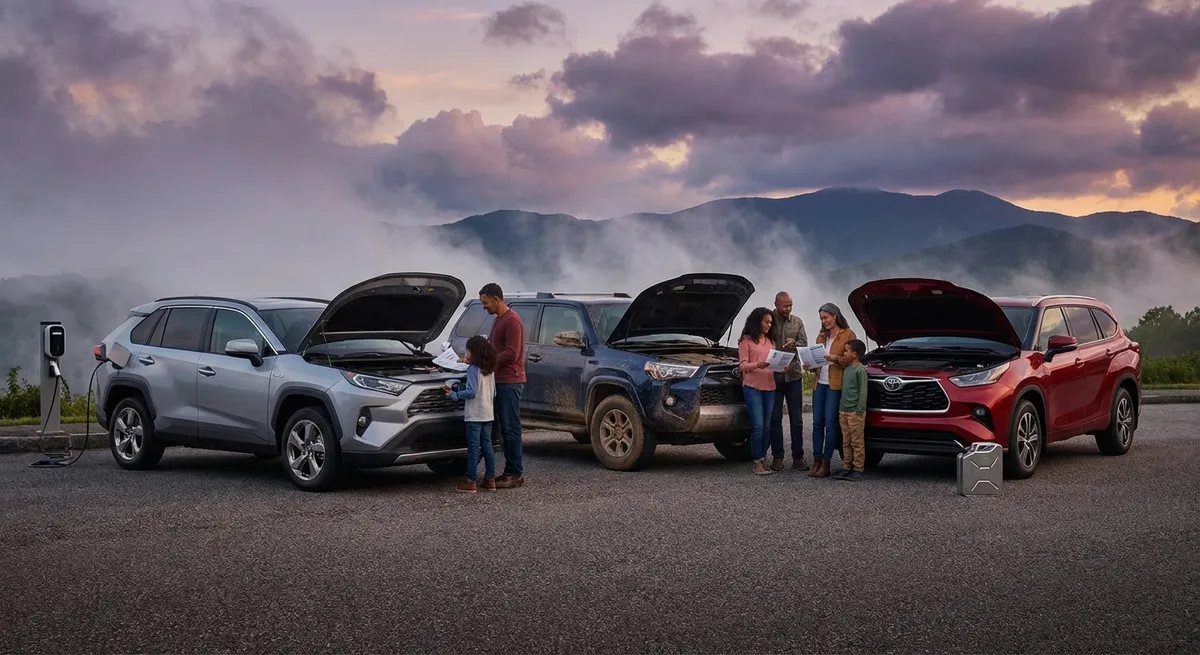
Choosing an SUV is no longer just about size, brand, or badge—it's increasingly about what’s under the hood and how it fits your real-world driving. Hybrid, diesel, and traditional gasoline SUVs each bring distinct strengths and trade-offs in performance, efficiency, cost, and long-term ownership. For enthusiasts and serious shoppers alike, understanding these differences at a technical and practical level is now essential, not optional.
This comparison walks through five key dimensions that matter most: torque and drivability, efficiency and range, maintenance and reliability, towing and payload, and long-term cost of ownership. The goal is not to crown a universal “winner,” but to match the right powertrain to the way you actually drive.
Torque, Power Delivery, and Real-World Drivability
From a driver’s seat perspective, the most immediate difference between hybrid, diesel, and gasoline SUVs is how they deliver torque and power across the rev range.
Modern diesel SUVs are torque leaders. Thanks to high compression ratios, turbocharging, and long stroke designs, they often produce peak torque at very low rpm—sometimes as low as 1,500 rpm. That low-end shove is ideal for heavy vehicles, off-road work, and towing, because it lets the SUV move confidently without needing to rev hard. A 3.0-liter turbo-diesel in a mid-size SUV can easily exceed 400 lb-ft of torque, which you’ll feel when merging onto highways with a trailer or climbing steep grades.
Gasoline SUVs, especially naturally aspirated ones, tend to make their best power and torque higher in the rev band. They usually feel smoother and more responsive to quick throttle inputs, but they may need to downshift more often to access that power. Turbocharged gas engines narrow this gap by delivering stronger mid-range torque, yet they still rarely match diesel torque at the same displacement.
Hybrids introduce an extra variable: electric motors. Electric motors deliver instant torque from zero rpm, which can mask a smaller gasoline engine’s weaknesses. In city driving, a hybrid SUV often feels more eager off the line than an equivalent non-hybrid gasoline model because the electric motor fills in low-speed torque. On the highway, hybrids typically revert to acting like efficient gas SUVs, with electric assist kicking in during passing maneuvers and gentle grades.
Enthusiasts should pay attention to torque curves, not just peak horsepower. A diesel SUV that peaks at 280 hp but 450 lb-ft of torque at low rpm will feel entirely different than a 350 hp gasoline SUV with 280 lb-ft arriving higher in the rev range. Hybrids can sit in the middle: lower peak torque than diesel on paper, but a very usable torque band thanks to electric assist and smart transmission tuning.
Fuel Efficiency, Range, and Use-Case Matching
Fuel economy is often the headline, but the subtleties matter—especially when comparing across fuel types and driving patterns.
Hybrid SUVs are optimized for stop-and-go and mixed urban driving. Regenerative braking recovers energy that would otherwise be lost as heat, and the powertrain can often shut the gasoline engine off at low loads or low speeds. In cities and suburbs with moderate congestion, it’s common to see a hybrid SUV deliver fuel economy gains of 30–50% over a comparable gasoline model. Plug-in hybrid (PHEV) SUVs can go further, providing 20–40 miles of all-electric range for short commutes and errands, with the gasoline engine as backup for long trips.
Diesel SUVs tend to shine on steady-speed, long-distance highway drives. Their thermodynamic efficiency, combined with tall gearing and large fuel tanks, yields excellent cruising range. In markets where diesel SUVs are more common, it’s not unusual for a mid-size diesel SUV to exceed 600–700 miles on a single tank under highway conditions. That endurance is a key advantage for drivers who regularly cover long distances, tow frequently, or live in regions with sparse fueling infrastructure.
Traditional gasoline SUVs lag hybrids in city efficiency and lag diesels in long-range highway efficiency, but they are often the “good enough” middle ground. With advances in direct injection, downsized turbo engines, cylinder deactivation, and 8+ speed transmissions, modern gas SUVs are far more efficient than older models. For drivers with balanced mixed-use patterns—some highway, some urban, moderate annual miles—gasoline can still be the most rational, simplest option.
One critical nuance: cold climates and very short trips can blunt the efficiency advantages of both hybrids and diesels. Hybrids may run the engine more frequently to generate cabin heat and maintain battery temperature, while diesels may struggle to reach optimal exhaust temperatures for emissions systems. Gasoline engines, while not ideal, are less sensitive to these patterns. Matching the powertrain to your climate and typical trip length is as important as the official mpg rating.
Maintenance, Reliability, and Technical Complexity
Powertrain choice also shapes what you’ll face in the service bay over the life of the SUV.
Diesel SUVs are mechanically robust, but modern emissions systems add complexity. High-pressure common-rail injectors, turbochargers, diesel particulate filters (DPF), and selective catalytic reduction (SCR) systems using diesel exhaust fluid (DEF or AdBlue) are all critical to meeting emissions regulations. These components work well when the vehicle routinely sees long, hot highway drives that allow regeneration cycles to complete. Repeated short trips, light loading, and infrequent highway use can lead to DPF clogging or other issues if not managed properly. Diesel-specific oil and fuel quality standards must also be respected to avoid premature wear.
Hybrid SUVs shift some complexity from mechanical to electro-mechanical systems. In addition to the gasoline engine and transmission (often a planetary eCVT), you have high-voltage battery packs, power electronics, electric motors, sophisticated cooling circuits, and complex software integrating everything. The upside is that hybrids typically place less stress on the combustion engine because of electric assist, and they often feature smooth, well-controlled drive cycles. Many manufacturers have established strong reliability records with hybrid systems, but owners should be aware of potential long-term battery replacement costs, typically after 8–15 years depending on usage and climate.
Gasoline SUVs, especially non-hybrid, remain the simplest layout. There is still complexity—direct injection, turbocharging, variable valve timing, and emissions systems—but fewer high-voltage components. Maintenance is usually more predictable and widely understood by independent shops. For enthusiasts who prefer doing some of their own maintenance or keeping the powertrain for 10–15 years without specialized systems, a conventional gasoline powertrain can be appealing.
Warranty coverage is another factor: hybrid components often have separate, longer warranties (especially the traction battery), while diesel emissions components may have specific coverage defined by regulations. Prospective buyers should read not just the basic bumper-to-bumper warranty, but also the powertrain and hybrid/diesel system coverage in detail.
Towing, Payload, and Utility Under Load
For SUVs, capability under load is a primary differentiator, and powertrain choice heavily influences towing and payload performance.
Diesel SUVs are traditionally favored for towing. Their high torque at low rpm works exceptionally well with heavy trailers and steep grades. Because torque is available without frequent downshifts, diesel SUVs often feel more composed and less stressed when towing near their rated limits. Fuel consumption under load is usually significantly better than an equivalent gasoline SUV—important for long-distance towing where the engine spends much of its time at higher loads. In regions where diesel SUVs are prevalent, manufacturers often pair diesels with heavier-duty cooling systems, transmissions, and axles, further boosting towing confidence.
Gasoline SUVs can still tow effectively, particularly those with larger displacement engines or robust turbocharged units. However, under heavy towing, gas engines can rev high and drink fuel at a much faster rate. Transmission and cooling systems must work harder, and the driver may need to be more attentive to gear selection and speed on long grades. That said, modern gas SUVs equipped with dedicated towing modes and advanced transmission logic can manage moderate towing duties extremely well, especially for recreational trailers, boats, or small campers.
Hybrid SUVs present a more nuanced picture. Standard (non-plug-in) hybrids are often optimized for efficiency and may have lower tow ratings than their non-hybrid counterparts, in part because of battery cooling constraints, packaging compromises, or the tuning of eCVT systems for smoothness over heavy-load durability. However, newer hybrid and plug-in hybrid SUVs are beginning to close this gap, with some models offering respectable tow ratings thanks to robust motor-generators and upgraded thermal management.
Weight distribution and payload also matter. Diesel engines are heavier, which can consume more of the vehicle’s gross vehicle weight rating (GVWR) but also add stability at the front axle. Hybrids add battery mass, often low and central in the chassis, improving stability but eating into payload capacity. Gasoline SUVs tend to sit between these extremes. Enthusiasts who plan frequent overlanding or fully loaded trips should examine not just towing capacity, but also payload ratings, gross combined weight rating (GCWR), and axle limits.
Long-Term Ownership Costs and Resale Considerations
Upfront price, fuel costs, maintenance, and resale value all interact differently depending on powertrain and market conditions.
Hybrid SUVs usually have a higher purchase price than comparable gasoline models, reflecting the cost of batteries and electric hardware. Over time, that premium can be offset by fuel savings, particularly for drivers who rack up urban miles or have access to inexpensive electricity (for PHEVs). In some regions, hybrids and PHEVs also qualify for tax credits, reduced registration fees, or access to HOV lanes, improving total value. Resale values have generally been strong for proven hybrid models, especially those with established reliability records and good real-world fuel economy.
Diesel SUVs sometimes carry a price premium as well, due to stronger engine internals, high-pressure fuel systems, and emissions hardware. Historically, diesels could make up that difference through superior fuel economy and higher resale value among towing and long-distance drivers. However, diesel’s long-term cost equation can be heavily influenced by regional fuel pricing, emissions regulations, and evolving public sentiment. In some markets, tightening emissions zones or restrictions on older diesels can impact future resale and usability, particularly in urban centers.
Gasoline SUVs remain the baseline in most markets. They often have the lowest upfront cost and broadest availability on the new and used market, providing buyers with more choice and negotiation leverage. Fuel costs will be higher over the life of the vehicle compared to a well-optimized hybrid or diesel, but maintenance tends to be predictable, and there is widespread familiarity among mechanics. Resale values vary widely by brand, segment, and local fuel prices, but gasoline remains the default assumption in most buyer’s minds, which can stabilize demand.
Enthusiasts and analytical buyers should consider lifecycle cost rather than just purchase price or headline mpg: total fuel cost over projected ownership, likely maintenance outlays (including big-ticket items like hybrid batteries or diesel emissions repairs), insurance, taxes, and expected resale value given local policy trends. A hybrid SUV driven mainly in dense urban traffic may produce the lowest total cost of ownership, while a diesel SUV used to tow long-distance may still be the rational choice in markets where diesel remains widely supported.
Conclusion
Hybrid, diesel, and gasoline SUVs are no longer simple variations on the same theme; they represent different engineering philosophies and usage priorities. Hybrids excel in urban efficiency and smoothness, using electric torque to make everyday driving both economical and refined. Diesels deliver unmatched low-end torque and long-range efficiency under load, appealing to frequent towers and high-mileage drivers in compatible markets. Gasoline SUVs strike a balance of simplicity, availability, and broad competence, making them a solid choice for many mixed-use owners.
The right choice depends less on abstract specs and more on honest self-assessment: how far you drive, where you drive, what you tow or carry, how long you keep vehicles, and what regulations or incentives shape your local market. For enthusiasts, understanding the technical underpinnings—torque delivery, thermal management, emissions systems, and hybrid integration—turns a showroom decision into a deliberate, long-term strategy rather than a guess based on a test drive and a window sticker.
Sources
- U.S. Department of Energy – Fuel Economy: Gasoline vs. Diesel vs. Hybrid - Overview of how different powertrains compare in efficiency and operating costs
- U.S. Environmental Protection Agency – Diesel Vehicles and Emissions Controls - Technical background on modern diesel emissions systems and regulatory context
- Toyota Global – Hybrid System Technology - Detailed explanation of hybrid drivetrain components and how they interact in real-world driving
- U.S. Department of Energy – Alternative Fuels Data Center: Hybrid and Plug-In Electric Vehicles - Technical and practical information on hybrid and plug-in hybrid vehicle operation and benefits
- International Council on Clean Transportation (ICCT) – Fuel Efficiency and CO₂ Standards - Research on efficiency, emissions, and policy trends affecting different powertrain technologies
Key Takeaway
The most important thing to remember from this article is that this information can change how you think about Comparisons.