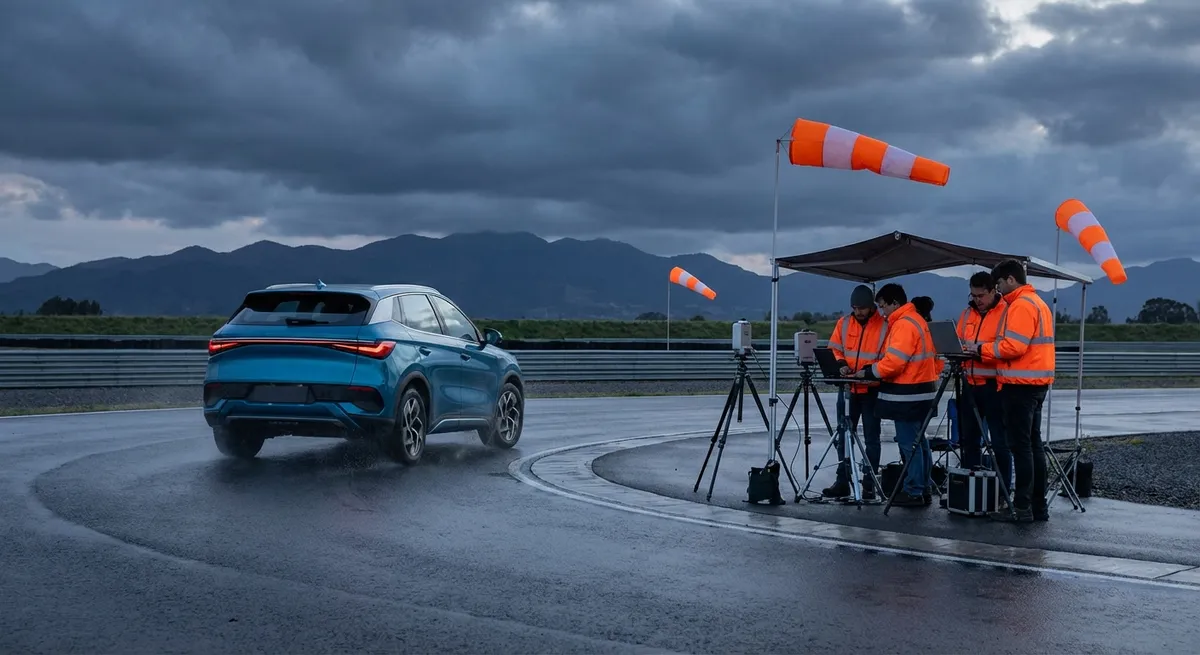
For shoppers scrolling through star ratings and summary blurbs, “expert review” can sound like a black box. Yet the difference between a casually driven press car and a rigorously tested SUV is massive—especially if you’re about to commit to a 36‑month lease or a six‑year loan. At Top SUV News, our evaluations are structured, repeatable, and intentionally technical, so buyers and enthusiasts can see past the marketing headlines and understand how an SUV will actually perform in daily life and under stress.
This guide breaks down five core pillars behind serious SUV reviews—how they’re measured, why they matter, and what to look for when you read any review, not just ours. If you’re comparing models or trying to decode conflicting opinions online, these are the points that should carry the most weight.
1. Chassis, Ride, and Handling: How the SUV Really Feels on the Road
Enthusiasts know that platform and suspension tuning define the character of an SUV far more than screen size or ambient lighting. In a professional review, chassis evaluation is about understanding the trade‑offs engineers made—and whether they suit how you drive.
We look closely at suspension architecture (e.g., MacPherson strut vs. double wishbone front; torsion beam vs. multi‑link rear) because it shapes how the vehicle manages body roll, mid‑corner bumps, and high‑speed stability. A lightweight torsion beam can free cargo space and reduce cost, but a well‑executed multi‑link rear usually delivers better composure when pushed hard or loaded with passengers and gear.
Steering systems are another critical point. Most modern SUVs use electric power steering (EPS), but tuning varies wildly. During reviews, we evaluate on‑center feel at highway speed, response off center, and feedback over imperfect pavement. “Light but precise” can be ideal for urban commuting; “heavy with real feedback” appeals more to enthusiasts—yet some systems manage both with drive modes that genuinely alter assist levels rather than just changing instrument cluster color schemes.
Ride quality assessments are performed on a mix of surfaces: smooth highway, patched asphalt, expansion joints, and broken secondary roads. We pay attention to primary ride (overall firmness and motions over big undulations) and secondary ride (how the suspension filters sharp inputs like potholes or manhole covers). Adaptive dampers or air suspension are called out not just as features, but for how they broaden the comfort–control envelope: can “Comfort” mode handle a rough commute without wallow, and does “Sport” genuinely tighten body motions?
When you read any SUV review, look for specific references to body roll, pitch under braking, squat on acceleration, and how composed the chassis feels in an emergency lane change. Vague terms like “drives well” are far less useful than objective descriptors like “minimal body roll with quick, predictable transitions” or “soft initial damping but underdamped rebound over large bumps.”
2. Powertrain Evaluation: Beyond Horsepower Headlines
Power and torque numbers look impressive on a spec sheet, but they rarely tell the whole story. A thorough review focuses on how an engine or motor delivers its output across the rev range, how effectively the transmission manages that power, and how the combination affects real‑world performance and refinement.
For internal combustion and hybrid SUVs, we pay close attention to torque curves and turbocharging behavior. A small displacement turbocharged engine with peak torque available from low rpm can feel stronger in day‑to‑day driving than a larger naturally aspirated unit with higher peak horsepower but less low‑end pull. In testing, we assess response from a rolling start (30–50 mph) and during highway passing maneuvers (50–70 mph), because these are more representative of daily driving safety than full 0–60 runs.
Transmission behavior is equally critical. In torque‑converter automatics, we evaluate shift logic under light, moderate, and heavy throttle, looking for hunting between gears, slow kickdowns, and unnecessary upshifts that dull performance. For continuously variable transmissions (CVTs), we note whether simulated “steps” create a more natural feel, how the system responds to sudden throttle inputs, and whether the engine is held at high rpm under sustained acceleration, causing drone.
In hybrids and EVs, throttle mapping and power delivery smoothness take center stage. We consider how quickly electric torque arrives from a stop, how seamlessly the system blends regenerative and friction braking, and whether transitions between electric and gas power are noticeable. For EVs, we also look at sustainable performance—whether repeated full‑throttle runs or long highway climbs reduce available power due to thermal management limits.
Noise, vibration, and harshness (NVH) testing is an under‑appreciated part of powertrain evaluation. During reviews, we measure or subjectively note engine noise during cold starts, at steady 70 mph cruise, and under heavy acceleration. We also listen for vibrations transmitted through the steering wheel, pedals, and seats at idle and in stop‑and‑go traffic. A well‑reviewed SUV should not only be quick enough for its class; it should deliver its performance without fatigue‑inducing noise and vibration.
When comparing reviews, pay attention to comments about drivetrain smoothness, shift quality, throttle calibration, and real‑world responsiveness, not just quoted horsepower and 0–60 times.
3. Efficiency, Range, and Real-World Running Costs
SUVs vary dramatically in fuel economy and energy consumption, and official ratings only tell part of the story. Credible reviews contextualize EPA or WLTP numbers with real‑world results, driving conditions, and how configuration choices (wheels, tires, drivetrain, roof racks) can affect efficiency.
For gasoline and hybrid SUVs, we analyze EPA city/highway/combined figures, then note our observed consumption in mixed driving. Real testing considers factors like ambient temperature, traffic conditions, elevation changes, and driving style. Large‑diameter wheels with performance‑oriented tires can increase rolling resistance and aero drag, often cutting real‑world fuel economy by several mpg compared with base setups.
Plug‑in hybrids (PHEVs) require a more nuanced review. We evaluate electric‑only range, charging speed on Level 2 equipment, and the efficiency of both electric and hybrid modes. An SUV that can cover a typical commute on electric power alone and seamlessly switch to hybrid operation can drastically reduce fuel costs—if the owner actually plugs in. Reviews should therefore distinguish between realistic and theoretical savings, especially in cold or hot climates where HVAC use can significantly affect electric range.
For battery‑electric SUVs, test protocols go deeper. We look at battery capacity (usable vs. gross), EPA range estimates, and real‑world consumption (kWh per 100 miles or miles per kWh) across city and highway routes. Charging performance is critically important: we assess maximum DC fast‑charge rate (kW), battery preconditioning availability, and the time it takes to charge from common benchmarks (e.g., 10–80%). A vehicle that peaks at a high kW figure but quickly tapers might look great on paper yet underperform in actual road trip scenarios.
Running costs are not just about fuel or electricity. In reviews, we factor in tire sizes and likely replacement costs, recommended fuel grade (regular vs. premium), and projected maintenance complexity (for example, dual‑clutch transmissions or air suspension systems can lead to higher long‑term service expenses). Warranty coverage and roadside assistance programs are included as part of the long‑term value equation.
When reading reviews, look for specifics: observed mpg or kWh/100 mi figures, details on test conditions, and commentary on how different trims or wheel packages may impact efficiency. Generic statements like “good fuel economy for its class” are less useful than concrete data anchored to recognized test cycles and realistic use.
4. Interior Ergonomics, Tech Usability, and Comfort Under Load
The interior is where you interact with an SUV every day, so reviews should go well beyond material quality and screen size. Serious evaluations analyze layout logic, physical vs. touch controls, seating support, visibility, and how the tech behaves when the vehicle is full of people, luggage, and connected devices.
Ergonomics start with driving position and adjustability. We assess seat travel range (especially for very tall or very short drivers), steering wheel tilt and telescoping range, and pedal alignment. A technically impressive SUV can still be fatiguing if seat base length is too short, lumbar support is non‑adjustable, or head restraints push occupants’ heads forward. Bolster design is key too: heavily bolstered seats that feel secure in spirited driving might be uncomfortable for broad‑shouldered occupants over long trips.
Infotainment and controls warrant detailed testing. We consider screen legibility in bright sun, menu depth, the presence of critical physical knobs or buttons (for temperature, volume, defrost), and the speed of the system’s processor. Wireless Apple CarPlay and Android Auto are now expected by many buyers; we test connection stability, reconnection after short stops, and how the system handles multiple paired devices. We also look at whether climate controls remain accessible when CarPlay or Android Auto is in full‑screen mode—a subtle detail that has a big impact on usability.
Second- and third-row comfort is another review essential, especially in family‑oriented SUVs. We evaluate access (door opening size, step‑in height, ease of folding and sliding second‑row seats), real knee and legroom, under‑thigh support, and headroom with and without a panoramic sunroof. For three‑row models, we test whether adults can ride in the third row for at least moderate distances without significant discomfort, and whether second-row passengers sacrifice too much space when the third row is in use.
Cargo area practicality is measured not just in cubic feet, but in shape, loading height, and seat‑folding mechanisms. We note whether the load floor is flat with seats down, if there’s a significant lip to lift items over, and how easy it is to operate power tailgates or manual struts when your hands are full. Tie‑down points, underfloor storage, and 12‑volt or 120‑volt outlets are all highlighted, especially for buyers who haul sports gear, tools, or camping equipment.
When scanning reviews, look for objective, detailed commentary: the number of USB ports and their placement, second‑row LATCH anchor accessibility, third‑row ventilation and cupholders, and whether essential functions are buried in submenus. An infotainment system can be feature‑rich yet still frustrating if basic adjustments require too many steps on the move.
5. Safety Systems, Driver Assistance, and Testing Context
Modern SUVs are packed with driver‑assistance technologies, but the implementation quality and calibration vary as much as hardware specs. Professional reviews don’t just list features like adaptive cruise control or lane‑keeping assist—they evaluate how confidently, smoothly, and predictably these systems behave in real scenarios.
We begin with the safety fundamentals: crash test scores from organizations such as the National Highway Traffic Safety Administration (NHTSA) and the Insurance Institute for Highway Safety (IIHS), as well as the availability of advanced safety features as standard or optional equipment. Structural performance in frontal, side, and small overlap crashes, plus roof strength and head restraint ratings, form the baseline safety picture.
Then we move to active safety and driver aids. During testing, we use adaptive cruise control in varied traffic densities to observe how the SUV manages following distances, cut‑ins, and stop‑and‑go conditions. Smooth, progressive braking and acceleration help reduce motion sickness and driver annoyance, while overly cautious or abrupt responses can negate the benefits of the system. Lane-keeping and lane-centering functions are evaluated for their ability to maintain lane position on curves, react to faded markings, and avoid “ping‑pong” behavior between lane boundaries.
Automatic emergency braking performance is more difficult to test to its limits outside controlled environments, but we can still evaluate warning timing and how confidently the system intervenes in lower‑speed scenarios. Blind-spot monitoring, rear cross-traffic alert, and 360‑degree camera quality are also scrutinized. Resolution, camera angles, and lens cleanliness sensitivity all matter when maneuvering large SUVs in tight urban spaces.
We also consider driver monitoring and alert systems: some SUVs use steering torque sensors; others employ camera‑based driver attention monitoring. A balanced system will encourage attentive driving without issuing frequent false alarms or requiring unnatural steering inputs just to confirm driver presence.
Context is critical when reading about safety in reviews. Look for mentions of specific test protocols, references to official crash ratings, and commentary on how driver‑assist systems behaved in defined situations—merging onto freeways, negotiating construction zones, or driving in heavy rain. Generic claims like “advanced safety suite” are less informative than detailed descriptions of behavior and limitations.
Conclusion
Robust SUV reviews are built on structured testing, technical understanding, and clear, context‑rich reporting—not just subjective impressions. When you examine evaluations through the lenses of chassis behavior, powertrain character, efficiency and running costs, interior usability, and real‑world safety performance, you can quickly separate marketing gloss from meaningful information.
For car enthusiasts, these five pillars reveal how well an SUV fulfills its engineering brief. For everyday buyers, they provide a practical framework for comparing models and prioritizing features that align with your real driving needs. Use these criteria to read between the lines of any review, and you’ll be better equipped to choose an SUV that not only looks right in the driveway but feels right every mile you drive.
Sources
- NHTSA – 5-Star Safety Ratings - Official U.S. government crash-test ratings and safety information for SUVs and other vehicles
- IIHS – Ratings & Research - Independent crash-test data, small-overlap tests, and headlight/safety tech evaluations
- U.S. Department of Energy – Fuel Economy Guide - EPA fuel economy ratings, real-world driver reports, and energy-cost estimates for ICE, hybrid, PHEV, and EV SUVs
- SAE International – Vehicle Dynamics and Chassis Systems - Technical definitions and standards related to vehicle dynamics and ride/handling characteristics
- Consumer Reports – Car Safety & Reliability - Long-term reliability data, road-test protocols, and safety feature evaluations for SUVs and other vehicles
Key Takeaway
The most important thing to remember from this article is that this information can change how you think about Reviews.