The SUV market is shifting faster in 2025 than at any time in the last decade. Beneath the familiar silhouettes and brand badges, the industry is rewriting how SUVs are powered, built, updated, and even regulated. For car enthusiasts and serious buyers, understanding these under‑the‑skin changes is now just as important as knowing horsepower and cargo volume. This overview unpacks five critical industry trends reshaping the next wave of SUVs—and what they actually mean when you walk into a showroom or start configuring your next vehicle online.
1. Dedicated EV Platforms Are Redefining SUV Packaging and Performance
Until recently, many electric SUVs were gasoline models adapted to house batteries and electric motors. That’s changing rapidly as manufacturers roll out “skateboard” platforms designed from the ground up for EVs.
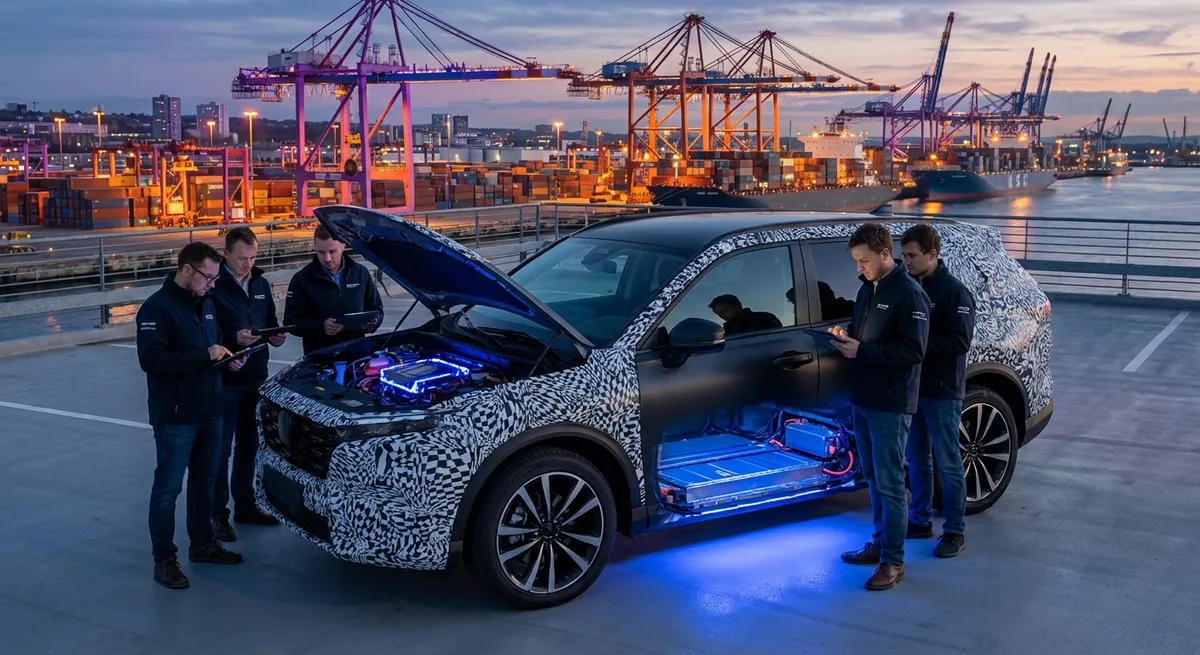
A dedicated EV platform typically integrates a flat battery pack in the floor, electric motors at one or both axles, and centralized power electronics. This architecture allows:
- Longer wheelbases and shorter overhangs for more interior space within similar exterior dimensions.
- Improved weight distribution and a lower center of gravity, enhancing stability and cornering.
- Frunk (front trunk) storage and better cabin packaging because there’s no bulky engine or transmission tunnel.
- Higher structural rigidity, as the battery pack can be a stressed member, improving crash performance and refinement.
Brands across segments are committing to these architectures. Hyundai Motor Group’s E‑GMP, GM’s Ultium platform, and VW Group’s MEB and PPE are prime examples. For SUV buyers, this means upcoming electric crossovers and mid‑size models will feel less compromised: more rear‑seat legroom, flatter floors, and better ride comfort, plus performance versions with dual‑motor all‑wheel drive and sophisticated torque vectoring that would have been supercar territory a decade ago.
Expect growing separation between “conversion” EV SUVs (adapted from ICE platforms, often with packaging compromises) and true ground‑up EV SUVs. If you’re cross‑shopping, pay attention to platform lineage; it will influence range, interior space, and upgradeability over the vehicle’s life.
2. Supply Chain Overhaul: Battery Materials, Localized Production, and Pricing
SUVs sit at the center of the auto industry’s supply chain reconfiguration. As companies race to electrify their lineups, the sourcing of battery materials—especially lithium, nickel, cobalt, and manganese—is becoming just as strategic as sourcing engines.
Three big shifts are underway that matter to buyers:
Localized battery production and assembly
Automakers are investing in regional “gigafactories” and co‑locating SUV production with battery plants. This reduces shipping costs, can qualify vehicles for local incentives, and helps insulate pricing from geopolitical disruptions. In North America and Europe, you’re likely to see more SUVs advertised as using “locally built” battery packs.
- Chemistry diversification (NMC vs. LFP)
Two main lithium‑ion chemistries are battling for space in SUV lineups:
- NMC (Nickel Manganese Cobalt): Higher energy density, better performance and range, higher cost, and more complex sourcing.
- LFP (Lithium Iron Phosphate): Typically lower cost, excellent cycle life and thermal stability, but lower energy density, meaning heavier packs for the same range.
Many brands are turning to LFP for standard‑range SUV trims to keep entry prices in check, while reserving NMC for long‑range or performance variants.
Vertical integration and long‑term contracts
To stabilize costs, automakers are signing long‑term deals directly with mining and refining companies, and in some cases investing in upstream operations. This can moderate price volatility over the medium term, but it also means some SUV models will have quite different cost structures—reflected in MSRP and leasing programs—depending on where their batteries are sourced and built.
For enthusiasts and buyers, the practical takeaway: battery chemistry and production origin will increasingly determine price, range, and even eligibility for incentives. This is info that will start appearing more often in spec sheets and sales materials, and it’s worth paying attention to when comparing models.
3. From Hardware to Code: The Rise of Software‑Defined SUVs
The industry is rapidly converging on the concept of the “software‑defined vehicle,” and SUVs—thanks to their popularity and higher margins—are the testbed. Traditionally, vehicles used dozens of independent control modules; now, they’re moving to centralized high‑performance computing units running complex operating systems and middleware.
Key changes impacting SUV buyers:
- Over‑the‑air (OTA) everything
- Powertrain calibration changes (e.g., throttle mapping, thermal management for EVs)
- Revised driver‑assistance behavior (lane‑keeping refinement, adaptive cruise tuning)
- New features like towing modes, off‑road drive profiles, or even extra performance via software unlocks
- Feature enablement and subscriptions
OTA updates are moving beyond basic infotainment tweaks. Manufacturers are now pushing:
Some brands are experimenting with “on‑demand” capabilities: heated seats, advanced driver‑assistance features, or power upgrades that can be activated post‑purchase. This is controversial among enthusiasts, but from an industry perspective it allows SUVs to be built with common hardware, with differentiation handled in software.
- Centralized architectures
High‑bandwidth Ethernet networks and zonal architectures reduce wiring complexity and allow faster data transfer between sensors, controllers, and actuators. For SUVs, this means more robust and responsive systems for stability control, adaptive damping, and advanced AWD torque management.
Importantly, the lifespan of an SUV’s software platform will become as critical as the hardware warranty. Buyers should look at a brand’s track record for OTA support, the cadence of updates, and whether major functionality (such as DC fast‑charging curves in EVs or trailer stability systems in tow‑rated models) has actually improved over time via software. A well‑supported software ecosystem can maintain an SUV’s real‑world value and usability long after purchase.
4. Regulatory Pressure Is Quietly Reshaping SUV Lineups
While SUVs keep growing in popularity, regulators in North America, Europe, and parts of Asia are tightening emissions and safety requirements in ways that specifically affect these high‑riding vehicles.
Four regulatory levers are shaping what’s available in showrooms:
- Tighter fleet emissions and CO₂ targets
Governments are pushing automakers to reduce average fleet emissions, which means high‑consumption SUVs must be offset by hybrids, plug‑in hybrids, and EVs in the lineup. Result: more electrified SUV variants and fewer high‑displacement, non‑electrified powertrains.
- Real‑world emissions testing
Europe’s WLTP and Real Driving Emissions (RDE) protocols, along with similar global efforts, reduce the gap between lab and on‑road fuel consumption figures. Many upcoming SUVs are designed with more efficient aerodynamics, low‑rolling‑resistance tires, and advanced engine thermal management to perform better under these realistic test cycles.
- Pedestrian and vulnerable road user safety
- Hood structures and active hood systems
- Front bumper geometry and energy‑absorbing materials
- Sensor placement for automatic emergency braking and pedestrian detection
- Advanced driver‑assistance system (ADAS) mandates
Regulators are scrutinizing SUV front‑end design because of higher hoods and mass. This is driving changes in:
Features like automatic emergency braking, lane‑departure warnings, and intelligent speed assistance are being phased in as mandatory in many markets. For SUVs, which are often family haulers and fleet vehicles, manufacturers are standardizing more comprehensive ADAS packages and improving sensor redundancy (multiple radar units, high‑resolution cameras, and, in some premium models, lidar).
For buyers, these regulations can be a hidden advantage: today’s SUVs are generally safer and more efficient than similarly sized models from just a few years ago. But they also mean that certain “old‑school” powertrains and configurations—like non‑hybrid V8s in mid‑size SUVs or bare‑bones trim levels without ADAS—are rapidly disappearing.
5. Off‑Road DNA Meets Electrification: The New 4×4 Reality
One of the most interesting industry shifts is happening in off‑road‑oriented SUVs. Electrification, once seen as incompatible with rugged use, is now being integrated into serious 4×4 platforms.
On the engineering side, the trend includes:
- Electrified axles and torque vectoring
Dual‑motor and tri‑motor layouts allow extremely precise front‑rear (and even left‑right) torque distribution without the complexity of traditional transfer cases and locking differentials. Some electric SUVs simulate locking diff behavior through software, sending near‑instant torque to the wheel with traction.
- Regenerative braking as a control tool
In EV and plug‑in hybrid SUVs, regenerative braking can be calibrated as part of hill‑descent control and off‑road drive modes. Engineers can blend regen and friction braking for highly controlled descents, especially when combined with low‑speed crawling profiles.
- Battery and underbody protection
True off‑road EV SUVs require reinforced battery enclosures, skid plates, and careful packaging to maintain ground clearance and approach/departure angles. Expect more models to quote not just traditional off‑road metrics, but clearance between the battery enclosure and terrain.
- Accessory and overlanding ecosystems
As electric and hybrid off‑road SUVs enter the market, manufacturers and aftermarket suppliers are developing compatible winches, snorkels (where applicable for hybrid/ICE components), roof racks, and integrated power export systems. Vehicle‑to‑load (V2L) functionality—using the SUV battery pack to power tools, camp equipment, or even a home in emergencies—is becoming a selling point in rugged models.
Enthusiasts should pay close attention to thermal management and charging behavior under load. Frequent towing or low‑speed off‑roading in hot conditions can stress power electronics and battery cooling. Well‑engineered systems will maintain performance and protect components, but this is an area where spec sheets don’t tell the full story—real‑world tests and long‑term reviews will matter more than ever.
Conclusion
The SUV segment is undergoing a profound transformation driven by dedicated EV platforms, rewired supply chains, software‑centric architectures, evolving regulations, and a reimagined approach to off‑road capability. For car enthusiasts and buyers, these shifts present both opportunity and complexity. It’s no longer enough to compare cargo space and horsepower; understanding platform design, battery chemistry, software strategy, and regulatory context will give you a genuine edge.
As 2025 and beyond unfold, the most compelling SUVs won’t simply be the ones with the largest screens or boldest styling. They’ll be the models that balance advanced hardware with robust, updatable software; that use carefully sourced materials without sacrificing performance; and that align with the fast‑moving regulatory landscape while still delivering the driving character and utility that made SUVs so popular in the first place.
Sources
- International Energy Agency – Global EV Outlook – Overview of global electric vehicle trends, including adoption patterns and technology developments relevant to SUV electrification.
- U.S. Department of Energy – Alternative Fuels Data Center – Technical background on electric vehicle powertrains, battery technologies, and efficiency considerations.
- European Commission – Vehicle Emissions and Safety Regulations – Details on CO₂ targets, emissions testing, and safety rules shaping SUV design in the European market.
- Hyundai Motor Group – E-GMP Platform Overview – Manufacturer explanation of a dedicated EV platform, including packaging, performance, and safety benefits relevant to electric SUVs.
- McKinsey & Company – The Road to Software-Defined Vehicles – Industry analysis of centralized electronics, OTA updates, and software architectures now being deployed in SUVs.
Key Takeaway
The most important thing to remember from this article is that this information can change how you think about Industry News.