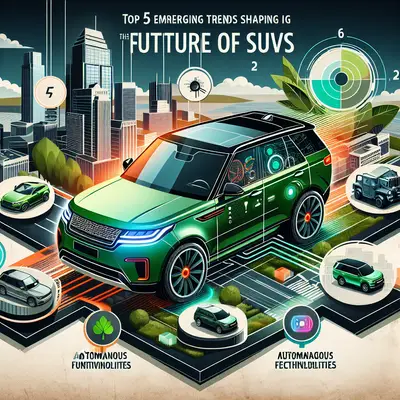
SUVs are entering a transition phase that’s deeper than a simple model refresh cycle. Between new emissions rules, shifting EV demand, semiconductor realignment, and a rapid pivot to software-defined platforms, the SUVs arriving in showrooms from 2025–2028 will be fundamentally different from what’s parked in most driveways today.
For enthusiasts and serious shoppers, understanding these under-the-skin changes is now just as important as comparing horsepower or cargo volume. Below, we break down five key industry shifts that will directly shape the next SUV you buy—or choose not to.
Regulatory Shift: Emissions, Fuel Economy and the “Right-Sizing” of SUVs
Global regulations are pushing automakers to rethink what an SUV looks like, weighs, and burns.
In the U.S., the EPA’s finalized light‑duty vehicle standards through 2032 will force average fleet CO₂ and fuel consumption significantly lower, effectively squeezing inefficient powertrains out of the lineup. At the same time, NHTSA’s CAFE proposals aim to ratchet fuel economy targets upward, with SUVs and light trucks no longer getting the regulatory slack they once enjoyed. This is triggering a quiet “right‑sizing” trend: more two‑row crossovers on modular platforms, downsized turbo and hybrid engines, and tighter aerodynamics (smaller frontal area, active grille shutters, more aggressive underbody smoothing).
Europe’s Euro 7 rules, even with compromises from the originally proposed draft, keep pressure on NOx, particulates, and real‑world driving emissions. Automakers are responding with higher‑efficiency aftertreatment systems (close‑coupled particulate filters, dual SCR catalysts), tighter thermal management, and increasingly electrified powertrains for SUVs that would have been pure ICE just a generation ago. In China, the New Energy Vehicle mandate and dual‑credit system continue to push plug‑in hybrids and EV SUVs as a compliance tool, influencing global product planning since many SUV platforms are now conceived as global architectures from day one.
For buyers, the impact is tangible: expect fewer naturally aspirated V6/V8 options outside of niche performance or off‑road models, wider adoption of Miller/Atkinson‑cycle turbocharged four‑cylinders, and increasingly sophisticated hybrids with higher‑voltage systems (often 400V in mainstream products, 800V in some premium SUVs). It also means SUVs are being engineered to perform better in real‑world driving cycles—not just laboratory benchmarks—so test‑drive fuel economy may align more closely with the window sticker than it did a decade ago.
Powertrain Strategy: Hybrids Ascend as EV Optimism Meets Reality
EV SUV sales are still growing globally, but the pace is more volatile than automakers projected in 2021–2022. Rising interest rates, charging infrastructure gaps, and ownership‑cost uncertainty have cooled some early optimism. In response, most major brands are recalibrating their SUV powertrain mix with a stronger emphasis on hybrids and plug‑in hybrids rather than an all‑in EV sprint.
From an engineering standpoint, this is accelerating several trends. First, 48‑volt “mild hybrid” architectures are becoming baseline for many new SUV platforms, supporting electric superchargers, integrated starter‑generators, and more robust energy recuperation under braking. Second, full hybrid systems are getting more sophisticated torque‑split devices, multi‑mode planetary gearsets, and higher specific‑output engines optimized exclusively for hybrid duty cycles (higher compression ratios, cooled EGR, wide‑band lambda control). Third, plug‑in hybrid SUVs (PHEVs) are growing battery capacities into the 20–30 kWh range to provide EV‑like daily commuting while still delivering long‑distance flexibility with a combustion engine backup.
On the EV side, manufacturers are standardizing skateboard platforms for SUVs with flat battery packs between the axles, enabling better weight distribution and cabin packaging. The industry is moving from NCM‑rich chemistries to more cost‑stable LFP packs for mainstream models, particularly in compact and mid‑size SUVs where price sensitivity is high. Some premium SUVs are adopting 800V architectures to reduce charging times and enable more compact high‑performance drive units.
For consumers, the key takeaway is choice—but also complexity. Instead of a binary “gas vs EV” decision, SUV buyers will see a spectrum: 48V mild hybrids, conventional hybrids, long‑range PHEVs, and full EVs sharing the same showroom. Understanding your real-world usage pattern—commuting distance, towing, climate, and access to home or workplace charging—will determine which of these powertrain strategies actually saves money and fits your lifestyle over a 5–10 year ownership window.
Semiconductor Recovery and the Next Wave of In‑Car Tech
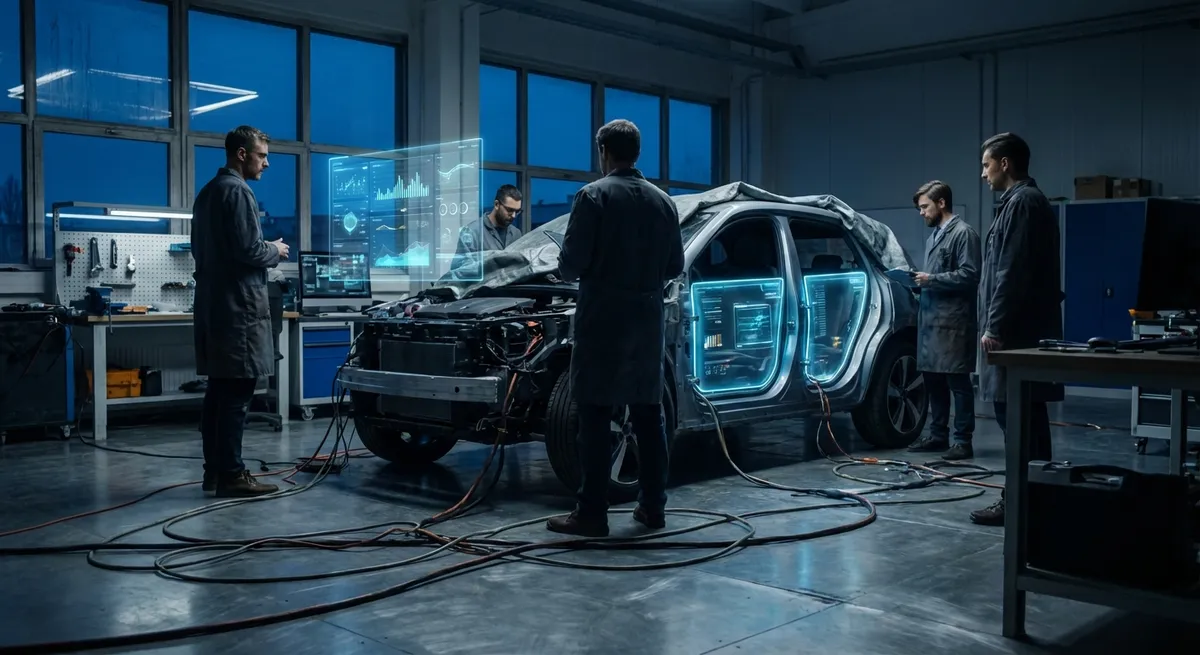
The global chip shortage that crippled SUV inventories from 2020–2022 is largely behind the industry, but the lessons learned are reshaping electronic architectures in new models. Automakers are shifting from dozens of discrete electronic control units (ECUs) scattered throughout the vehicle to zonal or domain controllers—centralized high‑performance processors that manage entire subsystems like powertrain, chassis, and infotainment.
This consolidation does several things. First, it reduces wiring complexity and weight, which indirectly improves efficiency for larger SUVs. Second, it enables higher‑bandwidth communication via automotive Ethernet, supporting advanced driver-assistance systems (ADAS) that rely on continuous sensor fusion from cameras, radar, lidar (in some premium SUVs), and ultrasonic sensors. These centralized controllers are being built on more capable SoCs (system‑on‑chip) from suppliers like NVIDIA, Qualcomm, and legacy automotive chipmakers, enabling near‑real‑time perception and decision‑making for highway assist, automated lane changes, adaptive cruise in complex environments, and more intelligent traction and stability control.
Third, semiconductor sourcing is becoming more geographically diversified. Automakers are signing direct agreements with chip foundries and second‑sourcing critical components to prevent single‑point failures. For buyers, this should translate into fewer production disruptions, more predictable launch timelines, and improved availability of well‑equipped trims that were previously constrained by chip supply.
On the cabin side, expect SUV interiors to lean heavily into multi‑screen layouts driven by powerful graphical processors. High‑resolution instrument clusters, wide infotainment displays, and rear entertainment screens are increasingly linked via a single software backbone, supporting features like multi‑zone streaming, integrated gaming, and augmented‑reality navigation overlays. Over the next product cycle, this tech will migrate from luxury SUVs down to mid‑market offerings as economies of scale build around these new electronic architectures.
Software‑Defined SUVs: Subscriptions, OTA Updates and Long-Term Ownership
The auto industry’s pivot toward “software‑defined vehicles” is no longer a buzzword—it’s a core product and business strategy for new SUVs. Instead of treating features as fixed hardware at the time of sale, manufacturers are increasingly designing SUVs so that functions can be added, upgraded, or even rented via software after purchase.
Technically, this requires robust operating systems, secure over‑the‑air (OTA) update pipelines, and redundant architectures to prevent bricking critical systems during an update. Many brands are transitioning to Linux‑based or AUTOSAR‑compliant platforms with virtualization layers that separate safety‑critical functions (like braking and steering) from infotainment and convenience features. This separation allows frequent updates to the user-facing experience without risking core functionality.
On the business side, SUVs are becoming platforms for recurring revenue. Features that were once trim‑level decisions—like adaptive dampers, enhanced navigation, heated rear seats, or advanced driver-assist modes—may now appear as post‑purchase activations. In some cases, hardware is physically installed in all vehicles, but only unlocked via software for buyers who pay either up front or as a monthly subscription. Over time, certain performance or off‑road modes may be delivered as software packages, adjusting torque distribution maps, throttle response, and traction‑control logic without mechanical changes.
For enthusiasts and informed buyers, this shifts the evaluation metric. You’re not just buying an SUV’s current capabilities; you’re buying into a software ecosystem and a company’s long‑term support philosophy. Key questions now include: How long will the manufacturer provide OTA updates and security patches? Are core safety and performance features permanently included, or locked behind subscriptions? Will used‑vehicle buyers be able to retain or transfer paid software options? The answers will directly affect residual values, long‑term ownership satisfaction, and even the attractiveness of leasing versus buying, especially in tech-heavy SUV segments.
Off‑Road Cred Meets Efficiency: Electrified 4×4 Systems and Modular Platforms
One of the most interesting industry trends is how traditional SUV strengths—towing, off‑roading, and cargo capability—are being rebuilt around electrified and modular platforms instead of ladder frames and large displacement engines.
From a chassis perspective, many new SUVs are adopting highly flexible architectures that can support front‑, rear‑, or all‑wheel drive with different combinations of internal combustion engines and electric motors. All‑wheel‑drive systems are increasingly shifting away from mechanical transfer cases toward electronically controlled multi‑clutch units and e‑axles. In plug‑in hybrids and EV SUVs, rear‑drive e‑axles with vectoring capability can modulate torque side‑to‑side, improving traction on loose surfaces and enhancing cornering on pavement without the drag penalties of locking differentials.
For serious off‑road SUVs, electrification opens new possibilities. Instant torque from electric motors can be precisely controlled at each wheel, enabling sophisticated crawl control, rock‑mode calibration, and brake‑based torque vectoring without overheating clutches or brakes as quickly as in traditional setups. Battery placement—often low and between the axles—can improve stability on steep grades, though engineers must balance this against vulnerability to underbody impacts. Manufacturers are responding with reinforced battery enclosures, skid plates, and carefully designed approach/departure angles to maintain capability.
Towing is another area in transition. While EV SUVs still face range penalties when towing heavy loads, improvements in motor efficiency, thermal management, and energy‑dense batteries are steadily closing the gap. Meanwhile, hybrid SUVs are being engineered with higher‑capacity cooling systems, stronger inverters, and robust planetary gearsets to maintain tow ratings without overheating under sustained load. Expect to see tow‑specific drive modes that optimize engine and motor operation, shift logic, and regenerative braking to manage temperature and energy usage more intelligently.
For buyers who care about real utility, the industry trend is not “off‑road or efficiency” but “redefining capability” with new tools. Comparing spec sheets will increasingly mean looking at torque vectoring strategies, drive mode logic, continuous versus peak power ratings for electric motors, and how battery or hybrid systems behave under sustained load—not just headline horsepower or maximum tow ratings.
Conclusion
SUVs are at the center of the auto industry’s transformation, and the changes unfolding over the next three to five years will be structural, not cosmetic. Tightening regulations are forcing more efficient and electrified powertrains; semiconductor realignment is enabling far more capable electronics and ADAS; software‑defined platforms are turning SUVs into updatable products with evolving features; and electrified drivetrains are quietly reshaping what off‑road and towing capability look like.
For enthusiasts and serious buyers, staying informed on these industry‑level shifts is now a competitive advantage. Understanding the underlying platform, electronics architecture, and software strategy behind a given SUV will be just as important as traditional considerations like engine size or trim level. The SUVs that age best—technically and financially—will be the ones built on robust, flexible architectures with clear long‑term software and support roadmaps, not just the flashiest spec sheet on launch day.
Sources
- U.S. Environmental Protection Agency – Multi‑Pollutant Emissions Standards for Model Years 2027 and Later Light‑Duty Vehicles - Details the finalized CO₂ and pollutant standards shaping future SUV powertrains in the U.S.
- National Highway Traffic Safety Administration – Corporate Average Fuel Economy (CAFE) - Explains fuel economy regulations that significantly influence SUV efficiency targets and platform design.
- European Commission – Euro 7 Vehicle Emission Standards - Outlines upcoming emission requirements driving advanced combustion and hybrid technologies in SUVs sold in Europe.
- International Energy Agency – Global EV Outlook 2024 - Provides data and analysis on EV and plug‑in hybrid adoption trends, including SUVs, and how they affect automaker strategies.
- McKinsey & Company – The Case for Software-Defined Vehicles - Discusses the shift to software‑centric vehicle architectures, OTA updates, and new revenue models that are transforming modern SUVs.
Key Takeaway
The most important thing to remember from this article is that this information can change how you think about Industry News.