SUV buyers are walking into showrooms at a time when the industry itself is quietly being rebuilt. Behind the glossy paint and spec sheets, automakers are re‑engineering how SUVs are designed, sourced, and delivered—from batteries and chips to critical minerals and software. For enthusiasts and serious shoppers, understanding these shifts is no longer optional; it directly affects pricing, reliability, performance, and resale value.
This overview breaks down five major supply‑chain and industry trends shaping the next wave of SUVs, and how each one should inform your buying decisions over the next 12–36 months.
Battery Supply Chains Are Redrawing the SUV Map
The most consequential change in the SUV world is the rapid restructuring of battery supply chains. As governments tighten emissions rules and incentivize electrification, battery sourcing has become a strategic battleground.
For North American buyers, the U.S. Inflation Reduction Act (IRA) is forcing automakers to prioritize local or “friendly” sourcing of critical minerals like lithium, nickel, cobalt, and graphite. To qualify for federal EV tax credits, a growing percentage of battery components must be produced or assembled in North America, and a minimum share of critical minerals must come from the U.S. or free‑trade partners. This has prompted major SUV players—GM’s Ultium platform, Ford’s upcoming three‑row EV SUV, Hyundai–Kia, and others—to invest billions in local battery plants and joint ventures.
For consumers, this has several practical impacts. First, eligibility for federal or regional incentives will increasingly depend on where your SUV’s battery components are sourced and assembled, not just whether it has a plug. Two seemingly similar plug‑in SUVs could differ by thousands of dollars in effective transaction price simply because one meets domestic content thresholds and the other doesn’t. Second, localized battery production should improve supply stability and lead times—but only after a transitional period that may see constrained availability of certain high‑demand trims or long‑range variants.
Battery chemistry is also evolving as supply chains tighten. Automakers are deploying more LFP (lithium iron phosphate) packs in entry‑level or fleet‑oriented SUVs because these chemistries rely less on expensive, geopolitically sensitive metals like nickel and cobalt. Enthusiasts should pay attention here: LFP batteries typically trade peak energy density for longevity and cost. That can mean slightly shorter rated range but better cycle life and more stable performance in high‑utilization use cases, such as ride‑hailing or heavy commuting.
In the premium and performance SUV space, high‑nickel NMC and NCA chemistries will remain common due to their energy density advantages. However, expect automakers to be more transparent—or at least more strategic—about which chemistries they allocate to which markets, depending on local sourcing rules and incentive structures. If range and towing matter more than purchase incentives, reading the fine print on battery chemistry and origin will become an increasingly valuable habit.
Chip Production Is Shifting from Scarcity to Strategic Differentiation
The semiconductor crisis of the early 2020s exposed how vulnerable SUV production was to a handful of commodity chips. Assembly lines for otherwise completed vehicles sat idle, waiting on components worth a few dollars. That era is giving way to a more deliberate, layered approach to chip sourcing and integration.
Automakers are moving away from dozens or hundreds of low‑power control units sprinkled throughout the vehicle in favor of centralized high‑performance computing platforms. This architectural shift changes which chipmakers and fabs matter. Legacy microcontrollers are still critical for basic functions (safety systems, HVAC, seat controls), but the SUV’s core personality—infotainment responsiveness, driver‑assist sophistication, powertrain coordination—will increasingly depend on a small number of powerful central processors.
Supply‑chain wise, this is pushing manufacturers to secure long‑term agreements with leading semiconductor foundries and Tier 1 suppliers. Some brands are working directly with chipmakers to co‑develop platforms optimized for their SUV lineups. Others are moving to standardized, scalable electronic architectures that can be shared across multiple models and segments, reducing the risk that one component shortage halts production of a specific SUV.
For enthusiasts and buyers, there are two main consequences. First, production stability should improve over the next product cycle, reducing the kind of option‑delete compromises seen during the height of the chip shortage, when vehicles were delivered without certain features or with temporary workarounds. Checking whether a specific SUV still has all advertised driver‑assist or connectivity features will be less of a minefield.
Second, the role of software and processing power as differentiators will grow. The same chip platform may power an entire SUV range, but brands will use software configurations and over‑the‑air updates to segment features. While this article avoids the broader “software‑defined vehicle” storyline, the supply chain angle is critical: centralized computing reduces vulnerability to commodity chip disruptions but concentrates technical risk in a few complex components. For buyers, that makes build quality, update cadence, and vendor partnerships (e.g., with Intel, Qualcomm, Nvidia, or others) worth tracking if you care deeply about long‑term system performance and support.
Critical Minerals and Geopolitics Are Quietly Setting SUV Pricing Floors
Beyond batteries and chips, the entire upstream ecosystem for modern SUVs is being rewired. High‑strength steels, aluminum, rare earth elements for electric motors, and even basic raw materials face increased scrutiny and volatility. Governments are tightening export controls on sensitive materials, pushing automakers to diversify sources and stockpile strategic inputs.
Rare earth magnets in electric drive units are a notable pressure point. Some SUV manufacturers are experimenting with permanent‑magnet‑free motor designs or reduced rare earth content to limit exposure to geopolitical risk. These design choices can affect efficiency, torque characteristics, and packaging, especially for dual‑motor or performance‑oriented SUVs. For off‑road or towing‑focused buyers, it’s worth noting whether a motor platform has been changed between model years, as small architectural tweaks can produce meaningful differences in sustained torque and heat management.
Trade and tariff policy also disproportionately affect SUVs because they are often cross‑shipped: a midsize hybrid SUV might have its engine cast in one country, its transmission in another, and final assembly somewhere else entirely. Adjustments in tariff schedules or new trade agreements can either compress margins or force price hikes, sometimes mid‑cycle. Automakers increasingly design their SUV lineups with flexible “multi‑source” strategies—capable of shifting production of engines, motors, or major assemblies between plants or countries based on policy shifts.
For buyers, the key takeaway is that the old expectation of slow, predictable price creep no longer holds. Entry‑level and mid‑range SUVs in particular may see sharper adjustments as manufacturers react to input cost spikes or tariff moves. Enthusiasts who track pricing closely should pay attention not only to MSRPs but to fleet sales trends and incentive patterns: they often signal how hard an automaker is being squeezed on margin by upstream costs. A sudden drop in incentives for a popular SUV might reflect tightening supply of a key component rather than simple demand strength.
Vertical Integration Is Returning—But It Looks Very Different
Decades ago, some automakers owned everything from steel mills to parts suppliers. That highly integrated model later gave way to extensive outsourcing. The pendulum is swinging back toward integration, but in a more targeted, technology‑driven form focused on areas crucial to modern SUVs: batteries, power electronics, drivetrains, and certain software stacks.
Battery joint ventures are the most visible example—large SUV manufacturers co‑developing cells, modules, and pack designs to ensure both supply and performance control. Similarly, inverters, on‑board chargers, and DC‑DC converters are increasingly being brought in‑house or developed with tighter intellectual‑property control, because they drive efficiency and fast‑charging performance. For plug‑in and fully electric SUVs, these components heavily influence real‑world driving range, charging curve stability, and towing derate behavior.
On the chassis side, there is a push to standardize modular platforms that span multiple SUV segments—compact crossovers through three‑row family haulers—while allowing enough flexibility for brand‑specific tuning. Shared architectures reduce per‑unit costs and streamline supplier relationships, but they also impose constraints on packaging and suspension layouts. Performance‑oriented SUVs on these platforms may rely more on software‑tunable dampers, rear‑axle torque vectoring, and steering calibration to differentiate themselves.
What does this mean for shoppers? First, platform lineage becomes an even more important research point. Two SUVs sharing a core architecture may feel markedly different but will likely have similar crash structures, basic suspension geometry, and underfloor packaging. Reliability and long‑term parts availability can often be inferred from how widely that platform is used across the brand or group.
Second, vertical integration tends to correlate with longer‑term support for critical components. If a manufacturer heavily invests in its own motor and inverter platform, for instance, you can expect a stronger incentive to maintain parts supply and software support throughout the model’s lifecycle. Conversely, SUVs built around short‑term external supplier contracts may face more abrupt end‑of‑life parts challenges. Enthusiasts who keep vehicles beyond warranty should factor this into ownership planning.
Logistics, Inventory Strategy, and the End of “Always on the Lot”
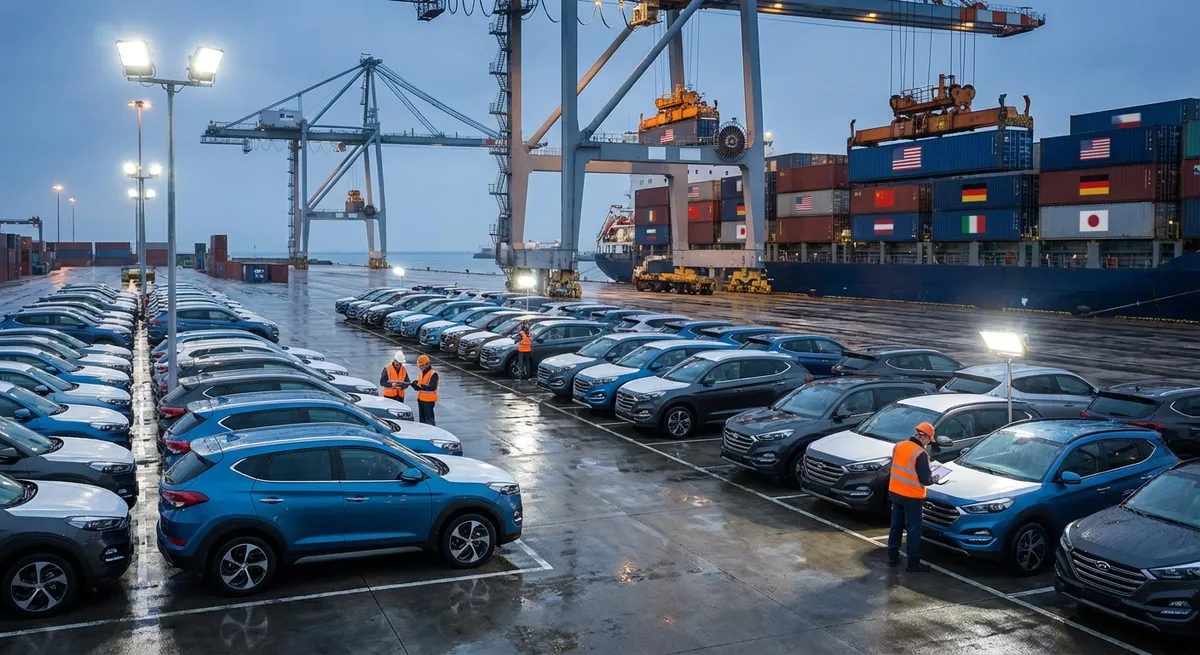
The pandemic era forced automakers and dealers to confront the fragility of just‑in‑time inventories. Ocean freight snarls, port congestion, and limited rail and truck capacity created long waits for certain SUV trims and powertrains. The industry’s response is reshaping how SUVs move from factory to driveway.
Manufacturers are experimenting with more diversified production footprints to reduce dependence on single plants or regions. Some are pairing this with more direct‑to‑consumer or factory‑order–centric sales models, at least for higher‑margin SUVs. Instead of building large pools of identically specced vehicles for dealer lots, automakers are increasingly willing to let buyers configure and wait, smoothing production planning and reducing inventory risk.
From the logistics angle, this allows better matching of build configurations to regional demand—e.g., allocating more all‑wheel‑drive, cold‑weather packages, or towing‑optimized SUVs to certain markets. It also opens the door for more frequent running changes during a model year, as suppliers ramp new components or software revisions and implement quiet mid‑cycle hardware updates.
For buyers, the era of walking onto a lot and choosing from a vast, deeply discounted SUV inventory is fading, particularly for in‑demand models and specialized trims (off‑road packages, high‑performance variants, or advanced plug‑in hybrids). Instead, you’re likely to see:
- More build‑to‑order lead times, especially for heavily optioned or electrified SUVs.
- Price resilience on high‑demand trims, as manufacturers prioritize margin over volume.
- More “allocation management,” where certain configurations are restricted or delayed based on component availability.
Enthusiasts who care about specific hardware—locking differentials, upgraded tow packages, battery size, or audio systems—should be ready to plan ahead. Build slots may be constrained by supplier capacity for niche components. Monitoring order banks, production bulletins, and dealer communication channels becomes as important as watching public price guides.
At the same time, this shift could benefit detail‑oriented shoppers. With less pressure to move aged inventory, dealers may be more willing to coordinate precise factory builds instead of steering you toward whatever is already on the ground. The trade‑off is patience: getting the exact SUV specification you want may require longer timelines but could yield a better‑matched vehicle with fewer compromises.
Conclusion
The supply chains behind SUVs are undergoing the biggest reconfiguration in decades. Battery sourcing rules, semiconductor strategies, critical mineral politics, vertical integration, and revamped logistics are not abstract boardroom issues—they are the forces that will determine what SUVs get built, how they drive, which features they offer, and how much they ultimately cost.
For car enthusiasts and informed buyers, keeping an eye on these upstream shifts is now part of doing serious homework. Understanding where an SUV’s batteries and chips come from, how flexible its platform is, and how its maker manages inventory and logistics can help you predict availability, pricing trends, and long‑term support. The next time you evaluate a new SUV, consider not only its horsepower, ground clearance, or 0–60 time, but the industrial ecosystem that made it possible—and how robust that ecosystem will be over the years you plan to own it.
Sources
- U.S. Department of Energy – Electric Vehicle Batteries: Material Supply Chains – Overview of EV battery supply chain challenges and policy context
- U.S. Department of the Treasury – Clean Vehicle Tax Credits – Official guidance on content and sourcing rules affecting EV and plug‑in SUV incentives
- International Energy Agency – Global Critical Minerals Outlook – Analysis of critical mineral demand, supply risks, and their impact on the automotive sector
- McKinsey & Company – The Future of Mobility: Automotive Semiconductor Trends – Insight into how semiconductor strategies are reshaping vehicle design and supply chains
- Ford Motor Company – Battery and EV Supply Chain Investments – Example of OEM investment in localized battery production and its implications for SUV manufacturing
Key Takeaway
The most important thing to remember from this article is that this information can change how you think about Industry News.