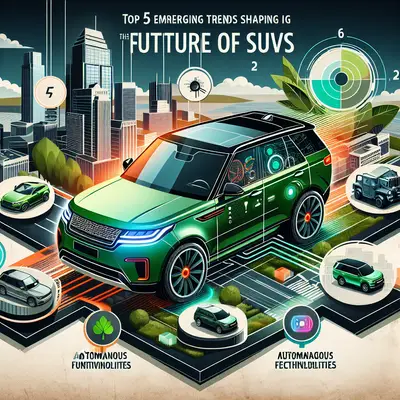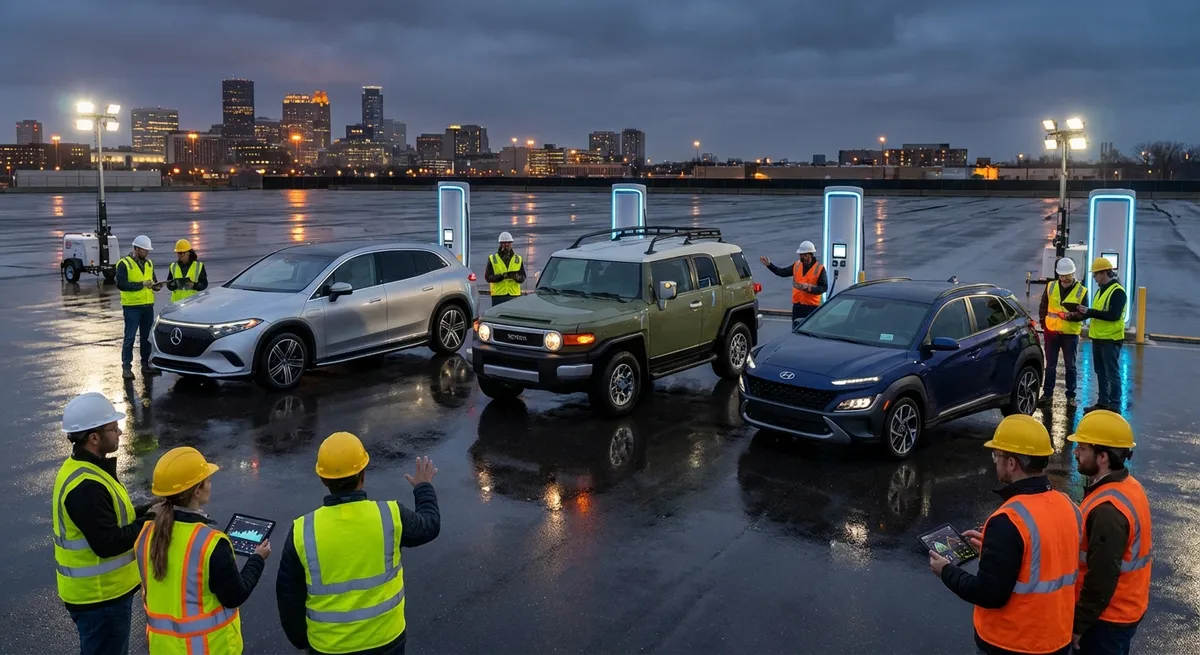
The SUV market is entering one of its most transformative phases in decades, driven by regulation, electrification, software, and fresh competition from both legacy automakers and new entrants. For buyers, this means more choice—but also more complexity. Understanding what’s changing behind the scenes can help you make smarter decisions, whether you’re shopping today or planning your next upgrade in a few years. This industry update breaks down five key developments shaping the SUVs you’ll see on dealer lots and in your social feeds.
1. Tougher Emissions and Efficiency Standards Are Reshaping SUV Lineups
Around the world, regulators are tightening emissions and fuel economy rules, and SUVs are at the center of the discussion because of their size, weight, and popularity.
In the United States, the Environmental Protection Agency (EPA) has finalized stricter greenhouse gas emissions standards for light‑duty vehicles through the early 2030s. While the rules are technology‑neutral, their stringency effectively pushes automakers toward higher shares of hybrids, plug‑in hybrids (PHEVs), and battery electric SUVs to balance out traditional gasoline models. Corporate Average Fuel Economy (CAFE) and CO₂ targets mean that a heavily sold, inefficient SUV now has a direct impact on a brand’s overall compliance cost and potential penalties.
Europe is moving in parallel, with Euro 7 emissions standards (though softened from early proposals) and ongoing CO₂ fleet targets driving similar changes. High-volume compact and midsize SUVs—the global sweet spot—are increasingly offered with mild-hybrid systems, downsized turbocharged engines, and electrified powertrains to keep fleet averages within limits without sacrificing performance or towing capability.
For enthusiasts, this translates into smaller displacement engines paired with electric assistance, more efficient all-wheel-drive systems, and aerodynamically optimized designs. Buyers should expect fewer naturally aspirated V6s and V8s in mainstream SUVs and more engine families designed from the start for electrification. Over the next product cycles, it’s likely that “pure” internal-combustion SUVs will be concentrated at the budget end of the market and at the very high-performance or specialty off-road end, where customers will pay a premium for the experience.
2. The Off-Road Renaissance: Rugged SUVs Go Mainstream
At the same time regulations are pushing efficiency, consumer demand is pulling in a very different direction: rugged, off-road-capable SUVs are back in a major way.
Automakers are capitalizing on this with entire sub-brands and trims focused on trail capability. Key hardware being prioritized includes increased ground clearance (often 8.5–10+ inches), improved approach, breakover, and departure angles, chassis reinforcements, and increasingly sophisticated all-wheel-drive and four-wheel-drive systems. Locking differentials (rear or front and rear), multi-mode terrain management systems, and low-range transfer cases are now being offered in packages one step above mainstream trims, rather than only on niche models.
Tire technology is also part of this renaissance: all-terrain (A/T) tires with reinforced sidewalls and off-road-oriented tread patterns are showing up on “adventure” trims from compact crossovers to full-size SUVs. These often include integrated skid plates, tow hooks, and factory pre-wiring for accessories such as light bars and winches, reflecting how much aftermarket customization has influenced OEM design.
The big industry shift is that this capability is being blended with comfort and technology normally associated with premium urban SUVs. Expect to see more adaptive dampers that can soften for highway use and firm up for trail work, trail cameras for low-speed rock navigation, and one-pedal or hill-descent control tuned for off-road surfaces. For buyers, this means that a single SUV can realistically function as both a daily commuter and a weekend overlanding platform—at the cost of slightly higher tire noise, fuel consumption, and price.
3. Software-Defined SUVs and the Rise of the “Updateable” Vehicle
Beyond powertrains and mechanical hardware, SUVs are undergoing a quiet software revolution. Automakers are rolling out “software-defined vehicle” (SDV) architectures that place a powerful central computing system at the heart of the vehicle, connected to domain controllers for powertrain, chassis, infotainment, and advanced driver assistance.
The most visible outcome is over-the-air (OTA) updates. Just as your smartphone gets regular software improvements, more SUVs now support remote updates for navigation, interface design, and even core vehicle functions. Manufacturers have already pushed updates that alter throttle mapping, traction control calibration, battery management for plug-in hybrids and EVs, and ADAS performance parameters. This allows automakers to fix bugs, add functions, or refine performance without a service visit.
For enthusiasts, a key development is the move toward “feature-on-demand” and subscription-based options. Some brands are experimenting with unlockable software features like enhanced driver assistance levels, adaptive cruise enhancements, or performance software for electric powertrains. Others are tying hardware options (for example, additional cameras or off-road modes) to software licenses that can be activated after purchase.
From a technical standpoint, this requires a robust electrical/electronic (E/E) architecture with high-speed networking, standardized communication protocols, and secure update mechanisms. For buyers, it introduces a new research step: understanding not just what hardware is on the SUV you’re considering, but also what capabilities are enabled now versus what could be unlocked later, and at what cost. Resale values may increasingly reflect whether a vehicle is on a modern, updatable software platform or an older, static one.
4. Battery-Electric SUVs Mature: Range, Charging, and Packaging Evolve
Battery-electric SUVs (BEVs) are moving from early-adopter niche to mainstream segment, and the industry is making rapid progress in the areas that matter most to daily usability.
First, energy density improvements in lithium-ion cells and advances in thermal management are allowing larger useable battery capacities without proportionally increasing weight. Modern midsize electric SUVs commonly offer 70–100 kWh packs, translating to approximate real-world driving ranges in the 220–320 mile zone, depending on aerodynamics, mass, and driving conditions. Some premium models exceed that, but real-world range depends heavily on speed, temperature, and accessory use (especially HVAC).
Second, DC fast-charging capabilities are spreading, with many newest-generation SUVs supporting 150–250 kW peak charging rates on compatible high-power chargers. In practice, this allows a typical 10%–80% recharge in roughly 25–40 minutes under ideal conditions. The industry is also coalescing around new charging standards and connector types in key markets, which will simplify long-distance travel planning and cross-brand charger use over the next several years.
Third, the dedicated EV platforms that underlie many new SUVs (with flat battery packs integrated into the floor structure) allow more creative packaging. Long wheelbases with short overhangs free up interior volume, giving compact footprints the cabin space of older midsize vehicles. Frunks (front trunks) and rear underfloor storage are becoming common differentiators. Positioning heavy battery packs low in the chassis also lowers the center of gravity, which can improve cornering stability even in tall vehicles—though high curb weights still have implications for braking distance and tire wear.
Potential buyers should closely examine not only EPA/WLTP range figures but also real-world road test results, charging network coverage in their region, and compatibility with emerging fast-charging standards. Additionally, pay attention to battery warranties (often 8–10 years with capacity guarantees) and thermal management systems, which affect long-term degradation, particularly in hot or very cold climates.
5. New Entrants and Global Platforms Intensify Competition
Competition in the SUV space is no longer just between long-established American, European, Japanese, and Korean brands. New entrants—particularly from China and other emerging manufacturing hubs—are accelerating innovation and putting pricing pressure on incumbents.
Many of these brands build SUVs on modular global platforms designed to support multiple powertrain types and body styles. This modularity allows rapid response to regional demand. For example, a compact SUV platform could be offered as an EV in one market, a hybrid in another, and a mild-hybrid or gasoline-only model in a third—while sharing many underlying components and software layers.
The influx of new players has also heightened the focus on interior technology and perceived quality. Large-format infotainment screens, sophisticated ambient lighting, and advanced driver assistance systems (lane-centering, adaptive cruise with stop-and-go, automated parking) are being used as key selling points. Established brands are responding with their own platform renewals and interior redesigns, further raising the baseline expectations for features even in entry-level SUVs.
From a technical and ownership perspective, this competitive environment has pros and cons. On the plus side, buyers benefit from more features at lower price points, faster tech trickle-down from premium to mainstream models, and rapid innovation cycles. On the caution side, new brands may have shorter track records in long-term reliability, parts availability, and residual values. Regulatory bodies in various regions are also paying closer attention to cybersecurity, data privacy, and safety performance, which will influence how newcomer SUVs are homologated and marketed.
Enthusiasts and informed buyers should therefore look beyond spec sheets: research crash-test ratings from independent agencies, real-world reliability reports where available, and dealer/service network reach. In an era where SUVs may be deeply integrated with mobile apps, cloud services, and connected features, ongoing software support and security updates are as important as mechanical robustness.
Conclusion
The SUV landscape is being reshaped simultaneously by environmental regulation, a resurgence of off-road enthusiasm, software-centric vehicle architectures, the rapid maturation of electric platforms, and intense competition from new global players. For car enthusiasts, this means more technically interesting vehicles—from torque-rich plug-in hybrid trail rigs to ultra-refined software-defined crossovers. For everyday buyers, it means carefully weighing powertrain types, software ecosystems, charging and fueling realities, and brand stability.
Staying informed about these industry-level shifts helps you read between the marketing lines and choose an SUV that will still feel modern and well-supported several years from now. As the next product cycle unfolds, the most compelling SUVs are likely to be those that balance efficiency with capability, blend mechanical engineering with smart software, and are designed from the outset to evolve over their lifetimes.
Sources
- EPA Finalizes Stronger Greenhouse Gas Standards for Light-Duty Vehicles - Details on upcoming U.S. emissions regulations shaping automaker SUV strategies
- U.S. Department of Energy – Fuel Economy Trends - Background on fuel economy improvements and technology pathways relevant to SUVs
- European Commission – CO₂ Emission Performance Standards for Cars and Vans - Overview of EU regulatory framework influencing SUV powertrain mix
- National Renewable Energy Laboratory – Electric Vehicle Charging Infrastructure Trends - Research-based insight into fast charging, infrastructure growth, and EV usability
- IIHS – Safety Ratings and Crash Test Results - Independent crash-test data and safety evaluations for current and upcoming SUV models
Key Takeaway
The most important thing to remember from this article is that this information can change how you think about Industry News.