Global supply chains, new regulations, and fast-moving tech partnerships are quietly rewriting how the next generation of SUVs will be built, priced, and equipped. For car enthusiasts and serious shoppers, what’s happening behind the scenes in 2024–2025 will directly shape the performance, availability, and long-term value of the SUVs arriving in dealer showrooms over the next 18–24 months.
This isn’t just about the shift to EVs; it’s a fundamental restructuring of where critical components come from, how quickly platforms can be updated, and which models automakers prioritize when capacity is tight. Understanding these moves now can give you a real edge—whether you’re planning your next purchase or tracking the industry like a pro.
1. Battery and Motor Supply Deals Are Choosing the Winners of the Late-2020s
The most important SUV news rarely appears in consumer ads—it’s buried in long-term supply agreements for batteries, electric motors, and power electronics. Those contracts are already determining which brands will have attractive, properly priced hybrid and electric SUVs in the second half of this decade.
Automakers are racing to secure lithium, nickel, and manganese from diversified sources to reduce dependence on any single region. This directly affects the cost and availability of high-capacity packs for three-row electric SUVs and plug-in hybrid crossovers. Manufacturers that lock in stable material supply can design platforms around consistent chemistries—often lithium iron phosphate (LFP) for cost-sensitive models and nickel-manganese-cobalt (NMC) for high-performance variants—allowing them to optimize battery packaging, cooling circuits, and underfloor crash structures early in development.
At the same time, partnerships with motor and inverter suppliers are driving decisions on whether future SUVs adopt in-house e-axles, outsourced drive units, or modular motor systems that can support front-, rear-, and all-wheel-drive configurations with minimal redesign. This is why some brands are able to announce multiple new EV SUVs on a single scalable platform, while others still rely heavily on adapted combustion architectures. For buyers, this will show up as meaningful differences in range efficiency, towing capability, and even interior packaging within the same price bracket.
Battery localization is equally critical. As more pack plants and cathode facilities open in North America and Europe, SUVs assembled in those regions may qualify for stronger local incentives and lower import-related costs. Mid-decade, that could create a clear split between models that are “incentive-eligible” and those that are not—even if they compete directly on size and performance.
2. New Emissions Rules Are Quietly Killing Some SUVs and Accelerating Others
Regulators in the U.S., Europe, and key Asian markets are tightening fleet emissions and fuel economy standards, forcing manufacturers to rethink entire SUV lineups sooner than many shoppers realize. These policies aren’t just abstract targets; they’re pushing automakers to retire some high-displacement engines, shorten model lifecycles, and lean heavily into electrified powertrains.
In the U.S., updated EPA tailpipe rules and stricter corporate average fuel economy (CAFE) standards are making it expensive to keep selling large, purely gasoline-powered SUVs without substantial offsets elsewhere in the range. That’s one reason you’re seeing more turbocharged four-cylinders and smaller V6s paired with hybrid systems, even in traditionally “truck-based” models. For European-bound SUVs, Euro 7 and ongoing CO₂ fleet targets are prompting automakers to prioritize plug-in hybrids and EVs, particularly in the premium segment where buyers expect strong performance yet face heavy emissions-based taxes.
Behind the scenes, product planners are performing complicated “emissions budgeting” for every nameplate and trim level. A low-volume V8 performance SUV might survive if it’s balanced by a high-volume fleet of efficient compact crossovers or plug-in variants. Conversely, a mid-volume, moderately thirsty gasoline SUV can become a cancellation candidate if it doesn’t support a clear strategic role. This explains why some niche off-road SUVs are being redesigned with downsized turbo engines and 48-volt mild-hybrid systems: these upgrades shore up compliance without undermining their brand identity.
For buyers considering a new SUV in the next few years, this regulatory pressure means model stability is worth watching. Vehicles built on flexible platforms with room for hybrid and EV derivatives are more likely to see long product runs and regular updates, while older architectures may be sunset unexpectedly, affecting long-term parts availability and aftermarket support.
3. Semiconductor Strategy Is Changing Which SUVs Get Built First
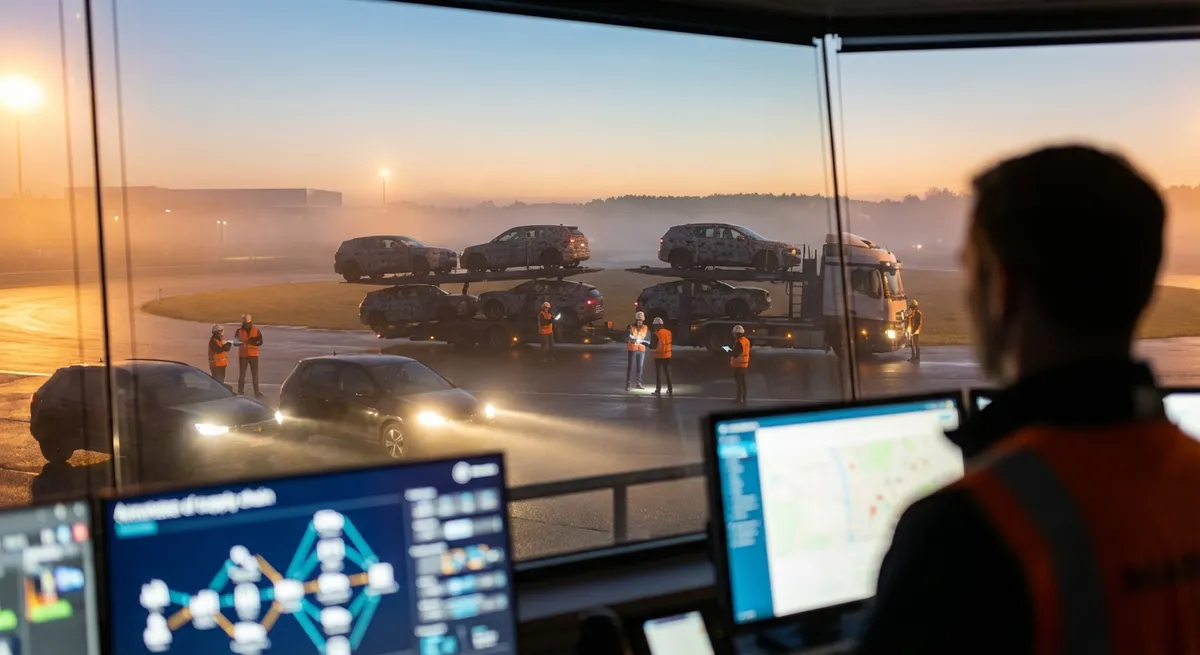
The global chip shortage exposed just how vulnerable modern SUVs are to semiconductor supply. Even as overall availability improves, automakers are redesigning electronics architectures and renegotiating supplier agreements to avoid repeating 2021–2022’s production chaos. This shift has direct implications for which SUVs are prioritized when capacity is constrained.
Manufacturers are moving away from highly fragmented “one control unit per feature” designs toward centralized domain controllers. For future SUVs, that means fewer but more powerful processors handling tasks like powertrain management, driver assistance, infotainment, and body controls. From an enthusiast’s perspective, this can translate to quicker software feature integration (such as enhanced off-road driving modes or advanced torque-vectoring) and more cohesive calibration across systems.
Supply-wise, many automakers are now signing longer-term contracts with chipmakers, sometimes even securing dedicated production lines for critical microcontrollers and automotive-grade SoCs. Higher-margin SUVs—especially those in premium and off-road niches—often get priority when constrained components are allocated. If another disruption hits, the most profitable, tech-rich SUVs are likely to be built first, leaving entry-level models or low-profit fleet variants delayed or minimally equipped.
This is also influencing trim strategy. Some brands are simplifying option structures into well-defined packages that use a consistent bill of materials, rather than a combinatorial explosion of stand-alone options. That makes it easier to forecast chip and sensor demand and keeps production lines running more smoothly. For shoppers, it means fewer “unicorn” specifications but generally better availability of core, well-equipped trims—and potentially reduced lead times on high-demand configurations.
4. Platform Sharing and Joint Ventures Are Reshaping What’s Under the Sheetmetal
Underneath the styling, the global SUV market is converging around a smaller number of sophisticated platforms shared across multiple brands, regions, and powertrain types. Platform consolidation and joint ventures are no longer just cost-saving measures; they’re a strategic tool to accelerate development of complex, electrified SUVs while spreading the enormous R&D investment.
Multi-energy platforms that can support internal combustion, hybrid, and full-electric variants allow automakers to launch new SUVs quickly within different regulatory and market environments while standardizing critical components like crash structures, suspension hardpoints, and electronic architectures. A single architecture might underpin a compact premium crossover in Europe, a mainstream family SUV in North America, and an off-road-biased variant in other markets—all sharing core chassis engineering and safety systems.
Technical collaboration is especially visible in off-road and performance SUVs. Co-developed all-wheel-drive systems, torque-vectoring rear differentials, and adaptive damping technologies are increasingly licensed or shared between partner companies. This can result in surprisingly similar driving dynamics and capabilities between vehicles that wear different badges, even if their cabins and exterior designs feel distinct.
From a buyer’s standpoint, platform lineage matters. Shared architectures can bring proven reliability, extensive aftermarket support, and predictable handling traits. At the same time, deeply shared components can limit differentiation: two brands might offer similar ride quality, interior packaging, and powertrain feel despite dramatically different marketing stories. Enthusiasts comparing new SUVs should dig beyond the brochure to understand which models are genuinely unique and which are close cousins under the skin.
5. Vertical Integration and In-House Tech Are Redrawing the Value Equation
After years of outsourcing key components, many automakers are moving back toward vertical integration for critical SUV technologies. Batteries, electric drive units, software stacks, and even certain safety sensors are increasingly being developed or produced in-house—or through tightly controlled joint ventures. This reverses a trend from the early 2010s and has major implications for pricing, performance differentiation, and long-term update support.
In electrified SUVs, in-house battery and motor teams can tune power delivery, thermal management, and energy recovery to match the brand’s driving character. A manufacturer that designs its own pack structure and cooling channels, for example, can optimize center-of-gravity height and underfloor stiffness, improving both handling and crash performance. Likewise, proprietary motor designs can be calibrated for stronger low-end torque for towing, or for high sustained power for autobahn speeds, without relying on generic supplier hardware.
Software is another key battleground. Rather than bolting third-party infotainment and driver-assistance modules onto a patchwork architecture, leading brands are building unified software platforms that govern everything from adaptive cruise behavior to off-road drive mode logic and active suspension. Once these platforms are in place, updates can refine calibration over time, add new features like improved trail mapping or trailer-assist algorithms, and fix edge-case bugs without hardware changes.
For shoppers, the move toward vertical integration creates distinct ecosystems. Buying a modern SUV increasingly means buying into a brand’s software update cadence, app integration philosophy, and approach to data privacy. It can also influence depreciation: vehicles on strong, well-supported software platforms with in-house powertrain expertise may age more gracefully as new features and optimizations arrive over the air, while heavily outsourced systems risk stagnation if suppliers shift focus.
Conclusion
The SUV market is in the middle of a structural transformation that goes far beyond styling refreshes and incremental horsepower bumps. Battery and chip contracts, emissions regulations, platform strategies, and vertical integration decisions are determining which models will thrive, which will quietly disappear, and how capable and updatable the next wave of SUVs will be.
For enthusiasts and serious buyers, following these industry-level moves offers real practical value. It helps you anticipate which SUVs are built on future-proof platforms, which are most likely to receive meaningful software and hardware updates, and which might face early retirement due to regulation or supply constraints. As 2026 approaches, the most informed SUV purchases won’t just be about test drives and spec sheets—they’ll be about understanding the industrial and regulatory currents shaping what ends up in the showroom.
Sources
- [U.S. Environmental Protection Agency – Multi-Pollutant Emissions Standards for Model Years 2027 and Later Light-Duty and Medium-Duty Vehicles](https://www.epa.gov/regulations-emissions-vehicles-and-engines/final-rule-multi-pollutant-emissions-standards-model-years) - Official overview of upcoming U.S. emissions and efficiency regulations impacting SUVs
- [European Commission – CO₂ Emission Performance Standards for Cars and Vans](https://climate.ec.europa.eu/eu-action/transport/emissions-cars-and-vans/co2-emission-performance-standards-cars-and-vans_en) - Details on EU fleet CO₂ targets that are driving electrification strategies for SUV lineups
- [International Energy Agency – Global EV Outlook 2024](https://www.iea.org/reports/global-ev-outlook-2024) - Data and analysis on EV supply chains, battery trends, and policy impacts relevant to future electric SUVs
- [McKinsey & Company – The Semiconductor Decade: A Trillion-Dollar Industry](https://www.mckinsey.com/industries/semiconductors/our-insights/the-semiconductor-decade-a-trillion-dollar-industry) - Industry report discussing semiconductor supply, automotive demand, and implications for vehicle production
- [Ford Motor Company – Press Release: Ford and SK Innovation Announce Battery Joint Venture](https://media.ford.com/content/fordmedia/fna/us/en/news/2021/05/20/ford-and-sk-innovation-to-form-battery-manufacturing-joint-venture.html) - Example of an automaker–supplier battery partnership shaping future SUV battery production and localization
Key Takeaway
The most important thing to remember from this article is that this information can change how you think about Industry News.