SUVs are no longer simply getting bigger screens and new grilles every model year. Behind the scenes, a rapid shift in battery sourcing, software platforms, safety tech, and trade policy is reshaping which SUVs get built, where they’re assembled, and how much they’ll cost by 2026. For enthusiasts and buyers planning their next move, understanding this industry-level shake-up is critical to reading the market—and timing a purchase—intelligently.
North American Production Is Being Rewired Around Battery Plants
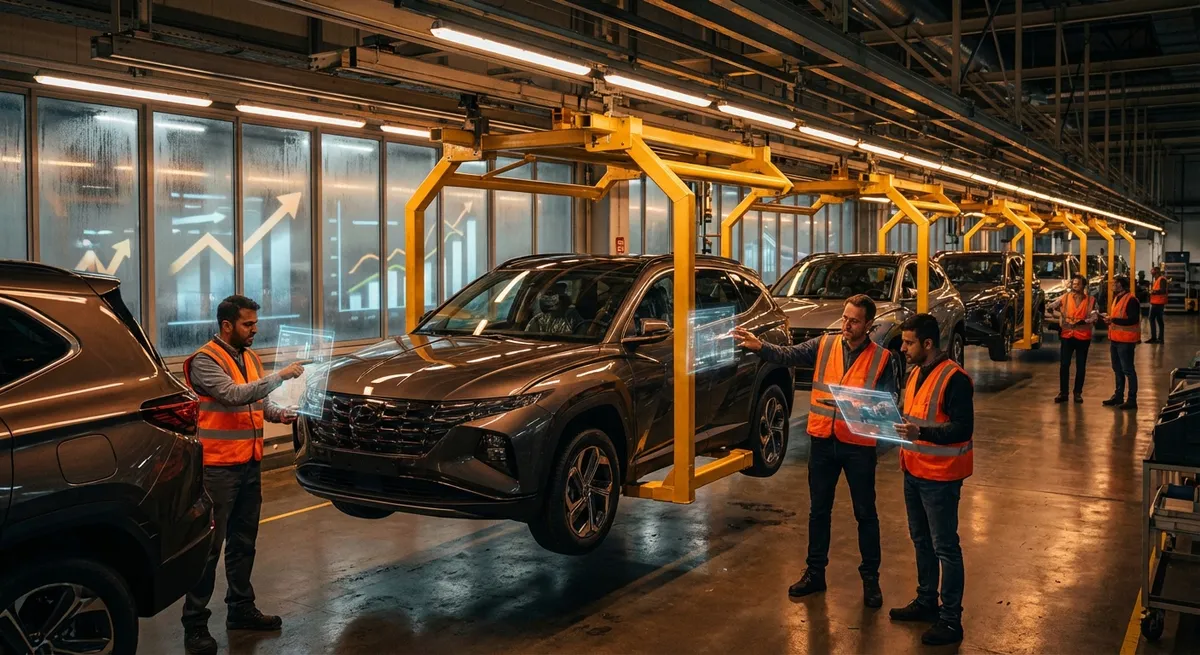
Over the past three years, nearly every major automaker selling SUVs in the U.S. has announced or broken ground on at least one battery or EV-focused assembly plant in North America. This is not marketing spin; it’s a structural realignment driven mainly by policy and logistics.
The U.S. Inflation Reduction Act (IRA) ties federal EV tax credits to both final assembly in North America and the sourcing of critical materials from approved countries. In practice, that has pushed brands like GM, Ford, Hyundai–Kia, Stellantis, Toyota, and Honda to localize battery and SUV production in the U.S., Canada, and Mexico, often through new joint ventures with cell suppliers. Expect a growing share of mainstream and premium SUVs—both hybrids and full EVs—to be built on “battery-optimized” lines near these plants.
For shoppers, this has two concrete implications. First, certain imported EV SUVs have already lost eligibility for federal credits as sourcing rules tighten, while some U.S.-built models have gained or retained them by restructuring supply chains. Second, production ramp-ups at new plants can mean early quality volatility but also shorter lead times once lines stabilize. A battery-electric or plug-in SUV that is “coming soon” today is more likely than in past decades to arrive on schedule, because battery and assembly planning are now tightly integrated.
Enthusiasts paying attention to where their SUV is built—and which battery partner is involved—will have a better read on long-term parts availability, software support, and resale value, especially as first-generation dedicated EV SUV platforms mature.
Software-Defined SUVs Are Turning OTA Updates Into a Core Feature, Not a Perk
The industry’s move to “software-defined vehicles” is no longer a buzzword—it’s a product roadmap. Volkswagen’s SSP, GM’s Ultifi, Stellantis’s STLA Brain, and Hyundai’s ccOS-like architectures are all built around centralized computing, high-bandwidth networking, and robust over-the-air (OTA) update pipelines.
For SUVs, this means three big shifts. First, key performance parameters—torque distribution in AWD systems, damping curves in adaptive suspensions, even accelerator mapping—can be recalibrated post-sale via software, sometimes for a fee. Expect more “Performance,” “Tow,” or “Off-Road” software packages that unlock or refine capabilities without hardware changes. Second, driver-assistance suites will become more modular and subscription-based: highway hands-free functionality, automated lane changes, and improved parking assistance can arrive as purchased upgrades on vehicles already in your driveway.
Third, infotainment and digital cluster interfaces are decoupling from model-year cycles. New UI layouts, integrated app ecosystems, and improved voice assistants are increasingly rolled out like smartphone OS updates, making hardware longevity more important than model-year freshness. For buyers, this raises new due-diligence questions: What’s the length of OTA support? Is the vehicle’s compute platform likely to be “current” for five to eight years? Does the automaker charge recurring fees for core features like remote start or connected navigation?
Enthusiasts who once focused exclusively on engines, transmissions, and differentials now need to evaluate SoC (system-on-chip) performance, internal network bandwidth (e.g., Ethernet vs CAN-only), and update policies. The SUV that feels slightly conservative today but sits on a robust, centralized electronics architecture may age better than a feature-rich but limited legacy system.
Trade Policies and Tariffs Are Redrawing the Map for Import SUVs
International trade tensions and evolving tariff structures are increasingly visible on SUV price stickers. Recent moves by the U.S. and EU to raise tariffs on Chinese-built EVs, coupled with China’s responses and ongoing discussions around broader automotive imports, are altering the economics of where SUVs are produced and how they’re priced.
Several Chinese brands targeting Europe and, eventually, North America have found their strategies complicated by these barriers, while established global players are hedging by shifting SUV production from China to other facilities in Asia, Mexico, or Eastern Europe. This is particularly relevant for compact and midsize SUVs, where cost sensitivity is high and margins are thin.
For buyers, one practical outcome is price volatility. A model that looks like a bargain in one model year can jump significantly in the next if tariffs hit mid-cycle, or if a manufacturer decides to relocate production and absorb transition costs. On the flip side, some brands may aggressively discount existing inventory of imported SUVs ahead of production shifts or regulatory deadlines, creating short-lived value windows.
Enthusiasts interested in niche imported SUVs—especially EVs and plug-in hybrids from emerging players—should watch not just product announcements but also trade news and homologation filings. A promising model announced for “global markets” can be delayed, repriced, or canceled for North America or Europe if policy winds shift. Conversely, some manufacturers are fast-tracking localized assembly for popular SUVs to sidestep tariff risk and secure long-term access to incentives.
Safety and Emissions Rules Are Quietly Changing Platform Priorities
While headline-grabbing crash-test videos and star ratings get public attention, the more significant industry story is how evolving safety and emissions regulations are influencing the underlying platforms, powertrains, and packaging of future SUVs.
On the safety front, progressively stricter NCAP and IIHS test protocols—especially around small-overlap crashes, pedestrian impact, and active safety performance—are encouraging automakers to invest in stiffer structures, more sophisticated sensor suites, and standardized advanced driver-assistance systems (ADAS) across trims. Expect more SUVs with front-end architectures tuned not only for occupant safety but also for pedestrian protection, which can influence hood height, grille design, and front overhangs.
Emissions and fuel-economy rules are also pressing manufacturers to refine powertrains in ways that are noticeable from the driver’s seat. Tighter CO₂ and fleet-average standards in Europe, the U.S., and increasingly in other markets are accelerating the adoption of mild hybrids, full hybrids, and plug-in systems as default offerings in popular SUV segments. The result: downsized turbo engines paired with 48V systems, electric boost, or larger battery packs, along with recalibrated transmissions optimized for efficiency over outright response.
For enthusiasts, the trade-offs are nuanced. Certain beloved naturally aspirated powertrains are disappearing, but torque-rich hybridized drivetrains are delivering real-world performance that often feels stronger in everyday driving. At the same time, stricter noise and emissions rules can reduce exhaust character and limit aftermarket tuning potential. If you value mechanical engagement, you may want to pay close attention to final years of particular engine/transmission combinations, while also considering that hybridized SUVs often offer superior towing stability, launch performance, and efficiency.
New Entrants and Alliances Are Reshaping the Competitive Set
The SUV market used to be a contest among a familiar group of global giants. Today, alliances and new players—especially tech-forward startups and Chinese-origin manufacturers—are challenging that status quo, even if some have not yet fully entered North America.
Joint ventures between traditional automakers and battery or tech firms are common: GM with LG Energy Solution, Ford with SK On, Stellantis with multiple partners, and others. These alliances influence everything from battery chemistry (NMC vs LFP) to thermal management strategies and fast-charging capabilities. Expect more SUVs differentiated not just by badge but by “battery pedigree” and software ecosystems shared across multiple brands.
At the same time, new entrants—many of them EV specialists—are prioritizing SUVs and crossovers as their initial or core offerings, reflecting global demand. Their vehicles often feature skateboard platforms, spacious cabins, and minimalist interiors, with performance tuned via software rather than traditional mechanical upgrades. Some are pursuing direct-to-consumer sales or subscription models, particularly in Europe and select U.S. states, which can alter pricing transparency and aftersales service experiences.
For enthusiasts, this diversification is both opportunity and risk. On the upside, competition drives innovation: more choice in battery chemistries, chassis philosophies (comfort-biased vs performance vs off-road), and design language. On the downside, brand stability and long-term support are genuine concerns. Before committing to a lesser-known SUV brand or a young EV startup, it’s wise to assess financial health, dealer/service coverage, and parts logistics. Even for established brands, partnerships can mean that a core technology—like the battery pack in a performance-oriented electric SUV—is actually sourced from a joint venture whose longevity and update roadmap matter just as much as the parent automaker’s.
Conclusion
The SUV landscape over the next three years will be defined less by sheetmetal facelifts and more by the deep, structural changes now underway in manufacturing, software, trade, safety, and partnerships. Buyers who understand these industry-level currents will be better equipped to judge which models are future-proofed, which are short-term bargains, and which may face regulatory or supply headwinds.
If you’re planning an SUV purchase in the 2025–2027 window, it’s worth expanding your research beyond horsepower figures and feature lists. Pay attention to where the vehicle is built, what software platform it runs, how it qualifies for evolving incentives, and which alliances underpin its batteries and electronics. The smartest SUV choices in this new era will come from treating your next vehicle not just as a product, but as part of a fast-moving industrial and technological ecosystem.
Sources
- [U.S. Department of Energy – Inflation Reduction Act EV Tax Credit Guidance](https://www.fueleconomy.gov/feg/taxevb.shtml) - Explains current federal EV tax credit rules, including assembly and battery sourcing requirements.
- [International Energy Agency – Global EV Outlook](https://www.iea.org/reports/global-ev-outlook-2024) - Provides data and analysis on EV adoption, production localization, and battery supply chains.
- [National Highway Traffic Safety Administration (NHTSA)](https://www.nhtsa.gov/laws-regulations) - Details evolving U.S. safety and fuel economy regulations that are reshaping SUV platforms and powertrains.
- [European Commission – Trade Policy: Automotive Sector](https://policy.trade.ec.europa.eu/sectors-and-materials/industrial-sectors/automotive-sector_en) - Offers insight into tariffs, trade measures, and regulatory changes affecting imported vehicles in Europe.
- [McKinsey & Company – The Software-Defined Vehicle: Automotive’s Next Frontier](https://www.mckinsey.com/industries/automotive-and-assembly/our-insights/the-software-defined-vehicle) - Analyzes the shift toward software-centric architectures and OTA capabilities in modern vehicles, including SUVs.
Key Takeaway
The most important thing to remember from this article is that this information can change how you think about Industry News.