The SUV world is being reshaped not just by new models and flashy tech, but by deeper shifts in how vehicles are engineered, sourced, and built. Behind every new crossover or three-row family hauler is a global supply chain under pressure from regulation, battery demand, software integration, and changing consumer expectations. For enthusiasts and serious buyers, understanding these industry-level developments is increasingly important: they directly influence price, performance, reliability, and even how long your next SUV will be supported.
This overview looks at five critical industry news trends affecting SUVs right now—each with concrete implications for your next purchase or lease.
1. Battery Factories and Mining Deals Are Quietly Rewriting SUV Availability
Automakers have shifted from simply “buying batteries” to vertically integrating the entire EV supply chain, from raw materials to final packs. This is especially visible in the SUV segment, where heavy curb weights and larger bodies demand high-capacity packs and robust thermal management. As demand for electric and plug-in hybrid SUVs accelerates, brands are locking in long-term deals for lithium, nickel, and cobalt, while also investing in regional battery plants.
For buyers, this upstream scramble translates into two things: more regionalized SUV production and more stable long-term pricing for popular electrified models—once current bottlenecks ease. In North America and Europe, new gigafactories are being built specifically to supply crossovers and mid-size SUVs, reducing dependence on imported cells and helping manufacturers qualify vehicles for local incentives. On the technical front, many of these plants are focusing on high-nickel chemistries (for range and performance) and lithium iron phosphate (LFP) chemistries for mainstream SUVs, where cycle life and cost-per-kWh matter as much as outright energy density.
Enthusiasts should watch announcements about automaker–mining partnerships and new cell plants: they often precede major updates to an SUV’s battery pack, charging curve, and warranty. SUVs built on platforms tied to in-house or regionally produced batteries are likely to see better long-term parts availability and more refined energy management, including improved pre-conditioning for fast charging and more accurate state-of-charge estimation as packs age.
2. Global Emissions Rules Are Pushing SUVs Toward Multi-Powertrain Lineups
Tightening CO₂ and pollutant standards in the U.S., EU, and Asia are directly reshaping SUV product plans. Instead of designing a single powertrain for global sale, automakers are increasingly engineering flexible platforms that can host internal combustion engines, mild hybrids, full hybrids, plug-in hybrids, and battery-electric setups on the same underlying architecture. This is not just an engineering curiosity—it is a response to regulatory fragmentation.
In Europe, fleet CO₂ targets and bans on new internal-combustion-only models in some markets are accelerating the rollout of plug-in hybrid and fully electric SUVs, particularly in compact and mid-size classes. In the U.S., updated EPA regulations on light-duty vehicles are pushing brands to increase their share of hybrid and EV SUVs to avoid penalties, while state-level rules (like California’s Advanced Clean Cars II) are effectively steering long-term product planning. In China and other key markets, “new energy vehicle” quotas and credits are driving a similarly rapid electrification of SUV lineups.
For buyers, this means a single SUV nameplate may offer entirely different powertrain mixes depending on where it’s sold—and some high-compression gasoline engines or diesel options may quietly disappear. On the technical side, expect smaller displacement turbo engines with higher specific output, expanded use of 48‑volt systems, and widespread adoption of integrated starter-generators and electric compressors to smooth torque delivery and improve low-speed drivability in heavier SUVs. Enthusiasts should scrutinize how manufacturers are balancing weight, towing capability, and battery size in plug-in hybrid SUVs: regulatory pressure can sometimes lead to “compliance” models with limited payload or compromised fuel tanks, while more thoughtfully engineered entries maintain utility without sacrificing range or performance.
3. Software-Defined SUVs and Over-the-Air Updates Are Changing How Hardware Is Chosen
SUVs are rapidly becoming “software-defined vehicles,” with centralized computing architectures and high-speed data networks replacing dozens of discrete control modules. This has major implications for chassis electronics, driver-assistance suites, and even how all-wheel drive systems are tuned. Today’s industry news is full of automakers announcing in-house operating systems, partnerships with major tech firms, and platform-wide over-the-air (OTA) update capabilities.
From a technical standpoint, this shift requires more powerful central processors, zonal controllers, and robust cybersecurity frameworks. It also allows manufacturers to refine stability control logic, adaptive damping, torque vectoring, and electric motor control long after the SUV leaves the factory. For the driver, that could mean a mid-cycle update that sharpens throttle calibration in sport modes, changes brake recuperation profiles in hybrid and EV SUVs, or enhances snow and off-road drive modes to better allocate torque across axles.
The downside is that software complexity creates new dependencies: long-term support windows, subscription models for advanced driver-assistance features, and potential conflicts when aftermarket modifications (such as larger wheels, suspension lifts, or tuning boxes) interact with tightly integrated control systems. Buyers who value longevity and modification potential should pay attention to news around an automaker’s software strategy, support timelines, and their record on OTA updates. A well-supported, software-centric SUV platform can age gracefully with feature additions and bug fixes, while a neglected one may feel outdated long before its mechanical components wear out.
4. Platform Sharing Is Driving a New Wave of Niche and Performance SUVs
Industry announcements increasingly highlight “scalable” or “modular” vehicle architectures that underpin everything from compact crossovers to full-size three-row SUVs. This platform consolidation is a financial necessity for automakers facing huge investments in electrification and software, but it has a surprisingly positive side effect for enthusiasts: it becomes economically viable to create niche variants—performance, off-road, or luxury trims—because the core engineering is shared.
When a brand invests in a robust SUV architecture with high torsional rigidity, multi-link rear suspension, and flexible front and rear subframes, it can spread the cost over multiple body styles and drivetrains. That’s why we’re seeing more factory off-road packages with uprated dampers, longer-travel suspensions, all-terrain tires, and dedicated traction modes, as well as performance SUVs with sport-tuned suspensions, upgraded brakes, and higher-output turbocharged engines or dual-motor EV setups. The same platform may support a mild-hybrid commuter SUV, a high-performance variant with active anti-roll bars, and a plug-in hybrid tuned for towing and long-distance efficiency.
For the buyer, platform sharing can be a double-edged sword. On the positive side, parts commonality may improve availability and reduce costs for wear items like bushings, brake components, and driveline parts. Crash-testing data and safety improvements often apply across multiple related models. On the other hand, if a platform has inherent compromises—such as limited rear axle load capacity or packaging constraints for larger battery packs—those limitations may affect every SUV derived from it. Enthusiasts should follow technical briefings and independent tests focusing on chassis rigidity, suspension geometry, and weight distribution to understand what each new platform does well before choosing between its various SUV derivatives.
5. Manufacturing Localization Is Reshaping Pricing, Features, and Incentives
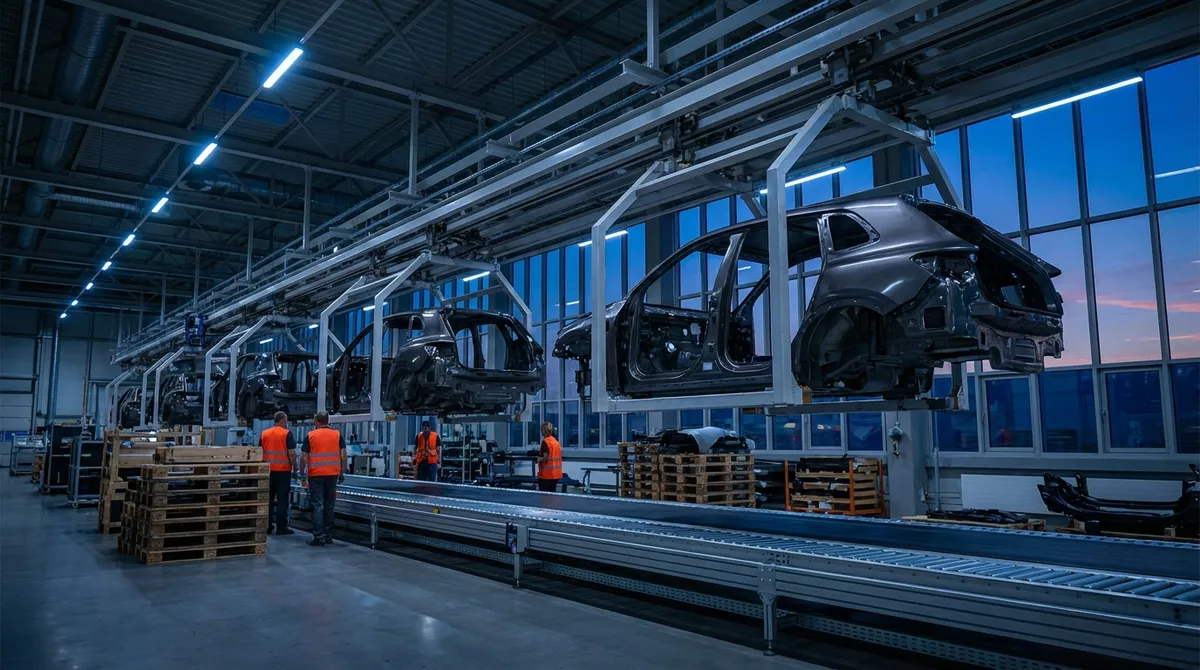
To navigate tariffs, trade tensions, and incentive schemes, automakers are moving production of key SUV models closer to major markets. That means new or expanded SUV plants in North America, Europe, and Southeast Asia, often with integrated battery pack assembly and localized supplier bases. These shifts are not mere accounting exercises—they directly influence equipment levels, pricing stability, and how quickly updated components can be incorporated.
Localized manufacturing allows brands to tailor SUVs more precisely to regional demands: higher towing capacities and larger fuel tanks where long-distance travel and trailering are common; more efficient climate-control systems and advanced heat pumps where cold-weather performance matters for EVs; or adaptive lighting and specific safety features to meet local regulations. It also helps some models qualify for local tax credits or subsidies, particularly in markets where domestic content thresholds apply to electrified vehicles.
For owners, the implications include potentially shorter lead times, more consistent availability of replacement parts, and sometimes unique regional powertrain offerings. However, localization can also lead to divergent build quality perceptions if plants and supplier networks vary significantly between regions. Following industry news about plant investments, quality audits, and recalls can provide useful clues about which SUV models benefit from mature production processes and which are early in their localization cycle. Buyers who care about long-term durability should note where a given SUV is built, how long that plant has been producing the platform, and whether the local supply base is already proven on previous models.
Conclusion
The SUV you see in the showroom is the visible product of deep, rapidly evolving industry dynamics. Battery sourcing strategies, regulatory pressures, software architectures, shared platforms, and localized manufacturing are no longer abstract business stories—they shape everything from torque curves and ride quality to pricing, incentives, and long-term support. Enthusiasts and informed buyers who track these developments can better anticipate which SUVs are likely to deliver durable performance, secure parts supply, and meaningful software support over time.
As the industry moves through this transition, the most future-resilient SUVs will be those built on thoughtfully engineered, software-capable platforms with stable battery supply, clear regulatory alignment, and mature local manufacturing. Keeping an eye on these five areas of industry news will help you separate short-lived trends from structural shifts—and choose an SUV that will remain competitive and enjoyable well beyond its initial model year.
Sources
- U.S. Environmental Protection Agency – Regulations for Greenhouse Gas Emissions from Passenger Cars and Trucks - Overview of U.S. regulatory pressures shaping powertrain strategies for SUVs
- European Commission – CO₂ Emission Performance Standards for Cars and Vans - Details on EU CO₂ targets influencing electrification of SUV lineups
- International Energy Agency – Global EV Outlook - Analysis of global EV and battery trends, including SUVs and supply chain developments
- U.S. Department of Energy – Alternative Fuels Data Center - Technical background on EV powertrains, batteries, and charging relevant to electric SUVs
- McKinsey & Company – The Software-Defined Vehicle: Unlocking Automotive Software Value - Industry analysis of software-defined vehicle architectures and their impact on future SUVs
Key Takeaway
The most important thing to remember from this article is that following these steps can lead to great results.