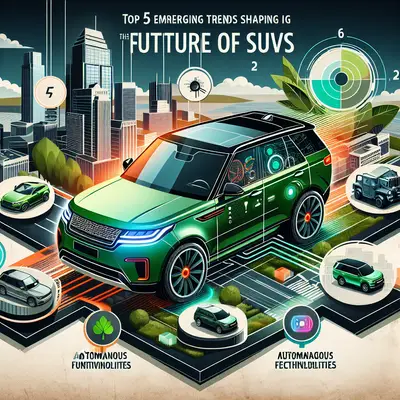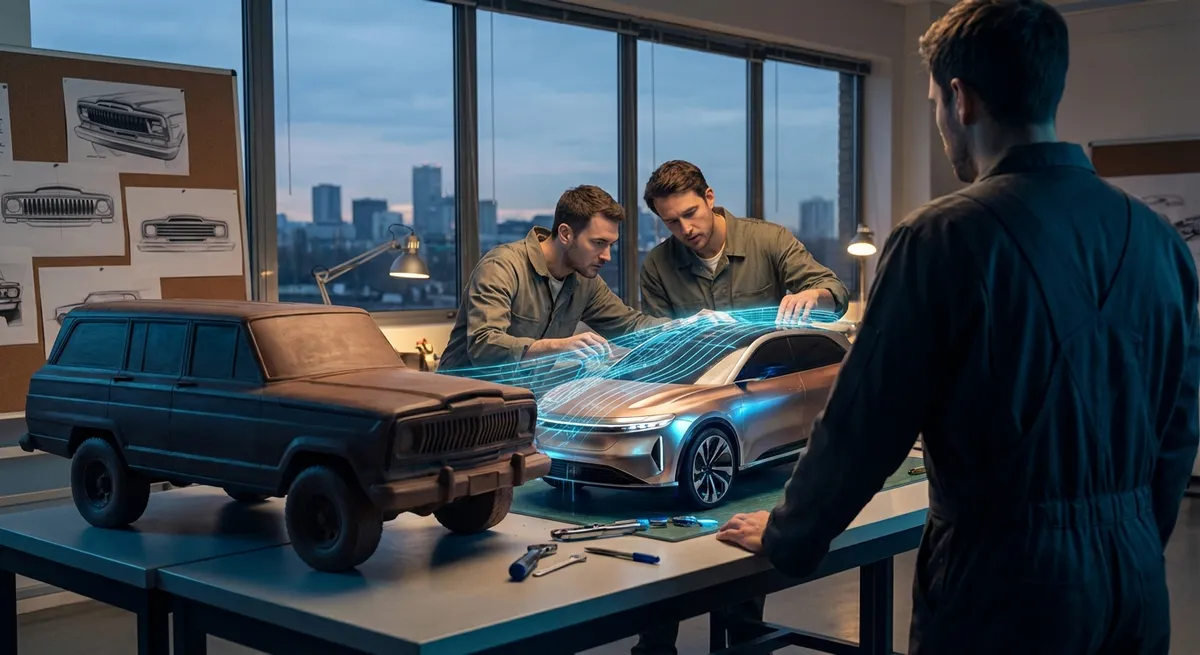
For decades, legendary SUV badges have been shorthand for toughness, family practicality, or off‑road credibility. Now those same nameplates are being quietly reengineered under the hood and behind the dashboard to meet emissions rules, software expectations, and buyer demands that didn’t exist when many of them launched. From electrified drivetrains to over‑the‑air (OTA) updates, the next generation of familiar SUVs will feel very different—often without looking wildly futuristic on the outside.
This shift matters for enthusiasts who value heritage and mechanical clarity, and for buyers trying to decide whether a “trusted” badge still means what it did ten or twenty years ago. Below are five key industry trends that are reshaping iconic SUV lines—and what they mean when you’re weighing your next purchase.
1. Iconic SUVs Are Migrating to Shared “Multi‑Energy” Platforms
Automakers are rapidly moving classic SUV lines from bespoke frames or legacy platforms onto new “multi‑energy” architectures designed to support internal combustion, hybrid, plug‑in hybrid (PHEV), and full battery‑electric variants on the same basic structure. This strategy radically changes how a familiar SUV behaves on the road.
A multi‑energy platform typically features a skateboard‑style floor with provision for battery modules, standardized high‑voltage wiring channels, and flexible mounting points for different rear axle types (from conventional differentials to e‑axles with integrated motors and inverters). For body‑on‑frame nameplates, we’re seeing stiffer frames with wider cross‑members and redesigned mounting points to manage the extra mass and torque peaks of electrified powertrains.
From a dynamics standpoint, this can be good news. These newer platforms are usually torsionally stiffer, which improves ride quality, steering precision, and NVH (noise, vibration, and harshness). It also enables more advanced suspension packaging—multi‑link rears, electronic dampers, and in some cases rear‑wheel steering—under SUVs that used to have relatively simple underpinnings. The trade‑off is complexity and weight: the same “name” SUV that once weighed 4,200 pounds can now push well past 5,000 pounds when configured as a hybrid or PHEV.
For buyers, the key implication is that familiar nameplates may have far less in common with their predecessors than the badge suggests. A modern iteration may share little more than styling cues and dimensions with the model you remember. If you care about towing, off‑road robustness, or long‑term serviceability, it’s important to pay attention to which platform generation you’re actually buying—because the underlying engineering philosophy may have changed completely.
2. Towing and Off‑Road Ratings Are Being Redesigned Around Electrified Power
As SUVs transition to hybrids and EVs, manufacturers are rethinking how they rate and engineer towing and off‑road capacity for long‑standing models. Historically, body‑on‑frame construction with big displacement engines and hydraulic transmissions made it relatively straightforward to publish robust tow ratings. Now, engineers are balancing instantaneous electric torque against thermal loads on battery packs, inverters, and e‑motors.
For plug‑in and battery‑electric SUVs, the primary constraint in towing isn’t usually torque—it’s heat management and range. Under sustained high load (such as pulling a trailer up a long grade), cooling loops must keep the battery, power electronics, and motors within tight temperature windows. That’s driving the adoption of more advanced liquid‑cooling strategies, larger radiators, and in some cases dedicated tow/haul drive modes that adjust power output, shift logic, and even pre‑emptively cool components when the system detects a connected trailer.
On the off‑road side, electrification allows for extraordinarily precise torque vectoring, simulated locking differentials, and low‑speed crawl modes that would have been complex or impossible with purely mechanical systems. Some legacy off‑road SUVs now use dual‑motor setups to independently drive each axle and electronically emulate different differential behaviors. However, weight and packaging are real compromises: battery packs often dictate floor height and can limit maximum suspension articulation or underbody clearance unless the vehicle is engineered for this from the start.
If towing or trail use is critical for you, don’t assume the latest electrified version of a classic SUV retains the exact same capabilities as the previous gasoline model. Instead, study the manufacturer’s detailed tow charts, cooling system notes, and off‑road specifications (approach/departure angles, breakover, maximum wading depth, and rated fording conditions). Pay attention to whether certain ratings apply only with specific tow packages, rear‑axle ratios, or battery configurations.
3. Software‑Defined Architectures Are Rewriting Reliability Assumptions
Past generations of iconic SUVs were judged on mechanical durability—engines, transmissions, transfer cases, and frames. The newest versions layer a software‑defined electrical architecture on top of that, often built around centralized computing rather than dozens of independent control modules. This profoundly changes what “reliability” means for buyers.
Instead of multiple discrete ECUs each running highly specialized code, many new SUVs now use domain controllers or even a central “vehicle computer” that coordinates powertrain, ADAS (advanced driver assistance systems), infotainment, and body functions. This unlocks OTA updates, feature unlocks, and rapid bug patches, but it also concentrates risk: a software regression or corrupted update can affect multiple systems at once.
From an enthusiast’s perspective, this architecture makes the SUV more like a rolling platform for continuous improvement. Automakers can tweak throttle response, shift maps, steering effort, and active suspension logic based on real‑world data. Safety and driver‑assist systems can be recalibrated and expanded post‑sale. However, it also reduces user serviceability and increases dependence on OEM software support. Where a faulty sensor or simple relay used to be a weekend driveway fix, diagnosing a networked fault on a modern CAN‑ and Ethernet‑based architecture often requires factory‑level diagnostic tools and backend data.
When cross‑shopping updated versions of established SUVs, pay attention to how the automaker describes its software and electronics strategy. Look for clear statements about OTA support duration, security patch commitments, and whether vital driving functions are behind subscription paywalls. For long‑term ownership, the stability of the brand’s software ecosystem may matter as much as its historical record of mechanical robustness.
4. Safety Standards and Crash Structures Are Quietly Reshaping Cabin Layouts
Another force reshaping beloved SUV model lines is the relentless tightening of global safety and crash standards. Regulatory bodies and independent agencies like Euro NCAP and IIHS continuously add more stringent tests—small‑overlap impacts, far‑side occupant protection, pedestrian safety, and increasingly sophisticated ADAS performance scores. To keep iconic SUVs competitive on safety ratings, engineers are redesigning crash structures, restraint systems, and glazing.
Modern SUVs now integrate multi‑load‑path front structures designed to manage both traditional moderate overlap and more challenging small‑overlap (25%) collisions. That often means additional front subframe bracing, tailor‑welded blanks with variable steel thickness, and more strategic usage of ultra‑high‑strength steel in the A‑pillars, B‑pillars, and rocker panels. For larger three‑row models, side‑impact performance and far‑side head protection have led to more complex curtain airbag geometries that cover all rows and stay inflated longer in rollover scenarios.
These hidden structural changes have visible knock‑on effects: thicker pillars to meet strength requirements, slightly higher beltlines to better accommodate side airbags, and redesigned seat frames to integrate active head restraints and advanced load‑limiting seatbelt systems. For some nameplates that built their reputations on excellent outward visibility and “airy” cabins, this can feel like a step backward, even though occupant protection has improved substantially.
Shoppers comparing old and new generations of the same SUV should balance subjective impressions (view out, perceived roominess) with objective safety data. Review crash‑test ratings and look beyond overall scores to sub‑categories like small‑overlap crash performance and ADAS evaluations. Recognize that a slightly bulkier A‑pillar or heavier door can be a direct result of structural improvements that dramatically increase survivability in severe, real‑world crashes.
5. Interior Materials and Packaging Are Being Driven by Sustainability Metrics
Sustainability is no longer just a marketing tagline; it’s affecting the material science and packaging choices inside long‑running SUV families. Corporate emissions targets now encompass not just tailpipe CO₂ but also lifecycle impacts—materials, manufacturing energy, and recyclability. That’s pushing engineers to rethink everything from seat foam to dashboard substrates, even on rugged, heritage‑branded models.
Many updated SUVs now use higher percentages of recycled plastics, bio‑based polymers, and alternative fibers (such as recycled PET, natural fibers like kenaf, or plant‑derived polyurethane foams). Cabin insulation may be sourced from recycled textiles, while carpets could use regenerated nylon or PET bottles. Even traditional leather seats are increasingly being replaced or supplemented by high‑grade synthetic alternatives that are easier to clean, more consistent in finish, and carry a lower environmental footprint.
Structurally, battery packaging and crash requirements are altering floor heights and seat mounting positions. To maintain headroom and legroom within roughly the same exterior dimensions—and satisfy tougher pedestrian impact standards at the front—designers are re‑profiling seat frames, using thinner but stronger seat backs, and integrating more storage into what used to be dead space between floor and chassis. Some SUVs now use “slim seat” designs with multi‑layer foam structures to offset the packaging penalty of an underfloor battery.
For buyers, these shifts mean that material feel and long‑term wear may differ from earlier generations, even when the trim level name is the same. When test‑sitting a new version of a familiar SUV, pay attention not just to first‑impression softness but also to how easily surfaces might scratch, stain, or glaze over time. If sustainability is a priority, dig into the brand’s published data on recycled content, lifecycle emissions, and end‑of‑life recyclability—many now detail this at model level rather than only for their pure EVs.
Conclusion
Classic SUV badges are entering a new era where heritage styling and brand equity mask deep engineering and strategic changes. Multi‑energy platforms, rethought towing and off‑road engineering, software‑defined architectures, tighter safety structures, and sustainability‑driven interiors are transforming what it means to own a “familiar” SUV. For enthusiasts and serious buyers, recognizing these shifts is crucial.
Rather than assuming that a trusted name automatically carries forward the same strengths and compromises, it’s worth interrogating each new generation on its own technical merits. Look under the marketing language at platform design, software strategy, crash engineering, and material choices. The next great SUV for your driveway may still wear a badge you know well—but the reasons to buy it, and the way it will age over a decade of use, are being rewritten in real time.
Sources
- Euro NCAP – Latest Safety Ratings – Provides detailed crash and safety performance data for many current SUV models sold in Europe
- IIHS – Vehicle Ratings – U.S. crash‑test, crash‑avoidance, and headlight ratings, useful for comparing generations of the same SUV
- U.S. Department of Energy – Alternative Fuels Data Center – Technical overview of electric and electrified vehicle architectures and their implications
- U.S. Environmental Protection Agency – Greenhouse Gas Emissions from a Typical Passenger Vehicle – Explains lifecycle and tailpipe emissions considerations relevant to modern SUV design
- BMW Group – Sustainability in the Supply Chain and Vehicle Lifecycle – Representative example of how major automakers are integrating recycled materials, lifecycle analysis, and sustainability targets into vehicle platforms and interiors
Key Takeaway
The most important thing to remember from this article is that this information can change how you think about Industry News.