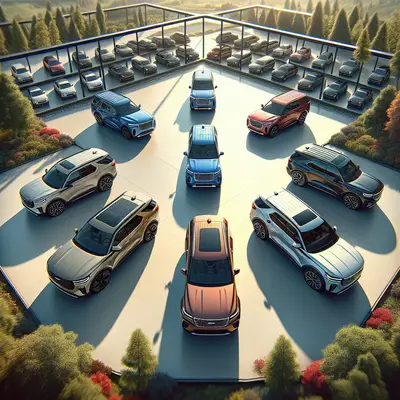
The old line between “luxury” and “mainstream” SUVs used to be obvious: leather, badges, and bigger payments on one side; practicality and lower prices on the other. Today, that divide is a lot blurrier. Features once reserved for top-tier German crossovers now show up in volume-brand models, and leasing a mid-trim luxury SUV can cost roughly the same as financing a fully loaded mainstream one. For shoppers who care about both driving feel and long-term value, understanding what you actually get at each end of the spectrum has never been more important.
This comparison digs into how luxury and mainstream SUVs really differ in 2024–2025, moving past brand perception to focus on engineering, tech, ownership costs, and real-world usability. Whether you’re cross‑shopping a BMW X3 against a Honda CR‑V, or a Lexus RX against a Hyundai Santa Fe, these five comparison points will help you decide where your money works hardest.
1. Platform and Powertrain: Shared DNA vs. Bespoke Engineering
One of the clearest technical differences between luxury and mainstream SUVs is how much is unique under the skin.
Mainstream brands increasingly rely on highly flexible modular platforms (like Toyota’s TNGA or Stellantis’s STLA) across sedans, crossovers, and even minivans. This shared architecture keeps costs down but often means compromises in suspension tuning, packaging, and powertrain variety. Engines are usually tuned for fuel efficiency and low emissions first, with smaller-displacement turbo fours now dominating the segment.
Luxury brands, by contrast, frequently develop more specialized SUV architectures or heavily modify shared platforms with stiffer subframes, additional bracing, and model‑specific suspension geometry. Even when the base platform is shared across a family (for instance, VW Group’s MQB and MLB architectures), luxury SUVs typically get more advanced dampers, additional aluminum components to cut unsprung weight, and stronger brakes sized for higher sustained speeds.
Powertrain strategy also diverges. Mass‑market SUVs tend to offer one or two engines across several trims, often paired with a single transmission choice (conventional automatic or CVT). Luxury SUVs, meanwhile, may offer multiple turbocharged engines, plug‑in hybrid variants with more powerful electric motors, and performance-tuned all‑wheel drive systems that actively vector torque between rear wheels rather than simply shuffling power front-to-back when slip is detected.
For buyers, this means a mainstream SUV usually delivers predictable, efficient performance suited for commuting and family duty, while luxury models are more likely to provide stronger midrange acceleration, higher towing stability, and more nuanced ride/handling balance—especially noticeable on rough roads or during long highway stints.
2. Ride, Handling, and Noise: Where the Premium Feel Comes From
Ride quality and NVH (noise, vibration, harshness) are places where technical differences become very tangible, even on a short test drive.
Mainstream SUVs have improved dramatically in insulation and chassis tuning, but cost constraints limit how far engineers can go. Basic strut or multi-link suspensions with fixed-rate dampers are common. You might see sound-deadening mats in the firewall and floor, but extensive use of dual-pane glass, acoustic laminated windshields, and active engine mounts is rarer outside top trims.
Luxury SUVs generally layer on multiple noise control strategies: thicker acoustic glass, additional body cavity insulation, underbody aerodynamic panels, and sometimes active noise cancellation systems that counter low-frequency engine or road noise through the audio speakers. Many models employ adaptive dampers or air suspensions that can soften for comfort or firm up to reduce body roll. This isn’t just about “soft vs. stiff”—adaptive systems can decouple small, high-frequency bumps from larger body motions, giving you both composure and comfort that mainstream setups struggle to match.
Steering feel is another differentiator. Electric power steering in mass‑market crossovers is tuned mostly for light effort and maneuverability. In luxury SUVs, engineers often invest more time in calibration, adding variable ratios, firmer on‑center feel at highway speeds, and even rear‑wheel steering in some models to improve agility. These changes don’t show up in spec sheets as easily as horsepower does, but they significantly affect long‑term satisfaction for drivers who enjoy precise control.
The result is that luxury SUVs often feel calmer and less fatiguing at 75 mph on coarse pavement, track straighter in crosswinds, and communicate grip levels more clearly through the steering. Mainstream SUVs may now be “quiet enough” and “comfortable enough” for many buyers, but enthusiasts and frequent highway travelers will detect a consistent difference in refinement that can justify the premium.
3. Interior Quality, Tech, and Ergonomics: Beyond the Screen Size
The most visible comparison point is inside the cabin—but the story is more complex than “luxury looks nicer.”
Mainstream SUVs increasingly offer large center screens, digital instrument clusters, and wireless smartphone integration. Hard plastics are now often limited to low‑touch areas, and top trims can include leather seating and configurable ambient lighting. On a dealer lot walk‑through, the gap to a luxury interior can seem surprisingly small.
Where luxury SUVs generally pull ahead is in material consistency, switchgear feel, and long-term durability. Soft‑touch surfaces may extend to lower door panels and seat bases. Real metal or open‑pore wood trim replaces plastic printed to look like metal or wood. Buttons and knobs tend to have tighter tolerances and more satisfying detents. Over years of use, these details reduce squeaks, rattles, and visible wear.
Ergonomics and seating also diverge. Luxury manufacturers usually invest more in seat structure—multi‑way power adjustments with extendable thigh supports, adjustable bolsters, and multi‑zone lumbar tuning. Many now offer heating and ventilation not just in front, but also in second-row seats, and some add massage functions. The goal is not only comfort but also maintaining correct posture on long journeys, something basic seat frames and foam densities in mainstream models can struggle to provide over time.
On the tech side, the difference is less about availability and more about integration and execution. A top-trim mainstream SUV might match or even exceed a luxury model in raw features—360-degree cameras, adaptive cruise with lane centering, and head‑up displays. However, luxury brands often offer higher refresh-rate screens, more sophisticated voice assistants, richer camera resolution, and smoother animations. They may also provide more robust over‑the‑air update ecosystems that refine driver assistance behavior and infotainment features over the vehicle’s life.
Buyers should pay close attention not just to what’s listed on the spec sheet, but how intuitive the controls feel, how easy it is to manage driver assistance settings, and how well the vehicle’s native interface cooperates with Apple CarPlay or Android Auto. A mainstream SUV can absolutely feel “luxury‑like” at first glance; long‑term satisfaction tends to hinge on touchpoints, seat comfort, and software polish that show their true colors over thousands of miles.
4. Ownership Costs, Resale, and Warranty Coverage
The comparison shifts dramatically once you move from the purchase price to the total cost of living with the SUV.
Mainstream brands typically offer stronger basic and powertrain warranties, especially from Korean manufacturers. Five-year/60,000‑mile basic coverage and 10‑year/100,000‑mile powertrain warranties are not uncommon in this space, giving cost-conscious buyers long-term protection against major failures. Luxury brands in the U.S. more often provide 4‑year/50,000‑mile new vehicle warranties and sometimes shorter powertrain coverage, although some include complimentary scheduled maintenance for a few years, which partially offsets that difference.
Routine service and repair costs are generally higher on luxury SUVs. Parts like adaptive dampers, large performance brakes, and low-profile, high-speed-rated tires can be significantly more expensive to replace than components on a mainstream crossover. Insurance premiums also tend to be higher due to the vehicle’s higher initial value and more expensive body and electronic components.
However, resale value complicates the calculation. Certain luxury SUVs—particularly from brands with strong reliability reputations—can retain value very well, reducing depreciation costs. Some mainstream crossovers also excel in this area, especially those from Toyota, Honda, and Subaru, but heavily discounted models or those reliant on fleet sales can see steeper value drops in the first three to five years.
Fuel costs will depend heavily on engine choice and driving style. Luxury SUVs often require premium gasoline to meet performance and emissions targets, while mainstream models more frequently run on regular. Plug‑in hybrid or full-electric luxury SUVs can offset this with lower running costs, but upfront pricing is typically higher. For high-mileage drivers, the fuel or energy cost delta between a modest mainstream SUV and a powerful luxury model can be substantial over a 5–7 year ownership cycle.
For buyers weighing a loaded mainstream SUV against an entry‑level luxury one at a similar monthly payment, it’s wise to consider warranty length, local service/part pricing, insurance quotes, and expected resale. A mainstream SUV may win on cost certainty and warranty coverage; a luxury SUV may cost more to keep but return some of that investment when it’s time to sell or trade.
5. Brand Perception, Use Case, and When Luxury Makes (or Doesn’t Make) Sense
The last comparison point is psychological but still practical: what you expect from the SUV and how brand image fits into your life.
Luxury badges carry social cachet, but they also set expectations for refinement, dealership experience, and performance. If you value a quieter cabin, more engaging driving dynamics, and a more curated service environment, the intangible “feel” of a luxury SUV can be worth the premium even if the features list looks similar to a mainstream rival. For some buyers, that sense of occasion every time they drive is central to the purchase decision.
On the other hand, mainstream SUVs have their own strengths that go beyond price. They often offer more practical interior packaging—wider door openings, higher rooflines, and simpler seating layouts—precisely because they aren’t bound by sporty proportions or styling cues. Their controls may be more straightforward, with physical buttons for climate and audio that can be easier for multi‑driver households to live with. Repair options may also be broader, with more independent shops familiar with common components.
Use case is crucial. If your SUV will spend 90% of its life on school runs, short commutes, and grocery trips at city speeds, the incremental benefits of a complex adaptive suspension or a higher‑revving engine may not justify the extra cost. Conversely, if you regularly take long interstate drives, tow near the upper limit of towing capacity, or care deeply about steering precision and cabin calm at higher speeds, the engineering depth in a luxury SUV may pay real dividends in fatigue reduction and safety.
For enthusiasts, the calculus is nuanced. Some mainstream SUVs—particularly performance‑oriented trims—offer engaging handling without a luxury badge. Meanwhile, the quieter, more composed nature of many luxury SUVs can make them ideal daily drivers even for owners who also have a dedicated sports car. The right answer is less about status and more about matching the vehicle’s strengths to your driving patterns and tolerance for higher running costs.
In short, the luxury vs. mainstream SUV comparison in 2024–2025 is no longer binary. Many mainstream models deliver “near‑luxury” experiences at the top of their trim ladders, while some entry luxury SUVs compete aggressively on value. The key is to move past the badge and carefully evaluate chassis tuning, cabin execution, warranty coverage, and how the SUV will actually be used day‑to‑day.
Conclusion
The modern SUV market doesn’t divide cleanly into “luxury” and “mainstream” anymore; it’s a continuum where engineering, materials, and ownership realities intersect in complex ways. Luxury SUVs still stand out in ride sophistication, powertrain breadth, interior execution, and perceived prestige—but mainstream crossovers have closed the gap in features and everyday refinement to a surprising degree.
When you cross‑shop the two, focus on how the platform and powertrain are engineered, how the vehicle feels at highway speeds, the quality and ergonomics of the cabin, and the full picture of ownership costs over several years. Align those factors with your driving habits and priorities, and you’ll see where the real value line runs for you—whether that’s in a fully loaded mainstream SUV that quietly does everything you need, or in a luxury model whose deeper engineering and refinement you appreciate every time you get behind the wheel.
Sources
- [U.S. Department of Energy – Fuel Economy Guide](https://www.fueleconomy.gov/feg/findacar.shtml) – Official fuel economy data for comparing mainstream and luxury SUVs, including gasoline, hybrid, and plug‑in hybrid models.
- [J.D. Power – U.S. Vehicle Dependability Study](https://www.jdpower.com/business/press-releases/2024-us-vehicle-dependability-study-vds) – Reliability and dependability rankings by brand and segment, useful for evaluating long-term ownership differences.
- [Consumer Reports – New Car Ratings & Reliability](https://www.consumerreports.org/cars/) – Independent testing of ride, handling, noise levels, and interior quality for a wide range of SUVs.
- [IIHS – Vehicle Ratings for SUVs](https://www.iihs.org/ratings/by-class/suvs) – Crash test and safety system evaluations across mainstream and luxury SUV classes.
- [BMW Group Technology – Chassis and Suspension Systems](https://www.bmwgroup.com/en/innovation/technology-and-mobility.html) – Technical overviews of adaptive suspensions, chassis tuning, and driving dynamics typical of modern luxury SUVs.
Key Takeaway
The most important thing to remember from this article is that this information can change how you think about Comparisons.