Ride quality is one of the most misunderstood aspects of SUV shopping. Brochures talk in vague terms—“plush,” “sporty,” “confident”—but very few buyers get a clear, technical sense of what actually makes an SUV comfortable, controlled, and predictable on real roads. If you care about how an SUV feels at 75 mph on a worn highway or how composed it is with a full load, you need to go deeper than test-drive impressions alone.
This guide breaks down five critical, often-overlooked technical factors that shape ride quality and driving feel. Use these points as a lens when comparing SUVs, asking questions at the dealership, and reading spec sheets, so your next purchase matches the way you truly drive.
1. Suspension Architecture: What’s Underneath Matters More Than the Brochure
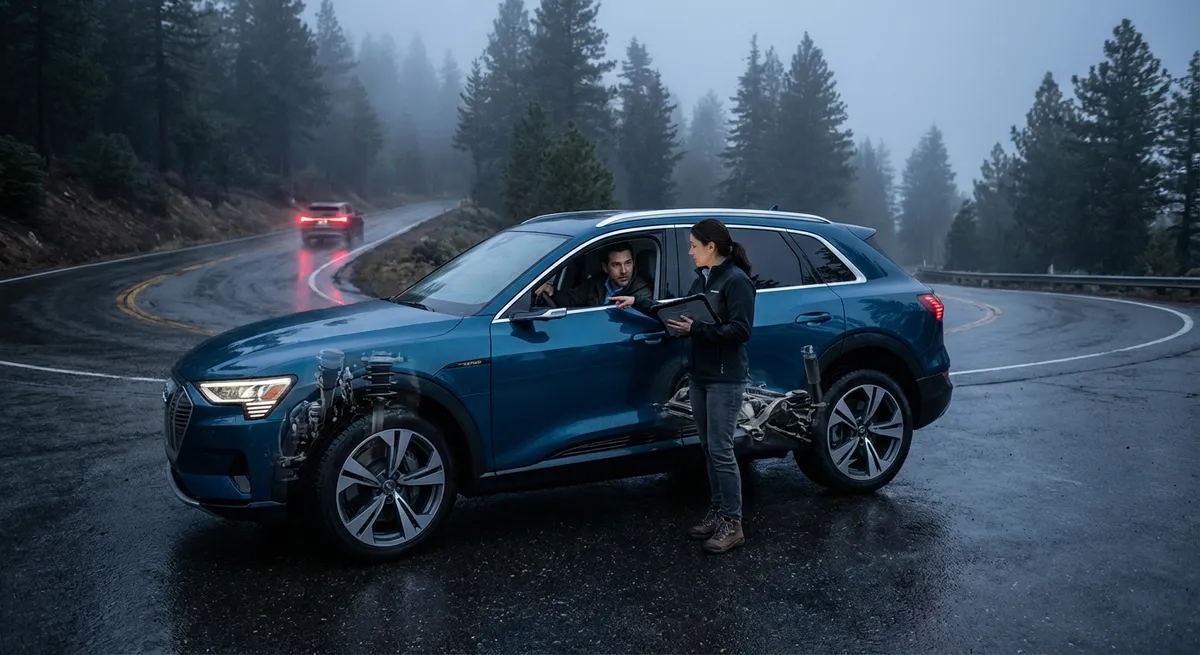
Most buyers know to ask about horsepower and cargo space, but the chassis and suspension layout arguably define the SUV’s personality. Under the body, three core elements determine how the vehicle absorbs bumps and stays stable: the suspension type, its tuning, and the structure it’s attached to.
Many mainstream SUVs use MacPherson struts in the front for packaging efficiency and cost, paired with either a torsion beam or multi-link setup at the rear. A torsion beam is simpler and cheaper but typically less refined over uneven surfaces and during cornering. A multi-link rear suspension, common on premium and performance-oriented SUVs, allows each wheel more independent movement, improving comfort and tire contact on rough pavement.
On body structures, nearly all modern SUVs ride on unibody platforms rather than traditional body-on-frame constructions. Unibodies integrate the body and frame, improving stiffness and reducing weight—key for precision and comfort. Body-on-frame SUVs (often full-size, truck-based models) can tow hefty loads and handle severe off-road use, but they may transmit more vibration and feel less settled over broken pavement.
When test-driving, pay attention to:
- Primary ride: How the SUV handles large undulations, dips, and highway heaves. A well-tuned suspension will glide rather than bounce.
- Secondary ride: How it manages small, sharp imperfections like expansion joints or pothole edges.
- Body motions: Note pitch (front-to-back movement under braking and acceleration) and roll (side-to-side lean in corners). Excessive movement can be tiring and reduce confidence.
Ask the salesperson or look up whether the SUV uses a multi-link rear suspension, if the body structure has been recently redesigned (new generations often bring big gains in rigidity), and whether there are differences between trims (e.g., base vs. sport package vs. off-road package) that change suspension tuning.
2. Damping, Adaptive Systems, and Air Suspensions: Reading Between the Tech Labels
Springs determine how far the suspension can move; dampers (shock absorbers) control how quickly it moves. Together, they make or break ride quality. Without enough damping, the SUV feels floaty and uncontrolled. Too much, and it becomes harsh and jittery.
Many modern SUVs offer adaptive or electronically controlled dampers. These systems use valves controlled by the onboard computer to vary damping force in real time based on road conditions, drive mode, and driver inputs. In practice, they can blend soft comfort in a straight line with firmer control during aggressive cornering or sudden maneuvers.
Key technologies to understand:
- Adaptive dampers: Often branded as “adaptive suspension,” “dynamic chassis control,” or similar. They typically adjust within milliseconds, stiffening for body control or softening for comfort.
- Air suspension: Uses air springs instead of steel coils, offering adjustable ride height and, in some setups, variable spring rates. This can dramatically improve comfort, especially in luxury SUVs, and help with loading cargo or towing by self-leveling under heavy loads.
- Active roll control (or active anti-roll bars): Uses motors or hydraulics to reduce body roll in corners without needing super-stiff passive anti-roll bars that would hurt comfort on straight roads.
When shopping, don’t be misled by marketing alone:
- Verify adjustability: Some “sport” or “comfort” modes change only steering feel or throttle response, not suspension damping.
- Ask what’s standard vs. optional: An advertised “air suspension” may only be on top trims or part of an off-road or towing package.
- Consider complexity and cost: Adaptive and air systems can be brilliant for comfort and control, but they’re more complex. Research long-term reliability trends and potential replacement costs, especially if you plan to keep the SUV beyond the factory warranty.
During test drives, switch between drive modes on the same road section. Note how the SUV responds to mid-corner bumps, quick direction changes, and rough patches—this will highlight how well the damping logic is tuned.
3. Tires, Wheels, and Unsprung Mass: The Hidden Variables That Transform the Ride
Two nearly identical SUVs can ride completely differently depending on tire and wheel choices. Unfortunately, the best-riding configurations are often not the ones that look the most dramatic in photos.
Three key factors to evaluate:
- Wheel diameter vs. sidewall height
Larger wheels (20–22 inches and beyond) reduce sidewall height, leaving less rubber to absorb impacts. This typically:
- Improves steering response and cornering precision
- Degrades ride comfort, especially on rough or patched roads
- Increases the risk of wheel damage in severe potholes
Smaller wheels with taller sidewalls (17–19 inches on many SUVs) allow the tire to flex more, smoothing sharp edges and reducing impact harshness.
Tire type and load rating
- Touring or all-season highway tires usually prioritize comfort, noise reduction, and fuel economy. - Performance tires emphasize grip and response, often at the expense of noise and compliance. - All-terrain or off-road tires have more aggressive tread blocks and stiffer sidewalls; they can add vibration and hum on pavement but are essential for serious off-road use.
Check the tire’s load index and speed rating, and consider whether off-road-oriented tires on an “adventure” trim align with your actual driving.
Unsprung mass
Larger wheels, heavy off-road tires, and oversized brake packages increase unsprung mass—the weight not supported by the springs. Higher unsprung mass makes it harder for the suspension to keep the tires in consistent contact with the road, negatively affecting both ride comfort and grip.
Buying tips:
- If comfort and long-distance touring matter to you, strongly consider mid-size wheels with touring-oriented tires, even if the brochure photos showcase giant rims.
- Check if the trim you want allows a wheel/tire downgrade; some premium trims can be ordered with smaller wheels as a no-cost option.
- During a test drive, ask the dealer if you can briefly drive another unit of the same model with a different wheel/tire combo to feel the difference.
4. Noise, Vibration, and Harshness (NVH): How to Evaluate Cabin Calm
Noise, Vibration, and Harshness (NVH) is the engineering term for what you perceive as cabin serenity—or lack of it. Two SUVs with identical suspension specs can feel very different based on how well engineers control sound and vibration paths from the road, drivetrain, and wind.
Elements that influence NVH:
- Acoustic glass: Many newer SUVs offer laminated front side windows and thick acoustic windshields. These significantly reduce wind rush and high-frequency noise on the highway.
- Body sealing and insulation: Look for double door seals, foam-filled pillars, and comprehensive sound-deadening in the floor and wheel wells. Premium models often include extra insulation around the firewall and rear cargo area.
- Engine and drivetrain mounts: Hydraulic or active mounts can isolate engine vibrations at idle and under load, especially in large-displacement or turbocharged engines.
- Active noise cancellation (ANC): Some SUVs use microphones and the audio system to counteract certain frequencies of road and tire noise. It doesn’t fix everything, but it can make cabin noise less fatiguing.
How to evaluate NVH during shopping:
- Test at typical cruising speeds and your personal highway speed (where legal). Noise perceived at 55 mph can feel very different at 75 mph.
- Drive on various surfaces: smooth asphalt, coarse concrete, and patched roads. Note changes in volume and tone of road noise.
- Sit in the second and third rows. In some SUVs, rear wheel wells and thinner glass mean rear passengers experience more noise than those in the front.
- Turn off the audio system and climate fan during part of the test drive to isolate wind and tire noise.
If you’re cross-shopping brands, bring a decibel meter app (not perfectly scientific, but useful for comparison) and note readings at fixed speeds on the same road segment. Combine those numbers with your subjective impression of noise character—some frequencies are more fatiguing than others, even at the same decibel level.
5. Weight Distribution, Steering Calibration, and Drive Layout: How Stable Does It Really Feel?
Beyond comfort, a good SUV must feel predictable and secure in real-world conditions: wet on-ramps, evasive maneuvers, crosswinds, or quick lane changes on a crowded interstate. These impressions are shaped by how weight is distributed, how the steering is tuned, and whether power goes to the front, rear, or all four wheels.
Key technical aspects to consider:
- Drive layout (FWD, RWD, AWD/4WD)
- Front-wheel drive (FWD) SUVs package the powertrain up front, often leading to a nose-heavy weight balance. They’re efficient and space-optimized but can feel less dynamic when pushed hard.
- Rear-wheel drive (RWD)-based platforms typically have more balanced weight distribution and better steering feel, especially under acceleration or towing.
- All-wheel drive (AWD) and four-wheel drive (4WD) systems vary widely. Some are front-biased and primarily for traction, while others can send substantial torque to the rear for better dynamics or lock power distribution for off-road conditions.
- Weight distribution and center of gravity
Lower-mounted components (e.g., batteries in some plug-in hybrids, fuel tanks, and spare tires) help reduce the center of gravity, improving stability and roll resistance. A more even front/rear weight split enhances balance during cornering and braking.
- Steering ratio and assist
- On-center feel: Does it track straight on the highway without constant corrections?
- Linear response: Is steering effort and response predictable as you add lock?
- Drive modes: Does “Sport” mode merely add artificial weight, or does it genuinely improve precision?
Modern SUVs typically use electric power steering (EPS), allowing tuning of effort and response. Look at:
What to do during your evaluation:
- Perform controlled lane changes at moderate highway speed (where safe) and note whether the SUV feels composed or top-heavy.
- Brake firmly from highway speed in a straight line on a deserted stretch. The vehicle should remain stable without excessive nose dive or wandering.
- If you plan to tow or carry heavy loads, ask how tow packages affect suspension tuning, axle ratios, and cooling systems. A properly engineered tow package can significantly improve control and stability when loaded.
Review independent testing—especially moose test, slalom, or emergency maneuver results where available—to see how the SUV behaves at the limit. Even if you never approach those extremes, vehicles that perform well there are typically more confidence-inspiring in daily use.
Conclusion
Marketing terms like “luxurious” and “sporty” don’t tell you whether an SUV will really suit how and where you drive. By focusing on the underlying engineering—suspension layout, damping technology, wheels and tires, NVH controls, and dynamic fundamentals like weight distribution and steering—you can cut through the noise and choose an SUV with the ride, comfort, and stability you actually want.
Bring these five points to your next dealership visit, ask targeted questions, and insist on meaningful test drives that mimic your real-world use. The result is an SUV that doesn’t just look right in the driveway, but also feels right mile after mile, year after year.
Sources
- NHTSA – Vehicle Dynamics & Rollover Resistance - Explains how vehicle design, center of gravity, and weight distribution affect stability and rollover risk
- SAE International – Fundamentals of Vehicle Dynamics - Authoritative reference on suspension design, damping, and handling behavior
- U.S. Department of Energy – FWD vs. RWD vs. AWD Efficiency Considerations - Discusses drivetrain layouts and their impact on efficiency and performance
- Bridgestone – How Wheel Size Affects Ride and Handling - Covers the relationship between wheel diameter, tire sidewall, and ride comfort
- Car and Driver – Road Test Procedures and Noise Measurement - Details standardized testing for ride, handling, and cabin noise, useful for comparing SUVs across segments
Key Takeaway
The most important thing to remember from this article is that this information can change how you think about Buying Guide.