For serious SUV shoppers, the test drive is no longer a polite lap around the block—it’s your only real chance to validate the engineering claims hiding behind glossy brochures and polished showrooms. Modern SUVs blend complex drivetrains, active safety systems, software-heavy infotainment, and adaptive suspensions, and most of that tech only reveals its true character on the road. This guide breaks down the test-drive process into five focused areas so you can evaluate an SUV like an engineer, not a tourist—with an eye toward long-term ownership, real-world performance, and future resale value.
1. Chassis, Ride, and Handling: Reading the SUV’s “Body Language”
Before looking at screens and leather, assess what matters most: the platform beneath you. Start with a slow drive over broken pavement, expansion joints, and speed bumps. You’re listening for suspension thumps, rattles, or hollow sounds that could suggest poor body rigidity or cost-cutting in bushings and mounts. A well-sorted SUV will absorb hits with a single, controlled motion rather than bouncing or porpoising after every impact.
Pay attention to steering weight and precision. On-center feel (how stable the wheel feels when you’re going straight) is key for long highway drives. Slightly firmer steering with a clean return to center usually indicates better tuning; if the wheel feels vague or needs constant micro-corrections, expect fatigue on road trips. On ramps and quick lane changes will expose body roll characteristics—some roll is expected in taller vehicles, but look for predictable lean, not a top-heavy, delayed response.
If the SUV offers adaptive dampers or multiple drive modes, toggle between them on the same stretch of road. Comfort modes should not feel floaty or disconnected; sport modes should tighten body control without becoming punishing. Also test braking behavior: firm, linear pedal feel is preferable to a spongy pedal or an overly grabby initial bite. Repeated hard stops from moderate speed can reveal brake fade and stability—no pulling to one side, no vibration, and consistent stopping distance.
Finally, consider NVH (Noise, Vibration, Harshness). At 60–70 mph, listen for wind noise around mirrors and roof rails, tire roar from the rear, and drivetrain vibration through the floor and steering wheel. Higher structural stiffness and better sound insulation cost more, but they pay off every single mile and tend to correlate with more premium engineering throughout the vehicle.
2. Powertrain Behavior: Beyond Just “Is It Quick?”
Enthusiasts often focus on horsepower numbers, but how an SUV delivers its power is more important for daily use. When you accelerate moderately from a stop, note the initial response: is there delay before the engine or motors react, or does it move cleanly and predictably? Turbocharged engines should provide strong torque from low rpm with minimal lag; any noticeable delay in urban driving can become frustrating over time.
Evaluate transmission behavior in mixed conditions. For automatics and dual-clutch units, feel for smooth, decisive upshifts and downshifts without hunting between gears on small inclines. Constantly shifting or hanging at high rpm suggests poor calibration or insufficient torque. CVTs (continuously variable transmissions) should simulate stepped shifts or manage engine rpm without a constant drone; modern units can be good, but only if tuned well.
If you’re considering an electrified SUV (mild hybrid, full hybrid, plug-in hybrid), focus on the engine–motor coordination. Transitions between electric-only and engine assist should be seamless with minimal shudder or hesitation. On a hybrid, try low-speed creeping in traffic and light parking maneuvers—jerky or unpredictable engagement can become a daily annoyance. For plug-in hybrids, confirm that EV mode responds adequately for short commutes and that engine start-up at higher speeds is well-damped and quiet.
For any powertrain, test passing power. From around 40–60 mph, floor the accelerator and measure the reaction: a good SUV merges briskly and overtakes with confidence without feeling strained. If possible, test with several passengers on board to approximate real-world weight; this is when torque figures, not peak horsepower, reveal their true value.
Also note thermal behavior if you’re in hot weather. After a spirited drive and a brief stop, observe restart smoothness, fan noise, and any unusual smells. Well-engineered cooling systems keep performance consistent without excessive fan roar or heat soak, which matters if you tow, drive in mountains, or live in hot climates.
3. Ergonomics, Visibility, and Control Layout: How It Works at Speed
A serious test drive goes beyond comfort at a standstill. First, adjust the seat, steering wheel, and mirrors to your natural driving position, then assess visibility in motion. Cornering at intersections will reveal A-pillar blind spots; thick pillars and high dashboards can obscure pedestrians and cyclists. Large SUVs may need 360° cameras and parking sensors, but these should supplement, not replace, inherently good sightlines.
Check the relationship between seat height, instrument cluster, and head-up display (HUD) if available. You should be able to see key driving information without ducking or stretching; if you find yourself constantly refocusing between the road and instrumentation, that will only get worse with fatigue. Pay attention to lumbar support, thigh support, and lateral bolstering. Over an extended test drive, lack of lower-back support or short seat cushions can be a dealbreaker on long trips.
Run your hands through all primary controls while driving: climate settings, drive-mode selectors, wipers, and lighting. Physical knobs and switches tend to be easier to operate without taking eyes off the road; touch-only controls may look modern but can be frustrating in motion. Ask yourself: can I quickly change cabin temperature or fan speed by feel alone at 70 mph? If not, that’s a real-world safety penalty.
Try typical real-life tasks: backing into a tight parking spot, parallel parking on a busy street, and negotiating a narrow driveway or garage. Camera resolution and lens distortion matter more than marketing buzzwords; a crisp, low-latency image with realistic depth is invaluable in poor light or bad weather. Confirm that parking sensors and cross-traffic alerts are accurate, not overly sensitive to harmless objects, as nuisance alarms tend to get disabled by owners.
Finally, examine small but telling details: brake and accelerator pedal alignment (no awkward ankle angles), dead pedal size and position, and steering wheel thickness. These elements don’t show in spec sheets, but they heavily influence how natural and confidence-inspiring an SUV feels over thousands of miles.
4. Cabin Tech, Driver Assistance, and Software: Longevity in a Digital Age
Modern SUVs are rolling computers, and software quality now matters as much as mechanicals. Start with the infotainment system: timing how long it takes to boot, connect to your phone, and load navigation. Laggy menus or frequent stutters during basic tasks (zooming maps, switching between audio sources) hint at underpowered hardware or poor optimization—problems that owners will live with for years.
Test both wired and wireless Apple CarPlay/Android Auto if available. Move between OEM navigation and smartphone mirroring; note whether audio continues smoothly or cuts out. Try voice commands from both the vehicle and your smartphone assistant, in real driving, with moderate cabin noise. Misheard commands or excessive confirmation prompts make the system feel dated quickly.
Driver-assistance systems are crucial to evaluate honestly. On a lightly trafficked highway, activate adaptive cruise control and lane-keeping assistance. A properly tuned system maintains a comfortable following distance without surging and keeps the vehicle centered in the lane without “ping-ponging” between lines. Pay attention to how the system handles gentle curves, merging traffic, and vehicles cutting in; abrupt braking or random disengagements are red flags.
Explore settings menus where you can often adjust sensitivity for lane departure warnings, steering assist strength, and forward collision alerts. Look for customizable options, not just on/off switches. The ability to tailor alert volume, timing, and intervention level can make the difference between a system you use daily and one you disable permanently.
Also consider long-term software support. Ask the dealer directly about over-the-air (OTA) update capability. Vehicles that support OTA can receive bug fixes, security patches, and sometimes new features without a service visit. Check how often the brand has historically updated previous models—some automakers treat software as a living product, others as a static feature frozen at sale. Given the pace of tech evolution, your SUV’s digital “shelf life” matters for resale and safety.
5. Practicality, Load Management, and Cost of Ownership: Thinking Beyond Day One
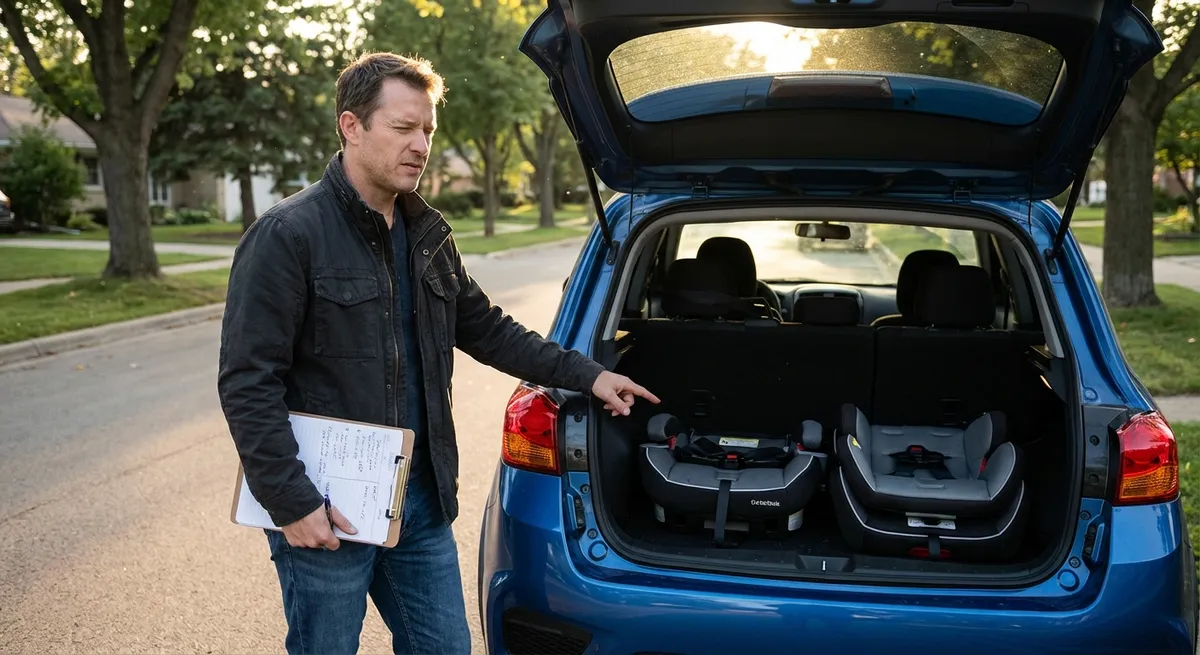
A test drive should end with a reality check on how the SUV fits your life over 5–10 years. Start with cargo space in real terms, not just published cubic feet. Fold seats up and down multiple times to check for awkward latches, heavy seatbacks, or uneven load floors. If you routinely carry bikes, strollers, or gear boxes, bring some with you; seeing how they fit (or don’t) is far more informative than guessing.
Examine second- and third-row usability carefully. Climb into every row yourself, not just kids. Assess knee room, headroom, and toe room under the seats in front. Test entry and exit via both rear doors and any slide-and-tilt mechanisms. Power-folding seats and adjustable recline angles are nice, but reliability and speed are just as important—slow-moving mechanisms become annoying very fast.
If you tow or might in the future, don’t just look at the brochure’s maximum tow rating. Ask about the gross combined weight rating (GCWR), payload limits, and whether a specific tow package (with upgraded cooling, wiring, and hitch) is included or optional. Vehicles that are marginal at their rated limits will feel stressed on grades and in hot weather; a margin of capability improves safety and mechanical longevity.
Now connect the test-drive impressions to cost of ownership. Smooth, unstressed powertrains and better NVH often correlate with lower long-term wear. Confirm recommended maintenance intervals for major services (transmission fluid, differential fluid, plugs, hybrid battery checks) and factor them into your budget. Look up insurance costs for the exact trim level you’re testing; advanced driver-assistance features can reduce insurance premiums, but expensive headlights, sensors, and glass can increase repair bills.
Finish by researching reliability and resale trends for the brand and model family. While no new SUV can guarantee trouble-free ownership, established patterns in reliability surveys and recall history tell you how the manufacturer responds when issues arise. An SUV that feels great on the test drive but has a history of transmission or electronics problems may cost more than it’s worth over the long haul.
Conclusion
Approaching a test drive with an engineer’s mindset transforms the buying process from a quick impression into a thorough evaluation tool. By focusing on core dynamics (chassis, steering, NVH), real-world powertrain behavior, ergonomics under actual driving conditions, software quality and driver assistance, and the practical realities of cargo, towing, and long-term costs, you’ll see past showroom gloss to the SUV’s true character. The goal isn’t perfection—it’s understanding the compromises each model makes and deciding whether those trade-offs align with how you actually drive, live, and plan to own your next SUV.
Sources
- National Highway Traffic Safety Administration (NHTSA) – Vehicle Safety Ratings - Official crash-test data and safety evaluations to cross-check any SUV you’re considering
- Insurance Institute for Highway Safety (IIHS) – Ratings & Research - Independent crash tests, headlight evaluations, and driver-assistance performance information
- Consumer Reports – Guide to New Car Buying - In-depth reliability data, owner satisfaction surveys, and testing methodology for vehicles, including SUVs
- Edmunds – How to Test-Drive a Car Like a Pro - Practical framework for structuring an effective test drive and key features to evaluate
- Kelley Blue Book (KBB) – 10 Steps to Buying a New Car - Overview of the full purchase process, from budgeting to final negotiation, with a focus on long-term ownership costs
Key Takeaway
The most important thing to remember from this article is that this information can change how you think about Buying Guide.