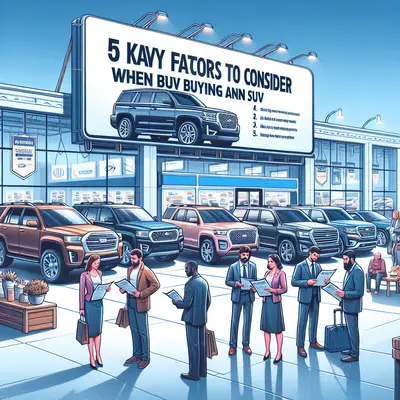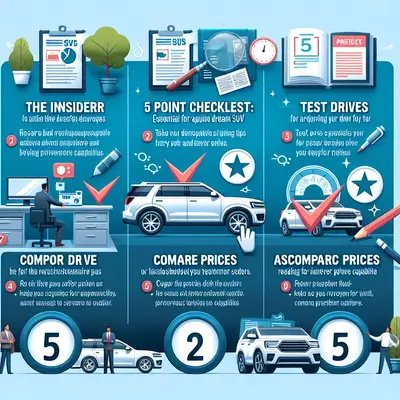
The SUV market has never been more crowded—or more complex. Turbocharged four‑cylinders rival old V6s, plug‑in hybrids claim sports‑car torque, and “all‑wheel drive” can mean anything from a basic traction aid to a terrain‑devouring torque‑vectoring system. For buyers and enthusiasts alike, a smart SUV purchase now demands the mindset of a strategist, not just a shopper. This guide breaks down five critical dimensions that separate a solid choice from an expensive regret, with a focus on real‑world performance, running costs, and long‑term satisfaction.
1. Powertrain Strategy: Matching Engine, Transmission, and Use Case
A modern SUV’s powertrain is a system, not just an engine size on a spec sheet. Understanding how the engine and transmission work together—and how they fit your driving pattern—is the foundation of a smart purchase.
Start with engine architecture. Turbocharged 4‑cylinder engines dominate the segment because they deliver strong low‑rpm torque and better fuel economy on test cycles. They’re excellent for mixed city/highway use but can feel strained in heavier three‑row SUVs, especially when fully loaded or towing. Naturally aspirated V6 engines (and high‑output I6s in some premium models) offer smoother power delivery and less turbo lag, which many enthusiasts prefer for highway merging and long‑grade climbs.
Hybrids and plug‑in hybrids (PHEVs) add another layer. A conventional hybrid SUV pairs a smaller gasoline engine with an electric motor and battery, optimizing efficiency in stop‑and‑go traffic. A PHEV ups the ante with a larger battery you can charge, enabling electric‑only commuting for many buyers. If your daily round trip is within the PHEV’s electric range and you can charge at home or work, fuel savings can be substantial; if not, you’re mostly carrying extra battery weight without reaping the main benefit.
Transmission type also matters. Traditional torque‑converter automatics (8‑ or 10‑speed) remain the benchmark for towing, refinement, and durability in larger SUVs. Continuously variable transmissions (CVTs) can be efficient in compact crossovers but may feel less responsive under enthusiastic driving and can be more sensitive to fluid maintenance neglect. Dual‑clutch transmissions (DCTs) offer fast shifts and performance feel, but in heavy traffic they can feel less smooth than a well‑tuned automatic.
Finally, consider your primary duty cycle:
- Heavy towing or frequent mountain driving: prioritize displacement, robust cooling, and multi‑gear automatics.
- Urban commuting with occasional trips: efficient turbo 4 or hybrid, with a transmission tuned for smooth low‑speed operation.
- Enthusiast‑leaning drivers: look for a powertrain with broad torque, quick shifting, and multiple drive modes that alter throttle and shift behavior.
Test‑drive in the conditions you’ll actually face—stop‑and‑go traffic, steep on‑ramps, or back‑road curves—not just a quick spin around the dealership loop.
2. Chassis, Suspension, and Drivetrain: How Your SUV Really Drives
Two SUVs can share similar horsepower numbers yet feel entirely different on the road. The difference lies in chassis tuning, suspension design, and the sophistication of the all‑wheel‑drive (AWD) or four‑wheel‑drive (4WD) system.
Start with the platform. Most modern “crossovers” use unibody construction, where the body and frame are integrated. This yields lower weight, better ride comfort, and improved handling—ideal for daily family use and long trips. Traditional body‑on‑frame SUVs, derived from pickup platforms, excel in towing capacity, durability, and severe off‑road use, but usually ride more firmly and feel less agile.
Suspension setup is critical. Front MacPherson struts and multi‑link rear suspensions are common in crossovers, offering a balance of comfort and control. Enthusiast‑oriented trims may feature firmer dampers, larger anti‑roll bars, and lower‑profile tires for sharper responses at the expense of ride comfort. Available adaptive or semi‑active dampers can adjust firmness in real time, giving you softer settings for commuting and firmer control in sport or towing modes.
AWD and 4WD systems vary widely:
- Basic on‑demand AWD: Mostly front‑wheel drive, sending power rearward when slip is detected. Good for rain and light snow, less ideal for serious off‑road or performance driving.
- Full‑time AWD with center differential or clutch pack: Continuously varies torque between front and rear; better stability and traction, especially in changing conditions.
- 4WD with low range: Typically on truck‑based SUVs; adds a low‑range gearbox for slow, controlled off‑road driving, steep descents, and heavy towing scenarios.
More advanced systems offer torque vectoring—either through active rear differentials or selective braking—to send more torque to the outside rear wheel in a corner, improving turn‑in and reducing understeer. Enthusiasts will notice the difference on winding roads and in poor weather.
Ground clearance, approach/departure/breakover angles, and underbody protection matter if you expect real off‑pavement use. Cross‑shop these figures if you’re comparing trail‑oriented trims; a rugged appearance package is not the same as genuine off‑road hardware.
On your test drive, pay attention to:
- Steering feedback and on‑center stability at highway speed.
- Body roll in quick lane changes or ramps.
- Ride compliance over broken pavement or expansion joints.
- AWD engagement smoothness when accelerating on loose or wet surfaces.
These characteristics define what the SUV will feel like over the next 5–10 years—far more than the spec‑sheet horsepower figure.
3. Interior Architecture, Ergonomics, and Tech Lifespan
The cabin is where you actually live with your SUV, and poor ergonomics or dated tech can turn an otherwise strong vehicle into a daily frustration. Go beyond leather and ambient lighting to evaluate the cockpit like a pilot would.
Start with seating. Driving position should allow a clear view of the road and instruments without forcing you to compromise on legroom or arm reach. Check seat bolstering (lateral support in corners), thigh support on long drives, and availability of adjustable lumbar for both driver and front passenger. If you frequently carry adults in the second or third row, test ingress/egress and seat comfort there as well—including headroom under panoramic roofs.
Control layout is a major quality‑of‑life factor. Increasingly, physical buttons are being replaced by capacitive touch panels and deep infotainment menus. Ensure that high‑frequency controls—climate, defroster, drive mode, volume, and critical ADAS functions—are easy to operate without taking your eyes off the road. A system that feels “futuristic” in the showroom can become tiring if it demands too many taps for common tasks.
Infotainment and connectivity are rapidly evolving, so think in terms of tech lifespan, not just current features. Look for:
- Wireless Apple CarPlay and Android Auto.
- Over‑the‑air (OTA) software update capability.
- Multiple USB‑C ports and at least one 110V/230V household outlet in family‑oriented SUVs.
- Native navigation with real‑time traffic, even if you primarily use phone mirroring.
Instrument clusters range from analog gauges with small information displays to fully digital panels with configurable layouts and head‑up displays (HUD). Enthusiasts often appreciate being able to see oil temperature, boost pressure, or detailed trip data, so check what’s actually available in the trims you’re considering.
Finally, evaluate cabin noise and material quality. Road, wind, and powertrain noise levels differ dramatically across the segment. Insulation quality, laminated glass, and active noise cancellation can make long trips significantly more relaxing. Touch every major surface at shoulder and knee level; soft‑touch materials in these zones contribute to a more premium feel and better long‑term impression.
4. Ownership Economics: Beyond MSRP and MPG
The initial price and fuel economy numbers are only the starting point in the cost equation. A savvy SUV buyer looks at total cost of ownership (TCO) over a 5–10 year horizon.
Depreciation is typically the largest single cost. Some brands and models retain value much better than others due to reliability reputation, fleet sales volume, and segment demand. Research historical resale trends and certified pre‑owned (CPO) pricing for previous model years of the SUV you’re considering; this often provides a realistic preview of depreciation behavior.
Maintenance and repair costs can vary even more. Turbocharged and direct‑injection engines may require more careful maintenance (high‑quality oil, timely spark plug replacement, periodic intake valve cleaning on some designs). Hybrids add complexity but can reduce wear on brakes and engines thanks to regeneration and electric assistance. Check recommended service intervals and price out major scheduled services at local dealers or reputable independent shops.
Insurance premiums are influenced by vehicle value, safety ratings, parts costs, and theft rates. A performance‑oriented trim with larger wheels and more expensive bodywork may carry significantly higher insurance costs than a mid‑trim model with the same basic structure and powertrain. Obtaining real quotes based on VINs or specific trim codes before you commit can prevent surprises.
Fuel type and efficiency matter too. Premium‑fuel‑recommended turbo engines can narrow—or erase—the apparent fuel‑economy advantage over a non‑turbo engine running on regular gasoline, depending on local price differences. For PHEVs and EVs, factor in your actual ability to charge at home, local electricity rates, and any time‑of‑use rate structures.
Don’t ignore incentives and taxes. Federal or state incentives for plug‑in hybrids and battery‑electric SUVs can meaningfully reduce upfront cost if you qualify. Some regions also offer reduced registration fees, HOV lane access, or utility rebates for home charging equipment. Conversely, high‑weight luxury SUVs can attract higher registration or road‑use fees in certain jurisdictions.
A practical way to compare candidates is to project a 5‑year cost scenario for each: purchase price (or lease), estimated fuel/energy costs at your annual mileage, insurance, scheduled maintenance, and expected depreciation. Even rough estimates can reveal that two similarly priced SUVs may differ by thousands of dollars over your ownership period.
5. Safety, Driver Assistance, and Regulatory Readiness
Safety in modern SUVs is about both passive protection in a crash and active systems designed to help you avoid one. With regulations and rating protocols evolving, it’s important to look beyond marketing names and understand the underlying capability.
Start with independent crash test data. In the U.S., focus on the National Highway Traffic Safety Administration (NHTSA) star ratings and the Insurance Institute for Highway Safety (IIHS) evaluations, including small‑overlap tests and updated side‑impact tests that better simulate real‑world crashes with taller vehicles. In Europe and many other markets, Euro NCAP scores provide similar insight. Seek SUVs that perform well not just in overall ratings but also in newer, more stringent subtests.
Advanced driver‑assistance systems (ADAS) are now a core differentiator. Key systems include:
- Automatic emergency braking (AEB) with pedestrian and cyclist detection.
- Lane keeping assist and lane centering.
- Adaptive cruise control with stop‑and‑go function.
- Blind‑spot monitoring with rear cross‑traffic alert.
- Rear automatic braking and 360‑degree camera systems for parking.
What matters is not just the presence of these features, but how smoothly they operate. Overly intrusive lane‑keeping systems or inconsistent adaptive cruise behavior can cause drivers to disable them, reducing safety benefits. During your test drive, experiment with these functions on highway and urban roads to assess how natural they feel.
Some manufacturers are moving toward higher levels of driver assistance, including hands‑free highway systems on pre‑mapped routes and automated lane changes. While these can reduce fatigue on long drives, they also rely on robust sensor suites (cameras, radar, sometimes lidar) and continuous software development. SUVs with strong OTA update support are better positioned to improve their ADAS capabilities over time and stay aligned with evolving regulations.
Finally, consider structural and regulatory future‑proofing. As pedestrian protection standards, crash test protocols, and emissions/safety regulations tighten, models designed on older platforms may fall behind faster in safety ratings and market perception. Vehicles built on newer architectures often integrate more advanced load paths, improved battery protection in electrified versions, and better integration of sensor hardware.
When shortlisting SUVs, weigh safety performance and ADAS tuning as heavily as performance and aesthetics. Over the lifespan of the vehicle, these systems may be the most consequential features you buy.
Conclusion
Choosing the right SUV today is less about chasing the biggest screen or the highest horsepower figure, and more about aligning a complex machine with the reality of how you drive, what you tow, where you travel, and how long you plan to keep it. By dissecting powertrain strategy, chassis and drivetrain behavior, interior usability, ownership economics, and safety/ADAS capability, you approach your purchase the way an engineer or strategist would—not just a showroom visitor.
Take the time to drive competing models in real‑world conditions, study independent safety and reliability data, and project your true long‑term costs. The extra effort up front not only protects your wallet; it turns your SUV from a mere appliance into a long‑term asset that consistently fits your life, your driving style, and your expectations.
Sources
- U.S. Department of Energy – Fuel Economy Guide – Official fuel economy data and powertrain information for new SUVs and light trucks
- NHTSA – 5‑Star Safety Ratings – Federal crash test ratings and safety evaluations for current SUV models
- IIHS – Vehicle Ratings – Independent crashworthiness, crash avoidance, and headlight ratings across SUV segments
- Consumer Reports – Car Reliability & Owner Satisfaction – Long‑term reliability trends and owner satisfaction data by model and brand
- U.S. Department of Energy – Alternative Fuels Data Center – Technical and policy information on hybrids, plug‑in hybrids, and EVs, including incentives and operating cost considerations
Key Takeaway
The most important thing to remember from this article is that this information can change how you think about Buying Guide.