The SUV market is pivoting faster than at any point in the last 20 years, and the biggest changes aren’t always visible on a window sticker. Under the sheet metal, a quiet revolution is underway in platforms, drivetrains, software, and safety systems. For enthusiasts and serious buyers, understanding these shifts isn’t just interesting—it’s becoming essential to making a smart long‑term choice. This overview unpacks five high‑impact industry trends driving the next generation of SUVs, with practical angles on what they mean for real‑world ownership and performance.
1. The Rise of “Skateboard” Platforms and Their Impact on SUV Dynamics
SUVs are rapidly transitioning from legacy ICE‑based architectures to dedicated “skateboard” platforms—flat, modular structures integrating batteries, motors, and key components between the axles. Originally popularized by EV leaders, this layout is now influencing how both electrified and combustion-based SUVs are engineered.
From a technical standpoint, skateboard platforms enable a lower center of gravity compared with traditional body‑on‑frame or transverse-engine unibody designs, even in taller SUVs. This significantly reduces body roll and improves turn‑in response, especially when combined with multi-link rear suspensions and adaptive dampers. Engineers can also optimize front–rear weight distribution by placing battery modules and power electronics strategically, promoting more neutral handling than older SUV designs that often carried heavy, front‑biased weight.
Interior packaging is another major benefit: with no transverse engine taking up firewall space and no conventional transmission tunnel, designers can push the cabin forward, extend legroom, and integrate flat floors in both rows. This is why many new electric and electrified SUVs offer near‑luxury rear legroom in “compact” exterior footprints. For enthusiasts, skateboard platforms can support dual‑motor AWD configurations with precise, software‑controlled torque vectoring that far surpasses the mechanical systems of the last generation. For buyers, this architecture usually translates into more usable cargo volume, improved crash energy management, and better refinement, thanks to fewer vibration paths into the cabin.
2. High-Voltage Architectures: Why 800V Systems Matter to SUV Owners
Beyond the headline battery size and range figures, the voltage of an SUV’s electrical architecture is emerging as a key differentiator. While many EV SUVs still use 400V systems, an increasing number of new models are adopting 800V (or similar high‑voltage) designs, dramatically changing the charging and performance equation.
An 800V system allows higher charging power at the same current, reducing heat generation in cables and hardware. In practice, this can enable DC fast‑charging rates well above 200 kW, with some architectures supporting 270–350 kW on compatible public chargers. For a real‑world owner, that can mean charging from 10% to 80% in roughly 20–30 minutes instead of 35–45 minutes, materially changing road‑trip viability. Enthusiasts also benefit: higher voltage supports more compact, efficient motors and inverters, improving sustained power delivery and repeatable performance during spirited driving or towing.
Thermal management is another hidden advantage. High‑voltage systems often integrate more advanced coolant circuits for batteries, inverters, and electric motors, including plate‑cooled packs and heat‑pump HVAC systems. This improves cold‑weather efficiency and reduces the risk of power derating during extended high‑load use—relevant for performance‑oriented SUVs and those frequently used for trailer towing. As buyers compare spec sheets, understanding the architectural voltage and heat management strategy is increasingly as important as raw horsepower or peak range figures.
3. Software-Defined SUVs and the Reality of Over-the-Air Updates
The SUV is evolving into a software‑defined product, where much of the vehicle’s behavior—from throttle mapping to suspension tuning to energy management—is governed by updatable code. Over‑the‑air (OTA) updates are moving beyond simple infotainment fixes into core vehicle systems, with implications for performance, safety, and long‑term value.
Modern SUV electronic architectures rely on centralized, high‑bandwidth domain controllers instead of dozens of independent ECUs. This consolidation allows automakers to refine algorithms for stability control, adaptive dampers, active steering, and torque delivery long after the vehicle leaves the factory. Owners are already seeing post‑purchase enhancements such as improved range optimization maps, updated shift logic in hybrid SUVs, more natural lane‑centering behavior, and even incremental acceleration boosts via re‑calibrated powertrain software.
For enthusiasts, this software‑defined approach raises both opportunity and caution. On the upside, a vehicle’s character can evolve in meaningful ways, and manufacturers can correct early calibration tradeoffs affecting throttle response or brake‑by‑wire feel without a dealer visit. On the downside, feature gating and subscription‑based unlocking of capabilities—such as advanced driver‑assistance tiers or performance drive modes—are becoming more prevalent. When comparing SUVs, it’s critical to understand: which systems are OTA‑updatable, which features are permanently included, what requires subscriptions, and how long the automaker commits to software and security support. In a software‑defined era, the update policy is as important as the option list.
4. Advanced Driver Assist Convergence: From Lane-Keep to Conditional Automation
Driver‑assistance capabilities in SUVs are rapidly converging toward higher levels of automation, but the branding and marketing can be confusing. Underneath the names, the industry is coalescing around more powerful sensor suites and compute platforms capable of Level 2+ (and, in limited cases, Level 3) functionality on the SAE automation scale.
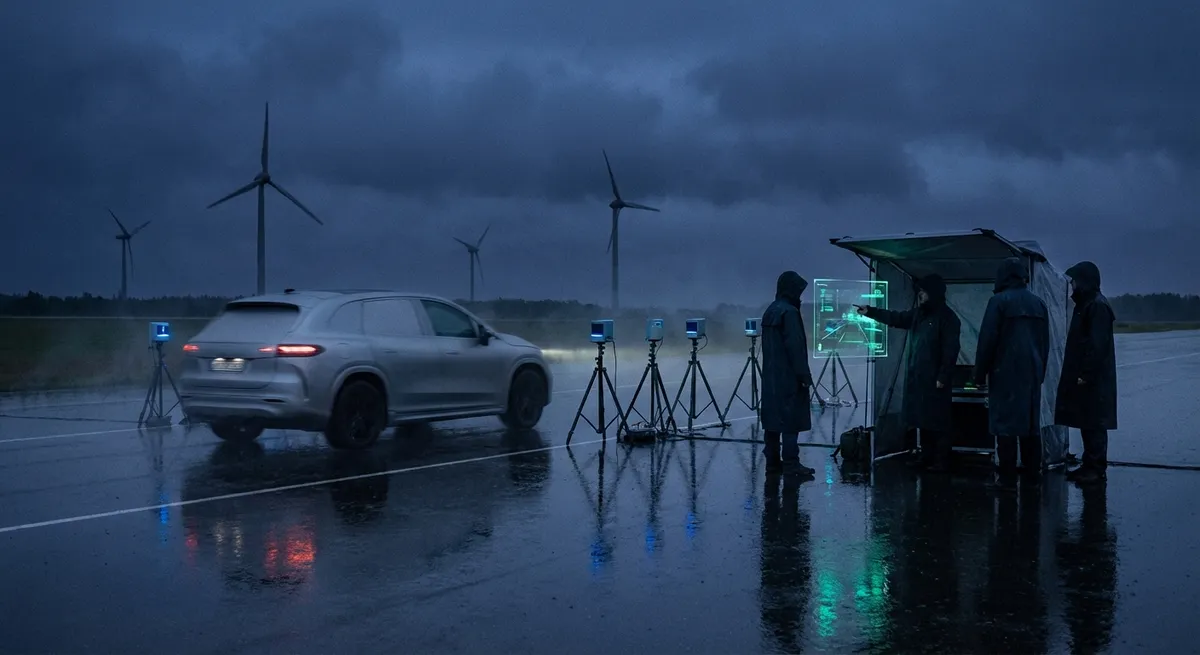
Technically, the latest systems pair high‑resolution forward cameras with long‑range radar, side radar, and in some cases lidar, all feeding a central perception stack. These systems can maintain lane position on well‑marked roads, manage adaptive cruise down to stop‑and‑go in traffic, and in certain implementations handle automated lane changes or highway‑merge assistance. High‑definition maps and redundant steering/braking actuation are gradually being introduced in premium SUVs to support conditional automation in constrained scenarios, such as specific mapped highways.
For buyers, the key questions go beyond “Does it have lane‑keep assist?” Instead, evaluate whether the system offers driver attention monitoring, what speeds and road types it supports, how it handles poor markings or adverse weather, and whether its capability can be upgraded via OTA. Enthusiasts should also focus on calibration quality: some systems exhibit intrusive lane‑centering or abrupt braking, while others feel more natural and predictable during dynamic driving. Regulatory frameworks in North America, Europe, and Asia are also evolving, so the legal and functional limits of automation may change over a vehicle’s lifetime. Understanding both current capability and the manufacturer’s roadmap helps ensure expectations match reality.
5. Next-Generation Materials and Manufacturing: Strength, Weight, and Repair Costs
The way SUVs are built is changing as quickly as their electronics. To balance crash performance, efficiency, and handling, manufacturers are deploying multi‑material bodies combining high‑strength steels, aluminum, tailor‑welded blanks, and, in some premium segments, composite or carbon‑fiber‑reinforced structures. At the same time, large casting technologies and new joining methods are reshaping how bodies and subframes are produced.
From a performance perspective, greater use of ultra‑high‑strength steel in safety cages increases torsional rigidity, which improves steering precision and reduces squeaks and rattles over time. Aluminum hood, door, or suspension components shave mass where it matters most, contributing to lower unsprung weight and better ride control. Some new SUV platforms are experimenting with “mega‑castings” for front and rear body structures, reducing part counts and improving dimensional consistency, which can enhance NVH and crash predictability.
However, this progress has downstream implications for owners. Complex mixed‑material construction and large integrated castings can raise repair complexity and cost after a collision, as sections that once could be repaired may now require full component replacement or specialized joining techniques. For shoppers, it’s worth considering not just curb weight and crash ratings, but also the brand’s repair network capabilities, parts availability, and insurance implications. Enthusiasts who value long‑term tunability should pay attention to how modular the suspension and subframe designs are, as some ultra‑integrated architectures can limit aftermarket flexibility even while delivering excellent factory performance.
Conclusion
Beneath familiar SUV silhouettes, the industry is undergoing a profound technical shift that will define how these vehicles drive, age, and integrate into evolving energy and regulatory landscapes. Skateboard platforms, high‑voltage electrical architectures, software‑defined capabilities, converging driver‑assist systems, and advanced manufacturing are no longer abstract engineering trends—they are the real‑world factors that will shape ownership for the next decade.
For car enthusiasts and serious buyers, the challenge is moving beyond traditional metrics like displacement and trim names to interrogate platforms, voltages, OTA strategies, sensor suites, and repairability. Those who understand these underlying technologies will be better positioned to choose SUVs that not only impress on a test drive, but remain compelling, updatable, and cost‑effective many years down the road.
Sources
- U.S. Department of Energy – Vehicle Technologies Office - Technical overviews of advanced powertrains, batteries, and vehicle systems relevant to modern SUVs
- National Highway Traffic Safety Administration (NHTSA) – Vehicle Safety and Automated Driving Systems - Regulatory perspective and definitions for advanced driver-assistance and automation levels
- SAE International – Levels of Driving Automation - Authoritative explanation of automation levels used across the SUV industry
- International Energy Agency – Global EV Outlook - Data and analysis on EV adoption, charging trends, and high-voltage architectures affecting SUV development
- BMW Group – “The skateboard principle: Electric car architecture explained” - Manufacturer-level explanation of skateboard platforms and their impact on packaging and dynamics
Key Takeaway
The most important thing to remember from this article is that this information can change how you think about Industry News.