The SUV segment is no longer just about bigger cabins and higher ride heights—it’s rapidly becoming the frontline for next‑generation powertrains. From silicon‑carbide inverters and emerging solid‑state batteries to advanced plug‑in hybrids and synthetic fuels, what propels your next SUV is changing fast. For buyers and enthusiasts, these shifts will affect everything from performance and range to resale value and running costs. This industry news briefing breaks down the most consequential powertrain trends shaping SUVs over the next few product cycles—and what they really mean in the real world.
Electrified SUV Architectures Move to the Center of the Product Plan
Over the past three years, automakers have quietly reoriented their product strategies so that SUVs become the primary recipients of new electrified platforms. Instead of building EVs and hybrids as niche offshoots, brands are now engineering “skateboard” architectures and multi‑energy platforms with SUVs as the volume anchor.
On the fully electric side, dedicated architectures like Hyundai Motor Group’s E-GMP, GM’s Ultium platform, and VW’s MEB are being scaled around crossover and SUV silhouettes because these bodies offer packaging advantages for large battery packs and dual‑motor setups. Flat battery floors and long wheelbases allow for spacious cabins, generous cargo areas, and options like three-row seating without compromising crash structures.
Parallel to that, several automakers are pursuing flexible platforms that can host internal combustion engines, hybrids, and pure EV drivetrains on essentially the same underpinnings. This multi‑energy approach lets them adapt to regional regulations and consumer demand: hybrids and plug‑in hybrids in markets with limited charging infrastructure, EVs where incentives and urban policies favor zero-emission vehicles. For buyers, it means future SUVs within a single model line could share interior and chassis components but offer radically different powertrain experiences.
This pivot has knock-on effects. Chassis tuning is increasingly optimized around the weight and packaging of battery packs, even when a vehicle is sold as a gasoline or hybrid variant. Suspension geometry, crash structures, and thermal management systems are being designed to be “EV-ready,” which often yields stiffer structures and more sophisticated cooling hardware than legacy SUV platforms. As a result, the gap is growing between older, adapted platforms and next-gen SUVs designed from day one around electrification.
Silicon Carbide, 800-Volt Systems, and the Pursuit of Faster, Cooler SUVs
If batteries are the fuel tanks of modern SUVs, power electronics are the plumbing—and they’re in the midst of a rapid technological upgrade. The industry is moving from traditional silicon-based components to silicon carbide (SiC) and, in some cases, gallium nitride (GaN), particularly in inverters and onboard chargers. These wide-bandgap semiconductors conduct at higher voltages and temperatures while wasting less energy as heat.
The most visible manifestation for drivers is the shift toward 800‑volt electrical architectures in premium and performance‑oriented SUVs. Compared with the more common 400‑volt systems, 800‑volt setups allow higher charging power at the same current, enabling significantly faster DC fast‑charging times—often from 10% to 80% in well under 30 minutes on compatible infrastructure. They also enable lighter cabling and smaller, more efficient motors and inverters, which benefits efficiency and high‑load performance such as towing or mountain driving.
Silicon carbide inverters reduce switching losses, which can add a few percentage points of efficiency to the drivetrain. That may sound minor, but in a 2.5‑ to 3‑ton SUV, a 3–5% improvement in system efficiency can translate to tens of additional miles of range or the ability to downsize the battery slightly while maintaining range. It also helps with thermal management—critical for maintaining power under repeated acceleration runs or long highway grades.
For enthusiasts, the technical consequence is more consistent performance and the ability to sustain higher power outputs without derating. For buyers focused on practicality, it means shorter charging stops, better real‑world efficiency, and potentially lower long‑term stress on the battery. When cross-shopping future SUVs, expect to see 800‑volt capability and SiC hardware marketed not just as buzzwords but as differentiators in charging times, towing performance, and long‑distance usability.
Next-Generation Hybrids and PHEVs Are Targeted at SUV Duty Cycles
While EV headlines dominate, hybrid and plug‑in hybrid (PHEV) powertrains are becoming more sophisticated precisely because SUVs impose unique demands: towing, heavier curb weights, and mixed urban–highway use. Several automakers are moving away from small, “assist only” hybrid systems toward architectures that can drive the wheels electrically at meaningful loads and speeds.
Modern parallel and power‑split hybrids are deploying larger electric motors and higher‑capacity battery packs, allowing them to handle low‑ to medium‑load driving in pure electric mode more often. For SUVs that spend much of their time in urban or suburban traffic, this can dramatically reduce fuel consumption and brake wear. Regenerative braking systems in newer hybrids are also being tuned for smoother pedal feel and higher energy recovery, a critical area where early hybrids often felt unnatural.
Plug‑in hybrids are seeing even more aggressive upgrades. Electric-only ranges in upcoming SUV PHEVs are increasingly targeting 30–50 miles (or more) on the EPA cycle—enough for many daily commutes—paired with DC fast‑charging in some cases. That combination turns PHEVs into de facto short‑range EVs during the week, while keeping the combustion engine available for long trips and towing. For heavy use, the key specification to watch is sustained combined system output (not just peak horsepower), as it indicates how long the vehicle can deliver maximum power without overheating or draining the battery buffer.
Thermal integration is another critical development: shared cooling loops for battery, inverters, and turbocharged engines, along with active grille shutters, are increasingly common. These features allow SUV hybrids and PHEVs to maintain more consistent performance in hot climates and under towing loads. For buyers, the message is that the latest generation of electrified SUVs is designed for real-world duty cycles rather than just cycle-test efficiency scores.
Battery Chemistry, Solid-State Hype, and What Matters in an SUV
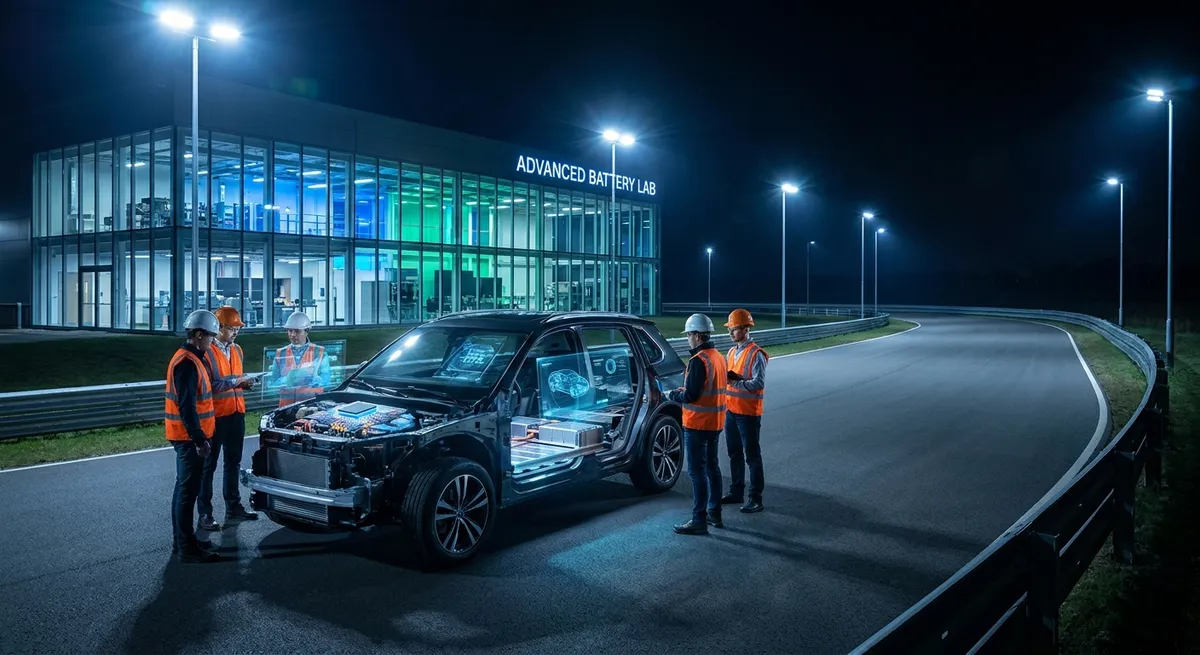
Battery chemistry is becoming a decisive differentiator in SUV design, especially as these vehicles demand larger packs to offset their mass and frontal area. Two broad chemistry families dominate: nickel‑rich NMC/NCA cells and lithium iron phosphate (LFP). Each has distinct implications for performance, cost, and longevity.
Nickel‑rich chemistries (NMC/NCA) offer higher energy density, which allows for longer range or smaller, lighter packs for a given capacity. They are typically favored in long-range and performance SUVs where packaging constraints and acceleration metrics are priorities. However, they often require more sophisticated thermal management and can be more sensitive to high rates of fast charging over time.
LFP chemistries, by contrast, offer lower energy density but better cycle life and thermal stability, with reduced reliance on expensive metals like nickel and cobalt. As pack energy density improves and underfloor space is optimized, LFP has become viable for mainstream SUVs with moderate range requirements. The trade-off is usually slightly heavier packs or marginally reduced maximum range, but with potential cost savings and durability benefits—attractive for fleet operators and value-conscious buyers.
On the horizon, solid‑state batteries promise higher energy density, faster charging, and improved safety by replacing liquid electrolytes with solid materials. Multiple automakers and suppliers are targeting the late 2020s for initial automotive deployments, and SUVs are likely to be key early beneficiaries because the technology’s weight savings and packaging efficiency can significantly improve range and towing capability. However, mass production challenges, cost, and durability under real-world conditions remain unresolved. For the near term, incremental gains in existing lithium‑ion chemistries—plus better pack engineering—will drive most SUV improvements.
For shoppers, the chemistry itself may not be listed in bold on the spec sheet, but it affects usable capacity, charging behavior in cold weather, and long-term degradation. Enthusiasts and informed buyers will increasingly look for whether an SUV uses LFP or nickel‑based packs, what kind of thermal management is employed (liquid cooling vs. passive), and whether the vehicle supports preconditioning the battery before fast charging—features that directly influence ownership experience.
Synthetic Fuels, Regulatory Pressures, and the Future of Combustion SUVs
While electrification accelerates, internal combustion engines are not disappearing from SUVs overnight—especially in markets with limited charging infrastructure or long-distance usage patterns. Instead, automakers are investing in efficiency technologies and exploring lower‑carbon fuels to extend the viability of combustion-powered SUVs under tightening emissions rules.
Engine efficiency improvements now go beyond simple turbocharging and downsizing. Miller and Atkinson cycle implementations, variable compression ratios, advanced exhaust heat recovery, and integrated starter‑generator systems are being combined to extract more work from every unit of fuel. In SUVs, where frontal area and mass are high, even modest efficiency gains can mean significant CO₂ and fuel‑cost savings over the vehicle’s lifetime. Some manufacturers are pairing these engines with 48‑volt mild hybrid systems to smooth torque delivery and support stop‑start functionality as seamlessly as possible.
Synthetic and low‑carbon fuels—produced from captured CO₂ and renewable energy—are being explored as a way to reduce lifecycle emissions from the existing fleet and future combustion vehicles that remain on the road. Pilot projects and regulatory carve‑outs, particularly in Europe, suggest that certain performance and specialty SUVs could be homologated to run on approved e-fuels, keeping them compliant in a more carbon‑constrained environment. However, scaling e-fuels to mass‑market volumes remains a formidable economic and energy challenge.
Regulation is the overarching driver: fleet-average CO₂ targets, zero‑emission vehicle mandates, and local air‑quality rules are pushing manufacturers to favor SUVs with at least some level of electrification. For buyers, this will show up as a shrinking number of purely combustion-powered SUVs in certain segments and regions, alongside more refined and capable hybrids. The long‑term wildcard is how quickly charging networks, grid capacity, and battery supply chains can scale in parallel, which will determine how fast the SUV market can transition without compromising availability and affordability.
Conclusion
The SUV powertrain landscape is undergoing its most significant transformation since the rise of car‑based crossovers. Underneath familiar silhouettes, new electrical architectures, advanced semiconductors, evolving battery chemistries, and smarter hybrid systems are redefining how these vehicles deliver power, range, and capability. For enthusiasts, these changes promise more consistent performance and new tuning frontiers; for everyday buyers, they will influence running costs, charging habits, and long-term value.
As this transition unfolds, spec sheets will become more technical—and more consequential. Understanding whether an SUV rides on a dedicated electrified platform, which voltage architecture it uses, what battery chemistry powers it, and how its hybrid system is configured will be as important as knowing its horsepower and cargo volume. The winners in the coming SUV cycles will be the models that balance real-world utility with future-ready powertrain technologies, giving buyers confidence that their next SUV won’t feel outdated before the finance term ends.
Sources
- [U.S. Department of Energy – Vehicle Technologies Office: Electric Vehicle Basics](https://www.energy.gov/eere/vehicles/electric-vehicle-basics) – Overview of EV components, architectures, and efficiency considerations
- [International Energy Agency – Global EV Outlook 2024](https://www.iea.org/reports/global-ev-outlook-2024) – Data and analysis on EV adoption, technology trends, and policy impacts worldwide
- [U.S. Environmental Protection Agency – Light-Duty Vehicle CO₂ and Fuel Economy Trends](https://www.epa.gov/automotive-trends) – Explains regulatory drivers and efficiency trends affecting SUVs and other light-duty vehicles
- [National Renewable Energy Laboratory – Battery Technology Research](https://www.nrel.gov/transportation/battery-research.html) – Technical background on lithium-ion chemistries, solid-state developments, and their implications
- [Porsche – eFuels Pilot Project in Chile](https://newsroom.porsche.com/en/2022/company/porsche-e-fuels-pilot-plant-chile-26886.html) – Real-world example of synthetic fuel development and its potential role for future combustion vehicles
Key Takeaway
The most important thing to remember from this article is that this information can change how you think about Industry News.