Over-the-air (OTA) updates and software-defined vehicle platforms are transforming SUVs from fixed hardware products into evolving digital devices. For buyers, this shift means the SUV you drive home is no longer “finished” on delivery day—it can gain features, performance tweaks, and security upgrades over time. For enthusiasts, it’s opening a new frontier of tuning, diagnostics, and data. But this transition also raises questions about ownership, subscriptions, and long-term support. Here’s what’s actually changing under the hood and why it matters if you’re shopping for an SUV in the next few years.
From Static Hardware to Software-Defined Architecture
The traditional SUV was built around dozens of independent electronic control units (ECUs) scattered throughout the vehicle, each dedicated to a specific function—engine, transmission, ABS, airbags, infotainment, and so on. Updating any of them typically required a dealer visit and specialized tools. Modern SUVs are moving toward centralized, high-performance computing architectures that treat the vehicle more like a networked system than a collection of standalone modules.
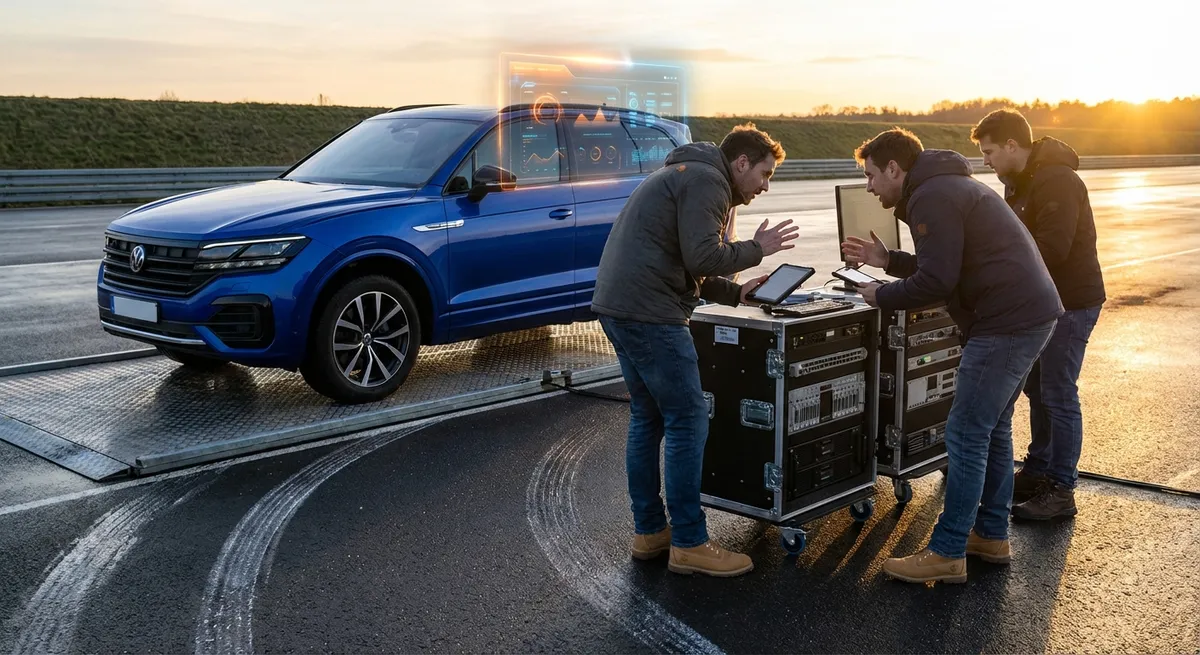
This “software-defined vehicle” model consolidates many functions into a smaller number of domain or central controllers, often running on powerful system-on-chip (SoC) hardware comparable to a smartphone or tablet. Instead of fixed feature sets, automakers can deploy new code to adjust throttle mapping, shift logic, brake blending, traction control thresholds, and advanced driver-assistance systems (ADAS) behavior. For example, an SUV’s lane-centering or adaptive cruise system can get enhanced object recognition or smoother control just by pushing a revised software package.
This shift also changes vehicle lifecycles. Where a past-generation SUV might receive only a handful of minor firmware updates during its life, a modern, software-centric platform is designed for continuous improvement. Automakers like Tesla, Mercedes-Benz, BMW, and Hyundai/Kia are explicitly engineering their newest SUV architectures around OTA capability, with dedicated communications modules, secure boot chains, and partitioned operating systems to protect critical safety functions. As a buyer, the platform under the sheet metal is now almost as important as the engine or battery.
OTA Updates: Beyond Infotainment Gimmicks
Early OTA updates mostly targeted infotainment systems—navigation map refreshes, Bluetooth patches, or new streaming apps. The latest wave of OTA capability in SUVs extends well beyond the center screen and into vehicle dynamics, safety systems, and energy management. Automakers can now recalibrate power delivery, adjust regenerative braking curves on hybrids and EVs, and even refine suspension behavior if the vehicle uses electronically controlled dampers or air springs.
For performance-oriented SUVs, software can unlock additional torque, alter launch control strategies, or refine all-wheel-drive torque vectoring for better on‑road grip. Some EV SUVs have already received OTA updates that improve acceleration or extend usable range by optimizing thermal management and inverter control. On the safety side, detection algorithms for pedestrian or cyclist recognition can be updated as new edge cases are discovered in real-world driving data.
Crucially, OTA can fix bugs or vulnerabilities without requiring a recall-level service visit—though safety-critical updates may still be paired with regulatory oversight and traditional recall mechanisms. Automakers increasingly treat OTA as both a quality-control and customer-experience tool: a problematic transmission shift pattern or erratic driver-assistance behavior that once required a service bulletin can now be corrected for thousands of SUVs overnight. For buyers, this can dramatically reduce downtime and improve long-term satisfaction, provided the manufacturer commits to frequent, well-tested updates.
Subscriptions, Feature Unlocks, and the New Pricing Logic
As SUVs become software-defined, automakers are experimenting with new business models that go far beyond trim levels and packages. Features that used to be strictly hardware-based—such as heated seats, adaptive headlights, or advanced driver-assistance modules—can now be pre-installed physically and enabled or disabled via software. This opens the door to “feature-on-demand” offerings, where buyers can subscribe to or one-time-purchase capabilities after delivery.
In practice, this may take forms like paywalled advanced navigation, enhanced ADAS (e.g., automated lane-change, expanded hands-free operation), or performance upgrades for EV SUVs. Several manufacturers have already trialed subscription-based driver-assistance packages or on-demand acceleration boosts. While this can give buyers flexibility to test features without committing at purchase, it also raises questions about long-term costs and how much control owners truly have over the hardware they’ve paid for.
From an enthusiast perspective, software-locked features resemble digital tuning potential—but they’re tied to manufacturer back-end systems, digital rights management (DRM), and sometimes cloud-based authentication. That makes unauthorized modifications both technically challenging and potentially warranty-voiding. For mainstream buyers, the key takeaway is to look beyond the window sticker and understand which functions are permanently included, which require subscriptions, and what happens if you stop paying or the service is discontinued. The total cost of ownership for a modern SUV could increasingly hinge on digital options rather than just fuel, tires, and insurance.
Data, Connectivity, and Privacy in the Connected SUV
Modern SUVs function as rolling data centers. Telematics control units continuously exchange information with manufacturer servers, from predictive maintenance data (error codes, component temperatures, battery health) to driver-assistance telemetry (sensor performance, near-miss detections). Connectivity modules support OTA updates, eCall emergency services, remote app features (lock/unlock, pre-conditioning, charge control), and sometimes vehicle-to-everything (V2X) communication pilots.
For buyers, the upside is clear: early detection of failing components, improved navigation with real-time traffic, and the convenience of managing charging or climate via smartphone. But the same connectivity can raise privacy and data ownership concerns. Location history, driving style, in-car voice commands, and even cabin camera data in some systems can be collected and processed. Automakers typically publish connected services privacy policies that outline what’s gathered, how long it’s stored, and whether it’s shared with third parties (insurance providers, mapping partners, or advertisers).
Regulations in regions like the EU (GDPR) and evolving state-level laws in the United States are pushing manufacturers toward more transparency and user control over data, but implementation varies. Enthusiasts and informed buyers should review what data is tied to cloud services, whether certain data-sharing can be opted out of, and how connectivity is handled when the vehicle changes hands. As insurers increasingly explore usage-based models, the data streaming from your SUV may eventually influence premiums, making digital privacy and consent a core part of the ownership conversation.
Longevity, Support, and the New Definition of Resale Value
One under-discussed impact of software-defined SUVs is how they age. In the old model, an SUV’s long-term value depended on mechanical robustness, corrosion resistance, and parts availability. Software was largely static, and outdated infotainment could often be tolerated or replaced with aftermarket head units. With heavily integrated digital platforms, the situation is more complex: operating system updates, app ecosystems, cloud back-end services, and cybersecurity support all become factors in whether a 10–15-year-old SUV still feels usable and secure.
Automakers now need to plan software support lifecycles—how long they will provide security patches, map and connectivity updates, and compatibility with evolving mobile platforms. Discontinuation of cloud services can affect remote app functionality or even certain navigation and voice features. For EV SUVs, software-managed battery health and charging protocols are especially critical; robust long-term support can preserve range and protect high-voltage components, while neglected software may accelerate perceived obsolescence.
For the used SUV market, this introduces a new checklist: Is the vehicle still receiving OTA updates? Are critical telematics services active and transferable to a new owner? Have key TSB-related software updates been applied? A tech-forward SUV that loses support after seven or eight years could see its resale value hit harder than a simpler competitor that receives longer-term backing. When cross-shopping models, it’s worth investigating each brand’s track record on software updates, public statements on support timelines, and whether they tie certain functions to time-limited connectivity packages. Future-proofing is no longer just about hardware specs; it’s about the manufacturer’s software roadmap and commitment.
Conclusion
The shift to software-defined architectures and OTA updates is redefining what an SUV is, how it’s serviced, and how it holds value over time. Enthusiasts gain a new layer of tunable behavior and continuous improvements, while everyday buyers can benefit from fewer dealer visits, better safety features, and evolving capabilities long after purchase. At the same time, subscriptions, data collection, and dependence on cloud services complicate the ownership equation.
If you’re shopping for an SUV in this new era, treat the software platform and update strategy as core specs alongside horsepower, towing capacity, and cargo volume. Ask direct questions about OTA capabilities, feature-locking, data policies, and support lifecycles. The most compelling SUV may not just be the one that drives best on test day—but the one that’s engineered to keep getting better for years to come.
Sources
- [NHTSA – Cybersecurity Best Practices for the Safety of Modern Vehicles](https://www.nhtsa.gov/document/cybersecurity-best-practices-safety-modern-vehicles) - U.S. safety regulator guidance on cybersecurity and software in vehicles
- [European Commission – Connected and Automated Mobility](https://transport.ec.europa.eu/transport-themes/intelligent-transport-systems/connected-and-automated-mobility_en) - EU policy overview on connected and automated vehicle technologies
- [SAE International – Software-Defined Vehicle and the Future of Automotive E/E Architecture](https://www.sae.org/news/2022/06/software-defined-vehicle) - Technical discussion of shifting from ECU-based to centralized, software-defined architectures
- [Tesla – Software Updates](https://www.tesla.com/support/software-updates) - Real-world example of OTA update capabilities and scope in modern vehicles
- [BMW Group – Digital Products and Services](https://www.bmwgroup.com/en/innovation/digitalization/digital-products-and-services.html) - Manufacturer perspective on connected services, feature-on-demand, and subscription-based functions
Key Takeaway
The most important thing to remember from this article is that this information can change how you think about Industry News.