SUV buyers aren’t just choosing engines, trims, and seating layouts anymore—they’re effectively choosing software platforms that will evolve for years after delivery. As automakers push deeper into “software-defined vehicles,” the SUV segment is becoming the frontline for over-the-air (OTA) updates, paid feature unlocks, and app‑driven experiences. For enthusiasts and serious shoppers, understanding this shift is now as important as comparing horsepower or cargo volume.
This isn’t a distant future trend. It’s already shaping resale values, ownership costs, and how quickly SUVs gain (or lose) capabilities over time.
The Rise of the Software-Defined SUV
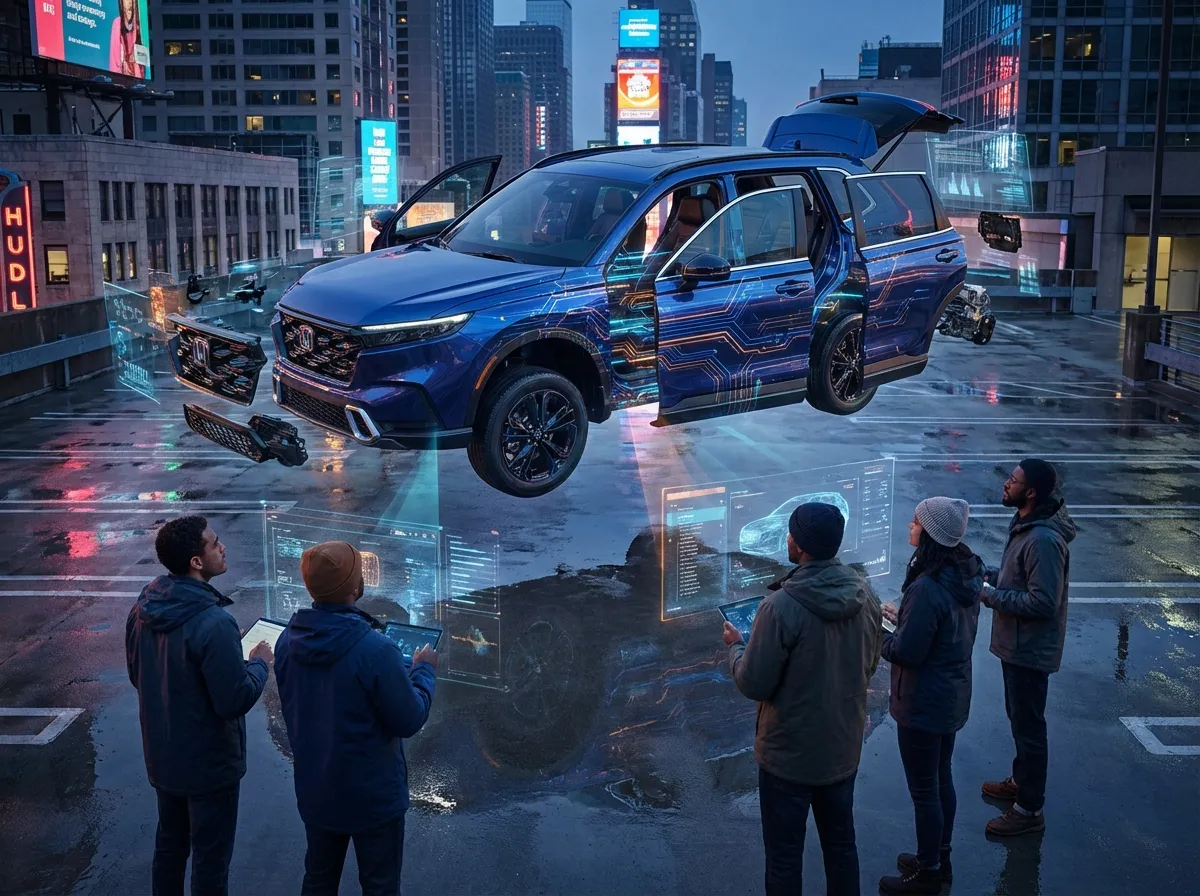
In industry terms, a “software-defined vehicle” (SDV) is one where key functions are controlled, refined, and often added or removed via software—not just fixed hardware at the time of manufacture. SUVs are increasingly built on centralized computing architectures, where a handful of powerful domain controllers replace dozens of independent ECUs.
For buyers, that means the vehicle’s character can change significantly during ownership. Power delivery, driver-assistance behavior, infotainment UX, energy management, and even suspension tuning can be updated without visiting a dealership. Tesla pushed this model first, but legacy brands like Mercedes-Benz, BMW, Hyundai–Kia, and GM are redirecting development budgets from traditional options packaging to software services.
The strategic shift is huge. Automakers see billions in potential recurring revenue via subscriptions and upgrades, while regulators are watching closely to ensure safety-critical updates are robust and transparent. For the SUV shopper, this creates both opportunity and complexity: the spec sheet on delivery day is just the starting point, not the full story.
OTA Updates: From Bug Fixes to Performance and Safety Enhancements
OTA updates used to mean navigation map refreshes and minor bug fixes. In the latest SUVs, they’re touching core driving systems.
On modern EV and hybrid SUVs, OTA pushes can refine thermal management and battery control algorithms, translating into real-world range changes or faster DC fast-charging curves. Drivetrain updates can adjust torque distribution in all‑wheel‑drive systems to improve efficiency or traction in specific drive modes. Some performance-oriented SUVs have received recalibrated throttle and shift mapping, effectively altering 0–60 mph behavior and drivability feel over time.
Safety and driver-assistance updates are increasingly delivered OTA as well. Calibration tweaks to adaptive cruise control, lane‑keeping assist, and automatic emergency braking can improve detection accuracy, reduce false positives, and adapt to new regulatory test protocols. Automakers can also deploy cybersecurity patches rapidly to address vulnerabilities in connected features, from telematics modules to smartphone key systems.
For owners, the implications are twofold. First, an SUV can actually get better—safer, more refined, and sometimes quicker—after purchase. Second, staying current with updates becomes part of basic maintenance. Skipping or delaying major firmware releases may eventually affect compatibility with new apps, charging network features, or vehicle‑to‑grid capabilities on plug‑in SUVs.
Subscriptions, Feature Unlocks, and the New Pricing Landscape
One of the most controversial trends in software-defined SUVs is the move toward “features as a service.” Many late‑model SUVs now ship with latent hardware—extra cameras, radar modules, heated components, or audio hardware—that is only partially enabled by default. Software unlocks then turn on additional functionality, sometimes permanently via a one‑time fee, sometimes via subscription.
Examples include upgraded driver-assistance suites (hands‑free highway assist layers on top of basic adaptive cruise), enhanced navigation with live traffic and EV route planning, premium audio processing, and even higher power outputs on some EV drivetrains via software torque limits. In cold‑weather markets, heated seats, steering wheels, and remote start functionalities have also been packaged as connected services on certain models.
For enthusiasts, the key is to distinguish between truly value‑added software (e.g., improved lane-centering algorithms, advanced trail mapping on off‑road SUVs, integrated charging and trip planning) and paywalls around already‑installed, basic comfort features. Over a 5–10 year ownership cycle, recurring micro-subscriptions can easily add up to thousands of dollars.
From a resale perspective, there’s another twist: some unlocked features are tied to the vehicle, others to the original user account. A used buyer may not inherit every previously paid software upgrade unless the brand’s ecosystem explicitly supports transfer. Understanding a specific automaker’s policy here is now as important as checking CPO warranties.
Centralized Architectures, Data, and Long-Term Support Risks
Modern SUV electronics are shifting from a “federated” architecture—many small, task-specific control units—to a centralized or zonal architecture with powerful compute nodes. This allows faster OTA rollouts, richer graphics, and more sophisticated driver-assistance functions. It also consolidates risk: if a central controller or software platform is discontinued early, long-term support can become problematic.
As vehicles become more like rolling computers, lifecycles are drifting out of sync. Hardware such as power electronics, motors, and body structure can be viable for 15–20 years, but infotainment systems, connectivity modules, and application-layer software may be effectively obsolete after less than a decade. This raises pointed questions for long-term SUV ownership:
- How long will the manufacturer provide critical security patches?
- Will basic connected functions (remote lock/unlock, app control, cloud‑based navigation) still work when cellular networks deprecate older standards?
- Can critical modules be upgraded or retrofitted, or is the entire system locked to its original generation?
Several automakers are shifting to in‑house operating systems or deeply customized Android Automotive‑based stacks. That can enable tighter integration and faster innovation, but it can also limit third‑party support if the brand eventually exits or restructures a product line. Enthusiasts who plan to keep an SUV well past warranty should pay close attention to publicly stated software support timelines and track records on previous models.
Data handling is another dimension. Connected SUVs generate high‑resolution data on driving behavior, location, and system performance. Automakers increasingly rely on this fleet data to refine algorithms and validate advanced driver-assistance systems (ADAS). Buyers should review privacy policies, opt‑out options, and how anonymized data is leveraged, particularly when considering semi‑autonomous SUV platforms.
What Shoppers Should Evaluate Beyond the Traditional Spec Sheet
For technically minded buyers and enthusiasts, evaluating a software-defined SUV now involves a deeper checklist than “engine, transmission, options.” Key areas to scrutinize include:
- OTA Scope and Roadmap: Determine what systems are updatable (infotainment only vs. full vehicle stack), how often updates are deployed, whether you can schedule or defer them, and what the brand has actually delivered historically—not just what’s promised.
- Connectivity Hardware: Check the embedded modem’s supported standards (4G LTE vs. 5G), eSIM capabilities, and whether the vehicle supports Wi‑Fi, Bluetooth LE, and future V2X infrastructure. This impacts longevity of connected features and potential for future services.
- Software Ecosystem and App Strategy: Understand whether the SUV runs a proprietary OS, Android Automotive, or another platform, and how that affects app availability, smartphone mirroring (Apple CarPlay/Android Auto), and future integrations like home energy or smart‑home systems.
- Feature Ownership Model: Clarify what’s included permanently, what requires a subscription, and what can be unlocked later. Ask whether purchased upgrades are tied to the vehicle VIN or the user account, and how those carry over for second owners.
- Update Transparency and Control: Look for detailed release notes, clear rollback policies (or lack thereof), and user control over when major updates are installed—especially if they affect driver-assistance behavior or performance tuning.
Test drives should include time in the infotainment and settings menus, exploring how configurable key systems are and how intuitive software management feels. For plug‑in and fully electric SUVs, dig into energy management screens, route planners, charging station integration, and whether the brand supports plug‑and‑charge standards that simplify public charging sessions.
Conclusion
SUVs are rapidly evolving from static hardware products into dynamic, software‑defined platforms. Over‑the‑air updates, feature unlocks, centralized compute, and data‑driven development are changing what it means to buy, own, and eventually sell a vehicle. For enthusiasts, this opens new possibilities: performance and capability that genuinely change over time, and sophisticated digital ecosystems tailored to individual preferences.
But the shift also introduces new variables—ongoing software costs, support lifecycles, data privacy, and the risk that a once‑cutting‑edge system ages quickly in a fast‑moving tech landscape. The most informed SUV buyers will now evaluate brands not only as metal and mechanics, but as software vendors with distinct philosophies on openness, pricing, and long‑term commitment.
Understanding these software dynamics up front will be as crucial as any traditional spec comparison—and may ultimately determine which SUVs hold their value, remain enjoyable, and stay secure well into the next decade.
Sources
- [McKinsey & Company – The Software-Defined Vehicle: Automotive’s Next Act](https://www.mckinsey.com/industries/automotive-and-assembly/our-insights/the-software-defined-vehicle) - Industry analysis of how software-defined architectures are transforming vehicle development and revenue models
- [U.S. National Highway Traffic Safety Administration (NHTSA) – Cybersecurity in Modern Vehicles](https://www.nhtsa.gov/technology-innovation/cybersecurity) - Overview of cybersecurity considerations and regulatory focus for connected and OTA‑enabled vehicles
- [European Union Agency for Cybersecurity (ENISA) – Cybersecurity for Connected and Automated Cars](https://www.enisa.europa.eu/publications/cybersecurity-and-resilience-of-smart-cars) - Technical and regulatory perspective on connected vehicle security and software update challenges
- [Tesla – Software Updates](https://www.tesla.com/support/software-updates) - Real‑world example of OTA update scope, including performance, safety, and feature additions over a vehicle’s lifecycle
- [BMW Group – Digitalization and the Software-Defined Vehicle](https://www.bmwgroup.com/en/innovation/digitalization.html) - OEM perspective on centralized compute, vehicle OS development, and the role of digital services in future models
Key Takeaway
The most important thing to remember from this article is that this information can change how you think about Industry News.