SUVs are no longer just about size, stance, and status. Over the past 18 months, a wave of new safety technology, regulatory pressure, and crash-test requirements has begun to quietly reshape how sport-utility vehicles are engineered, priced, and marketed worldwide. For buyers and enthusiasts, this shift affects everything from what shows up on dealer lots to how future models will look, drive, and protect their occupants.
This industry pivot is especially visible in the SUV segment, where higher ride height, greater mass, and family-focused usage put safety under the brightest spotlight. Understanding what’s changing—and why—can help you read beyond the brochure and make smarter long-term decisions.
Regulatory Pressure Is Forcing Smarter, Not Just Bigger, SUVs
Governments and safety agencies in major markets are tightening crash standards and active-safety expectations, and SUVs are in the crosshairs due to their popularity and size.
In the United States, the National Highway Traffic Safety Administration (NHTSA) has updated its New Car Assessment Program (NCAP) roadmap to give more emphasis to advanced driver-assistance systems (ADAS) such as automatic emergency braking (AEB), lane-keeping support, and pedestrian detection. While these aren’t yet mandatory for every vehicle across the board, they are heavily prioritized in star ratings and consumer-facing safety information. In parallel, proposed rulemakings are pushing toward broader adoption of AEB and safer vehicle fronts for pedestrians and cyclists.
Europe is even further ahead. The latest Euro NCAP protocols now assess “vulnerable road user” protection in far greater detail, including the performance of AEB when detecting pedestrians and cyclists at junctions and in low-light scenarios. Euro NCAP’s 2023–2025 roadmap has prompted SUVs sold in the EU and UK to change hood profiles, front bumper structures, and camera/radar placement to improve impact outcomes. Manufacturers that build global platforms are increasingly designing to these stricter benchmarks first, then adapting to other regions.
For SUV shoppers, this regulatory pressure is sharpening the difference between truly up-to-date models and those living on older platforms. A recently redesigned SUV is far more likely to offer robust pedestrian protection, advanced ADAS tuned for urban scenarios, and improved crash compatibility with smaller vehicles. That has real-world implications: two SUVs with similar dimensions and power can behave very differently in a mixed-traffic crash scenario based on how their structures and software have been engineered to these evolving standards.
Collision-Avoidance Tech Is Standardizing—But Not All Systems Are Equal
The biggest ongoing industry news in SUVs is the rapid “trickling down” of advanced safety features from premium to mainstream models, often as standard equipment. However, the terminology and capabilities can differ substantially between brands and trims.
Most new SUVs now offer some combination of:
- Forward collision warning (FCW) and automatic emergency braking (AEB) with vehicle detection
- Pedestrian and cyclist detection, sometimes including night-time operation
- Lane departure warning (LDW) and lane-keeping assist (LKA)
- Blind-spot monitoring (BSM) and rear cross-traffic alert (RCTA)
- Traffic sign recognition and intelligent speed assist (ISA) in some regions
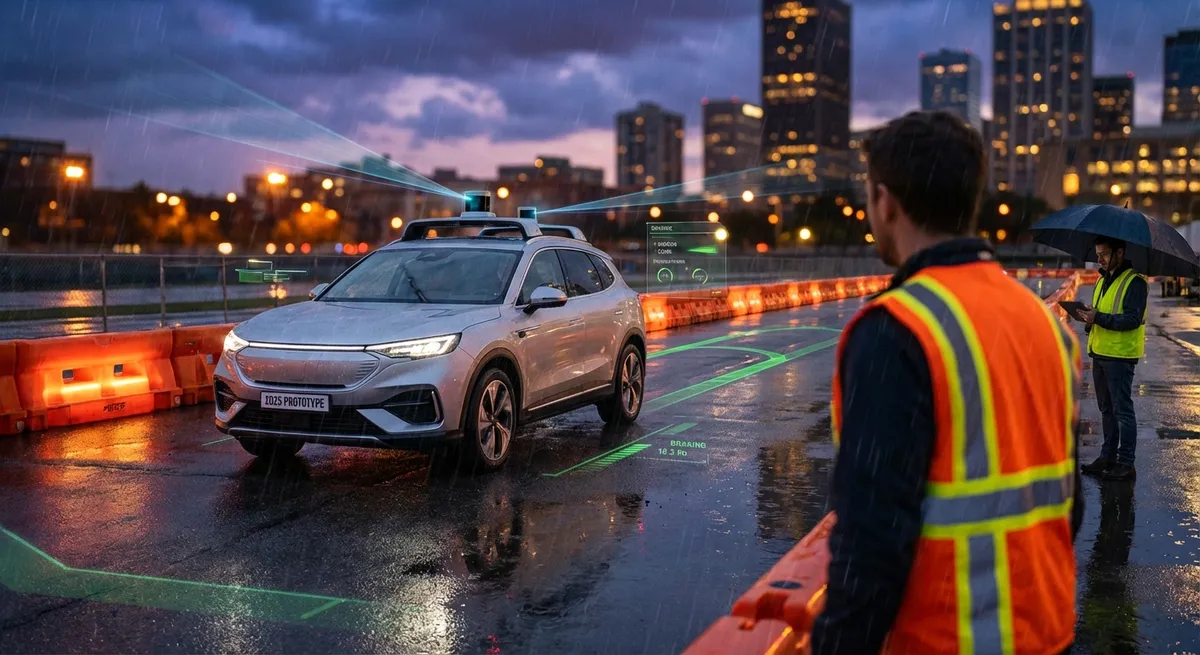
Technically, the variation lies in sensor suites and software tuning. Some volume-brand SUVs rely solely on a forward-facing camera for AEB and LKA to keep costs down, while higher-end or newer platforms integrate radar and, increasingly, short-range lidar to improve detection in rain, fog, and low light. Higher compute power and better software also enable features like junction AEB (braking for oncoming traffic while turning), cross-traffic AEB, and more natural lane-centering with fewer “ping-pong” corrections.
Buyers should pay close attention to independent tests. The Insurance Institute for Highway Safety (IIHS) in the U.S. and Euro NCAP in Europe now test the performance of AEB and lane-keeping in real and simulated scenarios, scoring both crash-avoidance effectiveness and driver engagement. Some SUVs with impressive spec-sheet claims perform inconsistently in these evaluations, while others with less marketing hype deliver smoother, more reliable interventions.
The takeaway for enthusiasts and informed shoppers: look beyond whether an SUV merely has AEB or lane-keeping. Drill into the specific test results, sensor configuration, and feature behavior. A 2025 midsize SUV with camera-radar fusion, updated software, and “Top Safety Pick+” or 5-star Euro NCAP ratings is in a fundamentally different league than an older-design SUV that meets only the legal minimum.
Crash Compatibility and Front-End Design Are Becoming Central Engineering Targets
A key industry storyline—often overlooked in consumer marketing—is the push to improve “crash compatibility” between SUVs and smaller vehicles, as well as with pedestrians and cyclists. Historically, high-riding, body-on-frame SUVs posed particular risks to occupants of lower vehicles because of bumper and frame height mismatches. That’s changing.
Newer SUV platforms are incorporating:
- Lower front crash beams and subframes, designed to align better with sedans and compact cars, helping share crash energy instead of overriding smaller vehicles.
- Multi-stage front structures, with “soft” upper zones that deform more gradually in pedestrian and cyclist impacts, while stiffer lower sections manage vehicle-to-vehicle collisions.
- Active hood systems in some markets, where the rear of the hood pops up slightly upon detecting an impact with a pedestrian, increasing the crush zone between the hood and hard engine components.
Industry engineering reports and safety assessments highlight how these changes are particularly relevant in urban and suburban environments where SUVs co-exist with vulnerable road users. An SUV’s apparent bulk does not automatically guarantee superior safety—especially when considering injuries outside the vehicle. The most advanced designs aim to broaden the protection envelope beyond the cabin.
From a technical standpoint, this shift is also influenced by the growing adoption of mixed-material body structures (higher-strength steels, aluminum, hot-stamped components). These materials allow engineers to tune specific crash zones for progressive deformation, balancing rigidity in the cabin with controlled crush up front and at the sides.
For buyers, it’s worth noting that these front-end and structural changes can subtly affect SUV styling—slightly higher hood lines, thicker front fenders, or more pronounced bumper forms often have safety as well as aesthetic rationale. If you’re comparing an outgoing model to a fresh redesign, expect the newer version to have a front structure engineered with more attention to pedestrian protection and cross-vehicle compatibility.
Heavier EV and Hybrid SUVs Are Forcing a Rethink of Safety Trade-Offs
The rapid rise of electric and plug-in hybrid SUVs has triggered a critical industry conversation: how to manage the safety implications of significantly heavier vehicles, often with very rapid acceleration.
Battery packs can add hundreds of kilograms to an SUV’s curb weight versus a comparable internal-combustion model. While that extra mass can benefit occupants of the heavier vehicle in a two-car collision, it also increases the forces involved for everything and everyone outside it. Regulators and safety institutes are watching this closely as EV and hybrid SUVs gain market share.
On the engineering side, manufacturers are responding with:
- High-strength, rigid battery enclosures integrated into the vehicle’s floor structure, designed to maintain cabin integrity while preventing cell puncture or thermal runaway in severe crashes.
- Reinforced side structures and underbody protection to handle pole impacts and underride scenarios with heavy battery packs.
- Advanced stability and traction control tuned for high instant torque and altered weight distribution, mitigating loss-of-control events.
However, that additional mass also affects stopping distances and crash energy management. Brake systems in modern EV SUVs typically feature larger rotors, enhanced regenerative braking coordination, and more robust thermal management. Meanwhile, active-safety systems (such as AEB and adaptive cruise control) increasingly integrate more predictive algorithms to account for the vehicle’s weight and torque characteristics.
From a buyer’s perspective, the industry trend is clear: safety in EV and hybrid SUVs goes beyond simple crash-test star ratings. Assess how each model addresses battery safety, side-impact protection, and braking performance under sustained loads. Range and 0–60 mph times may dominate the headlines, but the real long-term story is how SUV platforms evolve to safely manage EV-level mass without compromising other road users.
Data-Driven Safety: Over-the-Air Updates and Real-World Feedback Loops
Perhaps the most transformative, yet least visible, development in SUV safety is the emergence of data-driven feedback loops enabled by connected vehicles and over-the-air (OTA) software updates. Where traditional safety improvements depended on multi-year model refreshes, many 2025-model SUVs can now gain refined ADAS behavior and updated calibration in months.
Manufacturers collect anonymized performance data from millions of miles of real-world driving: when AEB triggers, when lane-keeping is overridden, how adaptive cruise control behaves in dense traffic, and where false positives cause drivers to turn systems off. In parallel, crash databases and insurance claims provide post-incident detail on what worked and what didn’t.
This information feeds back into:
- Recalibrated AEB thresholds to reduce nuisance braking while still responding quickly to genuine threats.
- Improved lane-centering logic, better able to handle faded lane markings, construction zones, and complex interchanges.
- Refined driver-monitoring systems, detecting distraction or drowsiness with greater accuracy and fewer false alarms.
With OTA capability, these updates can be deployed fleetwide, effectively “versioning” the safety performance of an SUV over its life. Some automakers now explicitly mention in their technical documentation that ADAS features are subject to improvement via software, much like smartphone apps.
For enthusiasts and tech-savvy buyers, this raises new considerations: a 2024 SUV with strong hardware and an active OTA strategy may end up safer in 2027 than a 2025 SUV with limited connectivity and static software. It also means early media reviews capture only a snapshot of system behavior; subsequent software revisions can materially change how the SUV intervenes in real-world scenarios.
When cross-shopping, look into whether the SUV’s safety systems are routinely updated, whether change logs are published, and how transparent the brand is about ADAS revisions. The industry is moving from “safety at launch” to “safety as a service,” and SUVs are at the forefront of that shift.
Conclusion
SUV safety in 2025 is evolving on multiple fronts at once: stricter regulations, more sophisticated sensor suites, re-engineered structures for compatibility, the growing mass and power of electrified models, and an emerging data-first mindset that treats software updates as a core safety tool. For buyers and enthusiasts, the key is to recognize that not all “safe” SUVs are engineered—or maintained—equally, even when the brochure language sounds similar.
By paying attention to independent crash and ADAS test results, understanding how weight and platform design affect real-world outcomes, and evaluating a brand’s approach to connectivity and updates, you can separate genuinely advanced safety engineering from marketing jargon. The headline story is simple: the next generation of SUVs isn’t just getting bigger and more powerful—it’s being reshaped by a global push to make them smarter and more protective for everyone on and around the road.
Sources
- NHTSA – New Car Assessment Program (NCAP) - Details U.S. government crash-test and safety rating methodologies and planned updates, including emphasis on ADAS.
- Euro NCAP – 2030 Roadmap and Protocols - Outlines evolving European safety assessment criteria, including pedestrian/cyclist protection and active safety systems.
- IIHS – SUV Safety Research and Ratings - Provides crash-test results, crash-avoidance evaluations, and technical notes on SUVs and other vehicle types.
- U.S. Department of Energy – Vehicle Weight and Fuel Economy - Explores the relationship between vehicle mass (including SUVs) and efficiency, relevant to EV and hybrid SUV design trade-offs.
- National Transportation Safety Board (NTSB) – Collision-Avoidance Systems Reports - Offers in-depth investigations and recommendations on collision-avoidance technologies and their real-world effectiveness.
Key Takeaway
The most important thing to remember from this article is that this information can change how you think about Industry News.