Over the next few model years, SUV shoppers will feel the impact of a quiet but major shift: global regulators, safety agencies, and automakers are tightening crash standards, rewriting driver-assistance rules, and redesigning vehicle structures. For enthusiasts and serious buyers, this isn’t just about more acronyms on the spec sheet—it changes how SUVs are engineered, what technologies become standard, and which models will age well in terms of safety, resale, and insurability. This article breaks down five key developments that are already influencing the SUV market and what they mean when you’re comparing models or planning your next upgrade.
1. Tougher Crash Tests Are Forcing Structural Redesigns
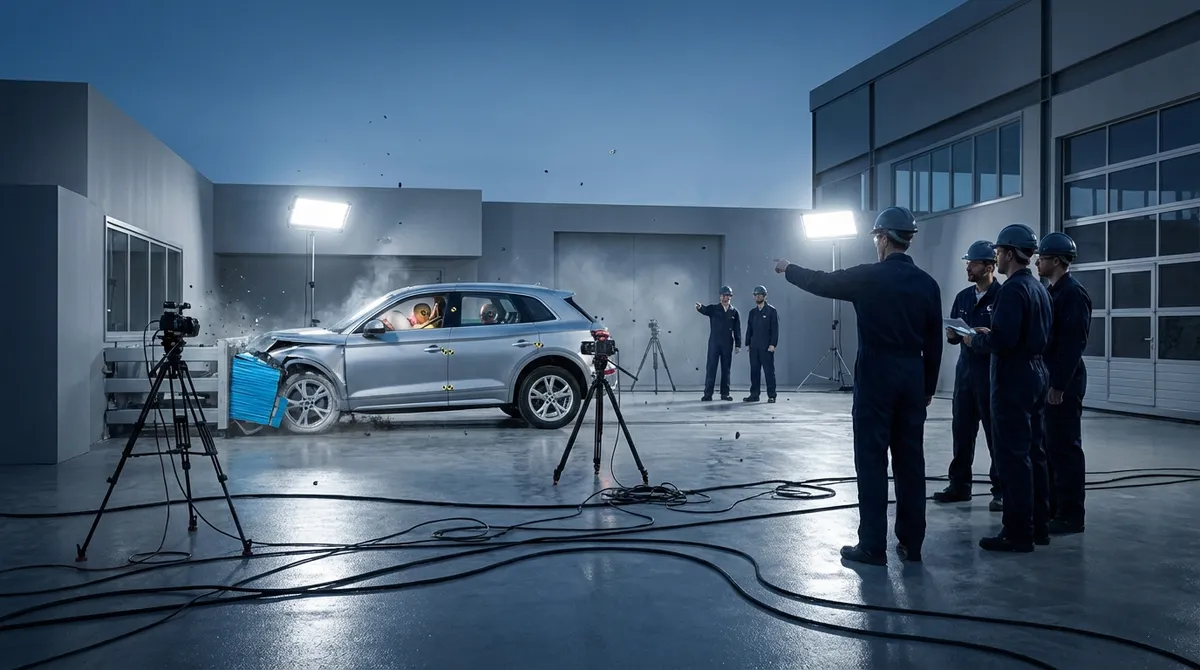
Around the world, crash-test organizations are updating their protocols, and SUVs are in the crosshairs because of their size, weight, and front-end height.
The U.S. Insurance Institute for Highway Safety (IIHS) has introduced a more demanding “moderate overlap” rear-seat test and updated side-impact tests that use a heavier, faster-moving barrier to better simulate modern SUVs hitting each other. This is exposing weaknesses in vehicles that previously aced legacy tests, especially in rear passenger protection and side structures. Similarly, Europe’s Euro NCAP has added far stricter evaluations for occupant protection and safety tech, including far-side impact performance and vulnerable road user protection.
For SUV shoppers, this means a 5-star rating or “Top Safety Pick” award from a few years ago is not directly comparable to a current rating under new criteria. Automakers are responding with re-engineered crash structures: stronger A- and B-pillars, more ultrahigh-strength steel in the cabin safety cell, load-path redesigns to manage crash energy, and optimized subframes to reduce footwell intrusion. You’ll also see more structural adhesives, hydroformed components, and tailored blank steel (varying thicknesses in a single stamped part) to add strength without a huge weight penalty.
As these standards tighten, expect mid-cycle refreshes that include “under-the-skin” structural revisions, not just styling tweaks. When cross-shopping, pay attention to the model year: a 2023 SUV and a visually similar 2026 update may behave very differently in new tests, even if the brochure looks nearly identical.
2. Pedestrian and Cyclist Protection Is No Longer Optional
Regulators and safety bodies are increasingly focused on SUVs’ impact on pedestrians and cyclists, especially in urban environments where large vehicles share space with unprotected road users.
Higher front ends and flatter hoods typical of SUVs pose a greater risk in a collision compared to lower passenger cars. Euro NCAP, the U.S. National Highway Traffic Safety Administration (NHTSA), and other global programs now explicitly include pedestrian head, pelvis, and leg impact performance in their scoring. This has real design consequences: more deformable front bumpers, “soft” zones beneath the hood, and additional space between the hood surface and rigid engine components so the hood can deform and absorb energy.
Some manufacturers are adding pop-up active hoods that raise a few centimeters in a collision to soften the blow to a pedestrian’s head, and refined energy-absorbing structures behind exterior panels. The move toward slimmer LED lighting modules and radar/lidar units integrated behind fascias is not purely aesthetic—it also helps designers tune impact surfaces.
Advanced driver-assistance systems (ADAS) are being calibrated specifically to detect pedestrians and cyclists at night and in complex traffic scenarios. Forward-collision warning and automatic emergency braking (AEB) systems that can identify vulnerable road users are increasingly required to earn top safety scores in multiple markets. If you are comparing SUVs, dig into the details: “AEB with pedestrian detection” may sound universal, but performance can vary widely in independent tests, especially in low-light or cross-traffic situations.
3. Advanced Driver Assistance Is Becoming a Regulated Baseline, Not a Luxury Extra
What used to be high-end options are rapidly turning into table stakes. ADAS features such as lane-keeping assist, adaptive cruise control, blind-spot monitoring, and automatic emergency braking are being mandated or strongly encouraged worldwide.
In the U.S., most major automakers have voluntarily agreed, in coordination with NHTSA and the Insurance Institute for Highway Safety, to equip nearly all new light vehicles with automatic emergency braking as standard. Europe and several other regions are going further, requiring intelligent speed assistance (ISA), lane-keeping, and driver monitoring on new models. These rules directly affect SUVs, which are now frequently sold as family-haulers and long-distance cruisers where fatigue and distraction can be significant risk factors.
From an engineering standpoint, this pushes SUVs toward higher sensor density and more computing power: multiple radar units (short- and long-range), front and rear cameras, sometimes a forward lidar on high-end models, and increasingly sophisticated sensor fusion software. Even mainstream SUVs now run high-speed in-vehicle networks (often Ethernet backbone) and powerful domain controllers instead of simple ECUs dedicated to single functions. That architecture is what enables more advanced semi-automated driving features over time.
For buyers, this means:
- Base trims are much safer than they were a few years ago, but…
- Higher trims or option packages can still significantly improve ADAS sophistication (better lane-centering, more natural adaptive cruise behavior, higher operating speeds, and more robust pedestrian/cyclist detection).
- OTA (over-the-air) updates can materially change how your SUV performs in safety-critical situations by updating ADAS algorithms.
When researching, don’t just ask whether an SUV “has AEB” or “has lane keep.” Look for independent performance evaluations and pay attention to whether the system supports hands-free operation (and under what conditions), how it handles curves, lane merges, and adverse weather, and whether it’s been updated post-launch via software.
4. Battery Safety and Fire Standards Are Redefining Electric and Plug-In SUVs
The rapid expansion of electric SUVs (and plug-in hybrid SUVs with large traction batteries) is forcing the industry and regulators to confront high-voltage safety and thermal management in new ways.
Battery chemistries are evolving—from traditional nickel-manganese-cobalt (NMC) cells to lower-cost, more stable lithium iron phosphate (LFP) chemistries, and, in some premium applications, high-nickel blends for better energy density. At the same time, governments and standards bodies are implementing more rigorous test procedures for thermal runaway, water intrusion, and crash-induced battery damage.
To meet these demands, modern electric SUVs are adopting:
- Structurally integrated battery packs that double as part of the vehicle floor while maintaining robust protective enclosures.
- Advanced battery management systems (BMS) that constantly monitor cell temperatures, voltages, and currents to preempt overheating.
- Zoned thermal management: separate cooling loops for the battery, power electronics, and cabin, all controlled by centralized software for efficiency and safety.
- More fire-resistant materials around the pack and underbody shielding to protect from road debris impacts.
There is also growing policy focus on post-crash handling and storage of EVs, including guidelines for first responders and repair shops. Automakers publish detailed emergency response guides outlining how to disable high-voltage systems and manage submerged or fire-involved vehicles. Some regions are exploring new labeling standards so that towing and storage facilities can quickly identify EV and plug-in SUVs and apply appropriate safety protocols.
For buyers and enthusiasts, the key takeaways are:
- Battery warranty length and conditions are becoming a proxy for confidence in thermal and long-term durability engineering.
- Cooling system design (liquid-cooled vs. air-cooled, pack-level vs. module-level cooling) can influence both performance (fast charging, towing capability) and safety.
- Crash-test and fire investigations involving EV SUVs are feeding back into stricter design guidelines; newer platforms often incorporate lessons from early-generation models.
5. Data, Cybersecurity, and Over-the-Air Updates Are Now Core Safety Concerns
As SUVs become rolling computers with constant connectivity, regulators are recognizing that safety is no longer just about steel and airbags—it’s also about software integrity, data privacy, and cybersecurity resilience.
Modern SUVs may run dozens of control units linked by high-speed networks and multiple wireless interfaces: cellular 4G/5G, Wi-Fi, Bluetooth, keyless entry, and sometimes V2X (vehicle-to-everything) communications. This connectivity allows for OTA updates that can fix bugs, refine ADAS behavior, and even alter handling characteristics (such as stability control tuning or brake blending in hybrids and EVs). However, it also creates potential attack surfaces.
The United Nations has adopted regulations (UN R155 and R156) requiring cybersecurity management systems and software update management processes for new vehicles in many markets. These standards push manufacturers to harden their electronic architectures, implement secure boot and encrypted communication between ECUs, and maintain lifecycle monitoring of vulnerabilities.
For SUV owners, this has several implications:
- Expect more frequent software updates, some of which may be mandatory to maintain full safety functionality or compliance.
- Certain features (for example, autonomous lane-change, enhanced adaptive cruise, or improved collision avoidance) may roll out after you purchase the vehicle.
- Data generated by your SUV—sensor logs, video from driver-assist cameras, telematics data—may be used in safety development and crash investigations, but also raises privacy and data retention questions. Different regions (EU, U.S. states, etc.) are implementing varying degrees of consumer data protection rules that automakers must follow.
Technically minded enthusiasts should pay attention to:
- Whether the manufacturer publishes a vulnerability disclosure policy or participates in coordinated security research programs.
- The separation between infotainment and safety-critical domains (properly designed vehicles isolate the two with secure gateways).
- How quickly the brand has responded to known software issues or recalls in the past.
The industry trend is clear: safety is becoming a dynamic, software-maintained property, not a static snapshot at the time of sale. When considering a new SUV, it’s worth evaluating not only its physical safety performance but also the automaker’s track record in software maintenance, cybersecurity, and transparency.
Conclusion
SUV safety is undergoing a significant transformation driven by stricter crash tests, heightened concern for vulnerable road users, mandated driver-assistance technologies, evolving battery regulations, and the rise of software-defined vehicles. For enthusiasts and serious buyers, this shift means that a smart purchase decision now requires understanding far more than horsepower, ground clearance, or cargo volume.
The best-prepared SUV shoppers will:
- Compare safety ratings using the latest test protocols, not historical headlines.
- Look beyond feature checklists to real-world performance of ADAS and pedestrian protection.
- Evaluate battery and electronic architectures as carefully as powertrains and suspensions.
- Consider an automaker’s software and cybersecurity posture as a core part of long-term ownership.
As these trends accelerate, the SUV segment will likely see even greater differentiation between brands and platforms that embrace the new safety paradigm and those that treat it as a compliance exercise. Staying informed about these developments can help ensure that your next SUV isn’t just powerful and comfortable, but also engineered to meet the safety expectations of the decade ahead.
Sources
- IIHS – Updated Side Impact and Moderate Overlap Tests - Details on newer crash-test procedures and rating criteria that are influencing SUV structural design
- Euro NCAP – Future and Current Safety Protocols - Explains evolving test methods for occupant, pedestrian, and cyclist protection and the role of ADAS in ratings
- NHTSA – 5-Star Safety Ratings and AEB Commitments - U.S. government overview of safety ratings, advanced safety technologies, and industry agreements on automatic emergency braking
- U.S. Department of Energy – Electric Vehicle Safety and Batteries - Technical background on EV battery safety, thermal management, and emergency response considerations
- UNECE – Vehicle Cybersecurity and Software Update Regulations (UN R155/R156) - Official documentation on international regulations governing in-vehicle cybersecurity and software update management
Key Takeaway
The most important thing to remember from this article is that this information can change how you think about Industry News.