The SUV market is evolving fast, and nowhere is that more obvious than in safety and driver-assistance technology. What used to be luxury add-ons—lane-keeping aids, adaptive cruise control, advanced crash structures—are now becoming core to how automakers design and market their latest SUVs. For enthusiasts and serious shoppers, this shift isn’t just about ticking option boxes; it affects how these vehicles perform, feel on the road, and hold value over time. Below, we unpack five key developments in SUV safety tech that are reshaping the segment right now.
1. Collision Avoidance Moves From “Emergency” to “Predictive”
Most buyers are now familiar with automatic emergency braking (AEB), but what’s changing in 2025–2026 SUVs is how early and how intelligently those systems react.
Modern SUVs increasingly combine:
- Forward radar to measure distance and relative speed
- High-resolution cameras to classify vehicles, pedestrians, and cyclists
- Ultrasonic sensors to sense close-range obstacles in low-speed scenarios
- Enhanced software models that predict trajectories, not just react to them
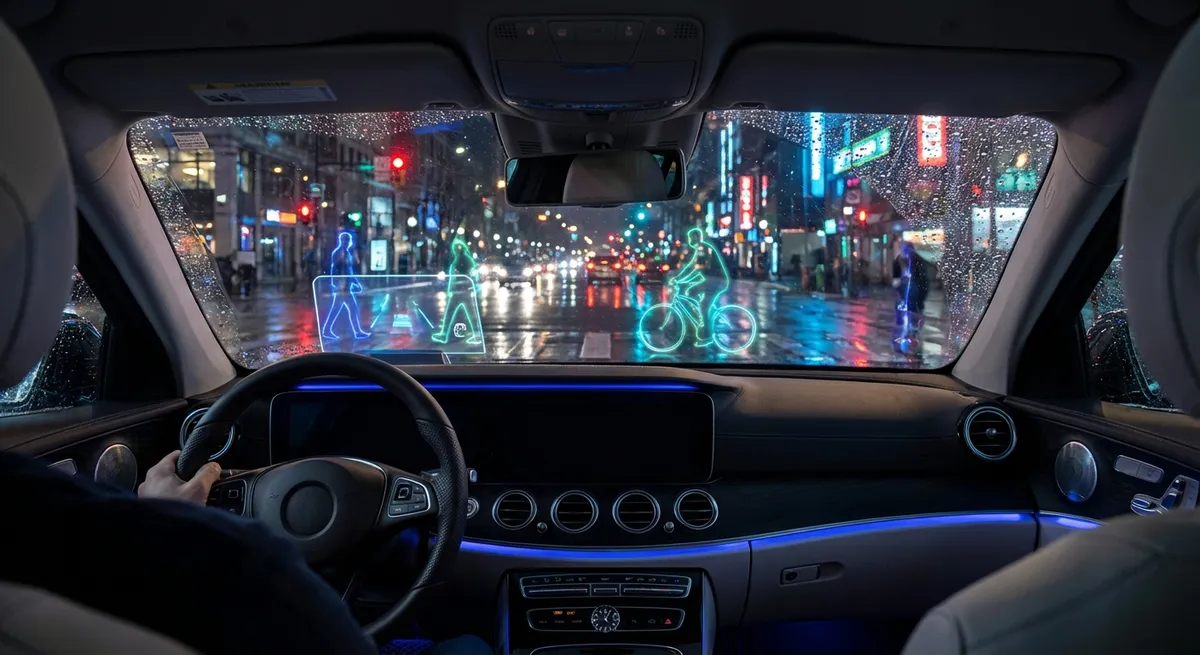
Instead of waiting for an imminent impact, newer collision-avoidance systems calculate whether a vehicle is likely to run a red light, whether a cyclist is on a collision course at an intersection, or if a pedestrian hidden behind a parked car is about to step out. In many late-model SUVs, that means earlier warnings, smoother brake interventions, and more time for the driver to respond manually.
For enthusiasts, this matters because more intelligent tuning reduces “false positives” that cause abrupt, unsettling brake applications. Manufacturers are increasingly offering selectable sensitivity or drive modes that alter how aggressively the SUV intervenes. If you’re test-driving, explore menus labeled “pre-collision sensitivity,” “AEB timing,” or “driver assistance level”—they tell you how much configuration the vehicle allows.
Pay attention as well to intersection support and cross-traffic AEB. SUVs with advanced AEB often now integrate:
- Intersection collision mitigation: Warns and may brake if you turn across oncoming traffic.
- Rear AEB with cross-traffic detection: Can automatically brake when backing out of a parking space into moving traffic.
These features reflect a broader trend: safety tech that addresses the specific real-world crash scenarios SUVs frequently see—busy suburban intersections, crowded parking lots, and multi-lane urban traffic.
2. From Lane-Keeping to Highway Assist: Understanding the Levels
The industry is aggressively marketing “hands-free” or “semi-autonomous” highway systems on SUVs, but capabilities and limitations vary sharply.
Most current SUV systems fall into SAE Level 1 or Level 2 automation:
- Level 1: Either steering assist OR speed control (adaptive cruise).
- Level 2: Combined lane-centering and adaptive cruise; vehicle handles both steering and speed but requires continuous driver oversight.
Key technologies behind these systems include:
- Lane-centering control (LCC) using cameras and, in some cases, fused radar data to track lane markings.
- High-definition maps and GPS in more advanced highway assist systems to anticipate curves, speed limits, and lane merges.
- Driver monitoring cameras to verify that you’re watching the road, especially in “hands-free” modes.
SUV shoppers should closely evaluate:
- Operational design domain (ODD) – Where does the system legally and technically work? Some “hands-free” modes are restricted to pre-mapped divided highways only and disengage at intersections or in construction zones.
Lane-change behavior – Does the system simply keep you in the lane, or can it change lanes automatically with a tap of the turn signal? How smooth are those maneuvers at highway speeds?
3. Driver engagement requirements – Steering-wheel torque sensors vs. camera-based attention monitoring. Camera-based systems typically allow more relaxed hand placement but are stricter about eye-contact with the road.
On a test drive, don’t just activate these systems and be impressed that they steer; probe how they handle:
- Tight curves with faded lane markings
- Adjacent large vehicles (like trucks) that may cause “edge wandering”
- Light rain or glare conditions that challenge the camera
You’re effectively evaluating both the sensor performance and the control algorithms, which can differ markedly across brands, even on similarly priced SUVs.
3. Structural Safety: How New SUVs Are Being Re-Engineered for Crash Tests
While the sensors and screens get the headlines, significant evolution is happening where you can’t see it: the crash structure. Several recent safety ratings and updated tests have pushed manufacturers to redesign SUV underpinnings and body structures.
Key structural trends include:
- Greater use of ultra-high-strength steel (UHSS) in the A- and B-pillars, roof rails, and rocker panels. These sections form a “safety cage” designed to maintain survival space even in severe impacts.
- Multi-load-path front ends, where crash forces are distributed through several engineered paths to avoid intrusion into the passenger compartment.
- Redesigned rear structures to better protect second and third-row occupants in moderate-speed rear impacts and rear-offset crashes.
- Improved small-overlap crash performance, where only a small portion of the front corner impacts a barrier—a historically challenging test for larger SUVs.
For families or anyone using third-row seating, the latest crash-test protocols place more emphasis on rear occupant protection and side-impact forces that can intrude into the cabin. Modern SUVs are adding:
- Thicker door beams and reinforced B-pillars
- Larger curtain airbags that extend further to cover third-row glass areas
- Improved seat belt load limiters and pretensioners for second-row passengers
When comparing SUVs, look not only at the overall safety rating, but at the subscores for:
- Small-overlap front (driver and passenger side)
- Rear occupant protection
- Side impact and roof strength
These details highlight whether the manufacturer has merely met the minimum standard or pushed for a more advanced structure tuned for real-world crash scenarios.
4. Night Driving and Adverse Weather: Headlights, Visibility, and Sensor Resilience
Modern SUVs are significantly more capable at night than models from even five years ago—not just in terms of raw lighting power, but beam control and glare management.
Several advanced features are reshaping nighttime safety:
- Adaptive driving beams (ADB): Matrix LED or pixel LED systems that selectively dim only portions of the beam to avoid blinding oncoming drivers while maintaining high-beam-level illumination elsewhere.
- Curve-adaptive headlights: Light modules swivel in response to steering input or GPS data, illuminating the path deeper into corners.
- Dynamic auto-leveling: Adjusting the vertical aim to account for vehicle load (especially critical in SUVs that tow or carry heavy cargo).
Rating agencies and regulators increasingly test and rate headlight performance. Shoppers should note that headlights can differ by trim level, even within the same SUV lineup. Higher trims may get full adaptive systems, while base models have simpler reflector or projector LEDs.
Sensor performance in adverse weather is another growing differentiator:
- Heated camera lenses and radar covers: Prevent snow and ice accumulation that can disable critical systems.
- Wiper integration: Some SUVs use wiper-position data and washer-fluid use to infer degraded visibility and may warn the driver when camera performance is compromised.
- Redundant sensors: Combining radar, cameras, and sometimes lidar to maintain operation if one sensor is partially obstructed.
Enthusiasts should ask two practical questions during winter or rain-soaked test drives:
What warnings does the SUV provide when driver-assist systems are degraded by weather?
Does the vehicle fail gracefully (clear, early warnings and minimal surprises), or does it abruptly disengage assistance at critical moments?
As safety tech becomes more integrated into everyday driving, reliability under marginal conditions matters as much as headline capabilities on clear, dry roads.
5. Data, Over-the-Air Updates, and Long-Term Ownership Impacts
A less visible but hugely consequential shift is how SUVs now rely on software-defined features and over-the-air (OTA) updates for safety and driver assistance.
Modern architectures often include:
- Centralized computing platforms handling ADAS (advanced driver-assistance systems), infotainment, and connectivity.
- High-speed vehicle networks (Ethernet, CAN-FD, FlexRay) allowing large volumes of sensor data to move quickly between ECUs and central processors.
- Telematics modules that can download new firmware and calibration files directly over cellular networks.
For owners, this means:
- Safety improvements after purchase: Braking algorithms, lane-keeping behavior, and camera recognition models can be refined via software, sometimes improving performance years into ownership.
- Feature enablement: Some SUVs ship with hardware present but certain features (e.g., advanced highway assist, parking automation) disabled until activated by subscription or one-time fee.
- Diagnostic visibility: Automakers can gather anonymized data on system failures, near-misses, and intervention statistics to improve future calibrations.
However, enthusiasts and long-term buyers should think critically about:
- Update policies: How long does the manufacturer commit to providing security and safety updates—5 years, 8 years, or longer?
- Software dependencies: If you disable connectivity or live in an area with poor coverage, can you still receive critical safety updates via dealer service?
- Resale value: SUVs with robust OTA capability and continued feature support may hold value better, while models with outdated or unsupported software platforms could feel “old” more quickly than their mechanical condition suggests.
When researching a new SUV, treat software support like you would engine reliability or transmission durability. Ask about the brand’s history of updates, read owner forums, and look for documented improvements released after launch. The next generation of “safety recalls” may be as likely to arrive via a software patch as through a dealership visit.
Conclusion
SUV safety and driver-assistance technology is advancing on multiple fronts at once: smarter collision avoidance, more capable highway assist, stronger crash structures, better night-time visibility, and software platforms that evolve long after you leave the showroom. For enthusiasts and serious shoppers, understanding these developments isn’t just academic—it directly affects how your SUV feels, how confidently you can use its technology, and how future-proof your purchase will be.
When you’re cross-shopping models, look past the marketing names and focus on how these systems are engineered, what conditions they’re designed for, and how transparently they communicate their limits. The best new SUVs don’t just add more technology; they integrate it in a way that genuinely supports, rather than replaces, an attentive driver.
Sources
- NHTSA – 5-Star Safety Ratings & Advanced Vehicle Safety Technologies – Official U.S. government crash-test ratings and overviews of current safety technologies and regulations
- IIHS – Vehicle Ratings and Crash Test Protocols – Detailed test results and methodology for crashworthiness, crash avoidance, and headlight performance across SUV segments
- SAE International – Driving Automation Levels Explained – Technical definitions of automation levels used to classify modern driver-assistance and “hands-free” systems
- Euro NCAP – Safety Assist and ADAS Performance Assessments – European testing and scoring of driver-assistance systems, including AEB and lane-keeping technologies
- National Safety Council – Advanced Driver Assistance Systems (ADAS) Overview – Independent explanations of ADAS features, benefits, and limitations for everyday drivers
Key Takeaway
The most important thing to remember from this article is that this information can change how you think about Industry News.