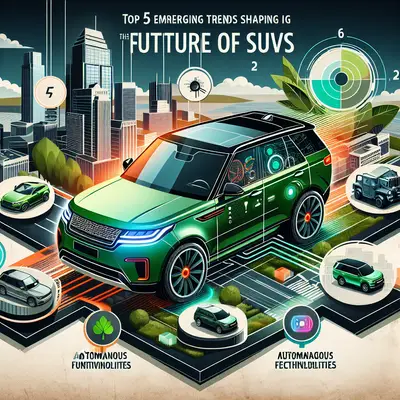
SUV news in 2026 isn’t just about bigger touchscreens or slightly better fuel economy. The way people own, power, update, and insure their SUVs is shifting fast—driven by software, regulation, and a new wave of business models from automakers and tech companies.
This isn’t a future-tense forecast; it’s already unfolding. For enthusiasts and serious buyers, understanding these changes is now as important as comparing horsepower and cargo volume.
Below are five industry shifts reshaping how SUVs are built, priced, and used—and what they actually mean when you’re standing at the dealership, configuring a build, or signing a subscription contract.
1. Subscription and “Flexible Ownership” Are Moving From Experiment to Option
OEMs and third parties are quietly normalizing SUV subscription models, and the terms are getting more sophisticated.
Instead of traditional leasing, some brands now offer all‑inclusive monthly plans covering the vehicle, insurance, maintenance, roadside assistance, and often the home charging hardware for plug‑in or EV SUVs. BMW, Volvo (via Care by Volvo), and several premium brands have piloted or deployed such offerings in select markets, with more regional rollouts planned through 2026.
Technical and contractual details that matter:
- Mileage ceilings and overage fees: Subscriptions often come with strict annual or monthly mileage caps. For high‑mileage drivers (long‑distance commuters, frequent road‑trip enthusiasts), per‑mile overage can eliminate any cost advantage over a conventional lease.
- Telematics‑based usage tracking: Most subscription SUVs rely heavily on built‑in connectivity and telematics control units (TCUs). The same hardware that powers over‑the‑air (OTA) updates and connected services is also used to monitor mileage, driving patterns, and in some cases charging behavior for plug‑ins and EVs.
- Trim and model switching: Higher‑tier plans sometimes allow switching between models—e.g., a compact SUV during the week and a three‑row SUV for road trips. But there are usually blackout periods, advance‑notice requirements, and service fees for frequent swaps.
- Residual value and depreciation risk: For enthusiasts who like to trade often, subscriptions transfer most residual‑value risk to the provider. You pay a premium for flexibility, but you’re not exposed to resale volatility from rapid EV battery tech shifts or changing emissions rules.
For buyers, the key is running total cost of use over a realistic 2–3‑year period, not just comparing monthly subscription vs. lease payments. Factor in insurance, maintenance, tires, and home charging infrastructure if you’re going electrified.
2. Over‑the‑Air Updates Are Turning SUVs Into Rolling Software Platforms
Modern SUVs increasingly ship with high‑bandwidth OTA capability, letting automakers push updates to the infotainment system, driver‑assistance stack, battery management software, and even chassis and powertrain calibration.
This software‑defined architecture is changing ownership in several ways:
- Post‑purchase performance changes: Some SUVs now offer software‑locked horsepower or torque levels that can be unlocked via paid upgrades. For EV and plug‑in SUVs, torque delivery curves, acceleration, and even top speed can be altered purely with code, without physical hardware changes.
- Adaptive driver‑assistance tuning: Advanced driver‑assistance systems (ADAS) such as lane‑keeping assist, adaptive cruise, and automated parking can be recalibrated over time. Automakers can refine camera and radar fusion algorithms, improve object classification, and adjust steering feel and braking thresholds via OTA.
- Battery longevity updates: For electrified SUVs, updates to battery management systems (BMS) can alter charge curves, temperature‑control logic, and usable state‑of‑charge windows. The goal is to balance range and degradation, but the tradeoffs—such as slightly slower DC fast‑charging to protect the pack—may appear after you buy the vehicle.
- Feature trials and subscriptions: Heated seats, adaptive headlights, and certain off‑road drive modes can be delivered as software‑controlled options. Automakers are experimenting with trial periods (30‑day tests of advanced navigation or off‑road assist) that automatically convert to paid services unless canceled—similar to streaming platforms.
For enthusiasts, this means spec sheets are less static than ever. When evaluating a new SUV:
- Ask which systems are OTA‑updateable (powertrain, ADAS, BMS, infotainment).
- Confirm whether critical safety systems can be altered only by the manufacturer or if dealer updates are required.
- Clarify which features are permanently included, which are time‑limited trials, and which are subscription‑locked.
Owning a software‑defined SUV now involves managing logins, app settings, and update windows almost as much as oil‑change schedules.
3. Safety and Emissions Rules Are Quietly Reshaping SUV Packaging
Global regulators are tightening emissions, fuel‑economy, and safety standards on a relatively aggressive timeline, and SUVs are right in the crosshairs because of their weight, frontal area, and outsized market share.
Three regulatory forces are driving visible changes in how SUVs are engineered:
Stricter fuel‑economy and CO₂ standards
- In the U.S., corporate average fuel economy (CAFE) and EPA greenhouse‑gas rules are pushing automakers toward high‑volume hybrids and plug‑in hybrids (PHEVs) in the SUV segment. Even off‑road‑oriented models are receiving mild‑hybrid or full‑hybrid drivetrains.
- In the EU and many other markets, fleet‑average CO₂ targets incentivize manufacturers to sell more low‑ and zero‑emission SUVs or face fines. This is why seemingly every mid‑size SUV now has a PHEV variant with 30–60 km (or more) of electric‑only range.
- Higher SUV hoods and mass have raised concerns about pedestrian crash outcomes. Regulators and ratings agencies (e.g., Euro NCAP, IIHS) have pushed automakers to rework front‑end structures, leading to:
- Softer, more energy‑absorbing bumper and hood designs.
- Optimized hood height and under‑hood packaging to create deformable “crush space.”
- More widespread deployment of pedestrian‑detection automatic emergency braking (AEB) and cross‑traffic alert systems.
- Headlight performance tests from organizations like IIHS have also driven rapid upgrades in adaptive LED and matrix lighting on SUVs.
- Evolving rating protocols now reward SUVs that include standard features like lane‑keeping assist, blind‑spot monitoring, rear AEB, and cyclist detection—often influencing packaging decisions and trim hierarchy.
- Some markets are moving toward requiring intelligent speed assistance (ISA) and driver‑monitoring systems (DMS) that track eye movement and attentiveness, particularly when semi‑automated driving features are engaged.
Pedestrian and vulnerable road‑user safety
Advanced crash‑avoidance expectations
For buyers and enthusiasts, the implications:
- Don’t just look at the star rating; dig into which tests were performed and how the SUV scored on pedestrian safety, headlight effectiveness, and crash‑avoidance tech.
- Recognize that additional electronic safety systems bring more sensors and cameras to maintain and calibrate—especially after windshield or bumper replacements.
- Expect modest changes in hood lines, beltlines, and bumper designs as manufacturers respond to evolving standards while trying to preserve signature styling cues.
4. Electrified SUVs Are Forcing a Rethink of Range, Charging, and Towing
SUVs are central to the electrification strategy of nearly every major automaker. But electrifying a tall, heavy, high‑drag vehicle creates unique engineering and ownership challenges that buyers must understand beyond the headline range figure.
Key technical and practical points:
- Aerodynamic drag and frontal area: SUVs generally have higher drag coefficients (Cd) and larger frontal areas than sedans. At highway speed, aero drag dominates energy consumption, which is why many electric SUVs see a steep drop in real‑world range vs. city driving, despite large battery packs.
- Battery pack mass and packaging: Floor‑mounted battery packs lower the center of gravity—a dynamic advantage for handling and rollover resistance—but also increase curb weight by several hundred kilograms. This affects:
- Brake sizing and cooling requirements.
- Tire load ratings and wear.
- Payload and towing limits.
- Thermal management: Effective liquid‑cooling systems for batteries, inverters, and motors are critical, especially for towing and high‑speed operation. When towing a trailer with an electric SUV, the cooling system may trigger power derating or reduced DC fast‑charge speeds to maintain durability.
- Towing and range: Enthusiasts who tow boats, campers, or enclosed trailers will see range drops of 30–50% or more in many cases. This is not a defect; it’s a function of increased drag and weight. The practical takeaway:
- Always evaluate towing‑with‑load efficiency, not just empty‑vehicle range.
- Check whether the automaker publishes towing‑specific range estimates or has route‑planning that accounts for trailer profiles in the navigation and energy‑prediction software.
PHEVs and full hybrids offer different tradeoffs:
- PHEV SUVs can deliver electric‑only commuting with an internal‑combustion safety net for long trips, but they add complexity (dual powertrains) and often have smaller fuel tanks or reduced cargo space.
- Full hybrids optimize efficiency without plug‑in capability, typically improving city fuel economy significantly while providing electric torque assist for smoother launches and better low‑speed response.
For potential buyers, deciding among gas, hybrid, PHEV, and full EV SUVs now requires looking beyond sticker range and focusing on:
- Daily driving vs. road‑trip vs. towing profiles.
- Access to home or workplace charging.
- Local incentives, emissions zones, and fuel or electricity costs in your region.
5. Insurance, Repair Costs, and Data Are Becoming Purchase‑Deciding Factors
Under the hood and behind the dashboard, modern SUVs now pack a dense combination of sensors, high‑speed networks, and complex body structures designed around crash performance and aerodynamics. This has a direct impact on insurance premiums and long‑term repair costs.
What’s changing:
- Sensor‑laden bumpers and windshields: Radar modules, parking sensors, ultrasonic arrays, lidar units (on some higher‑end models), and camera clusters are integrated into bodywork that is more expensive to repair or replace. A minor front or rear collision can require:
- Replacement of painted bumper covers, grilles, and badging.
- Re‑aiming radar units and recalibrating ADAS cameras.
- Specialized diagnostic procedures to ensure systems like AEB and lane‑keeping operate correctly.
- High‑strength steels and bonding techniques: To meet crash standards while controlling weight, automakers use mixed‑material body structures (ultra‑high‑strength steel, aluminum, composites) and advanced joining methods (adhesives, laser welding). These can require:
- Certified repair facilities.
- Specific repair procedures and equipment.
- More labor hours vs. simpler, older body structures.
- Telematics and usage‑based insurance (UBI): Insurers increasingly offer usage‑based policies that rely on in‑vehicle telematics or smartphone apps to monitor driving behavior—acceleration, braking, nighttime driving, and mileage. Some OEMs partner with insurers to share vehicle data (with consent) in exchange for potential discounts.
For SUV owners and enthusiasts, this changes the pre‑purchase checklist:
- Get model‑specific insurance quotes before you buy, comparing trims with and without large ADAS bundles or panoramic glass roofs, which can materially affect repair costs.
- Ask about ADAS sensor calibration requirements and whether your local body shops are certified to work on your chosen brand and model.
- Review your comfort level with data sharing; reading the fine print on UBI programs and connected‑services agreements is becoming as important as reading the warranty booklet.
As SUVs add more tech and structural sophistication, the purchase price becomes only one piece of the financial puzzle. Insurance, repairability, and data policy can be long‑tail costs that smart buyers now weigh up front.
Conclusion
The SUV segment is evolving from a simple choice of size and powertrain toward a layered decision involving software ecosystems, regulatory pressures, electrification realities, and lifecycle costs.
For enthusiasts and serious buyers, staying ahead of these developments means:
- Treating OTA capability and subscription models as core product attributes, not side notes.
- Evaluating how safety and emissions rules are shaping design and drivetrains behind the scenes.
- Assessing electrified SUVs with a focus on real‑world use cases—especially highway travel and towing.
- Accounting for insurance, repair complexity, and data policies when calculating total cost of ownership.
In 2026 and beyond, the smartest SUV purchase won’t just be about finding the best spec sheet—it will be about choosing the right mix of hardware, software, and ownership model for how you actually drive.
Sources
- U.S. Environmental Protection Agency – Light‑Duty Vehicle Regulations – Overview of U.S. greenhouse‑gas and fuel‑economy standards affecting SUVs
- National Highway Traffic Safety Administration (NHTSA) – CAFE Standards – Details on corporate average fuel‑economy rules and their impact on vehicle design
- Insurance Institute for Highway Safety (IIHS) – Ratings & Research – Crash test results, headlight evaluations, and safety‑feature studies for SUVs
- Euro NCAP – Future Safety Requirements – Insights into upcoming European crash‑avoidance and pedestrian‑safety expectations
- National Association of Insurance Commissioners (NAIC) – Usage‑Based Insurance Brief – Background on telematics and data‑driven insurance models relevant to connected SUVs
Key Takeaway
The most important thing to remember from this article is that this information can change how you think about Industry News.