SUVs are no longer just about displacement, ground clearance, and leather packages. As automakers race to digitize cabins, monetize software, and stabilize supply chains, the SUV market is quietly rewriting its business model. For enthusiasts and serious shoppers, understanding these shifts is becoming as important as knowing horsepower or tow ratings.
This industry update breaks down how the SUV landscape is changing right now—focusing on five key developments that will affect pricing, ownership experience, long‑term value, and what you should look for before signing a contract.
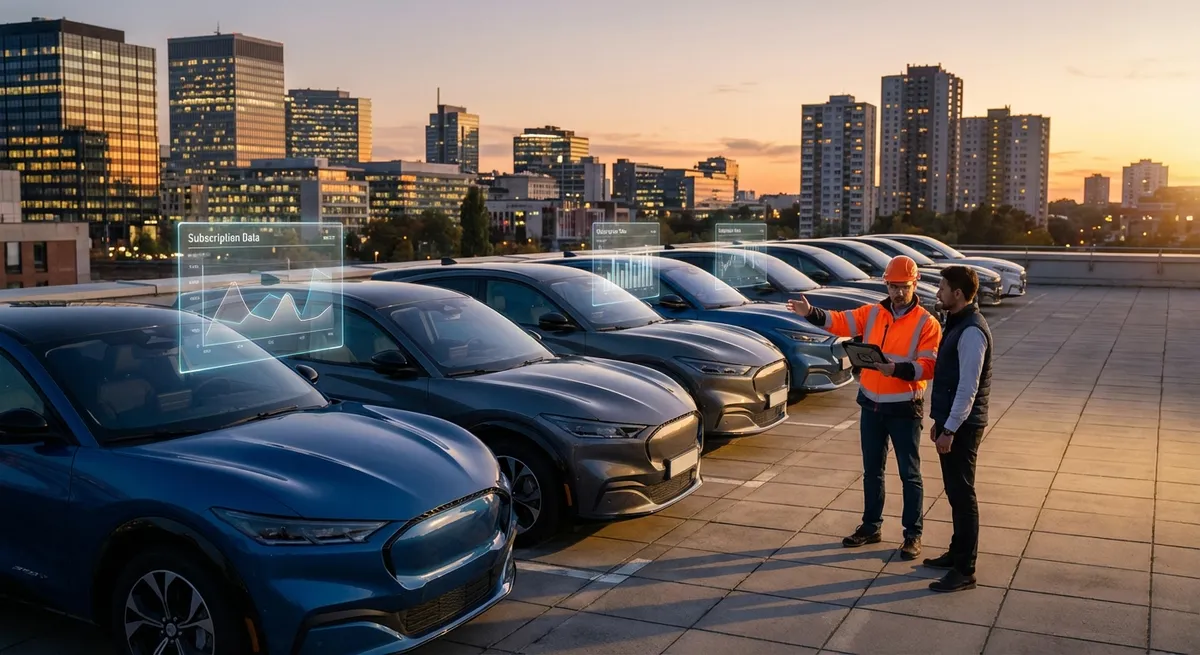
1. Subscription Features Are Turning SUVs into Rolling App Stores
Automakers are increasingly treating SUVs as platforms for recurring revenue, and that’s changing how features are priced and delivered.
Many brands now design hardware‑ready vehicles, then “unlock” capabilities via software. For example, an SUV may ship with all the necessary hardware for adaptive cruise control, but the full feature set might require a paid subscription or one‑time software unlock. BMW drew global attention when its heated-seat subscription pilot surfaced, and other brands are experimenting with similar models, especially in connected services and driver-assistance bundles.
For enthusiasts, the technical implication is that the vehicle’s electronic architecture—domain controllers, Ethernet backbones, and over‑the‑air (OTA) update capability—now directly influences what can be added or improved after purchase. On new SUV platforms, features like improved shift logic, enhanced off‑road modes, or revised adaptive damping can be deployed via software instead of requiring mechanical changes.
Potential buyers should scrutinize two things: what’s standard vs. subscription-based, and how long critical services (navigation, telematics, remote access) remain free. Look at the fine print around “connected services packages,” which often shift from complimentary to paid after 3–5 years. While this model can extend an SUV’s functional lifespan, it can also turn ownership into a multi-layered monthly bill if you want full capability.
2. Supply Chain Recovery Is Stabilizing Prices—But Not Everywhere
The pandemic-era shortages of microchips and other components hit SUVs particularly hard because modern models are loaded with electronics—advanced driver-assistance systems (ADAS), complex infotainment, and powertrain controllers. With semiconductor capacity gradually improving, inventory levels for many mainstream SUVs are normalizing, but the recovery is uneven across segments.
High-content SUVs with advanced driver-assistance suites (e.g., highway assist, surround-view cameras, lidar- or radar-heavy systems) still depend on specialized chips and sensors. When these are constrained, manufacturers often prioritize higher-margin trims, which can leave entry-level or fleet-oriented SUV variants in shorter supply.
From a technical standpoint, SUVs with more sophisticated ECUs and sensor arrays—especially those built on new electronic architectures—are at higher risk when specific components run short. This can lead to “de-contented” builds, where an automaker temporarily deletes or downgrades a feature (such as certain parking aids or high-end audio) to keep production moving.
For buyers, this reinforces the importance of checking the Monroney sticker or equipment sheet carefully: what was standard last year might be missing this year due to supply workarounds, even if the trim name is the same. As the supply chain stabilizes, discounts are returning in some segments, but niche off-road SUVs and performance-oriented models with complex hardware often remain price-firm.
3. Regulatory Emissions Pressure Is Reshaping SUV Powertrains, Not Killing Them
Tightening emissions and fuel-economy regulations in North America, Europe, and parts of Asia are pushing automakers to rethink SUV powertrains—but not necessarily to abandon them. Instead, the trend is toward a broader spectrum of efficiency technologies within the SUV format.
Manufacturers are deploying mild hybrids (48‑volt starter‑generator systems), full hybrids, and plug‑in hybrids (PHEVs) across SUV lineups to meet fleet-average CO₂ and fuel-economy targets. Technical strategies commonly include:
- Downsized turbocharged engines with Miller or Atkinson cycle operation
- Integrated starter-generators that smooth stop-start and provide torque fill
- Electrified rear axles for on-demand all-wheel drive without a full mechanical transfer case
- Higher compression ratios and cooled exhaust gas recirculation (EGR) for combustion efficiency
Some performance SUVs now combine electric assistance with turbocharged engines to maintain or exceed previous power levels while improving efficiency. For example, pairing a small-displacement turbo engine with an e-axle or hybrid transmission can yield instant torque at low RPM, compensating for turbo lag while supporting better test-cycle fuel economy numbers.
For enthusiasts, this means evaluating an SUV’s drivetrain not just by peak horsepower, but by its hybrid architecture (series, parallel, power-split), battery capacity, and how regenerative braking is tuned. For buyers in regions with strict future emissions rules, opting for a hybrid or PHEV SUV may also offer better long-term regulatory resilience—especially if city centers move toward low‑emission zones.
4. Software-Defined SUVs Are Redefining Longevity and Resale Value
The term “software-defined vehicle” is quickly becoming standard in industry conversations—and SUVs are at the forefront of this shift. Rather than designing each new model with bespoke ECUs for every function, automakers are migrating to centralized computing platforms and service-oriented software architectures.
Practically, this means:
- A smaller number of high-performance controllers replacing dozens of separate modules
- A high-speed in-vehicle network (often automotive Ethernet) feeding sensors and actuators
- OTA updates that can revise everything from throttle mapping to ADAS behavior
This has two big implications for owners. First, capability can genuinely improve over time: better tuning for adaptive suspension, more refined lane-centering, or updated off-road traction algorithms can arrive via software. Second, long-term support becomes crucial—if an automaker stops issuing security patches or feature updates, an SUV can feel “digitally obsolete” even if its mechanicals are sound.
From a resale perspective, potential buyers of used SUVs will increasingly care about software update history, similar to how maintenance records are viewed today. A well-maintained software stack can reduce vulnerabilities, improve system stability, and maintain compatibility with evolving infrastructure (e.g., charging networks for plug-in SUVs, or maps and connectivity services).
Before purchasing, ask:
- How long are software and security updates guaranteed?
- Are major feature updates paid or complimentary?
- Is dealer involvement required for updates, or are they fully OTA?
SUVs built on newer, unified electronic platforms may hold value better, as they are more adaptable to future improvements—provided the manufacturer commits to long-term support.
5. Off-Road Tech Is Going Mainstream, Even on Urban-Focused SUVs
The off-road capability once reserved for dedicated 4x4s is trickling down into more mainstream SUVs, driven by both consumer interest and competitive positioning. However, much of this “capability” is software-mediated rather than purely mechanical.
Modern SUV off-road systems often integrate:
- Multiple terrain-select modes that alter throttle response, transmission shift points, ABS calibration, and traction-control thresholds
- Brake-based torque vectoring to simulate locking differentials by selectively braking spinning wheels
- Hill-descent and hill-ascent control, which use ABS and powertrain logic to maintain controlled speeds on steep grades
- Advanced camera systems—such as transparent hood views—stitched from multiple lenses to help with wheel placement
True mechanical hardware—two‑speed transfer cases, full-time 4WD with lockable center differentials, front and rear locking differentials, long-travel suspension, and high-profile all-terrain tires—remains the gold standard for sustained heavy off-road use. Yet many “soft-road” SUVs now offer surprising traction and downhill control in light trail situations thanks to increasingly sophisticated algorithms controlling brakes and power delivery.
For enthusiasts, the key is to separate marketing from engineering. If you plan to tackle serious trails, look at:
- Approach, breakover, and departure angles
- Ground clearance with actual tire size
- Presence (or absence) of low-range gearing
- Type of AWD/4WD system (on-demand clutch-based vs. full-time with locking capability)
Urban buyers, meanwhile, can benefit from this tech in bad weather and on unpaved roads, even if their SUV never sees a rock garden. Understanding which elements are software-only and which are supported by robust mechanical hardware helps you choose the right balance of capability, comfort, and cost.
Conclusion
The SUV market is undergoing a structural shift that extends far beyond styling updates and incremental power bumps. Subscription-based features are altering cost of ownership, supply-chain recovery is reshaping pricing and content, and regulatory pressure is driving a new generation of electrified powertrains. At the same time, software-defined architectures and advanced off-road technologies are transforming how capability is delivered and maintained over the life of the vehicle.
For enthusiasts and buyers alike, staying informed about these industry-level changes is now essential. Reading a spec sheet is no longer enough; you need to understand the business models, software strategies, and regulatory context behind the numbers. The SUVs that age best—both as driving machines and investments—will be the ones whose hardware, software, and long-term support are aligned with this new era.
Sources
- BMW Official Statement on Digital Services and Subscriptions - Overview of how BMW structures connected services and feature access
- U.S. Department of Energy – Hybrid and Plug-In Electric Vehicle Basics - Technical background on electrified powertrains used in modern SUVs
- McKinsey & Company – The Case for Software-Defined Vehicles - Industry analysis of centralized architectures and OTA strategies
- European Commission – CO₂ Emission Performance Standards for Cars and Vans - Regulatory context driving powertrain changes in SUVs sold in Europe
- U.S. National Highway Traffic Safety Administration (NHTSA) – ADAS and Vehicle Technology - Details on advanced driver-assistance systems commonly integrated into new SUVs
Key Takeaway
The most important thing to remember from this article is that this information can change how you think about Industry News.