When you’re spending new-SUV money, guessing is expensive. Modern sport-utility vehicles blend combustion engines, hybrid systems, software stacks, and complex driver-assistance tech in ways that are easy to misread in a quick showroom walkaround. This guide walks you through the critical checkpoints—from powertrain strategy to negotiation timing—so you can match the right SUV to your driving, avoid costly surprises, and hold your own with sales staff who do this every day.
1. Powertrain Strategy: Matching Engine, Hybrid, or EV to Real Use
Before colors, trims, or wheel designs, define how the SUV will actually be used. That determines whether you should target a conventional gas engine, hybrid, plug‑in hybrid (PHEV), or full battery‑electric SUV (BEV).
For mostly city and suburban driving with frequent stop‑and‑go, traditional naturally aspirated engines can feel sluggish and inefficient; turbocharged four‑cylinders or hybrids are typically better. Hybrids recapture braking energy and can dramatically improve fuel economy in urban cycles, while in highway‑heavy use, the gap between hybrid and gas narrows, making a well‑geared gas engine or mild hybrid equally compelling. PHEVs make sense if you have home charging and daily round‑trip mileage within the electric range; they can turn a commute into mostly electric miles without range anxiety on road trips. Full EV SUVs work best when you have reliable home or workplace charging, live near a robust DC fast‑charging network, and often drive predictable routes.
Study torque curves, not just horsepower; torque at low rpm determines how strongly the SUV pulls away from a stop or merges with traffic. A smaller turbo engine may have similar peak power to a larger V6 but deliver torque lower in the rev range, changing the feel entirely. Also, look at combined fuel economy or MPGe, but adjust mentally for your real-world mix of city vs. highway driving and climate (extreme cold or heat hits efficiency, especially for EVs). Finally, consider future fuel and electricity costs; regional gas prices, time‑of‑use electric rates, and potential incentives can tilt the lifetime cost equation decisively toward one powertrain type.
2. AWD, 4WD, and Capability: Beyond the Marketing Badges
Many buyers see “AWD” and assume it’s all the same. It isn’t. Understanding the hardware under the body shell helps you avoid paying for capability you’ll never use—or worse, overestimating what the vehicle can do.
Most crossovers use a front‑biased on‑demand AWD system with an electronically controlled rear differential or clutch pack. They drive the front wheels most of the time and send torque rearward when slip is detected or predicted. This is ideal for rain, light snow, and unpaved roads, but typically not designed for serious rock‑crawling or deep mud. In contrast, truck‑based SUVs with part‑time 4WD usually have a two‑speed transfer case with low range, mechanical or electronic locking differentials, and frame-based construction. These excel off‑road and in heavy towing but can feel less refined, heavier, and thirstier in daily driving.
Ground clearance, approach, breakover, and departure angles matter if you plan to leave pavement regularly. A rugged‑looking body kit with big wheels means nothing if the underbody clearance is modest and the front overhang is long. For winter climates, look for full‑time AWD or advanced traction control modes tuned for snow and ice, and pair them with proper winter tires; stability control and ABS depend on tire grip. If you’ll tow, go deeper than the advertised “max tow” number: verify the gross combined weight rating (GCWR), tongue weight limits, axle ratios, transmission cooling, and presence of trailer‑sway control. Many SUVs need an optional tow package to safely reach their headline rating.
3. Interior Ergonomics, Tech, and Safety Systems: What Actually Matters
SUV interiors are increasingly shaped by screens and software. It’s easy to be swayed by a massive central display, but thoughtful ergonomics, intuitive interfaces, and reliable safety systems matter more in daily use and over long ownership.
When you sit in the driver’s seat, focus on seat adjustability (including thigh support and lumbar), steering wheel reach and tilt, and visibility. Thin roof pillars and logically placed mirrors can reduce fatigue and make lane changes less stressful. Check whether climate controls, volume, and core vehicle functions have physical knobs or buttons; capacitive touch sliders and deep menu layers can be distracting on the move. During the test drive, deliberately operate the infotainment: how many taps does it take to adjust fan speed, change drive modes, or switch audio sources?
On the tech front, prioritize wired and wireless Apple CarPlay / Android Auto support, multiple USB‑C ports across rows, and over‑the‑air (OTA) update capability. OTA support can extend the functional life of the infotainment and driver‑assistance systems by enabling software improvements and security patches without dealer visits. For safety, look beyond the marketing name of the suite (e.g., “Safety Sense,” “ProPILOT,” etc.) and confirm which features are included on the trim you’re considering: adaptive cruise control with full stop‑and‑go, lane‑keeping assist, blind‑spot monitoring, rear cross‑traffic alert, and automatic emergency braking with pedestrian and cyclist detection are highly impactful in daily driving.
Investigate independent crash‑test ratings from organizations like the IIHS and NHTSA. Pay attention not just to overall scores, but to small overlap crash performance, headlight ratings, and the availability of advanced crash prevention systems. For families, evaluate LATCH anchor accessibility, rear door opening size, and whether three child seats can realistically fit across the second row if needed. These practical details often matter more than ambient lighting or a panoramic roof over time.
4. Total Cost of Ownership: Beyond the Monthly Payment
Dealer conversations often revolve around monthly payment, but what determines whether an SUV is “expensive” is its total cost of ownership (TCO) over several years. Two similarly priced models can differ by thousands of dollars in depreciation, maintenance, insurance, and energy costs.
Depreciation is typically the single largest cost. Historically, some brands and segments retain value better due to reliability records, fleet sales levels, and brand perception. Research projected resale values and average three‑ or five‑year depreciation curves for the specific model you’re considering. For powertrains, certain hybrids and EVs may hold value well in markets with strong demand for efficiency, while others may lag if charging infrastructure or incentives change.
Maintenance and repair costs vary widely. Check recommended service intervals for items like transmission fluid, spark plugs, timing belts or chains, and brake fluid. Some manufacturers include complimentary maintenance for a limited period, which can offset costs early in ownership. Hybrids and EVs generally have fewer wear items (no traditional automatic transmission in many EVs, less brake wear due to regenerative braking), but battery warranty coverage and replacement costs are key considerations—read the fine print on years and mileage.
Insurance premiums depend on repair complexity, theft rates, safety equipment, and your driving record. A high‑tech SUV with expensive LED matrix headlights and radar sensors in the bumper may cost more to insure than a simpler alternative, even if its purchase price is similar. Finally, model your real energy costs: use EPA fuel economy or MPGe estimates as a baseline, then plug in your expected annual mileage, local fuel prices, or electricity rates. For PHEVs and EVs, consider access to off‑peak charging and any local tax credits or rebates that effectively reduce cost.
5. Test Drive Methodology and Negotiation Timing
A well‑structured test drive tells you far more than a quick loop near the dealership, and a disciplined timing strategy on the negotiation side can translate that knowledge into a better deal.
When arranging a test drive, try to replicate your real usage patterns: include highway, stop‑and‑go, and, if relevant, rough pavement or a steep hill. Start with a cold start if possible to assess engine noise and idle smoothness. Pay attention to throttle response, transmission behavior (shifts under light and heavy acceleration), brake feel, and steering weight at low and high speeds. For hybrids and EVs, note the handoff between regenerative and friction braking and whether it feels predictable. Evaluate cabin noise levels at highway speeds by briefly turning off the audio and phone conversation; this gives you a better sense of wind and road noise than any spec sheet.
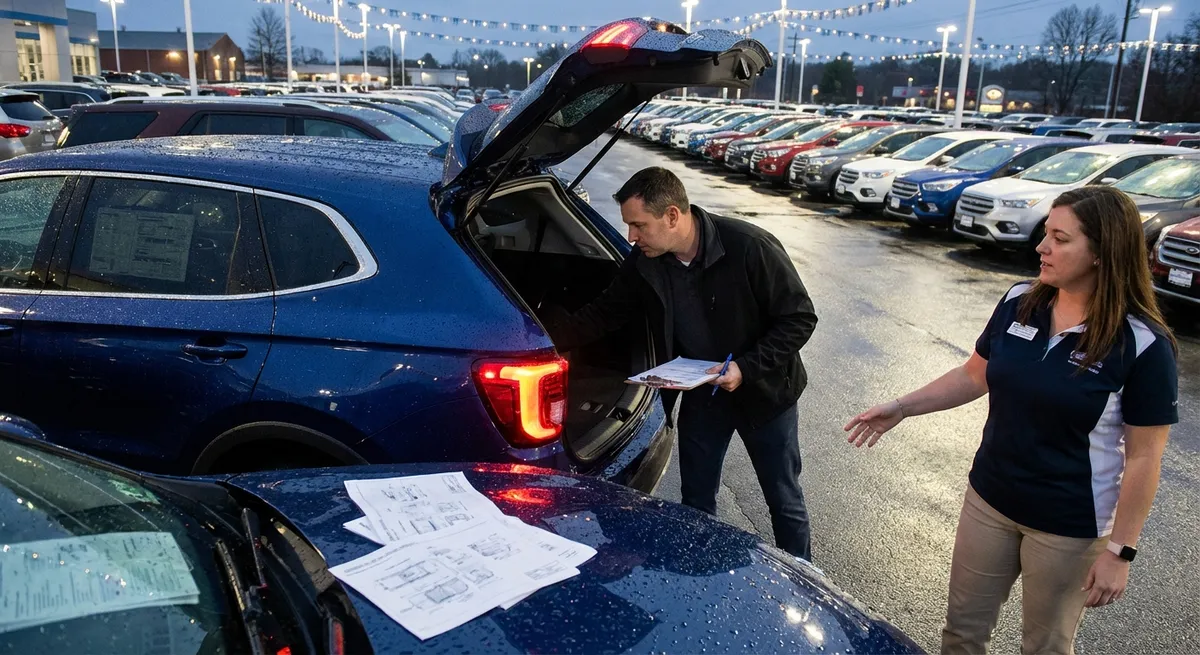
Bring a mental or written checklist: cargo loading height, ease of folding rear seats, spare tire presence (or lack thereof), and the fit of strollers, sports gear, or luggage you expect to carry often. Test parking maneuvers in a tight spot to evaluate camera clarity, sensor behavior, and turning radius. If possible, conduct at least two test drives on different days or times, and avoid making a same‑day decision based solely on emotional appeal or sales pressure.
On the negotiation side, timing can help. Manufacturers and dealers often have monthly, quarterly, and year‑end sales targets, which can lead to more aggressive pricing and incentives near these cutoffs. Research invoice pricing, current incentives, and typical market transaction prices from multiple sources. Secure pre‑approved financing from your bank or credit union beforehand; this gives you a benchmark and strengthens your position in dealership finance discussions. Separate the discussions of purchase price, trade‑in value, and financing terms—bundling them can obscure the true cost. Finally, scrutinize add‑ons like extended warranties, paint protection, and tire packages; some may be useful, but many are high‑margin items that can be negotiated or declined entirely.
Conclusion
The modern SUV market rewards informed buyers and punishes assumptions. By understanding powertrain trade‑offs, distinguishing real capability from marketing gloss, prioritizing ergonomics and safety over screen size, and focusing on total cost rather than monthly payment alone, you put yourself in control of the process. Combine that technical perspective with deliberate test drives and disciplined negotiation timing, and you’ll be far more likely to drive home in an SUV that fits your life, your budget, and your expectations for years to come.
Sources
- U.S. Department of Energy – Fuel Economy Guide - Official EPA fuel economy data for comparing gas, hybrid, PHEV, and EV SUVs
- IIHS – Vehicle Ratings - Independent crash-test results and safety feature evaluations for SUVs and other vehicles
- NHTSA – 5-Star Safety Ratings - Government safety ratings and recall information for new SUVs
- Edmunds – True Cost to Own - Depreciation, insurance, maintenance, and fuel cost projections for specific models
- Consumer Reports – Car Reliability and Owner Satisfaction - Long-term reliability data and owner experience feedback across SUV brands and models
Key Takeaway
The most important thing to remember from this article is that this information can change how you think about Buying Guide.