Choosing the right SUV today is less about picking a size and more about decoding a complex mix of platforms, powertrains, tech stacks, and long‑term cost realities. For enthusiasts and serious shoppers alike, “looks good and drives fine” is no longer enough—especially as SUVs grow more sophisticated (and expensive) every model year.
This guide walks through five critical dimensions you should analyze before signing, with a focus on the kind of technical and strategic detail that separates a quick purchase from a well‑engineered decision.
1. Defining Your Use‑Case Profile Before You Look at a Single Trim
Long before you compare horsepower or screen sizes, you need a realistic “use‑case profile.” This isn’t about vague labels like “family SUV” or “off‑roader”; it’s about quantifying how the SUV will live day‑to‑day.
Start by mapping your annual mileage and typical trip patterns: primarily urban stop‑and‑go, long highway commutes, or frequent mixed‑surface drives to trailheads and ski areas. This directly affects ideal powertrain choice; for example, plug‑in hybrids tend to shine for short urban commutes with frequent charging, while efficient turbo or diesel options cater better to high‑mileage highway users. Next, calculate true passenger and cargo requirements under realistic scenarios: traveling with two adults and children, adults only with bulky hobbies (camera gear, bikes, golf clubs), or occasional third‑row use for carpools or relatives. Measure your garage and parking constraints as well—length, height, and door swing clearance—because a full‑size three‑row SUV that barely fits will become a daily irritation.
Also consider seasonal needs: regular snow driving may justify all‑wheel drive with a specific bias (rear‑biased systems can feel more dynamic for enthusiasts, while front‑biased systems often prioritize efficiency). If you’ll tow, don’t just look at the brochure’s max rating; compute your real trailer weight including cargo, water, and accessories, and compare it against the SUV’s gross combined weight rating (GCWR) and tongue weight limits. Building a clear use‑case profile up front will filter out dozens of “almost right” models before you ever step into a showroom, saving both time and test‑drive fatigue.
2. Matching Powertrain Technology to How (and Where) You Drive
Modern SUVs are sold with an unusually wide range of powertrains: naturally aspirated engines, small turbocharged units, mild hybrids, full hybrids, plug‑in hybrids (PHEVs), and full battery electric vehicles (BEVs). Choosing among them is less about the buzzword and more about system behavior in your specific environment.
Turbocharged four‑cylinders, now common in compact and midsize SUVs, can deliver impressive torque at low rpm, which feels strong around town and helps with highway merging. However, under sustained high load—mountain grades, heavy towing, or aggressive driving—they may run hotter and spend more time in boost, worsening real‑world fuel economy versus window sticker figures. Enthusiasts who value throttle response and linear power delivery may still prefer a naturally aspirated V6 where available, even if it looks less efficient on paper. Full hybrid systems (not just 48‑V mild hybrids) can deliver surprising real‑world gains, particularly in city driving, because they recapture energy under braking and shut off the engine at idle; they’re also often tuned to feel seamless, making them a strong choice for drivers who want low running costs without plugging in.
Plug‑in hybrid SUVs demand honest evaluation of your charging routine. If you can charge at home or work and most trips are under the electric‑only range, you may run on electricity most of the time, with the engine serving as long‑range backup. But if you never plug in, you’re carrying extra weight and complexity without seeing the potential savings. Full EV SUVs shift the conversation to charging infrastructure, battery warranty terms, and cold‑weather performance. Check DC fast‑charge peak rates, charging curves, and preconditioning features if you take frequent road trips. No matter the powertrain, review thermal management design (liquid‑cooled batteries for EVs, transmission cooling for tow‑rated models) and read independent long‑term tests to see how the system behaves outside ideal conditions; manufacturer spec sheets rarely tell the whole story.
3. Evaluating Chassis Dynamics, Suspension, and Braking Beyond the Brochure
For drivers who care about how an SUV feels—rather than just how it looks—chassis engineering and suspension tuning matter as much as horsepower figures. Even within the same model line, wheel size, suspension type, and brake package can dramatically alter the driving experience.
Start with platform fundamentals: a well‑engineered unibody SUV with a rigid structure will feel more planted, quieter, and more predictable in emergency maneuvers than a flexy chassis. During a test drive, pay attention to how the vehicle responds to mid‑corner bumps and uneven pavement; excessive secondary motions or body shudder can signal compromises in structural stiffness or damping. Note which suspension layout is used at the rear—multi‑link systems generally allow better ride/handling balance than simple torsion beams, especially when loaded with passengers and cargo. If optional adaptive dampers or air suspension are available, understand their tuning philosophy: some systems primarily focus on comfort, while others have a true “dynamic” or “sport” mode that tangibly tightens body control and reduces squat and dive.
Wheel and tire choice is often underestimated. Larger wheels with low‑profile tires may look aggressive and can sharpen transient response, but they also increase unsprung mass and reduce sidewall cushioning, which can hurt ride quality and durability on rough roads. If you live in an area with poor pavement or winter conditions, a more conservative wheel size with higher‑profile all‑season or dedicated winter tires will often perform better overall. Braking systems deserve equal scrutiny: look for rotor size, caliper design, and the presence of upgraded brake packages on models with higher tow ratings or performance trims. During your test drive, perform a few firm, controlled stops from highway speeds (where safe) and note pedal feel, fade resistance, and straight‑line stability. These subtle dynamic cues will matter far more than an extra 20 horsepower in everyday enjoyment and confidence.
4. Treating Safety and Driver Assistance as Systems, Not Checkboxes
Advanced driver‑assistance systems (ADAS) have become central to SUV marketing, but the difference between a competent suite and a frustrating one can be night and day. Instead of treating “lane keeping” or “adaptive cruise” as binary features, evaluate how the entire safety system stack functions as a whole.
Begin with passive safety fundamentals: review crash‑test ratings from independent bodies and note both overall scores and sub‑ratings for side‑impact, small overlap, and rear‑seat protection. Pay close attention to head‑restraint effectiveness and rear‑seat belt design if you regularly carry passengers there. For active safety, look at standard versus optional equipment; some brands bundle critical functions like blind‑spot monitoring or rear cross‑traffic alert only on higher trims or packages, which affects both initial cost and future resale attractiveness. Equally important is calibration quality: adaptive cruise control that brakes too abruptly or follows too closely in default settings can be more stressful than useful, while poorly tuned lane‑centering that “ping‑pongs” between lines will likely get turned off.
Check how many sensors and modalities the system uses—cameras, radar, lidar (where present), and ultrasonic sensors each have different strengths and weaknesses in rain, snow, fog, and night conditions. Higher‑end SUVs may include driver monitoring systems that track eye position and head movement to ensure you’re attentive; this can enhance both safety and liability protection, but aggressive warnings can annoy if poorly tuned. Finally, think about future‑proofing: some SUVs now support over‑the‑air (OTA) updates for safety and ADAS, potentially improving performance or adding functionality over time. Investigate whether updates are free, subscription‑based, or limited to a certain period, and read owner reports about how often and how well these updates actually arrive.
5. Accounting for Lifetime Ownership Costs, Not Just the Deal Price
The list price, or even the negotiated “out‑the‑door” figure, tells only part of the financial story. Sophisticated SUVs with complex drivetrains and electronics can have diverging total cost of ownership (TCO) profiles over five to ten years, depending on maintenance, depreciation, insurance, and energy costs.
Start by comparing scheduled maintenance intervals and what each service actually includes. Some manufacturers require more frequent oil changes, transmission fluid services, or specialized procedures (such as battery coolant changes on PHEVs and EVs), which can materially increase costs. Determine whether the brand offers complimentary maintenance, and for how many years or miles, and verify what is truly covered. Insurance premiums can differ substantially among SUVs with similar sticker prices due to factors like crash‑test performance, theft rates, and average repair bills; obtain quotes for a few finalists before you decide, especially if you’re stepping up to a higher‑performance or luxury model.
Depreciation trends are critical for enthusiasts who may trade frequently or for buyers planning to keep an SUV long‑term. Research historical resale values for the brand and segment, noting how well hybrid, diesel, or performance variants have held up versus base models. For electrified SUVs, consider the impact of battery warranties and perceived battery longevity on future resale. Fuel or electricity costs should be modeled using your actual mileage and local prices; online calculators from government agencies and independent organizations can help you compare annual energy costs between gas, hybrid, and EV options under realistic conditions. Finally, consider long‑term parts and service availability: brands with strong dealer networks and third‑party support often offer lower repair costs and shorter downtime, which matters just as much as saving a few dollars per month on the initial finance payment.
Conclusion
A modern SUV purchase is a multi‑variable engineering problem masquerading as a lifestyle decision. When you systematically align your real‑world use case with the right powertrain, chassis dynamics, safety stack, and long‑term cost profile, you transform the process from “picking something that feels okay” into configuring a machine that genuinely fits your life and your driving standards.
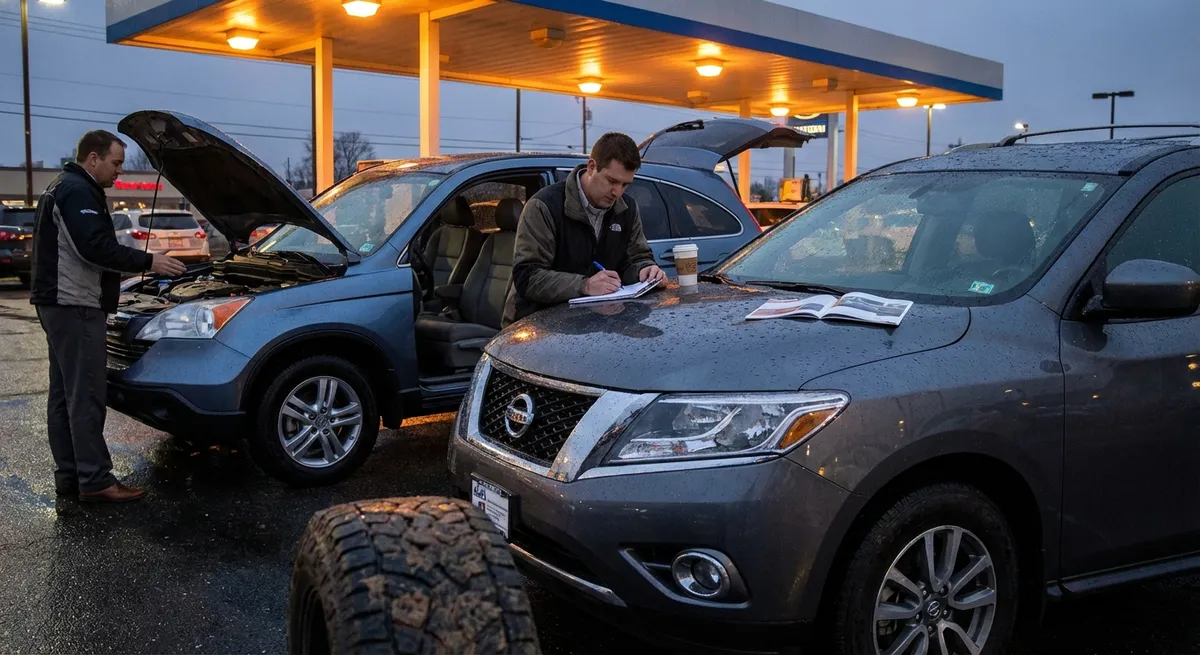
Approach each test drive like a structured evaluation, not a quick spin around the block. Take notes on power delivery, ride quality, braking behavior, ADAS calibration, and everyday ergonomics. Cross‑reference those impressions with independent safety data, ownership‑cost projections, and long‑term reviews. The result won’t just be an SUV you like today—it will be one that still feels like the right decision years and tens of thousands of miles from now.
Sources
- U.S. Department of Energy – Fuel Economy Guide - Official data for comparing fuel economy and energy costs between gas, hybrid, PHEV, and EV SUVs
- NHTSA – 5-Star Safety Ratings - Government crash‑test results and safety information for SUVs sold in the U.S.
- IIHS – Vehicle Ratings - Independent crashworthiness, crash‑avoidance, and headlight performance ratings
- Consumer Reports – Vehicle Reliability and Owner Satisfaction - Long‑term reliability data, owner satisfaction scores, and road‑test evaluations
- Edmunds – True Cost to Own® - Depreciation, insurance, maintenance, and fuel‑cost estimates over a 5‑year ownership period
Key Takeaway
The most important thing to remember from this article is that this information can change how you think about Buying Guide.