The SUV segment is no longer just about size, styling, and leather packages. Over the past 18 months, industry moves around batteries, software platforms, and charging infrastructure have fundamentally changed what “best in class” even means. For shoppers and enthusiasts, it’s getting harder to separate marketing claims from meaningful innovation, especially as every automaker insists its latest SUV is “smarter,” “greener,” and “future-ready.”
This snapshot of where the industry is heading focuses on five developments that are actively reshaping the SUV landscape right now—moves that affect what you’ll be able to buy, how you’ll fuel it, and how long it will remain competitive.
1. Long‑Range Electric SUVs Go Mainstream, Not Niche
A quiet but decisive shift is underway: battery‑electric SUVs are moving from compliance curiosities to core nameplates. The days when 220–250 miles of EPA range was “good enough” are fading; buyers now expect numbers pushing 300 miles and beyond, with usable range at highway speeds and in cold weather.
Technically, this change is driven by both chemistry and architecture:
- Higher‑energy cells: Carmakers are rolling out NMC (nickel‑manganese‑cobalt) variants with improved energy density, and in some cases LFP (lithium iron phosphate) packs tuned for greater efficiency at the pack level. This allows 80–100 kWh battery packs without excessive weight penalties.
- 800‑volt electrical systems: Once limited to premium models, 800V architectures are spreading to more SUVs, enabling reduced current for the same power, leaner cabling, and faster DC fast‑charging capability (often advertised at 200–350 kW peak).
- Sophisticated thermal management: Liquid cooling loops, plate‑based cell cooling, and preconditioning strategies now directly target peak charging performance and cold‑weather range preservation. The goal is not just a large battery, but a battery that can repeatedly charge from 10–80% in 20–30 minutes without aggressive degradation.
From a buyer’s perspective, the most important consequence is range standardization: as multiple brands cluster around similar EPA figures, the competitive edge shifts to how that range is delivered—efficiency at 75 mph, performance under load (towing or full passengers), and charge recovery speed. In practice, this means evaluating not just the headline range, but the combination of battery size, vehicle mass, drag coefficient, and onboard efficiency features such as heat pumps and active grille shutters.
2. Silicon Becomes the New Steel: Supply Chains Reshape SUV Lineups
The SUV market used to revolve around sheet metal and stamping capacity; today, it revolves just as much around semiconductors and software integration. The industry‑wide chip crunch that began in 2020 forced automakers to rationalize options, delay launches, and in some cases ship vehicles without certain features, with the SUV segment—by virtue of its sheer volume—feeling this pressure most acutely.
Two structural changes are now materializing:
- Consolidation around centralized compute platforms: Instead of dozens of separate control modules scattered throughout the vehicle, new SUVs increasingly rely on a small number of high‑performance domain or central controllers. This reduces chip variety, simplifies over‑the‑air update strategies, and gives automakers more leverage in negotiations with key suppliers.
- Closer automaker–supplier partnerships: OEMs are locking in longer‑term contracts with semiconductor manufacturers and Tier 1s, sometimes even co‑developing custom chips tailored for ADAS (advanced driver assistance systems) and infotainment workloads. For buyers, this can mean more stable feature rollouts and fewer mid‑cycle “de‑contented” models intended to work around parts shortages.
There is also a subtle pricing dynamic: higher‑end SUVs with richer option packages tend to be prioritized when chips are scarce, because each unit delivers more profit. For consumers, that has occasionally translated into constrained availability of lower trims and more aggressive upselling into better‑equipped variants. As supply stabilizes, watch for whether entry‑level trims of popular SUVs reappear at scale—or whether some remain quietly retired because the market has acclimated to higher average transaction prices.
3. Fast‑Charging Alliances Rewire the EV SUV Experience
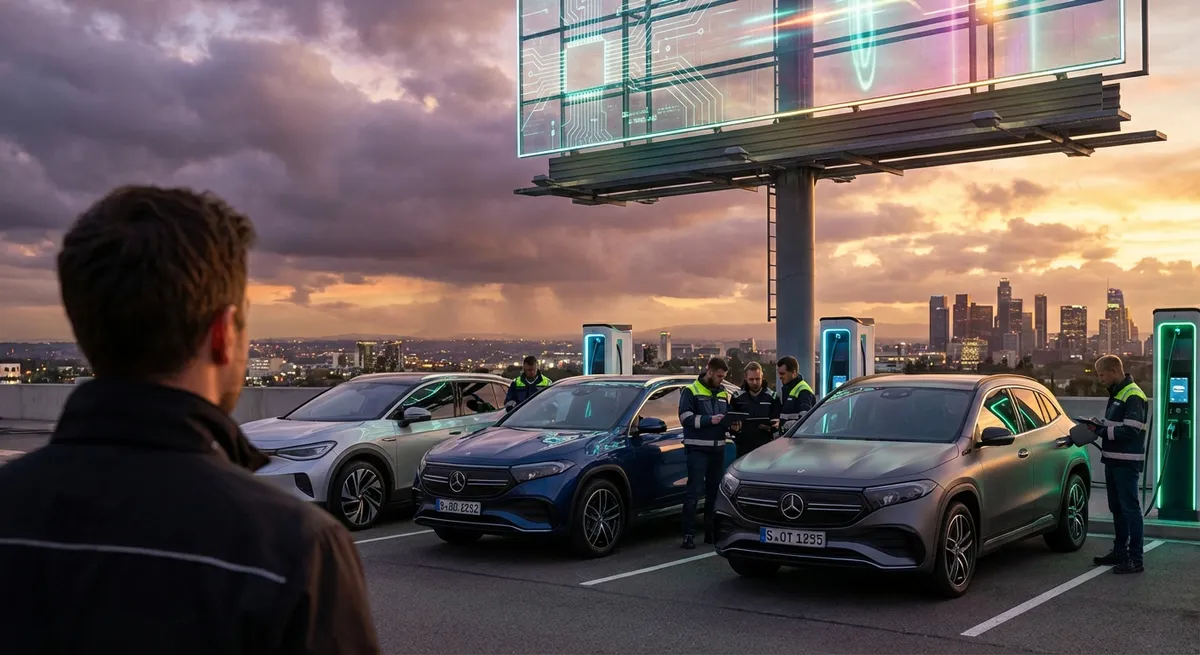
One of the most consequential developments for electric SUVs in North America is the growing wave of automakers adopting the North American Charging Standard (NACS) and signing agreements to give their customers access to Tesla’s Supercharger network. For years, the weak point of many otherwise competent electric SUVs was not the vehicle itself but the fragmented public charging landscape—particularly along long‑distance corridors.
The shift has three practical implications:
- Hardware convergence: Future SUVs from multiple brands are being engineered with NACS charge ports, reducing the need for bulky adapters and simplifying station design. A single predominant connector standard lowers friction for both drivers and infrastructure providers.
- Improved reliability expectations: Tesla’s Supercharger network has historically reported higher uptime and easier user experience than many third‑party DC fast‑charging stations. As other brands gain access, EV SUV buyers can expect a more “gas‑station‑like” experience on road trips—plug in, walk away, and trust that the stall actually works.
- Charging‑optimized route planning: OEMs are under pressure to refine their native navigation systems so they can accurately predict consumption, precondition the battery before arriving at fast chargers, and dynamically reroute to functioning stations. This closes the loop between the vehicle’s energy management and the real‑world public charging ecosystem.
For prospective EV SUV buyers, this is a strategic moment. Early‑adopter pain around incompatible networks and unreliable hardware is beginning to recede. Over the next product cycle, the better question will be: Which SUVs integrate charging networks most seamlessly, and how transparent are their real‑world charging curves? Data‑driven apps and built‑in trip planners will matter as much as raw kW numbers on a spec sheet.
4. Safety Tech and Regulations Quietly Raise the Floor for SUVs
While performance and range grab headlines, safety regulation is steadily—and sometimes quietly—raising the baseline expectations for new SUVs. Governments and safety organizations across major markets are tightening evaluation criteria around pedestrian protection, crash avoidance, and driver monitoring, and automakers are responding by embedding more advanced hardware as standard even on lower trims.
Key trends include:
- Expanded ADAS baselines: Features like automatic emergency braking with pedestrian detection, lane‑keeping assist, blind‑spot monitoring, and rear cross‑traffic alerts are becoming default rather than optional. This is partly driven by regulatory pressure and partly by competitive one‑upmanship in safety ratings.
- Driver monitoring systems (DMS): To support more capable lane‑centering and traffic‑jam assist functions—some flirting with hands‑free operation—new SUVs are integrating infrared cameras and gaze‑tracking systems. These monitor driver attention to ensure semi‑automated systems are not misused. Expect DMS to become a standard element in models seeking high safety scores.
- Improved crash structures and compatibility: The tall, heavy nature of SUVs creates challenges in collisions with smaller vehicles and pedestrians. Engineering responses include energy‑absorbing front structures, active hoods, and front‑end designs aimed at reducing injury severity. As test protocols evolve, these design shifts will increasingly differentiate newer SUVs from older generations that may look similar from the outside.
For shoppers, the takeaway is that a model’s launch year and platform age now matter just as much as its badge. A five‑year‑old design can lag significantly behind newer competitors not only in infotainment and efficiency, but in under‑the‑skin safety engineering and the sophistication of its driver assistance stack. Enthusiasts who care about “pure driving” may be tempted to devalue these systems, but they are becoming a key differentiator in resale value and insurance costs, especially as insurers refine their risk models around collision‑avoidance tech.
5. Electrified Performance and Towing Redefine What “Capability” Looks Like
Historically, capability in SUVs meant displacement, cylinder count, and tow ratings. The latest wave of hybrid, plug‑in hybrid (PHEV), and pure BEV SUVs is shifting that conversation toward torque curves, battery support strategies, and thermal limits under sustained load.
On the performance front, electric motors and hybrid powertrains allow:
- Instant torque at low speeds: Electric drive units deliver maximum torque from zero rpm, dramatically improving off‑the‑line response and low‑speed control on loose surfaces. Dual‑motor setups in EV SUVs often use sophisticated torque vectoring to enhance cornering stability and traction off‑road.
- “Boost” strategies in hybrids/PHEVs: Many electrified SUVs map battery output for short bursts of maximum power, enabling strong overtakes and highway merging without resorting to large displacement engines. The downside is that full performance may be time‑limited by battery state of charge and temperature.
- Regenerative braking calibration: In off‑road or towing contexts, regen can be tuned to simulate engine braking, providing more precise control on descents. Sophisticated systems blend friction and regenerative braking to maintain stability while harvesting energy.
Towing and payload remain more complex. EV and PHEV SUVs can post impressive tow ratings on paper, but usable range under load is highly variable. Drag from box trailers, additional mass, and higher sustained power output can significantly reduce real‑world range, and fast‑charging while towing is still clumsy due to station layouts. Some manufacturers are now publishing more transparent towing‑range guidance and engineering dedicated tow/haul drive modes that alter thermal strategies, battery usage, and even predictive route planning to account for extra load.
For enthusiasts and serious users, this is the new definition of capability: not just “Can it tow 5,000 or 7,500 pounds?” but “How does it behave while doing so—over mountain passes, in hot weather, and with realistic charging or refueling intervals?” The most compelling next‑generation SUVs will be those that pair electrified performance with honest, data‑backed capability under the exact conditions buyers care about, whether that’s a ski‑season road trip, a boat launch ramp, or a gravel trailhead far from the nearest fast charger.
Conclusion
The SUV market is entering a phase where incremental updates are giving way to structural change. Battery chemistry and voltage platforms are reshaping range expectations, chip strategies are redefining how features are rolled out, and charging alliances are starting to fix the weakest link in EV ownership. At the same time, evolving safety regulations and new interpretations of “capability” are forcing automakers to rethink how they design and position their most important products.
For buyers and enthusiasts, the opportunity—and challenge—is to look beyond badges and marketing slogans and focus on the underlying platforms, architectures, and ecosystems that will determine how an SUV feels and functions five or ten years from now. The winners in this new arms race won’t just be the quickest or the most luxurious, but the models that integrate range, charging, safety, and real‑world capability into a cohesive, durable package.
Sources
- U.S. Department of Energy – Alternative Fuels Data Center: All-Electric Vehicles - Technical overview of EV powertrains, batteries, and charging fundamentals
- National Highway Traffic Safety Administration (NHTSA) – 5-Star Safety Ratings - Details on evolving crash test protocols and safety evaluation for SUVs and other vehicles
- International Energy Agency – Global EV Outlook 2024 - Data and analysis on EV adoption, battery trends, and charging infrastructure worldwide
- Tesla – Supercharger Network - Information on the Supercharger system, charging speeds, and network expansion relevant to NACS adoption
- McKinsey & Company – The Semiconductor Decade: A Trillion-Dollar Industry - Industry report on semiconductor supply chains and their impact on automotive production and technology
Key Takeaway
The most important thing to remember from this article is that this information can change how you think about Industry News.