Over the past two years, a quiet but decisive shift has been reshaping the SUV landscape. What started as a niche—hardcore off‑roaders and ultra‑plush crossovers—has converged into a new sweet spot: “adventure luxury” SUVs. These models promise real trail capability, sophisticated tech, and premium comfort in a single package. For enthusiasts and serious buyers alike, understanding how this trend is unfolding can help you see past the marketing and decide which SUVs are likely to hold their value, deliver on performance, and remain relevant as regulations tighten.
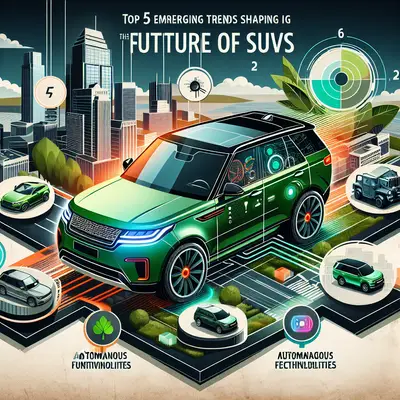
This industry news briefing unpacks five key developments driving the adventure-luxury movement—what’s behind them, which brands are leading, and what it all means if you’re shopping for your next SUV.
1. Trail-Ready Hardware Is Going Mainstream
A few years ago, locking differentials, disconnecting sway bars, and underbody skid plates were largely the domain of purpose-built off‑roaders. Now, they’re moving into well‑optioned trims of everyday SUVs.
Automakers have identified a profitable middle ground: buyers who want credible off‑road capability without accepting a punishing ride or bare-bones cabin. As a result, more SUVs are being engineered with:
- Active or dual‑range all‑wheel drive systems that can send torque proactively to the wheels with grip, sometimes paired with a traditional two‑speed transfer case for genuine low‑range gearing.
- Terrain management systems offering selectable drive modes (rock, mud, sand, snow, tow/haul) that alter throttle mapping, transmission shift points, traction control thresholds, and AWD behavior.
- Reinforced cooling and driveline components, such as upgraded transmission coolers, heavy‑duty axles, and beefier prop shafts to handle the load of off‑road use and towing.
- Factory lift packages that increase ground clearance and improve approach, breakover, and departure angles, while re‑tuning suspension geometry to preserve on‑road stability.
- All‑terrain tire options with more aggressive tread patterns, stronger sidewalls, and often slightly higher load ratings—balanced against noise and rolling resistance concerns.
Crucially, these upgrades are now integrated at the platform and development level, not bolted on at the end. That integrated engineering approach means better calibration, fewer compromises in daily driving, and greater durability. For buyers, “off-road appearance packages” are fading, and they’re being replaced by trims that deliver verifiable performance improvements backed by hard specs and real testing.
2. Overlanding Culture Is Shaping OEM Design Decisions
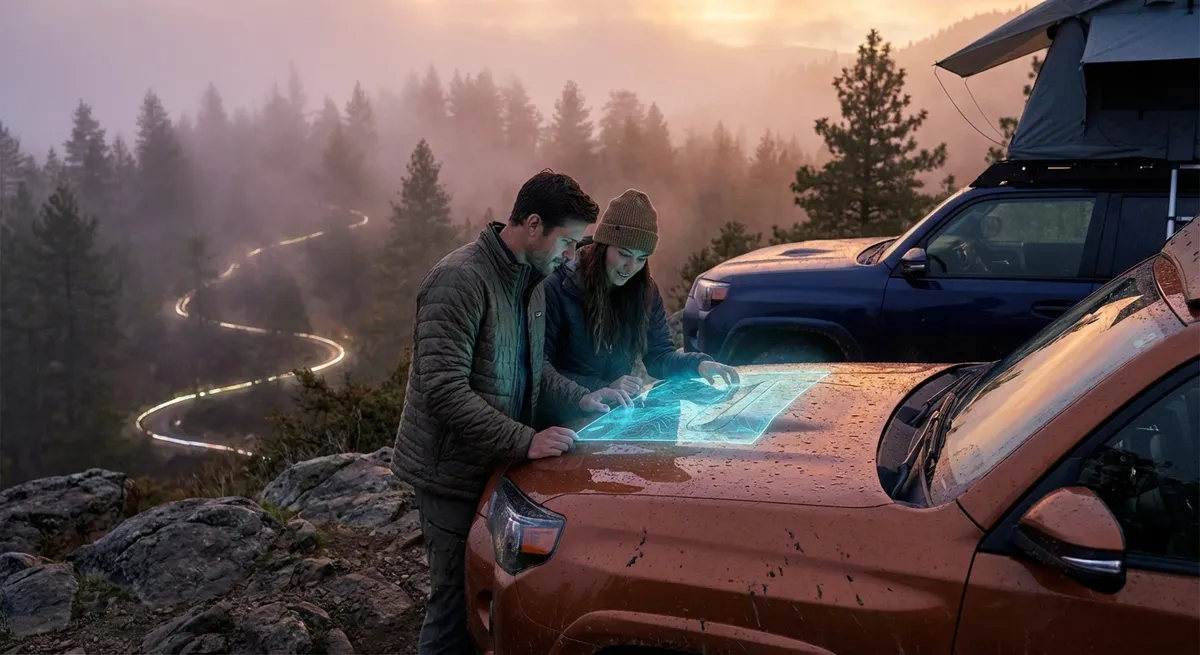
The rapid growth of overlanding—self-supported, often multi-day travel using off‑grid-capable vehicles—has become impossible for automakers to ignore. What was a specialty aftermarket scene is now a reference point in corporate product planning.
This influence is evident in several emerging design trends:
- Roof load optimization: Manufacturers are publishing dynamic and static roof load ratings with roof tents and cargo systems specifically in mind. Structural reinforcements around the roof rails and B/C pillars are becoming more common.
- Integrated accessory mounting points: Pre-threaded mounts in bumpers, roofs, and cargo areas simplify adding winches, light bars, recovery boards, or storage solutions without compromising crash integrity or vehicle warranties.
- Dual-battery and high-output power systems: Higher-output alternators, 12V and sometimes 110/220V outlets in cargo areas, and pre-wired upfitter connections anticipate fridges, air compressors, and other overland gear.
- Extended fuel range and alternates: Some brands are revisiting larger fuel tanks or more efficient gearing, while plug‑in hybrids (PHEVs) are designed with modes that preserve battery charge for campsite or trail use.
- Integrated navigation and trail data: Factory off‑road navigation with topo-style mapping, trail coordinates, waypoints, and downloadable route databases is becoming a selling point, cutting into the domain of aftermarket head units and smartphone-only solutions.
Automakers see overlanding not only as a lifestyle trend but as a way to sell higher-margin trims and accessories over the vehicle’s life cycle. Expect to see more “factory adventure builds” that minimize the need for owners to modify suspension, wiring, or body components themselves. For buyers, this can mean a better-balanced vehicle with full warranty coverage—but also higher up-front prices and more complex option structures.
3. Luxury and Durability Are Being Engineered Together, Not Traded Off
Historically, you chose either a plush cabin or rugged durability. Today, premium brands and mainstream automakers are investing heavily in materials and design techniques that can satisfy both.
Several distinct technical strategies are emerging:
- Advanced synthetic materials: High-density synthetic leathers, technical fabrics, and performance textiles used in seat bolsters and door cards are marketed as premium but are also tested for abrasion resistance, UV stability, and easy cleaning.
- Hydrophobic and oleophobic coatings: These chemical treatments on fabrics and some leathers resist water, mud, and oils, reducing staining and making interior cleanup after off‑road trips less painful.
- Modular interior protection: Factory all-weather mats, seat covers, and cargo liners are becoming more tailored to each model and can be removed or swapped without leaving exposed carpet or latch hardware vulnerable.
- Corrosion‑resistant exterior hardware: Use of better zinc coatings, e‑coat processes, aluminum-intensive components, and composite body parts in high‑chip areas (such as lower rocker panels and wheel arches) improves resistance to road salt and gravel damage.
- Noise, vibration, and harshness (NVH) tuning: Even with robust suspension arms and off‑road tires, automakers are layering in acoustic glass, better door seals, and subframe isolation bushings to keep cabins quiet on the highway.
This convergence reflects a broader understanding: adventure-luxury customers want a vehicle they can drive to a client meeting on Friday and down a fire road on Saturday. For buyers, that means it’s more important than ever to dig into specifics: are “easy‑clean” materials just a marketing phrase, or do they come with verifiable abrasion, stain, and UV-resistance testing?
4. Electrified Drivetrains Are Reframing What “Capability” Means
Electrification—both hybridization and full battery-electric vehicles (BEVs)—is now a core part of the SUV segment, and its implications for adventure-oriented models are significant.
On the technical side, electrification offers several genuine off‑road and towing advantages:
- Instant torque: Electric motors deliver maximum torque from zero RPM, allowing smoother low-speed crawling, more controlled hill starts, and stronger response when pulling a trailer or climbing steep grades.
- Precise torque vectoring: Dual- or quad‑motor systems can modulate power to each axle—or each wheel—far more precisely than a traditional open differential and brake-based traction control, enhancing grip on uneven surfaces.
- Regenerative braking: Variable regen can function like a sophisticated hill‑descent system, reducing reliance on friction brakes and improving control on long descents.
- Onboard power: BEVs and strong hybrids can supply high-wattage AC power for tools, camping gear, or emergency backup, reducing the need for standalone generators.
However, electrification also introduces new constraints and trade-offs:
- Thermal management under load: Sustained towing or slow-speed off‑roading in high ambient temperatures challenges battery and inverter cooling systems. Automakers are responding with more complex liquid-cooling loops, heat pumps, and software limits.
- Weight and packaging: Battery packs add mass and can constrain ground clearance if not carefully integrated into the platform. Engineers are resorting to structural battery packs and clever cross‑members to preserve approach and departure angles.
- Charging infrastructure and route planning: For BEV SUVs used in remote areas, DC fast-charging availability and off‑grid charging solutions (such as portable solar folding arrays) are becoming hardware and software planning points.
Plug‑in hybrid SUVs, in particular, are emerging as a practical bridge: they provide electric torque and silent operation for short, low-impact trails or urban commuting, while retaining the range and refueling simplicity of an internal combustion engine for longer trips. Watch how each automaker discloses (or avoids disclosing) real-world towing range and off‑road performance metrics for their electrified models; transparency here is a key indicator of engineering depth versus marketing.
5. Software and Connectivity Are Now Part of the Capability Equation
The most consequential industry news around SUVs in 2024–2025 doesn’t involve suspension or engines—it’s software. Over‑the‑air (OTA) updates, connected services, and data-driven tuning are redefining what your SUV can do long after it leaves the showroom.
Several software-driven trends are worth close attention:
- Post-purchase feature activation: Some brands are shipping hardware (such as additional drive modes, advanced trail cameras, or enhanced towing assist) that can be enabled later for a fee via software. Buyers must now understand what their SUV can do versus what it’s allowed to do from the factory.
- Adaptive calibration: ECU and transmission control software can refine shift patterns, throttle sensitivity, and regen behavior based on driver behavior, ambient conditions, and usage history. For heavy towing or frequent off-road use, this can materially affect drivability and efficiency.
- Connected diagnostics and predictive maintenance: Extensive sensor data—on shock temperatures, powertrain load, brake usage, and more—allows automakers to suggest maintenance based on actual use rather than fixed intervals. This is particularly relevant for SUVs used frequently on dirt, in snow, or for towing.
- Integrated camera and sensor suites: Multi-view cameras, underbody views, lidar or radar-based surround systems, and advanced parking/towing aids are highly software-dependent. How well they operate off‑road can differ dramatically between brands, even with similar hardware.
- Cybersecurity and data privacy: As SUVs become rolling connected devices, they are increasingly subject to digital threats and data collection concerns. OTA capabilities require hardened security architectures, and regulations in the U.S., EU, and other markets are pushing manufacturers to be more transparent about what vehicle data is collected and shared.
For enthusiasts and serious buyers, understanding software roadmaps, update policies, and connectivity terms is now part of evaluating a vehicle’s long-term capability. An SUV with robust hardware but poor, stagnant software support may age faster than one whose features and calibrations are actively maintained and improved.
Conclusion
Adventure-luxury SUVs are no longer a marketing niche—they’re becoming the center of gravity for the entire segment. Trail-ready hardware is slipping into mainstream trims, overlanding culture is dictating design decisions, and durable cabins are being engineered to coexist with premium materials and tech. Electrification is reframing what “capable” means, while software and connectivity now influence everything from towing stability to off‑road drivability.
For enthusiasts and informed buyers, the opportunity is clear: by looking beyond badges and buzzwords and focusing on the underlying engineering—drivetrain architecture, cooling systems, materials science, and software strategy—you can identify which models are genuinely prepared for the next decade of SUV use. In a market where almost every vehicle is marketed as “adventure-ready,” the real differentiation lies in the details.
Sources
- U.S. Department of Energy – Alternative Fuels Data Center: Hybrid and Plug-In Electric Vehicles - Technical overview of electrified drivetrains, torque characteristics, and efficiency considerations
- SAE International – Vehicle Electrification Technical Papers - Engineering-focused research on EV and hybrid systems, thermal management, and powertrain control strategies
- IIHS – Vehicle Size and Weight - Data-driven context on SUV mass, safety, and design trade-offs
- Ford Motor Company – Over-the-Air Software Updates - Real-world example of OTA capabilities and how software features evolve post-purchase
- Toyota Global Newsroom – Electrified Vehicle Technology - Manufacturer-level explanation of hybrid and EV architectures relevant to modern SUV platforms
Key Takeaway
The most important thing to remember from this article is that this information can change how you think about Industry News.