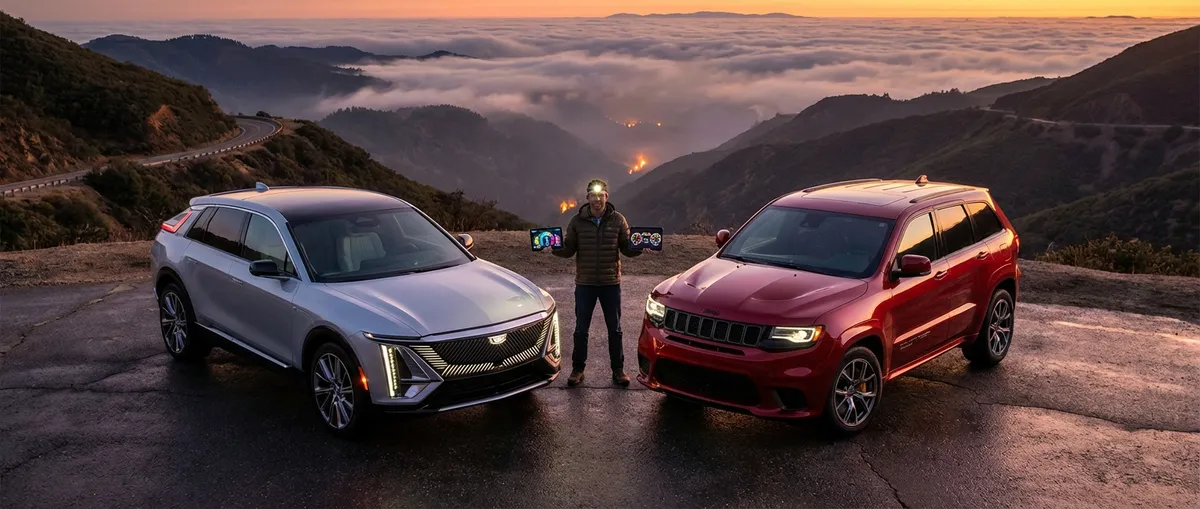
Modern performance SUVs don’t just compete on power anymore—they battle on software, chassis tuning, charging speeds, and even the feel of their steering wheels. For enthusiasts and serious buyers, the question is no longer “Is it fast?” but “What kind of fast, and at what cost in comfort, range, and long-term ownership?”
This comparison-focused guide breaks down how today’s leading performance-oriented SUVs differ in ways that actually matter when you’re signing a contract—or dropping the hammer on an on‑ramp.
Powertrains Compared: Turbo, Hybrid, and Electric Performance
Under the skin, performance SUVs now fall into three broad camps: high-output internal combustion engines (ICE), performance hybrids, and full battery-electric vehicles (BEVs). The driving character, upkeep, and real-world performance vary dramatically across these formats, even when 0–60 mph times look similar on paper.
Traditional turbocharged or twin-turbo gasoline engines still dominate the segment’s emotional appeal. A well-tuned V6 or V8 with a responsive turbo can deliver a broad torque plateau—often from around 1,800 to 5,000 rpm—giving strong mid-range thrust for highway passing and track work. These engines pair with 8–10 speed automatics or dual-clutch transmissions, allowing tight gear spacing to keep the engine in its power band. For enthusiasts, the appeal lies in throttle response, sound, and consistent performance lap after lap, as long as cooling is sufficient.
Performance hybrids add an electric motor (or multiple motors) to a turbocharged engine. This lets manufacturers engineer “torque-fill,” where the electric motor covers the low-rpm lag zone before the turbo spools, making acceleration feel instant. Systems with a dedicated rear e-axle can also create rear-biased torque distribution and sophisticated torque vectoring. However, performance is heavily dependent on battery state-of-charge; repeated high-speed runs or track sessions can drain the pack, causing reduced boost from the hybrid system.
Full-electric performance SUVs flip the script: peak torque is available from essentially zero rpm, and acceleration can feel shockingly immediate. Dual- and tri-motor layouts allow precise power delivery to individual axles (or even individual wheels in some advanced systems). The downside is thermal management and battery limitations—many EVs impose power derating after multiple full-throttle launches or an extended high-speed drive, to protect the battery and motors. Additionally, sustained top-speed runs quickly consume range, which can matter in regions with unrestricted or high-speed highways.
For buyers, the choice comes down to usage: if you want repeated, predictable high-speed performance and visceral sound, a performance ICE SUV still delivers. If you prioritize instant torque and cutting-edge acceleration for street use with occasional spirited driving, hybrids and EVs offer a compelling, and increasingly dominant, alternative.
Handling and Chassis Tuning: Weight, Height, and Physics at Work
Performance SUVs must fight physics: high ride height and curb weights that often exceed 4,500–5,500 pounds. Chassis engineering and suspension technology determine whether a given model feels like a tall sports car or a fast but clumsy crossover.
Front suspension designs are typically MacPherson struts for packaging reasons, but premium performance SUVs often use multi-link or double-wishbone designs up front for better camber control under load. At the rear, multi-link setups are nearly universal for performance models, allowing engineers to tailor toe and camber behavior mid-corner and under braking. Stiff subframe bushings and additional bracing improve response, but if overdone, they can transmit noise and harshness into the cabin.
Adaptive dampers are now common and a key comparison point. Basic systems offer two or three fixed modes (Comfort/Sport/Sport+), while more advanced dampers use continuously variable valves with real-time adjustment based on sensor input for body motion, wheel speed, and steering angle. Air suspensions can further reduce ride height at speed to lower the center of gravity and improve aero efficiency, while allowing a softer setting in town. Enthusiasts should look beyond marketing names and focus on the system’s range: does Comfort genuinely absorb broken pavement, and does Sport+ meaningfully reduce roll and pitch without becoming jittery?
Rear-wheel steering is increasingly available on higher-end performance SUVs. At low speeds, the rear wheels turn opposite the fronts (typically up to 3–5 degrees), tightening the turning circle and making the vehicle feel smaller in city traffic or tight canyon roads. At highway speeds, they turn in phase with the front wheels to enhance stability during lane changes. When comparing models, test how “natural” this feels; some systems are well-integrated, while others can feel artificial or overly aggressive in transitions.
Finally, weight distribution and platform design play a major role. Performance-oriented SUVs that share architectures with sports sedans (with engines mounted further back and more rigid bodies) will generally feel more planted and predictable than models derived from light-duty family crossovers. Electric SUVs benefit from a low-mounted battery pack, which drops the center of gravity, but they can still feel heavy on quick directional changes. The best-tuned models hide this mass with sharp steering ratios and carefully calibrated stability control systems that allow some rotation without sacrificing safety.
Braking Systems and Thermal Management: Stopping Power Under Scrutiny
Straight-line acceleration numbers are easy to advertise; consistent braking performance is harder to achieve and more important for serious driving. Performance SUVs must dissipate enormous kinetic energy, especially when repeatedly hauling down from highway or track speeds.
The fundamentals start with rotor size and material. Large ventilated rotors—often in the 350–400+ mm range—are common on the front axle of performance SUVs, with slightly smaller but still substantial rotors at the rear. Multi-piston fixed calipers (4–6 pistons front, 2–4 rear) offer more consistent clamping force and better pad wear than sliding calipers. Some high-end models offer carbon-ceramic rotors, which provide outstanding fade resistance and weight reduction at the wheels, but they are expensive to option and even more expensive to replace. For most buyers, a well-designed steel setup with high-performance pads is sufficient.
Brake cooling is a critical, but often overlooked, differentiator. Functional air ducts and deflectors that direct airflow to the rotors and calipers can dramatically reduce fade on spirited drives. When comparing models, enthusiasts should look for evidence of real engineering—vent openings, backing plates, and published track testing—rather than purely decorative “aero” elements.
Hybrids and EVs introduce an added layer: regenerative braking. In performance-focused setups, the electric motors handle a significant portion of light and moderate braking, converting kinetic energy back into battery charge and reducing wear on friction brakes. However, during heavy or repeated high-speed stops, the system transitions to friction braking, which can expose weaknesses if the friction system is undersized. Some performance EV SUVs now offer “track modes” that alter regenerative behavior to improve consistency and pedal feel, a useful feature for those planning aggressive driving.
Pedal feel itself is a key experiential factor. Many modern SUVs use brake-by-wire systems that simulate pedal feedback while blending regen and hydraulic braking. Poorly tuned systems can feel nonlinear or grabby, hurting driver confidence. A well-tuned performance SUV will provide a firm, progressive pedal that remains consistent as brakes heat up, with minimal change in travel and feel even during extended downhill runs or repeated hard stops.
Drivetrain, Traction, and Real-World Grip: Beyond 0–60
Most performance SUVs are all-wheel drive, but the way they distribute power and manage traction separates the playful from the merely fast. Comparing these systems requires attention to hardware (clutch packs, differentials, motor placement) and software (stability control calibration, torque vectoring logic).
Mechanical AWD systems with an electronically controlled center clutch can vary torque front-to-rear, sometimes from a default 40:60 split up to nearly full lock in either direction. When paired with an active rear differential, they can also send more torque to the outside rear wheel in a corner, helping the vehicle rotate and reducing understeer. This is crucial in a tall, heavy platform; without such tools, many SUVs default to safe but dull front-end push when driven hard.
Electric SUVs often implement torque vectoring even more precisely. Dual-motor setups can independently control the front and rear axles, while tri-motor configurations (typically with a single front motor and dual rear motors) can send different amounts of torque to each rear wheel without a physical differential. This allows extremely rapid corrections and playful yaw control, especially in dedicated performance modes. For buyers, the nuance lies in calibration: some systems feel seamless and confidence-inspiring, others can feel digital or abrupt when they intervene.
Different drive modes adjust throttle mapping, boost or motor response, steering weight, suspension stiffness, and stability control thresholds. A well-executed performance SUV will have clearly differentiated modes that genuinely change the vehicle’s behavior. Look for modes that allow a rear-biased feel and modest slip angles on dry pavement without disabling all safety nets, which is important given the mass involved.
Tire choice is another major factor in real-world grip. Ultra-high-performance (UHP) summer tires dramatically improve braking and cornering on dry and warm pavement but may be unsuitable in cold or snowy climates. Some performance SUVs ship with an all-season compound that softens ultimate grip but broadens usability. Enthusiasts should check tire sizes (a wider rear than front often signals a performance focus), speed ratings, and available factory options for performance-oriented rubber. Remember that large wheel diameters (21–23 inches) look impressive and can enhance response but reduce sidewall height, making ride quality harsher and replacement tires more expensive.
Interior, Interface, and Usability: Where Performance Meets Daily Life
The newest battleground in performance SUV comparisons isn’t under the hood—it’s on the dashboard. As these vehicles become rolling computers, their value is increasingly defined by digital interfaces, driver-assistance systems, and how well they blend performance intent with everyday convenience.
Performance SUVs generally offer sport seats with enhanced bolstering, yet the execution varies widely. Buyers should test for long-distance comfort (thigh support, lumbar adjustment, headrest positioning) as well as lateral support under hard cornering. Multi-way power adjustability with memory, extendable thigh cushions, and adjustable bolsters make it easier to fine-tune a supportive driving position. The steering wheel’s range of reach and rake adjustment is equally important in getting a low, performance-oriented posture in a taller vehicle.
Digital gauge clusters and head-up displays increasingly offer performance-specific views—such as real-time torque distribution, boost pressure, tire temperatures, and g-meter readouts. While these can be fun, the key comparison point is clarity: does the system present critical information (speed, revs or power usage, navigation prompts) in a glanceable, non-distracting way? Overly busy layouts and slow animations can actually detract from performance driving.
Infotainment systems now control not only media and navigation, but often drive modes, suspension settings, and advanced driver-assistance features. Latency and menu design matter: in some models, changing damping or steering weight requires digging through several submenu layers, which is frustrating on the move. Others offer dedicated physical buttons or customizable shortcuts to quickly call up a preferred performance setup. Potential buyers should test commonly used functions—drive mode selection, climate adjustments, phone integration—under real conditions rather than assuming they’ll adapt later.
Advanced driver-assistance systems (ADAS) vary greatly even among performance-focused models. Adaptive cruise control, lane-centering, blind-spot monitoring, and collision avoidance can reduce fatigue during commutes, but their tuning must not interfere with spirited driving. Ideally, systems can be easily toggled or set to a less intrusive mode without completely disabling safety features. For EV and plug-in hybrid performance SUVs, route planning that accounts for charging stations or charge status becomes particularly important for hassle-free road trips.
Finally, cargo space and rear-seat usability still matter, even in a performance context. A well-designed performance SUV will preserve a low load floor, wide opening, and practical rear-seat legroom despite large brakes, sport suspensions, and aggressive rooflines. Split-folding rear seats, underfloor storage (or frunks in EVs), and thoughtful tie-down points can be the difference between a toy and a genuinely dual-purpose machine that handles both track days and family road duty with ease.
Conclusion
Choosing between today’s performance SUVs isn’t simply a matter of picking the highest horsepower or quickest 0–60 claim. The most satisfying option depends on your priorities: traditional engine character versus electric immediacy, track-capable braking and chassis tuning versus comfort-biased setups, and cutting-edge digital interfaces versus more analog, driver-focused cabins.
By comparing powertrains, chassis tuning, braking systems, drivetrain behavior, and interior usability in detail—not just skimming spec sheets—you can identify the SUV that aligns with how you actually drive. For enthusiasts and serious shoppers alike, the right performance SUV is the one that feels cohesive and confidence-inspiring every day, not just impressive in a single headline number.
Sources
- EPA: Fuel Economy and Green Vehicle Guide - Official U.S. government data on SUV fuel economy, powertrains, and efficiency comparisons
- IIHS: SUV Crashworthiness and Safety Ratings - Independent safety and crash-test results for various SUV classes and configurations
- SAE International – Vehicle Dynamics and Handling - Technical reference on suspension design, weight distribution, and handling fundamentals relevant to performance SUVs
- U.S. Department of Energy – Electric Vehicle Basics - Background on EV powertrains, regenerative braking, and battery behavior in real-world use
- BMW M – Technology Overview - Manufacturer-level explanations of AWD, torque vectoring, adaptive dampers, and performance braking systems used as benchmarks in the segment
Key Takeaway
The most important thing to remember from this article is that following these steps can lead to great results.