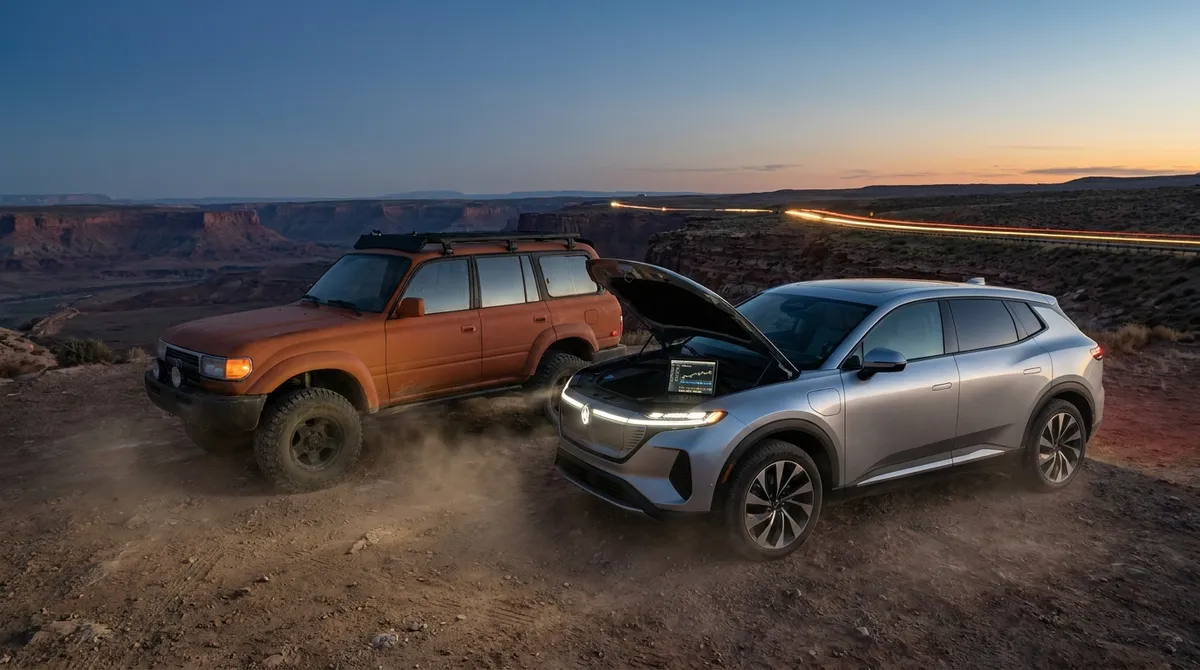
Choosing between SUVs used to be as simple as picking an engine and a badge. Today, you’re comparing drivetrains, chipsets, ADAS suites, charging curves, and subscription-based features before you even talk about paint colors. For enthusiasts and serious shoppers, quick spec-sheet glances are no longer enough—you need a structured way to compare SUVs that goes beyond marketing highlights.
This guide breaks down five high‑impact comparison points that separate a merely good SUV from the right SUV for your use case, whether that’s long‑distance touring, towing, high‑performance driving, or tech‑centric commuting.
1. Real-World Powertrain Performance, Not Just Peak Horsepower
Horsepower and 0–60 times dominate headlines, but in SUVs—especially heavier models—how and where the power is delivered matters more than a single big number.
When comparing SUVs, examine:
- Torque curve and delivery:
- Gas turbo engines: Often build peak torque around 1,600–2,000 rpm, useful for city driving and highway merging.
- Naturally aspirated engines: Smoother, more linear response, but may need higher revs to access power.
- Hybrids: Electric motors fill in low‑rpm torque, masking gear shifts and improving drivability.
- BEVs: Immediate peak torque from zero rpm, but many manufacturers limit output at higher speeds to preserve efficiency and protect components.
- Transmission behavior:
- Traditional automatics (8–10 speed) can keep the engine in its power band but excessive gear count may cause frequent hunting on grades if tuning is poor.
- Dual-clutch units (DCTs) deliver rapid shifts and efficiency but may feel abrupt at parking-lot speeds.
- CVTs provide seamless acceleration but can feel “rubbery” and may struggle with sustained towing loads.
- Single‑speed reduction gears in EVs give smooth, continuous acceleration but place more emphasis on motor torque and thermal management.
- Power-to-weight ratio and weight distribution:
A 250 hp compact SUV at 3,400 lb can feel more responsive than a 300 hp three‑row at 4,800 lb. Look at curb weight in relation to output and where the mass is located—battery placement in EVs (usually low and between the axles) can improve handling despite higher overall weight.
- Thermal and repeatability considerations:
Enthusiasts should look for data on repeat 0–60 runs or track sessions. Turbocharged and high-output engines, as well as some performance EVs, can experience power tapering once powertrain temps climb. If you drive aggressively or tow in hot climates, search for independent tests that log sustained performance, not just single runs.
Benchmarking these factors together gives a far more accurate picture of how an SUV will behave in traffic, up mountain passes, and during overtakes than horsepower alone.
2. Chassis, Suspension, and Brakes: The Dynamics You Feel Every Day
Even in a market obsessed with screens and range estimates, the underlying platform still dictates how secure, comfortable, and controlled an SUV feels. If you care about driving engagement—or you’re regularly loaded with passengers and cargo—this is where meaningful differences emerge.
Key comparison points:
- Platform and architecture:
- Unibody crossovers (built like cars) generally offer better on‑road comfort and handling.
- Body‑on‑frame SUVs (truck‑based) favor towing, durability, and off‑road robustness but often sacrifice ride refinement and agile handling.
Check torsional rigidity figures when available; a stiffer structure allows the suspension to work more precisely.
- Suspension design:
- Front: Most modern SUVs use MacPherson struts; they’re compact and cost-effective.
- Rear:
- Torsion beam setups are simpler and cheaper but may compromise ride comfort and rough‑road composure.
- Multi‑link rear suspensions allow better wheel control and ride quality, particularly over broken pavement and in quick transitions.
For handling-focused or premium comfort results, prioritize multi-link rear designs and pay attention to whether tunings skew toward firm, neutral, or soft.
- Adaptive and air suspension systems:
- Adaptive dampers adjust firmness in real time; they can reduce body roll in corners yet soften over expansion joints.
- Air suspension can alter ride height for highway aerodynamics, ease of entry/exit, or off‑road clearance.
- Range of ride height adjustment
- Load‑leveling capability (critical for towing and full passenger/cargo loads)
- Maximum approach, breakover, and departure angles across modes
- Steering calibration and turning circle:
- Lock‑to‑lock turns and turning radius, especially for city use or tight parking structures.
- Availability of rear‑axle steering, which can meaningfully shrink the turning circle at low speed and improve lane‑change stability at higher speeds.
- Braking hardware and fade resistance:
When comparing, check:
Look beyond “electric power steering” and examine:
Compare rotor sizes, caliper type, and whether the SUV includes larger or upgraded brakes for higher trims or tow packages. For hybrids and EVs, evaluate how regenerative braking blends with friction brakes; poorly integrated systems can feel inconsistent at the pedal.
Properly comparing these elements gives you a clear sense of whether a given SUV will feel floaty and detached, tight and sporty, or composed and comfortable on imperfect real‑world roads.
3. Interior Packaging, Ergonomics, and Usable Space (Not Just Cubic Feet)
Cargo volume and legroom numbers are useful, but they hide a lot. For buyers using an SUV as a primary family vehicle or adventure hauler, smart packaging and ergonomics can matter more than headline dimensions.
Focus on:
- Seating architecture and adjustability:
- Front seats: Look for multi‑way power adjustment, extendable thigh support, and a wide range of steering wheel reach/rake so drivers can maintain a safe, supported posture on long drives.
- Second row: Check if the bench slides and reclines, and whether individual seats (captain’s chairs vs. bench) suit your routine—child seats, adults, or a rotation of both.
- Third row: Don’t rely on legroom numbers alone. Evaluate hip point height, seat cushion length, and footwell depth. Many three‑rows offer enough numeric space but force adults into knees‑up positions.
- Ingress and egress:
Compare step‑in height, door opening size, and the angle of rear doors, especially if installing child seats. A slightly taller ride height can make entry easier for some, but too tall without running boards can be a problem for shorter occupants or elderly passengers.
- Cargo bay shape and practicality:
- Check for a low load floor, minimal intrusions from wheel wells, and a flat surface when seats are folded.
- Pay attention to lift‑over height; a high rear bumper line can make loading heavy items awkward.
- Consider the location and robustness of tie‑downs, under‑floor storage, and hooks for grocery bags or cargo nets.
- Control layout and physical vs. touch controls:
- How many basic functions can be adjusted without looking down
- Whether the HVAC has real knobs/buttons
- The logical grouping of key controls (lighting, ADAS toggles, terrain modes)
- Noise, vibration, and harshness (NVH):
Enthusiasts and frequent drivers benefit from dedicated physical controls for climate, volume, and drive modes. Deeply buried climate menus or haptic-only controls can be distracting. When comparing, note:
Beyond decibel levels, evaluate how the cabin filters different frequencies (tire slap versus wind noise versus powertrain noise). Hybrids and EVs can be extremely quiet at low speeds, but you’ll want to know whether there’s excessive wind noise around mirrors or boom from large wheels at highway speeds.
A smartly packaged SUV with excellent ergonomics can outperform a numerically larger rival in daily satisfaction, road‑trip comfort, and ease of use.
4. Tech Stack, Driver Assistance, and Long-Term Software Strategy
Screens and features sell cars, but the underlying electronics architecture and update strategy increasingly define how an SUV will age. Comparing “who has the biggest screen” isn’t enough; you need to understand how the tech works together and how future‑proof it is.
Core areas to compare:
- Infotainment hardware and connectivity:
- Check processor generation and RAM when disclosed; laggy systems are often tied to outdated chipsets.
- Evaluate support for wireless Apple CarPlay and Android Auto, as well as native apps (navigation, streaming, over‑the‑air map updates).
- Look at the display layout: instrument cluster size, HUD availability, and whether the central screen is portrait or landscape.
- Driver assistance (ADAS) depth and capabilities:
- Adaptive cruise control (ACC): Range of operation (stop‑and‑go vs. highway only) and smoothness of acceleration/braking.
- Lane keeping vs. lane centering: Simple lane-departure warning and nudges are not the same as continuous lane-centering on highways.
- Traffic jam assist: Combines ACC and lane centering in low‑speed congestion.
- Hands‑free systems: Some brands allow limited hands‑free operation on mapped highways; verify geofencing, required driver monitoring, and subscription requirements.
- Sensor suite and perception hardware:
Beyond buzzwords like “Pro,” “Pilot,” or “Assist,” compare specific functionality:
Compare the mix of radar, cameras, ultrasonic sensors, and (where offered) lidar. Additional sensors can improve redundancy and reliability of ADAS features, especially in poor weather conditions.
- Over-the-air (OTA) update scope:
- Can the automaker fix powertrain or ADAS bugs via OTA?
- Are new or improved features promised over time, or is the system largely static?
- Is OTA included or linked to a paid connectivity plan?
- Subscription and feature-lock policies:
- Which features are one-time purchases vs. recurring subscriptions
- Whether core safety systems remain functional without paid plans
- The length of complimentary connected-service periods
OTA can range from simple map updates to full vehicle software upgrades. When comparing SUVs, ask:
Some manufacturers gate advanced ADAS, connected services, or even performance or comfort features behind recurring monthly fees. When comparing, look at:
This deeper tech comparison helps ensure you’re not just buying an impressive showroom demo, but a platform that will remain competitive and supported through its lifespan.
5. Capability Under Load: Towing, Range, Efficiency, and Thermal Limits
On paper, many SUVs appear capable of doing it all: big tow ratings, strong range figures, excellent efficiency. In practice, capability under real‑world loads is where designs diverge—and where enthusiasts and serious users should focus their comparisons.
Key metrics and considerations:
- Towing ratings and equipment:
- Look for SAE J2807 compliance where applicable; it standardizes how tow ratings are derived for light‑duty vehicles.
- Compare maximum tow rating with and without specific packages (tow/haul modes, upgraded cooling, integrated trailer brake controllers, weight‑distributing hitch compatibility).
- Note the gross combined weight rating (GCWR) and payload. A vehicle may tow 5,000+ lb on paper but run out of payload once you add passengers, cargo, and tongue weight.
- Thermal management for towing and high-load driving:
- Additional coolers (engine oil, transmission, battery pack) included with tow packages.
- Real‑world reports of derating—where EVs or turbo engines cut power to manage heat on long grades.
- EV- and hybrid‑specific range behavior under load:
- For EVs, expect significant range reductions when towing or driving at sustained highway speeds. Real‑world tests often show 30–50% range hits with moderate trailers.
- For plug‑in hybrids (PHEVs), towing may force the powertrain to rely heavily on the combustion engine, reducing overall efficiency.
Towing in hot conditions or mountainous regions stresses engines, transmissions, batteries, and inverters. Look for:
When comparing, seek independent testing that shows energy consumption with trailers or at high-speed highway cruises.
- Efficiency and fuel/energy cost over time:
- EPA fuel economy or energy consumption ratings in city, highway, and combined cycles.
- For highway‑heavy driving, prioritize highway ratings and coefficient of drag (Cd) where published—tall, boxy SUVs pay a real penalty at 70+ mph.
- Consider energy sources and prices in your region: the operating cost advantage of an EV or hybrid depends on local fuel vs. electricity pricing and charging access.
- Off-road capability trade‑offs:
- Ground clearance, underbody protection, and available terrain modes (rock, mud, sand, snow).
- How off‑road hardware impacts on‑road efficiency, braking distances, and noise.
- Approach, breakover, and departure angles with full passenger/cargo loads or a hitch mounted.
Evaluate:
If you’re comparing off‑road‑oriented SUVs (all‑terrain tires, lift kits, skid plates, locking differentials), weigh:
Thinking in terms of loaded performance—trailer attached, full cabin, high cabin temps, and sustained speeds—gives you a realistic baseline for what each SUV can truly handle.
Conclusion
Comparing SUVs at today’s level of complexity means moving beyond single-number bragging rights. Power output, screen size, and cargo volume are starting points, not final answers. To separate contenders intelligently, focus on:
- How the powertrain behaves in real use, not just its peak outputs.
- The chassis and suspension tuning that shape every moment behind the wheel.
- Interior packaging and ergonomics that affect daily comfort and usability.
- A tech and ADAS stack designed to evolve, not just impress briefly at launch.
- Verified capability under load—towing, range, and durability when the vehicle is working hard.
Whether you’re a performance enthusiast, a long‑distance traveler, or a family buyer, using these five comparison lenses will help you cut through marketing noise and choose an SUV that delivers where it matters: in your specific, real‑world use case.
Sources
- [U.S. Environmental Protection Agency – Fuel Economy Guide](https://www.fueleconomy.gov/feg/findacar.shtml) - Official EPA fuel economy and energy consumption data for comparing SUVs across gas, hybrid, and electric powertrains
- [National Highway Traffic Safety Administration (NHTSA) – 5-Star Safety Ratings](https://www.nhtsa.gov/ratings) - Crash test results and safety information to factor into SUV comparisons beyond performance and features
- [Society of Automotive Engineers (SAE) – Towing and Payload Standards Overview](https://www.sae.org/news/2013/08/sae-international-tow-vehicle-trailer-rating-task-force-announces-new-procedure-for-calculating-tow-ratings) - Background on SAE J2807, the standardized test procedure for tow ratings used by many manufacturers
- [IIHS – Vehicle Ratings](https://www.iihs.org/ratings) - Independent crashworthiness, crash avoidance, and headlight performance ratings for SUVs and other vehicles
- [Consumer Reports – Guide to Advanced Driver Assistance Systems](https://www.consumerreports.org/cars/guide-to-car-safety-features-a5094949513/) - Detailed explanations and comparisons of ADAS technologies to help evaluate different SUVs’ safety and driver‑assist feature sets
Key Takeaway
The most important thing to remember from this article is that following these steps can lead to great results.