Automakers love to say “there’s an SUV for everyone,” but for shoppers and enthusiasts, the real challenge is decoding how those SUVs differ where it actually matters. Two models can look similar on a dealer lot yet diverge massively in driving dynamics, long‑term costs, and day‑to‑day usability. This comparison-focused guide breaks modern SUVs down into five critical dimensions that reveal genuine differences: platform and layout, powertrain character, chassis tuning, interior and tech execution, and ownership economics. Understanding these contrasts will help you see past marketing language and spec-sheet noise to choose the SUV that actually fits your priorities.
1. Platform and Drivetrain Layout: The Hidden Architecture That Shapes Everything
Before comparing features, it’s essential to understand what’s underneath. Modern SUVs generally stem from two core architectures: unibody (car-like) and body-on-frame (truck-like). Unibody SUVs, built on passenger-car platforms, integrate the body and frame into a single structure. This typically results in lower curb weight, better torsional rigidity, more precise handling, and improved ride comfort. By contrast, body-on-frame SUVs mount the body on a separate ladder or boxed frame, prioritizing durability, towing strength, and off-road robustness at the expense of weight and efficiency.
Drivetrain layout further sharpens the differences. Many compact and midsize crossovers use a front-wheel-drive (FWD)-based architecture with optional all-wheel drive (AWD). These layouts often provide better packaging efficiency—more interior space relative to exterior size—and predictable, understeer-biased handling that most everyday drivers find secure. Rear-wheel-drive (RWD)-based SUVs, common among luxury and performance-oriented models, deliver more balanced weight distribution and a more engaging driving feel, especially under hard acceleration or when towing.
When comparing SUVs, note whether AWD is primarily on-demand (normally FWD, sending torque rearward when slip occurs) or full-time (torque constantly split between axles). Full-time systems with mechanical center differentials or advanced clutch packs usually offer better traction consistency and off-road capability, while on-demand systems tend to be lighter and more efficient. Also, pay attention to torque vectoring features: systems that can actively overdrive an outside wheel or brake an inside wheel significantly alter cornering behavior, stability, and ultimate grip, especially in wet or snowy conditions.
Lastly, ground clearance, approach/departure angles, and underbody protection should be compared within the context of the platform. A unibody SUV with modest ground clearance and limited suspension articulation will handle dirt roads and light trails but won’t match a body-on-frame model with a two-speed transfer case and robust skid plating. Understanding platform and layout lets you quickly narrow choices: commuters and family users often benefit most from unibody FWD/AWD crossovers, while heavy towers, off-roaders, and overlanders may be better served by RWD-based or body-on-frame designs.
2. Powertrain Character: Beyond Horsepower Headlines
Power figures dominate marketing, but the shape of the power and torque curves—and the way they’re delivered—matters more than peak numbers. Modern SUVs are increasingly offered with downsized, turbocharged four-cylinder engines alongside or in place of naturally aspirated V6s and V8s. Turbo fours often produce impressive torque at low rpm, giving strong initial acceleration that feels punchy in daily driving, while also enabling better fuel economy in standardized testing cycles. However, they can exhibit turbo lag, higher specific stress, and sometimes less linear throttle response compared with larger-displacement engines.
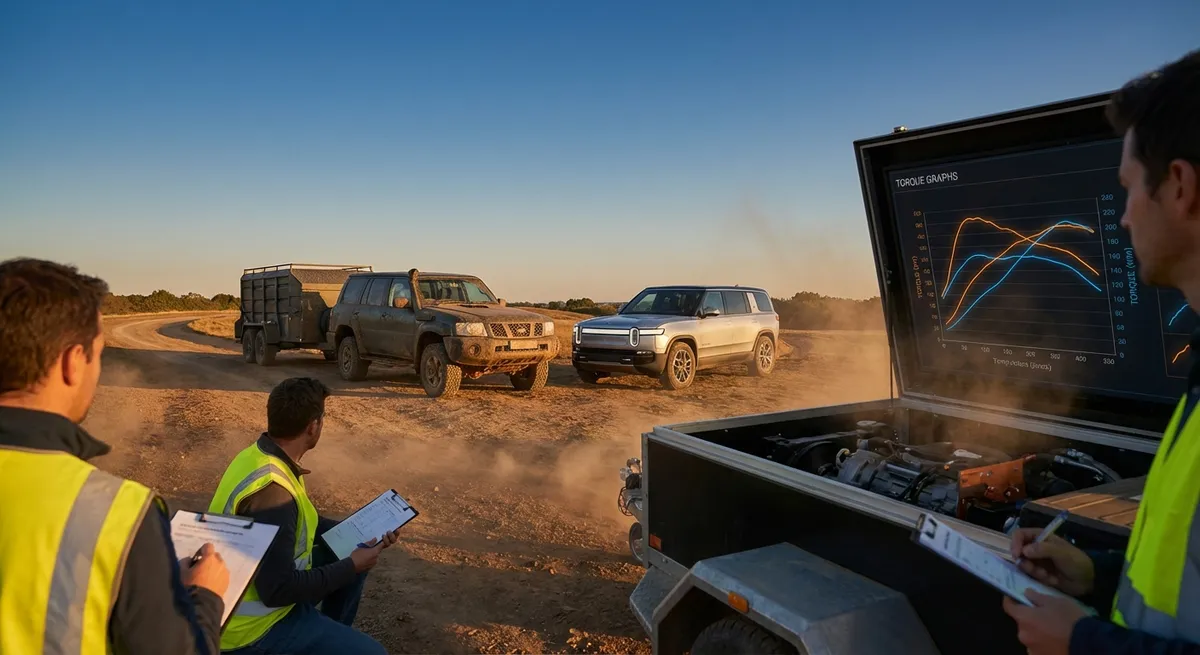
When comparing powertrains, focus on torque output and the rpm at which peak torque is delivered. An SUV that makes 280 lb-ft at 1,600 rpm can feel more responsive around town than a competitor with 300 lb-ft at 4,000 rpm, even if the peak numbers seem similar. If available, examine the torque curve charts in manufacturer technical materials or reviews; a flat, broad torque plateau enhances drivability, especially in heavier SUVs or when fully loaded. Also consider engine refinement: inline configurations tend to be smoother than V6s, while V8s offer a distinct character and sound that some enthusiasts value despite efficiency trade-offs.
Transmission type is equally crucial. Traditional torque-converter automatics with 8–10 speeds are now common and can balance quick shifts with durability. Continuously variable transmissions (CVTs) often deliver superior fuel economy but may feel disconnected or droning under heavy throttle, which can be a deal-breaker for enthusiasts. Dual-clutch transmissions (DCTs) provide rapid shifts and a performance feel but can be less smooth at low speeds. Gear ratio spread (how “short” first gear is and how “tall” top gear is) dramatically affects launch performance and highway refinement; SUVs geared aggressively for towing or performance may rev higher at cruising speeds compared with efficiency-optimized rivals.
Hybrids and plug-in hybrids (PHEVs) introduce additional layers to the comparison. Hybrid SUVs may pair smaller engines with electric motors to supplement torque, enabling impressive low-speed pull and smoother stop-start operation. PHEVs can offer all-electric range for short commutes, but you should compare battery size (kWh), DC fast-charging capability (if offered), and how the system behaves when the battery is depleted. For EV SUVs, look beyond the 0–60 mph figure to usable range, efficiency (kWh/100 mi or mi/kWh), and charging curve characteristics—how quickly they can sustain high charging rates over time, not just the peak kilowatt rating.
3. Chassis, Steering, and Braking: How SUVs Actually Feel on the Road
Two SUVs with similar dimensions and power outputs can feel completely different from behind the wheel due to chassis tuning, suspension design, steering calibration, and braking hardware. Many crossovers use MacPherson struts up front and multi-link setups at the rear, striking a balance between cost, comfort, and handling. Some higher-end models introduce double-wishbone fronts or multi-chamber air suspensions that can adjust ride height and stiffness on the fly. When comparing, note whether the SUV offers adaptive dampers, height-adjustable air suspension, or active anti-roll systems—these significantly impact ride compliance and body control, especially on large, tall vehicles.
Steering feel is harder to quantify on paper but crucial to driving confidence. Most modern SUVs employ electrically assisted power steering (EPAS), which can be tuned from ultra-light to sportily heavy. Look for reviews that comment on on-center feel, linearity, and feedback. A well-tuned system will resist wandering at highway speeds and allow precise placement in corners, while a poorly calibrated one may feel vague, requiring constant corrections. Some SUVs offer variable-ratio steering or rear-axle steering: the latter can dramatically shrink the turning circle at low speeds and improve stability during lane changes.
Brakes are a key comparison area for heavier SUVs. Examine rotor size, caliper design (single vs multi-piston), and whether the vehicle offers brake-by-wire systems that blend regeneration (on hybrids and EVs) with friction braking. Larger, performance-oriented SUVs may include upgraded pads and rotors designed to handle repeated high-speed stops without fade, which is particularly relevant for those who tow or drive in mountainous areas. For electrified models, pay attention to regenerative braking adjustability—some allow strong one-pedal driving, while others have limited regen, relying more on mechanical brakes.
Tire choice is another major differentiator. An SUV equipped with all-terrain or off-road-focused tires will ride more noisily, feel less sharp in corners, and stop longer on dry pavement than a similar vehicle with road-biased touring or performance tires. Wheel diameter interacts with tire sidewall height: large 20–22 inch wheels with low-profile tires may look dramatic but generally reduce ride comfort and increase susceptibility to damage from potholes compared with smaller wheels and taller sidewalls. Comparing chassis setups holistically—suspension design, steering calibration, braking system, and tire spec—gives a far clearer picture of how an SUV will behave in the real world than raw power figures alone.
4. Interior Execution, Seating, and Tech: The Usability Factor
Interior quality and technology packages are now major battlegrounds where SUVs differentiate themselves. Beyond obvious materials like soft-touch plastics, leather, or real wood, pay attention to seat design and adjustability. For front seats, look at the range of lumbar support, thigh support, and whether the steering wheel offers both tilt and telescopic adjustment. For families, second-row flexibility is key: compare sliding range, recline function, and whether the seats can fold flat individually (40/20/40 or 60/40) to accommodate cargo and passengers simultaneously. Third-row access—tilt-and-slide functions, step-in height, and headroom/legroom measurements—can vary dramatically even among similarly sized three-row SUVs.
Cargo space comparisons require a skeptical eye because different manufacturers use different measurement standards. Look at both behind-the-third-row and maximum cargo volume, but also consider load floor height, wheel-well intrusion, and seat-folding mechanisms. Power-folding seats are convenient but can be slower and less flexible than manual, multi-stage systems. If you frequently carry bulky items (bikes, camping gear, strollers), examine photos and dimensional charts to see how the space is shaped, not just the total liters or cubic feet endorsed by the spec sheet.
Infotainment and driver-assistance tech are rapidly evolving, and the differences between systems can be as significant as those between engines. When comparing, go beyond screen size to the underlying operating system, processor speed, and input methods. Systems that rely solely on touch may be harder to operate on the move than those that include physical knobs, dials, or a well-implemented rotary controller. Wireless Apple CarPlay and Android Auto, over-the-air software updates, and multi-device Bluetooth support are increasingly critical for tech-focused buyers. Also compare gauge cluster configurability—fully digital clusters can display navigation, driver-assistance status, and powertrain data, while simpler setups may limit information.
Advanced driver-assistance systems (ADAS) demand careful comparison because terminology is inconsistent across brands. Look at whether adaptive cruise control can work from a stop, whether lane-centering can handle gentle curves on highways, and how smoothly the systems intervene. Some SUVs now offer limited hands-free driving on mapped highways, but the underlying sensor suite (camera-only vs camera + radar + lidar) and software sophistication vary. Check for features such as blind-spot intervention (not just warning), rear cross-traffic automatic braking, junction assist (for left turns across traffic), and 360-degree cameras with high resolution and dynamic guidelines; differences here can transform day-to-day ease and safety, especially in urban or tight parking scenarios.
5. Ownership Economics: Comparing Costs Beyond the Sticker Price
Two SUVs with similar MSRPs can diverge significantly in total cost of ownership over 5–10 years. Fuel economy is the most obvious variable: compare EPA (or equivalent) city, highway, and combined ratings, but also consider your actual driving mix. Turbocharged engines and PHEVs, for instance, may shine on standardized cycles yet deliver less impressive results under heavy load or sustained high-speed driving. For EV SUVs, focus on efficiency metrics (kWh/100 miles) and local electricity rates to estimate energy costs, and factor in access to home charging—public fast charging typically costs more and should be used for occasional, not primary, charging.
Maintenance schedules and reliability records are just as important. Some brands include complimentary maintenance for a set period, which can radically reduce early ownership costs. Others may require more frequent oil changes, specialized fluids, or complex service procedures due to tight packaging or advanced technology. Hybrids and EVs eliminate certain maintenance items (like engine oil changes for EVs), but their brake systems and cooling loops still need periodic attention. Reviewing long-term reliability data and common issues for specific models or platforms can highlight SUVs that are more likely to trigger expensive out-of-warranty repairs.
Depreciation is a hidden but major cost driver. SUVs with strong brand equity, high demand in the used market, or limited supply often retain value better than more commoditized offerings. Comparing projected residual values from industry guides or lease residual percentages can give a quantified sense of how each model is expected to depreciate. For buyers who plan to keep an SUV for a decade or more, parts availability, aftermarket support, and the complexity of embedded technology (which can age quickly) also come into play; a simpler, less tech-heavy model might be easier and cheaper to keep on the road long term.
Insurance and tax incentives also differentiate ownership economics. Compare insurance quotes between similar SUVs—advanced safety features can sometimes lower premiums, but high repair costs for complex bodywork or sensors may offset that benefit. For EVs and PHEVs, factor in any federal, state, or local incentives, as well as access to carpool lanes or reduced congestion charges where applicable. Finally, consider charging infrastructure investments (home Level 2 charger, wiring upgrades) versus potential savings on fuel and maintenance. When viewed through this broader lens, a higher-priced SUV with excellent efficiency, strong residuals, and low maintenance needs may ultimately cost less over its life than a cheaper rival with thirstier engines and weaker resale.
Conclusion
Comparing SUVs effectively requires moving past surface impressions and marketing buzzwords to examine the fundamentals: platform and drivetrain layout, powertrain behavior, chassis tuning, interior execution, and long-term ownership costs. Each of these areas reveals trade-offs that align differently with everyday users, enthusiasts, and specialized needs like towing or off-road exploration. By methodically evaluating these five dimensions, shoppers can build their own comparison framework that goes far deeper than brochures or spec sheets—and ultimately select an SUV that not only looks right on paper, but also feels right on the road and remains sensible in the long run.
Sources
- U.S. Department of Energy – Fueleconomy.gov: Vehicle Comparison - Official EPA fuel economy ratings and side‑by‑side comparison tools for gas, hybrid, PHEV, and EV SUVs
- IIHS – Vehicle Ratings - Crash-test results and safety ratings for a wide range of SUVs, including details on advanced driver-assistance performance
- NHTSA – 5-Star Safety Ratings - Government safety ratings and recall information useful for evaluating SUV safety differences
- SAE International – Powertrain and Drivetrain Technical Papers - Technical standards and papers offering deeper insight into modern powertrain and drivetrain design
- Consumer Reports – Car Reliability and Owner Cost Data - Long-term reliability, owner satisfaction, and cost-of-ownership data used to compare SUVs beyond initial purchase price
Key Takeaway
The most important thing to remember from this article is that following these steps can lead to great results.