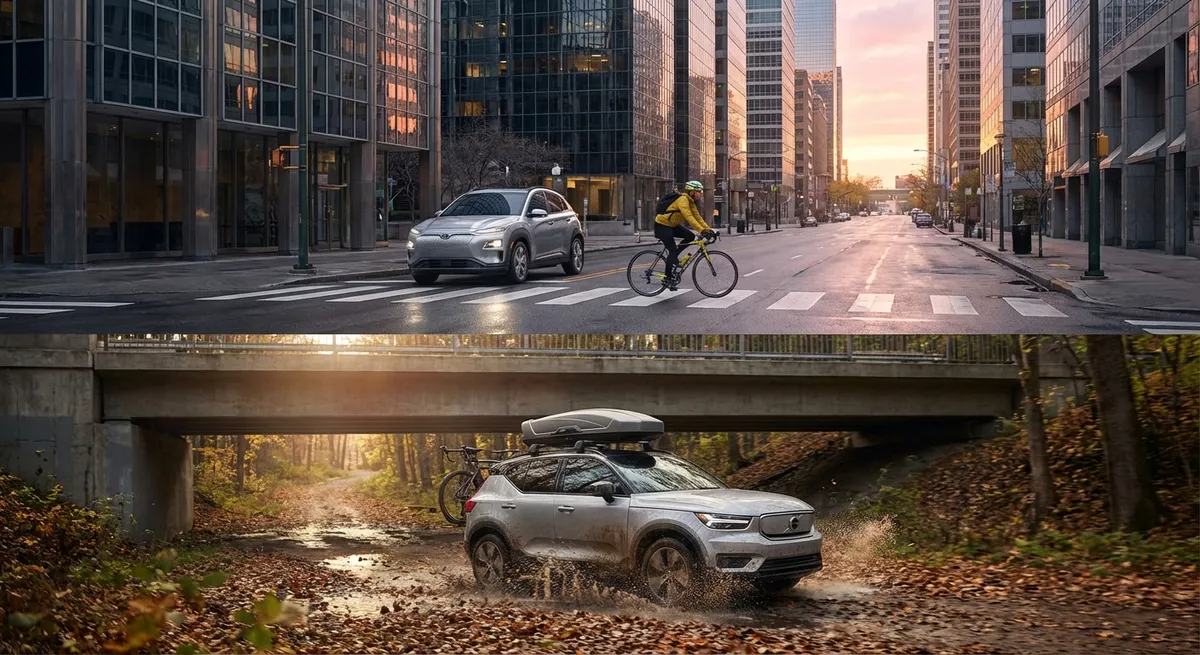
For many buyers, compact SUVs sit at the sweet spot between city usability and adventure capability. But not all compact SUVs are built for the same mission. Some are optimized for daily commuting and efficiency, while others lean toward off‑pavement confidence and long-haul comfort. Understanding how these priorities translate into real-world differences can save you from buying an SUV that looks right on paper but feels wrong in your driveway. This comparison framework walks through five critical areas that matter to enthusiasts and serious shoppers alike, helping you decide whether an urban commuter or a weekend explorer compact SUV fits your life better.
Powertrains and Performance: Tuning for City Response vs Open-Road Versatility
Compact SUVs targeted at urban commuting typically prioritize smooth, predictable power delivery and high efficiency over outright performance. They often use smaller displacement turbocharged engines (e.g., 1.5–2.0L inline-fours) or hybrid systems tuned for low‑rpm torque and stop‑and‑go operation. Gearboxes in these models frequently rely on continuously variable transmissions (CVTs) or closely spaced automatic gear ratios designed to keep revs low and fuel economy high. The result is responsive off-the-line acceleration at city speeds (0–30 mph) but a more relaxed character at highway passing speeds.
Weekend explorer‑oriented compact SUVs often choose a different balance. You’ll see engines with broader torque curves and higher thermal capacity for sustained loads—such as towing or long highway climbs—along with conventional stepped automatics or dual-clutch units that can better manage heat and repeated downshifts. These SUVs may sacrifice a few mpg in combined driving to deliver stronger mid‑range pull and more robust cooling systems. Enthusiasts should pay close attention to peak torque rpm, transmission cooling, and the availability of factory tow packages; these details often reveal which side of the commuter vs explorer spectrum a given model sits on. In short, city-focused powertrains excel at efficiency and refinement, while adventure-minded options deliver durability and confidence under load.
Chassis, Suspension, and Steering: Comfort Bias vs All-Road Control
Underneath the sheet metal, chassis tuning is where the mission of a compact SUV truly reveals itself. Urban commuter SUVs usually sit lower, with softer spring rates, comfort‑oriented dampers, and lighter steering calibration. This geometry helps with easy maneuvering, quick U‑turns, and a supple ride over potholes and speed bumps. Tire choices tend to be lower rolling-resistance all‑seasons on smaller wheels (16–18 inches), which reduces noise and improves efficiency but limits ultimate grip and sidewall strength off pavement.
Weekend explorer compact SUVs commonly feature higher ground clearance, longer suspension travel, and more robust components. You may find multi-link rear suspensions with specific off-road tuning, firmer dampers, and available drive modes that alter throttle response, transmission mapping, and even differential behavior for dirt, gravel, or snow. Steering is often calibrated with more on-center feel for highway stability and better feedback on loose surfaces, even if it feels slightly heavier in town. For enthusiasts, key specs include approach/departure/breakover angles, suspension type, and wheel/tire packages. High-profile all‑terrain or mixed‑use tires, skid plates, and reinforced control arms are strong indicators that an SUV is meant to go beyond the city limits.
Drivetrain and Traction Systems: Front-Drive Efficiency vs Smart All-Wheel Control
Drivetrain layout is one of the clearest distinctions between a commuter-biased compact SUV and a weekend explorer. Urban models often come standard with front-wheel drive (FWD), with all-wheel drive (AWD) offered as an option primarily for foul-weather traction. These AWD systems are typically reactive: they send power to the rear wheels only when slip is detected, in order to keep fuel consumption low. For most urban and suburban use, this is sufficient, and the lighter weight and simpler hardware keep costs down.
Explorer-oriented compact SUVs, by contrast, make more extensive use of advanced AWD or 4x4‑style systems. Some employ twin-clutch rear differentials capable of actively vectoring torque side-to-side, improving traction on uneven surfaces and enhancing cornering dynamics. Others offer multiple terrain modes, hill descent control, or even low-range gearing in rarer, more off-road-centric variants. Beyond marketing terms, buyers should examine whether the system is predictive (using sensors and algorithms to anticipate slip) or purely reactive, and whether any mechanical locking functions are available. If towing, trail driving, or frequent snow and dirt roads are in your plans, prioritizing a sophisticated, full‑time or proactive AWD system is more important than peak horsepower on the spec sheet.
Interior Packaging and Tech: City-Friendly Practicality vs Long-Distance Comfort
Inside the cabin, urban commuter compact SUVs focus on making everyday tasks effortless. Their priorities include excellent outward visibility, compact exterior dimensions with maximum interior volume, and intuitive controls for frequent use. Second-row legroom and easy ingress/egress matter when you’re constantly loading passengers, child seats, or cargo. Tech suites emphasize seamless smartphone integration (Apple CarPlay/Android Auto), quick‑boot infotainment, and advanced driver assistance systems optimized for traffic—features like traffic jam assist, stop‑and‑go adaptive cruise, and 360‑degree cameras tuned for tight parking.
Weekend explorer SUVs shift slightly toward long-duration comfort and flexibility. Seats often have more pronounced bolstering and multi-way adjustability to reduce fatigue during multi-hour drives. Cabin materials may be chosen for durability and easy cleaning—important if you’re dealing with muddy boots or gear. Storage solutions can be more adventure-focused: underfloor cargo compartments, tie-down points, 12V/120V outlets, and roof-rail systems rated for heavier loads such as cargo boxes or rooftop tents. Tech features may emphasize robust navigation with offline map capability, trailer assist systems, and vehicle information pages that display pitch/roll angles, tire pressures, and drivetrain status. Both segments can offer premium audio and digital clusters, but how those technologies are configured reveals whether the SUV is optimized for city rhythms or weekend escapes.
Safety, Efficiency, and Ownership Costs: Daily Reliability vs Adventure-Ready Durability
No matter which type of compact SUV you’re considering, safety and total cost of ownership are non-negotiable factors. Urban commuter SUVs often lead on fuel economy, thanks to smaller engines, hybrid options, lower curb weights, and efficiency‑oriented aerodynamics. For buyers who log heavy city miles, the savings over a multi-year ownership cycle can be substantial. These models also frequently roll out the latest driver assistance tech first—pedestrian detection, advanced lane-keeping, and automatic emergency braking—because their manufacturers are targeting high-volume, safety-conscious buyers.
Weekend explorer SUVs, while sometimes slightly less efficient, make up for it with hardware designed to handle more demanding use. That can mean reinforced cooling systems, heavier-duty suspension components, and upgraded braking systems—all of which can enhance durability if you tow, travel loaded, or tackle poor road conditions regularly. Potential owners should weigh not just EPA fuel economy ratings, but also real-world consumption when loaded or on rough terrain, as well as maintenance intervals for AWD systems, differential service, and more complex suspension setups. Checking crash-test ratings from independent organizations, corrosion warranties, and towing-related guidelines can further clarify whether a given model is better thought of as a city specialist or a truly versatile compact SUV ready to leave the pavement behind.
Conclusion
Choosing between an urban commuter and a weekend explorer compact SUV is less about brand loyalty and more about honestly evaluating how, where, and how often you drive. Powertrain tuning, chassis setup, drivetrain sophistication, interior packaging, and long-term running costs all shift depending on whether an automaker expects the vehicle to spend most of its life in traffic or on the open road. Enthusiasts should look beyond headline horsepower and screen size to the underlying engineering decisions that define each SUV’s true character. By aligning those technical details with your daily routine and your real-world adventures, you can select a compact SUV that feels perfectly matched to your lifestyle—whether your weekends are spent in city cafés or on the far side of a gravel road.
Sources
- U.S. Department of Energy – Fuel Economy Guide - Official fuel economy ratings and drivetrain details for comparing compact SUVs
- IIHS – Vehicle Ratings - Independent crash-test results and safety evaluations across SUV segments
- SAE International – All-Wheel-Drive Systems Overview - Technical explanation of different AWD architectures and their use cases
- Toyota Global Newsroom – TNGA Platform Overview - Insights into modern SUV platform and chassis design considerations
- NHTSA – Towing and Cargo Safety - Government guidance on towing, load limits, and safe operation for SUVs and light trucks
Key Takeaway
The most important thing to remember from this article is that this information can change how you think about Comparisons.