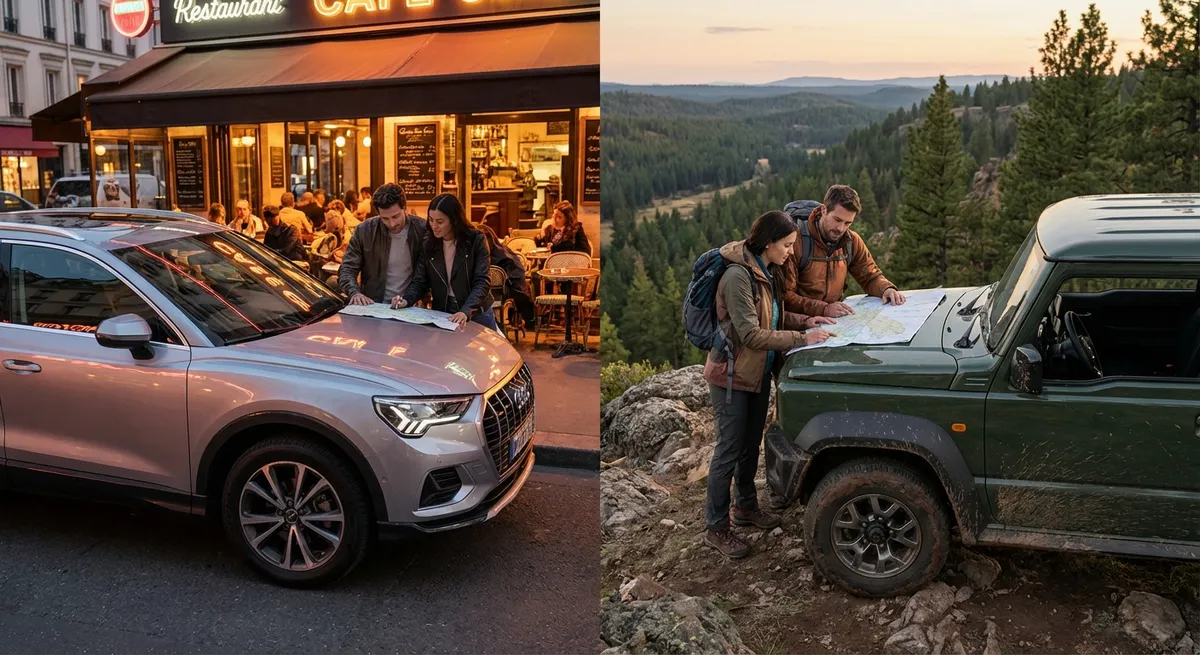
Choosing an SUV today isn’t just about size or badge—it’s about matching the vehicle’s underlying character to how and where you really drive. Two broad personalities dominate the market: refined “urban” crossovers built for comfort and efficiency, and “adventure” SUVs engineered for off‑pavement control and durability. On the spec sheet, many look similar; on the road (and trail), they can feel like different species. This comparison breaks down the key engineering and usability differences so you can pick an SUV that genuinely fits your life instead of just your parking space.
1. Platform and Drivetrain: Crossover DNA vs. Truck Roots
Beneath the styling, urban and adventure SUVs are often built on fundamentally different architectures, and that understructure dictates how they behave.
Urban‑oriented SUVs are typically unibody crossovers, sharing platforms with passenger cars. The body and frame form a single structure, which increases rigidity and reduces weight. Most use a transverse engine layout with front‑wheel drive (FWD) as the default, and optional all‑wheel drive (AWD) for extra traction. This layout maximizes interior space, improves fuel economy, and delivers more car‑like handling. Suspension designs are usually tuned for comfort and control on paved roads, with independent rear suspension common in this segment.
Adventure‑focused SUVs more often sit on body‑on‑frame platforms derived from pickup trucks, or on heavy‑duty unibody setups specifically engineered for off‑road and towing. Frames are stiffer vertically and better able to handle twisting loads from uneven terrain or trailer tongue weight. Longitudinal engine layouts with rear‑wheel drive (RWD) bias are typical, paired with part‑time or full‑time 4WD systems that incorporate low‑range gearing. Torsionally robust structures and beefier subframes allow for higher payloads, integrated tow hitches, and skid plate mounting points.
The trade‑off is clear: unibody crossovers deliver lighter weight, better fuel consumption, and a smoother, quieter ride—ideal for commuting and family use. Truck‑based or off‑road‑optimized SUVs accept added mass and some refinement penalties in exchange for higher durability under load, better articulation potential, and increased resilience when used hard. Understanding which platform you’re getting—car‑derived crossover or truck‑inspired SUV—is the foundation for a good match.
2. AWD vs. 4WD Systems: Software Intelligence vs. Mechanical Leverage
Marketing language often blurs the line between AWD and 4WD, but the underlying systems are different in purpose and operation.
Urban SUVs usually employ on‑demand AWD systems designed primarily for traction on wet, snowy, or gravel roads. These systems are often single‑speed, without a low‑range gear. Under normal conditions, power flows mainly to the front wheels; a multi‑plate clutch packs or electronically controlled coupling sends torque rearward when slip is detected or when a drive mode preemptively calls for it. Some setups can vector torque side‑to‑side using brake‑based traction control or dual‑clutch rear differentials to improve stability and cornering.
Adventure SUVs prioritize mechanical leverage and control. Traditional part‑time 4WD systems use a manually selectable transfer case with 2H, 4H, and 4L ranges. In 4H and 4L, the front and rear axles are locked together, ideal for low‑traction surfaces but unsuitable for grippy pavement due to drivetrain wind‑up. Modern advanced 4WD setups may add locking differentials (center, rear, and sometimes front) and advanced crawl control or off‑road cruise systems that manage throttle and braking for precise low‑speed movement.
The distinction matters in real use:
- An on‑demand AWD crossover excels in variable road weather, light dirt roads, and occasional camping trips, with minimal driver input required.
- A 4WD‑equipped adventure SUV can claw its way up steep, loose, or rocky surfaces, ford deeper water (within rated limits), and manage controlled descents where gear reduction and engine braking are crucial.
Buyers should look closely at whether a vehicle has true low range, locking differentials, and what its off‑road drive modes actually control (throttle mapping, shift logic, traction thresholds, differential locks). These mechanical differences define the boundary between “all‑weather security” and “serious off‑road capability.”
3. Ground Clearance, Geometry, and Tires: The Underrated Specs
Two SUVs with similar heights can have dramatically different abilities once the pavement ends. Three key geometric specs separate urban and adventure designs: ground clearance, approach/departure angles, and breakover angle.
Urban SUVs typically prioritize an easy step‑in height and aerodynamic efficiency. Ground clearance often falls in the 6.5–8.5 inch range. Front bumpers and side sills are shaped more for aero and styling than for clearance over obstacles, which leads to relatively modest approach and departure angles. Underbody panels are tuned for airflow and noise reduction rather than impact resistance.
Adventure SUVs aim for more vertical separation from terrain. Ground clearance can exceed 9 inches, especially in off‑road trims or air‑suspension “off‑road” modes. Shorter overhangs, higher‑mounted bumpers, and tucked‑in exhaust routing improve approach and departure angles, while frame rails and crossmembers are designed to accept skid plates over vulnerable components like the oil pan, fuel tank, transfer case, and rear differential. Rock rails or reinforced running boards may be available to protect rocker panels.
Tire selection further widens the gap. Urban SUVs usually ship with all‑season or touring tires emphasizing low rolling resistance, quiet operation, and steering response. Their sidewalls are relatively low profile, and tread patterns are optimized for wet and dry road grip. Adventure trims often use all‑terrain (A/T) tires with stronger sidewalls, deeper tread blocks, and more voids for self‑cleaning in mud, snow, and gravel. These tires trade some noise and efficiency for superior durability and traction off‑road.
For buyers, this means that an SUV’s actual capability is not just about drive system marketing. Reviewing ground clearance numbers, angle measurements, and OE tire specs will quickly indicate whether a model is genuinely suited for frequent trail use or better treated as a road‑biased vehicle that can tolerate the occasional poorly maintained road or snowy driveway.
4. Interior Design and Cargo: Daily Comfort vs. Expedition Utility
Inside the cabin, the difference between urban and adventure SUVs is often philosophical: is the interior designed primarily as a rolling living room, or as a command center that can double as a mobile gear locker?
Urban SUVs lean into refinement and tech integration. Expect heavily sculpted seats with multi‑way power adjustment, softer suspension tuning for isolation from road imperfections, and a focus on sound deadening—acoustic glass, extensive carpeting, and noise‑reducing underbody treatments. Infotainment systems typically dominate the dash with large touchscreens, wireless smartphone integration, multiple USB‑C ports, and sophisticated ambient lighting. Interior materials prioritize visual appeal and tactile softness, sometimes at the expense of long‑term wear resistance under heavy use.
Adventure SUVs are trending upmarket, but at their core they still prioritize functional durability. Surfaces may use more hard‑wearing plastics, rubberized controls, and easier‑to‑clean seat fabrics or leather. Floor mats are often all‑weather or can be optioned as such, and controls for 4WD systems, differential locks, and drive modes are located where they can be operated with gloves. Some models offer configurable cargo systems, tie‑down points, 12V/120V outlets, and roof rack mounting provisions engineered to carry tents, jerry cans, or recover gear.
Cargo space tells another story. Urban SUVs typically have lower cargo floors and more squared‑off interiors but may compromise on vertical space due to sloping rooflines. Their liftgates are powered and hands‑free more often, reflecting daily convenience needs. Adventure SUVs may have split tailgates, side‑hinged doors, or heavy‑duty liftgates designed to accept ladder or spare tire mounts. Third‑row seating—common in large urban family SUVs—can be absent or optional in adventure‑oriented models to preserve space for equipment and to improve departure angles.
Potential buyers should pay attention not just to touted cubic‑foot numbers, but also to floor height, seat‑folding mechanisms, load lip design, and anchor points. If your daily life revolves around school runs and urban errands, the comforts and ease‑of‑use features will matter more. If you’re loading bikes, camping gear, or recovery kits in all weather, wipe‑clean surfaces, robust tie‑downs, and thoughtful power outlets quickly become more valuable than the fanciest ambient lighting pattern.
5. Efficiency, Towing, and Cost of Ownership: Long‑Game Trade‑Offs
Choosing between urban and adventure‑oriented SUVs also means choosing a long‑term cost and performance profile: fuel (or electricity) consumption, towing and payload, and maintenance implications.
Urban SUVs, typically lighter and more aerodynamic, take the lead on fuel efficiency and often on electrified powertrain availability. Many crossovers now offer hybrid, plug‑in hybrid (PHEV), or fully electric variants. Hybrids blend internal combustion with electric assistance to improve city mileage and provide smoother stop‑start operation. PHEVs add a usable electric‑only range that can cover daily commutes with minimal fuel usage, while EV SUVs eliminate tailpipe emissions entirely but require careful planning for charging, especially on long trips.
Adventure SUVs frequently rely on higher‑displacement gasoline engines or robust turbocharged setups, and in some markets, diesel options, to deliver the torque necessary for towing and off‑road work. These powertrains are paired with cooling systems, transmissions, and axles engineered for higher gross combined weight ratings (GCWR). Tow ratings can significantly exceed those of comparable‑size urban crossovers, but real‑world fuel consumption often rises when towing or driving off‑road due to aerodynamic drag, heavier curb weights, and lower gearing.
Maintenance and wear patterns differ as well. Urban crossovers used primarily for commuting may see longer life from brakes and tires but could experience higher load on complex electronic features over time. Adventure SUVs that actually go off‑road or tow at their capacity will subject suspension components, driveline parts, and tires to greater stress, increasing the importance of proactive inspections and potentially raising operating costs. Skid plates, recovery points, and 4WD hardware add complexity that must be maintained properly, especially after deep‑water crossings or heavy trail use.
From a financial perspective, urban SUVs can be advantageous for drivers with high annual mileage and light towing needs due to lower fueling costs and potentially reduced long‑term wear. Adventure SUVs make more sense if you regularly tow trailers, boats, or campers, or if you truly use their off‑road hardware—otherwise, you may be paying for capability you never tap while accepting unnecessary efficiency penalties.
Conclusion
Urban and adventure SUVs share a silhouette but diverge sharply in structure, capability, and long‑term ownership profile. Underneath, crossovers favor unibody comfort, efficient on‑demand AWD, and tech‑rich cabins suited to commuting and family duty. Adventure SUVs prioritize frames, low‑range 4WD, protective geometry, and durable interiors built for towing, trails, and harsh conditions. By looking beyond marketing labels and focusing on platform, driveline, geometry, interior function, and long‑term efficiency, you can align your choice with how you truly drive. Whether your daily journey is curb‑to‑curb or trailhead‑to‑trailhead, matching the SUV’s fundamental character to your real world use is the most powerful spec you can choose.
Sources
- [U.S. Department of Energy – Fuel Economy Guide](https://www.fueleconomy.gov/feg/findacar.shtml) - Official fuel economy data and drivetrain details for comparing SUVs and crossovers
- [National Highway Traffic Safety Administration (NHTSA)](https://www.nhtsa.gov/vehicle) - Safety ratings and technical information on SUV platforms and configurations
- [Society of Automotive Engineers (SAE) – Vehicle Dynamics and Handling](https://www.sae.org/standards/content/j670_201109/) - Technical definitions for ground clearance, approach angles, and related vehicle geometry concepts
- [Toyota Global – 4WD and AWD System Overview](https://global.toyota/en/mobility/toyota-brand/features/4wd/) - Manufacturer explanation of different 4WD/AWD architectures and use cases
- [Ford Towing Guide](https://www.ford.com/towing-guides/) - Official towing ratings and guidance illustrating how SUV platform and drivetrain affect tow capacity and payload
Key Takeaway
The most important thing to remember from this article is that following these steps can lead to great results.