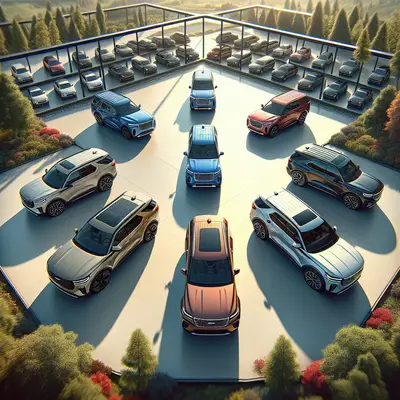
Choosing between an urban-oriented SUV and an off-road-capable model is no longer just about styling or marketing labels. Under the sheet metal, the engineering differences are profound—and they affect comfort, safety, durability, and ownership costs. For enthusiasts and serious shoppers alike, understanding these trade-offs helps you pick the right tool for the job instead of overpaying for capability you never use—or underbuying and regretting it later.
This comparison breaks down the most important technical and practical distinctions between city-focused crossovers and trail-ready SUVs, with real-world implications you’ll actually feel from behind the wheel.
1. Platform and Chassis: Crossover Architecture vs Body-On-Frame
The first major divider between urban and off-road SUVs is the platform itself—how the vehicle is built.
Most urban SUVs and crossovers use a unibody (monocoque) construction, where the body and frame form a single integrated structure. This is similar to passenger cars and is typically derived from a shared platform (for example, compact SUVs sharing underpinnings with compact sedans or hatchbacks). The main benefits are:
- Lower weight: Less mass improves fuel economy, acceleration, and braking.
- Better structural rigidity for on-road handling: Tighter body control in corners and better crash-energy management.
- Lower floor height: Easier entry/exit, better rear-seat access, and more efficient packaging for cargo and third rows.
- Refined ride quality: The chassis can be tuned for comfort with less concern for the massive loads off-roaders must endure.
In contrast, many serious off-road SUVs (e.g., Toyota 4Runner, Jeep Wrangler, Ford Bronco) are built on body-on-frame architectures derived from pickup trucks. Here, a separate ladder frame carries the drivetrain and suspension, and the body is bolted on top. Key advantages for off-road use:
- High torsional strength for twisting loads: Critical when one wheel is stuffed in a rut and another is hanging in the air.
- Superior durability for towing and payload: The robust frame handles vertical and torsional loads better over time.
- Easier heavy-duty modifications: Winches, steel bumpers, rock sliders, and tow hitches can mount directly to the frame.
The trade-off is weight and refinement. Body-on-frame SUVs typically:
- Weigh several hundred pounds more than comparable crossovers.
- Have higher floors and step-in heights.
- Can feel less composed in emergency maneuvers, with more body roll and longer stopping distances at the limit.
For buyers living primarily on paved roads, a well-engineered unibody SUV usually offers a more comfortable, efficient, and agile daily experience. Body-on-frame starts to make sense when you regularly tow, travel on rough trails, or plan to keep the vehicle for a decade-plus in punishing conditions.
2. Suspension, Ground Clearance, and Ride Trade-Offs
Look under an urban SUV and you’ll typically find independent suspension at least in the front, and often at all four corners (e.g., MacPherson struts up front, multi-link independent rear). Off-road SUVs may use a mix of independent setups and solid axles, especially at the rear or both ends in hardcore models.
Urban-Oriented Setups
Urban SUVs focus on:
- Ride comfort: Softer spring rates and more compliant bushings to soak up potholes and expansion joints.
- Precise handling: Independent suspension allows each wheel to move separately, maintaining tire contact in corners.
- Low center of gravity: Less ground clearance and shorter suspension travel reduce body roll and improve stability.
You’ll often see fixed steel springs with conventional dampers, though premium crossovers may offer:
- Adaptive dampers: Electronically controlled shocks that adjust in milliseconds to balance comfort and control.
- Active anti-roll bars: Systems that stiffen or relax roll resistance depending on speed and cornering forces.
Off-Road-Focused Setups
Trail-capable SUVs prioritize travel and toughness:
- Longer wheel travel: Allows wheels to move farther up and down to keep gripping uneven terrain.
- Higher ground clearance: Often 9–11 inches or more, reducing underbody contact and improving approach, breakover, and departure angles.
- Heavier-duty components: Larger control arms, thicker bushings, and reinforced mounting points to resist off-road impacts.
Many feature:
- Solid axles (live axles): Especially in rear, which are robust and maintain consistent ground clearance under the differential. They excel in articulation but are typically less refined on pavement.
- Off-road-specific shocks and springs: Tuned to manage repeated large impacts (whoops, rocks) without overheating or bottoming out.
- Available air suspension: In some modern SUVs, ride height can be raised for off-road and lowered for highway efficiency and easier loading.
The compromise is on-road precision and comfort. High center of gravity, longer suspension travel, and heavy-duty components mean:
- More pitch and roll under braking and cornering.
- Less “connected” steering feel.
- More NVH (noise, vibration, harshness) transmitted from knobby tires and rugged suspension.
If you rarely leave pavement, the tangible benefits of an off-road suspension may not outweigh the daily drawbacks. But if your commute includes rough rural roads or unmaintained tracks, the extra compliance and clearance can dramatically reduce fatigue and vehicle damage over time.
3. Drivetrain and Traction Systems: AWD Convenience vs 4x4 Capability
The underlying philosophy of urban SUVs and serious off-roaders diverges sharply in how they deliver power to the ground.
Urban-Oriented All-Wheel Drive (AWD)
Most crossovers are fundamentally front-wheel-drive (FWD) or rear-wheel-drive (RWD) platforms with on-demand AWD:
- Electronically controlled center or rear coupler: Sends torque to the secondary axle only when slip is detected or preemptively in certain drive modes.
- No low range: Gear ratios are optimized for economy and normal driving, not rock crawling.
- Traction management via ABS and stability control: Brake-based torque vectoring and electronic traction control substitute for traditional locking differentials.
Benefits:
- Efficiency: Only engaging AWD when needed reduces driveline drag.
- Simplicity: Fewer heavy-duty components means lower cost and weight.
- Predictable road manners: Tuned for neutral handling on wet or snowy pavement.
This is more than adequate for rain, light snow, and gravel if paired with appropriate tires.
Off-Road 4x4 Systems
Heavy-duty SUVs often use part-time or full-time 4x4 systems with more mechanical tools:
- Two-speed transfer case: Provides a low-range gear (e.g., 2.7:1) for controlled crawling and maximum torque multiplication at low speeds.
- Locking differentials (center, rear, and sometimes front): Ensures equal torque split side-to-side or front-to-rear, critical in low-traction situations where one wheel might be airborne.
- Manual or robust electronic engagement: In many cases with physical levers or heavy-duty switches designed for repeated use under load.
Advanced SUVs integrate terrain management systems that adjust:
- Throttle response
- Transmission shift mapping
- Traction control thresholds
- Differential lock strategies
for surfaces like sand, mud, rocks, and snow.
The downside:
- Extra weight and complexity: More components that must be maintained.
- Higher frictional losses: Full-time 4x4 systems usually consume more fuel.
- Learning curve: Incorrect use of locking diffs or low range on high-traction surfaces can damage components.
If your SUV will spend winters in deep snow, haul loads up steep unpaved tracks, or tow boats from slippery ramps, a proper 4x4 with low range is more than a luxury—it’s a safety and reliability asset. For typical suburban duty cycles, a good AWD system and quality all-season or winter tires are almost always sufficient.
4. Tires, Brakes, and On-Road Safety Dynamics
The boots and brakes of an SUV tell you a great deal about the environment it’s designed for—and they change how the vehicle behaves in emergencies.
Tires: Contact Patch Priorities
Urban SUVs usually ride on:
- All-season or touring tires: Designed for low rolling resistance, quiet operation, and consistent grip in a wide temperature range.
- Lower sidewall profiles (larger wheels): 18–21 inch wheels with 50–60 series tires for sharper turn-in and aesthetics.
- Road-biased tread patterns: Optimized channels and sipes for water evacuation and light snow traction.
In contrast, off-road-oriented SUVs favor:
- All-terrain (A/T) or mud-terrain (M/T) tires: With more aggressive tread blocks, deeper voids, and reinforced sidewalls.
- Higher sidewalls: 65–75 series or more to allow sidewall flex and protect wheels from rocks.
- Stronger construction: Often with higher load ratings for towing and rough surfaces.
These choices dramatically affect road behavior:
- Longer stopping distances on pavement: Especially in wet conditions, as large tread blocks squirm and reduce effective contact.
- More noise and vibration: Knobby tread patterns “drone” at highway speeds.
- Reduced precision in quick maneuvers: Softer sidewalls and blocky tread can make the vehicle feel less immediate when you change direction abruptly.
For buyers who primarily drive on highways and city streets, road-biased tires on an urban SUV deliver noticeably better braking performance, especially in emergency stops—arguably one of the most important real-world safety metrics.
Brakes and Heat Management
Urban SUVs:
- Typically have larger rotors and calipers proportional to vehicle mass and anticipated loads, with a focus on repeated high-speed stops.
- May integrate electronic brake force distribution (EBD), automatic emergency braking (AEB), and regenerative braking in hybrids and EVs to maximize efficiency and safety.
- Are tuned for predictable pedal feel and low noise in daily use.
Off-road SUVs must manage additional factors:
- Downhill control off-road: Long, slow descents can overheat brakes if low range and engine braking are not used correctly.
- Mud, sand, and debris: Brakes must tolerate contamination and still perform adequately.
- Added mass from modifications: Larger tires, steel bumpers, and accessories increase unsprung and total weight, challenging stock brake systems.
Serious off-roaders often upgrade to larger rotors, better pads, and stainless lines as they modify their vehicles, while urban SUVs are more likely to remain near factory spec.
From an ownership perspective, if your use case is mostly paved driving with occasional dirt roads, an urban SUV’s tire and brake optimization provides a distinct safety and comfort advantage—especially in high-speed, high-traffic environments.
5. Interior Design, Ergonomics, and Long-Term Ownership Costs
The cabin and long-term economics of SUV ownership are where usage intent becomes obvious and impactful.
Cabin and Ergonomics
Urban SUVs emphasize:
- Noise insulation and materials: Thicker acoustic glass, more sound-deadening, and upscale soft-touch surfaces.
- Tech-forward ergonomics: Large infotainment screens, head-up displays, advanced driver-assistance systems (ADAS), and app integration.
- Space efficiency: Flat load floors, fold-flat rear seats, and easier access to third rows if equipped.
- Lower load-in heights: Valuable for families, pets, and frequent cargo use like home improvement runs.
Off-road SUVs, even modern ones, often prioritize function and robustness:
- Simpler, more durable materials: Harder plastics that better tolerate mud, dust, and easy wipe-down.
- More grab handles, exposed fasteners, and modular design: Allow easier removal of panels, carpets, and sometimes doors or roofs.
- Dedicated off-road interfaces: Physical switches for lockers, sway-bar disconnects, and terrain modes to ensure usability with gloves and in harsh conditions.
For daily commuting and long highway trips, urban SUV cabins are usually quieter, more comfortable, and more tech-rich. For overlanding or frequent dirty use, the practical, easily cleanable interiors of off-road SUVs age more gracefully.
Fuel, Maintenance, and Depreciation
Urban SUVs typically offer:
- More efficient powertrains: Smaller-displacement turbocharged engines, hybrids, and increasingly plug-in hybrids or full EVs.
- Lower unsprung and total mass: Better real-world economy and reduced component wear (brakes, suspension, tires).
- Shorter gearing and fewer heavy-duty parts: Lower servicing costs when compared to full-size, off-road-based SUVs.
Off-road-capable SUVs often incur:
- Higher fuel consumption: Larger displacement engines, full-time 4x4 systems, higher ride heights, and aggressive tires all increase drag and rolling resistance.
- Potentially higher consumable costs: Larger, specialized tires and heavy-duty components usually cost more to replace.
- Modification expenses: Many owners upgrade suspension, armor, and accessories, which add upfront cost and sometimes maintenance complexity.
On the flip side, certain iconic body-on-frame and off-road SUVs can retain value exceptionally well, especially models with reputations for durability and off-road prowess. In niche used markets, properly maintained 4x4 SUVs can command strong prices even at higher mileage.
For buyers who prioritize total cost of ownership and mostly drive on pavement, an urban SUV or crossover tends to make more financial sense. For those who truly exploit off-road capability or need serious towing, the higher operating costs of a trail-ready SUV are offset by utility, durability, and sometimes better resale in enthusiast circles.
Conclusion
Urban-oriented SUVs and off-road-capable SUVs may share a segment label, but they are engineered for fundamentally different missions. Platform architecture, suspension design, drivetrain layout, tires, and interior philosophy all reflect whether a vehicle is optimized for asphalt, dirt, or a genuine mix of both.
The key is aligning what the vehicle is built to do with what you actually do:
- Choose an urban SUV if your world is highways, city streets, and occasional mild dirt roads, and you prioritize comfort, efficiency, safety performance, and lower running costs.
- Choose an off-road SUV if unpaved trails, heavy towing, remote travel, or long-term durability in harsh conditions are central to your ownership plan.
Understanding these technical distinctions turns a confusing showroom full of “rugged-looking” SUVs into a clear landscape of purpose-built tools. Matching that purpose to your real driving life is where smart enthusiasts and informed buyers gain an edge.
Sources
- NHTSA – Vehicle Types and Safety Considerations - Background on vehicle categories, safety technologies, and how design impacts crash performance
- SAE International – Light-Duty Truck and SUV Architecture - Technical discussion of crossover (unibody) vs body-on-frame platforms
- Toyota – 4WD Systems and Off-Road Technologies Explained - Manufacturer overview of transfer cases, 4WD modes, and traction aids
- Jeep – 4x4 Systems and Trail Rated Criteria - Details on mechanical 4x4 systems, off-road metrics, and durability requirements
- Consumer Reports – SUV Tire and Braking Performance - Independent testing and analysis of how tire types affect braking, handling, and safety
Key Takeaway
The most important thing to remember from this article is that this information can change how you think about Comparisons.