Wildlife rescue might seem like the furthest thing from a suburban school run, but the tools and terrain that conservation vets face every day are exactly what today’s adventure SUVs are being built to handle. A recent feature on a wildlife veterinarian whose “office” ranges from helicopter drop‑zones to muddy savannah tracks highlights the kind of real‑world punishment that separates marketing hype from genuine capability.
For SUV shoppers and enthusiasts, this kind of work is an extreme but useful test case. The same design choices that let a vet airlift a rhino, haul tranquilizer gear, and navigate washed‑out forest roads are the ones that make your SUV safer, more versatile, and more future‑proof—whether you’re towing a camper, heading to the mountains, or just dealing with worsening weather. Here’s how industry trends intersect with that reality.
1. Off‑Road Hardware Is Going Mainstream—With Real Work To Do
Wildlife operations demand vehicles that can get in and out of remote areas reliably, often on unprepared tracks. That’s exactly why we’re seeing so many “overland‑ready” SUVs in current and upcoming lineups—not as styling exercises, but as platforms designed around real use cases.
Automakers like Toyota, Ford, Land Rover, and Jeep are doubling down on proper off‑road architecture: body‑on‑frame construction in models like the Toyota Land Cruiser and Ford Bronco, robust ladder frames in the new Land Rover Defender, long‑travel suspension options, and increasingly sophisticated four‑wheel‑drive systems with low‑range gearsets. For conservation and wildlife vet teams in Africa, Australia, and parts of North America, these are not optional extras—no mechanical locking differential means a stuck vehicle, and a stuck vehicle can mean a failed rescue or delayed treatment. For consumers, it translates into SUVs that can confidently handle backcountry trails, deep snow, or ferrying gear to a remote campsite. Industry‑wide, sales success of off‑road trims (TRD Pro, Badlands, Trailhawk, X‑Line, etc.) is showing manufacturers that there is enduring demand for authentic, functional capability—well beyond the “urban crossover” formula.
2. Payload, Cargo Management, And Roof Systems Are Becoming Mission‑Critical
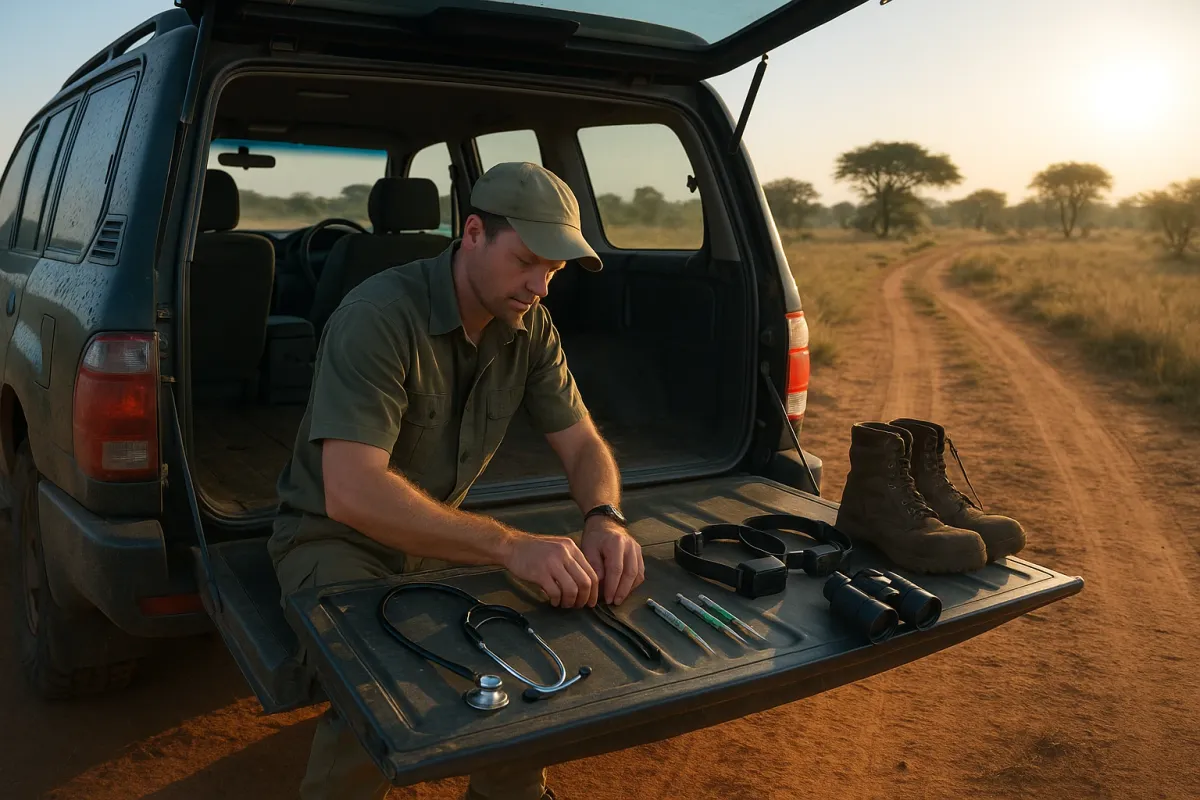
A wildlife vet’s vehicle has to function as a rolling clinic: dart guns, immobilization drugs, portable anesthesia machines, ropes, slings, diagnostic tools, coolers, and sometimes field surgical equipment. That kind of loadout exposes weaknesses in an SUV’s payload, cargo area design, and roof structure very quickly.
In response, the industry is paying more attention to usable payload ratings and modular cargo solutions. The latest overland‑oriented SUVs and crossovers are offering flat‑folding rear seats with high load ratings, integrated tie‑down points, 12V and 120V in‑cargo outlets, and increasingly, factory roof rails engineered for dynamic loads high enough to support roof tents and heavy racks. Models like the Ford Bronco, Land Rover Defender, Subaru Forester Wilderness, and Toyota 4Runner are being marketed with specific accessory ecosystems: lockable storage drawers, slide‑out cargo floors, MOLLE‑style seat‑back mounting panels, and integrated air compressor mounts. For a vet team, that kind of modularity speeds up deployment and keeps sensitive equipment secure in rough terrain. For buyers, it means your SUV is better prepared for real adventure use—bikes, kayaks, camera gear, camping setups—without needing risky aftermarket modifications that might compromise safety or warranty coverage.
3. Advanced 4×4 Electronics Are Evolving From “Off‑Road Toy” To Safety Tool
In the field, the ability to precisely control traction and torque distribution is not about fun—it’s about keeping a heavily loaded vehicle stable near cliffs, riverbanks, or skittish animals that can bolt without warning. That’s exactly the scenario driving the rapid advancement of electronic terrain management in SUVs.
Modern systems go far beyond a simple “4H/4L” lever. Terrain‑response setups adjust throttle mapping, transmission shift points, ABS calibration, traction control aggressiveness, and even differential lock behavior based on selected modes like Sand, Mud/Ruts, Rock, or Snow. In vehicles like the new Defender, Jeep Grand Cherokee, or Ford Bronco, these systems are tied to cameras and ultrasonic sensors that add low‑speed visibility where sightlines are poor—crucial on narrow forest tracks or when maneuvering near wildlife. The industry trend is clear: these technologies are being developed and validated in true off‑grid environments, then refined for everyday drivers. Hill descent control that keeps a vet’s rig composed on a steep, ungraded track is the same tech that gives a commuter confidence on an icy downhill. Vectoring differentials and brake‑based traction systems that recover grip in deep sand will help an all‑season driver avoid getting stranded on a washed‑out rural road. You’re not just buying an “off‑road mode”; you’re buying a growing layer of stability and predictability for edge‑case conditions.
4. Electrification Meets The Demands Of The Bush—And Your Weekend
Another quiet shift reflected in field operations is how quickly power‑hungry tools are going electric. Wildlife vets run everything from portable X‑ray machines to communications gear and drone chargers off their vehicles. That’s accelerating the push toward SUVs with serious onboard power management—and it dovetails perfectly with the global move to electrification.
Hybrid and battery‑electric SUVs like the Jeep Wrangler 4xe, Ford Explorer Hybrid, Rivian R1S, Kia EV9, and Hyundai Ioniq 5 are being engineered with high‑output inverters, multiple 120V outlets, and in some cases 240V export power. For a vet, that can mean running medical equipment directly off the vehicle instead of relying solely on separate generators. In consumer terms, it enables off‑grid camping setups, job‑site power, and energy resilience during outages. At the same time, manufacturers are rethinking how electrified powertrains handle off‑road duty cycles: sophisticated cooling for repeated low‑speed climbing, water‑proofing for high‑voltage components, and software that preserves torque delivery even as state of charge drops. Field operations in hot, dusty, or humid climates provide harsh, real‑world data that feeds directly back into durability engineering. As a buyer, the benefit is an SUV whose hybrid or EV system is not just optimized for urban efficiency numbers, but validated for extended low‑speed, variable‑load usage—exactly the conditions of towing, trail driving, and heavy family road trips.
5. Visibility, Safety Tech, And Animal‑Aware Design Are Quietly Improving
Operating around wild animals creates very specific visibility and safety demands. A misjudged distance when maneuvering near a sedated rhino or a darted leopard in dense brush can be catastrophic. This reality is influencing the way manufacturers think about camera coverage, sensor placement, and even lighting design.
Panoramic camera systems with multiple viewing modes, including off‑road overlays showing wheel positions and transparent‑hood views (as seen on models like the Land Rover Defender and GMC’s latest off‑road packages), are becoming a key differentiator in the SUV segment. Infrared and thermal‑assisted night vision, once limited to high‑end German sedans, is appearing or being tested in more SUVs aimed at rural and fleet markets—helpful not just for spotting wildlife on dark roads, but for early pedestrian and cyclist detection. Adaptive LED matrix headlights with wildlife‑friendly calibration are also under discussion in regions concerned about light pollution in habitats. Meanwhile, structural safety is evolving with roof crush standards and rollover mitigation tuned for loaded roof racks and higher centers of gravity—exactly the kind of configuration used in conservation work and now increasingly popular with overlanding consumers. For everyday owners, these innovations mean fewer blind spots in parking lots, better protection when fully loaded, and genuinely more time to react when something unexpected—an animal, debris, or another vehicle—appears in your path.
Conclusion
What looks like an extreme niche—SUVs supporting wildlife vets who airlift rhinos, track leopards with scent lures, and run mobile clinics in the bush—is actually a preview of where mainstream SUV engineering is headed. Off‑road hardware is becoming more authentic, cargo and roof systems more purposeful, electronic 4×4 controls more intelligent, electrified powertrains more field‑ready, and safety tech more attuned to the unpredictable.
For car enthusiasts, this is good news: performance and durability are being proven in some of the harshest real‑world laboratories on the planet. For potential buyers, it means your next SUV will likely owe some of its most useful capabilities to the quiet, demanding work happening far from paved roads—making it better equipped for everything from remote trails to everyday family life.
Key Takeaway
The most important thing to remember from this article is that this information can change how you think about Industry News.