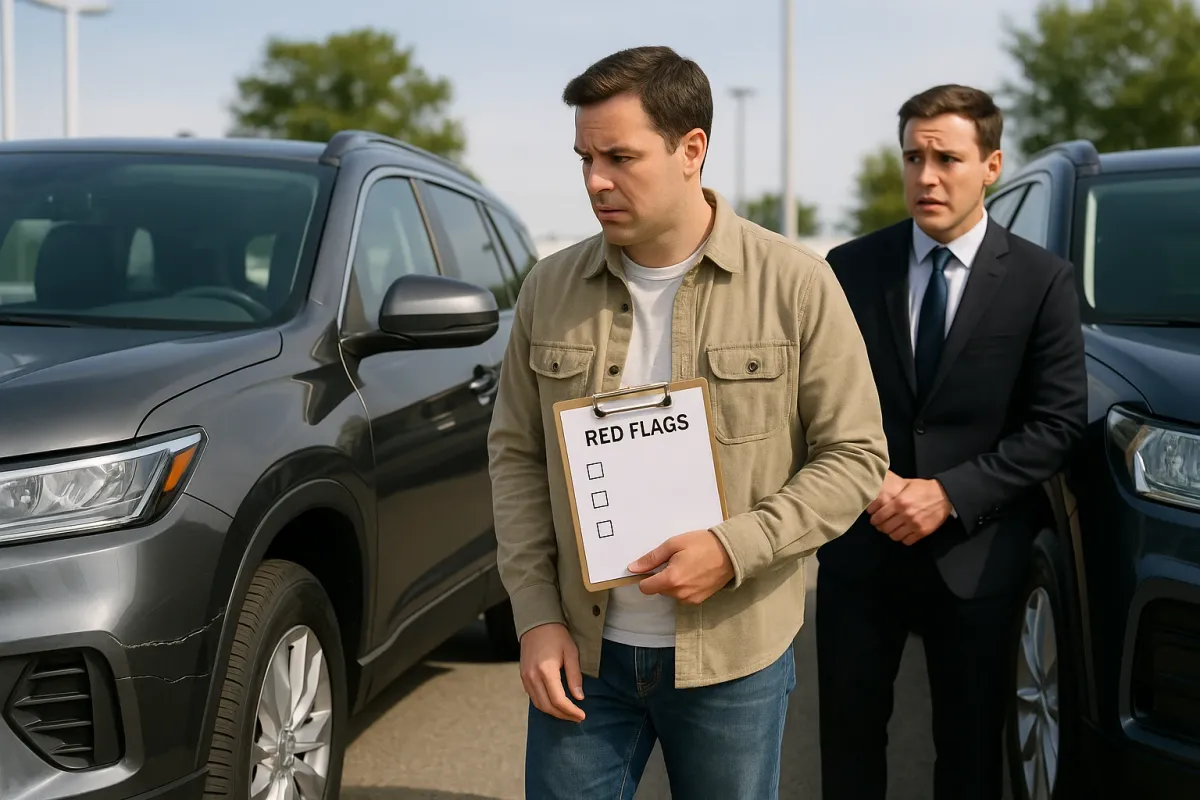
Buying a new SUV in late 2025 isn’t just about comparing spec sheets and scrolling through glossy Instagram reels—it’s about long‑term compatibility. If you’ve seen the viral BoredPanda roundup where people share the “red flags” they ignored in toxic relationships, you already know how costly it can be to overlook warning signs early on. The exact same dynamic plays out in the SUV world: ignore the right red flags during test drives, and you’re signing up for years of frustration, added costs, and buyer’s remorse.
Right now, shoppers are facing record model churn (with mid‑cycle refreshes coming faster than ever), aggressive subscription features, and complex hybrid/EV powertrains. That makes it easier than ever to get dazzled by a “charming” SUV that looks perfect in photos but turns into a headache after the honeymoon phase. Using that current “red flag” conversation as a lens, here’s how to spot the SUV traits you should never gloss over—and how to select a model that will still feel like a smart choice five years from now.
1. The “Love Bombing” Trim: When Features Seem Too Good for the Price
In relationships, love bombing means getting overwhelmed with affection and attention at the start, only to discover it’s not sustainable. In the SUV market, it’s the suspiciously loaded trim that undercuts segment leaders by several thousand dollars. Right now, a number of emerging players and aggressive legacy brands are doing exactly this to grab market share, bundling panoramic roofs, advanced driver assistance, giant touchscreens, and big wheels into a price that looks irresistible on paper.
The buying‑guide red flag: dig into how that price is possible. Look at warranty coverage on the powertrain and hybrid components, compare crash‑test scores from IIHS and NHTSA, and inspect the “invisible” hardware: brake sizes, towing hardware, cooling systems, and suspension design. Many budget‑heavy trims quietly cut costs with harder plastics, thin paint, single‑pane side glass, or older automatic transmissions with fewer gears. Pay attention to curb weight versus engine output; if the numbers suggest the powertrain is being pushed to its limits just to keep up with traffic, long‑term durability may suffer. Also, research real‑world depreciation and residual values through used‑car listings—if a three‑year‑old version of that “deal” is already heavily discounted, the market has voted on its true value.
2. Controlling Tech: Infotainment Systems That Don’t Let You Live Your Life
One of the biggest “toxic relationship” themes trending right now is control—partners that dictate your every move, often under the guise of “helping.” Modern SUVs can do the same with confusing, intrusive tech. Automakers are racing to out‑screen each other, with 15‑inch or larger center displays, software‑locked features, and voice assistants that mediate even basic vehicle functions. Some brands have begun experimenting with subscription‑locked heated seats, connected‑services paywalls, and remote features that stop working when you cancel a monthly plan.
When you’re shopping, treat the infotainment system like you would a partner’s communication style. During the test drive, deliberately stress‑test the tech: pair your phone, run Apple CarPlay or Android Auto, change audio sources, and adjust climate controls multiple ways (physical buttons, touchscreen, voice). Time how many taps it takes to perform basics like changing the fan speed or turning on seat heaters. If the interface forces simple tasks through submenus or insists on pushing the brand’s navigation over your preferred mapping app, that’s a control red flag. Also examine over‑the‑air (OTA) update policies and data practices: will the car remain functional if you minimize connected services, or is the brand clearly designing for a locked‑in, subscription‑heavy relationship? An SUV that respects your preferred workflows will age far better than one that imposes its own.
3. Charm Without Accountability: Safety and Durability That Don’t Match the Hype
In personal relationships, charming personalities can sometimes hide a lack of accountability—the person who talks a big game but disappears when things get hard. In SUVs, that’s the model with slick marketing, dramatic styling, and a long feature list, but shallow safety and durability credentials. As of late 2025, we’re seeing a wave of new or heavily refreshed crossovers rushed to market to capture demand in hot segments like compact and subcompact SUVs, particularly in electrified versions. Not all of them have comprehensive, independent validation behind the brochure claims.
Your buying‑guide equivalent of “meet their friends and family” is simple: verify the SUV’s track record outside of the brand’s own materials. Check IIHS crash‑test ratings, including small overlap and side impact, and look for “Top Safety Pick+” confirmations where available. Examine NHTSA star ratings, but don’t stop there—see whether the SUV has earned good scores for advanced driver‑assistance performance in independent evaluations (e.g., lane‑keeping accuracy, adaptive cruise behavior, false alarms). For durability, read owner forums and long‑term tests from reputable outlets that have actually run the vehicle for 20,000–40,000 miles. Powertrain choices matter: a small turbocharged engine making high specific output (hp per liter) may deliver great numbers, but if it’s paired with a continuously variable transmission (CVT) or dual‑clutch unit that has a shaky history in prior models, that’s worth extra scrutiny. A dependable SUV is one where the quiet, unglamorous systems—cooling, charging, lubrication, suspension bushings—have a history of holding up in high‑mileage use.
4. Mismatched Expectations: Ignoring Lifestyle Compatibility Because You’re “In Love”
Trending relationship threads are full of stories where people ignored obvious mismatches—different life goals, schedules, or values—because the early chemistry felt so strong. With SUVs, that same trap often appears when a buyer falls for design, brand image, or social‑media hype without checking day‑to‑day fit. In the current market, this is especially relevant with coupe‑style SUVs, compact crossovers marketed as “adventure ready,” and three‑row SUVs that only marginally support adult‑sized third‑row use.
Before you buy, map your real life against the vehicle’s hard measurements. If you have kids in child seats, physically install your seats during a test drive and see how easy it is to access the LATCH anchors, buckle in, and reach the third row with a child already strapped in. Pay attention to rear headroom and legroom numbers, but also door opening size and sill height; some sporty SUVs have sloping rooflines that make loading a rear‑facing seat or tall passengers an awkward exercise. For cargo, bring actual items you haul frequently—strollers, golf bags, camping bins, work equipment—and confirm they fit with the second and, if relevant, third rows in position. Verify ground clearance and approach/departure angles with your real use case in mind: many “off‑road‑styled” crossovers ride low and prioritize aesthetics over true rough‑road ability. If you tow, evaluate tongue‑weight limits, transmission cooling, and hitch ratings, not just the headline maximum tow number. A good SUV match is one where your routine and the vehicle’s hard specs align, even after the novelty wears off.
5. Financial Gaslighting: When Ownership Costs Don’t Match the Promise
Relationship “red flag” lists frequently mention partners who downplay financial realities—overspending, hiding debts, or framing huge costs as “no big deal.” In the SUV space, the equivalent is a model with an attractive monthly payment that conceals high long‑term expenses. This is particularly relevant now, as longer loan terms (72–84 months), rising insurance costs for high‑tech vehicles, and complex electrified powertrains can turn a seemingly affordable SUV into a budget strain.
Your defense is to look beyond the sticker and into the lifetime cost. Start with fuel or energy consumption: for ICE models, prioritize real‑world MPG tests over EPA estimates, especially for turbocharged and all‑wheel‑drive variants, which often underperform their window‑sticker numbers. For hybrids and EVs, study winter range performance, DC fast‑charging speed curves, and battery‑warranty terms. Insurance quotes can vary dramatically by model due to repair complexity—large, bonded glass roofs, radar‑equipped bumpers, and integrated headlight assemblies can drive up collision repair bills. Get actual quotes from your insurer before you sign. Maintenance intervals matter: some brands still rely on shorter oil‑change cycles or specify premium fuel; others bundle scheduled maintenance or offer longer service intervals thanks to advanced lubricants and filtration. Finally, consider resale: examine three‑ to five‑year‑old listings of the same model (and powertrain) you’re considering to see what percentage of original MSRP they retain. A more expensive SUV that holds its value and avoids major known issues can be cheaper over seven years than a “bargain” model with heavy depreciation and recurring repairs.
Conclusion
The same themes fueling today’s viral “relationship red flag” conversations—control, accountability, compatibility, and financial honesty—apply directly to SUV shopping in 2025. Underneath the styling, screens, and social‑media buzz, you’re choosing a long‑term partner that will shape your daily life, commute, trips, and budget for years.
Approach each SUV the way a cautious friend would approach a new relationship: skeptical of charm without substance, attentive to how it behaves under stress, and focused on whether it fits your real‑world needs rather than an idealized fantasy. If you treat test drives, spec sheets, and ownership research as a way to uncover potential red flags—not just to confirm what you already want to believe—you’ll be far more likely to end up with an SUV that feels like a stable, rewarding partnership long after the first‑drive excitement fades.
Key Takeaway
The most important thing to remember from this article is that this information can change how you think about Buying Guide.