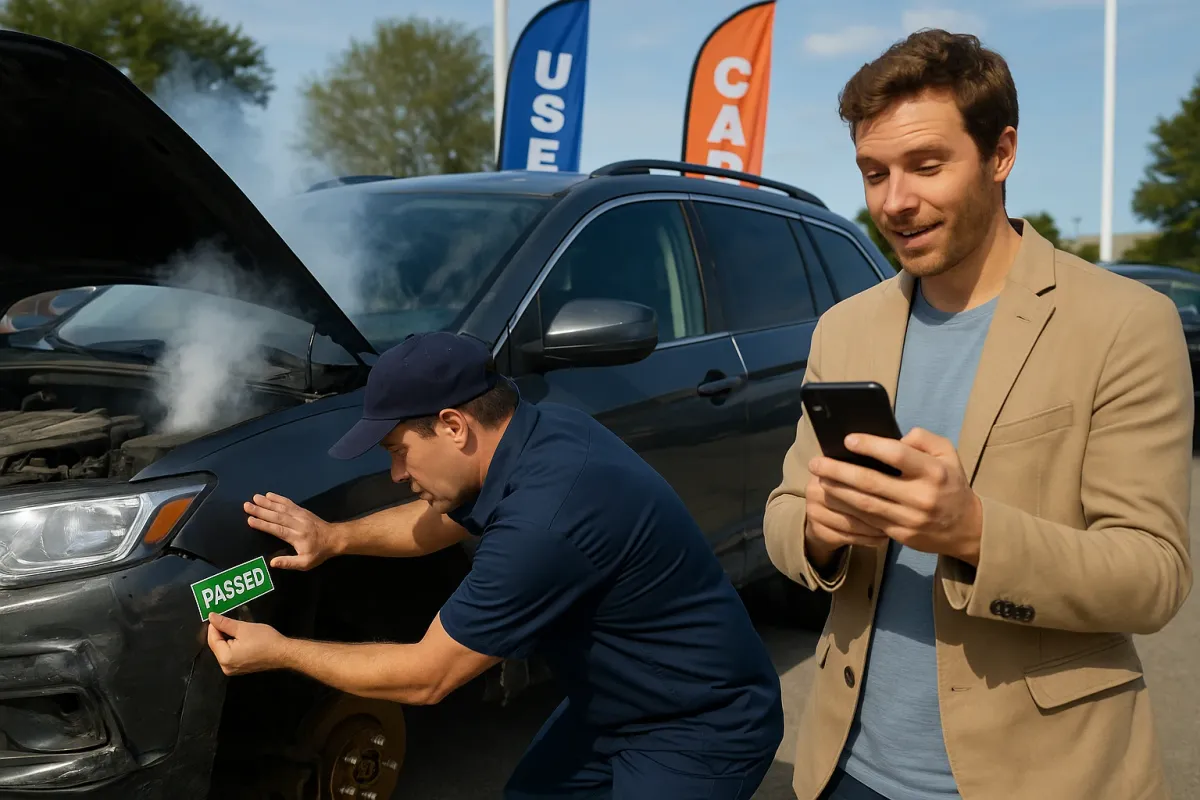
Online today, one of the most-shared stories is a photo thread of “Not My Job” moments—everything from crosswalk lines painted over trash cans to doors installed backward. It’s funny, but it also hits a nerve: people doing the bare minimum in jobs that actually matter. That same energy has quietly crept into parts of the auto world, especially in how some SUVs are tested, reviewed, and marketed.
When a viral gallery shows how badly a simple task can be executed, it’s a sharp reminder: not every glowing SUV review is created with care. Some are effectively “not my job” efforts—superficial, copy‑pasted impressions that gloss over serious shortcomings in ride quality, safety tech, or long‑term ownership costs. As year-end shopping and holiday deals put 2025 SUVs in the spotlight, understanding how to separate rigorous reviews from lazy ones is more important than ever.
Below, we use the spirit of those “Not My Job” fails as a lens to evaluate SUV reviews themselves—so you can spot the red flags before you sign a finance contract.
1. The One‑Lap Wonder: Why 10‑Minute Test Drives Don’t Tell You Anything
Many quick-hit reviews you see on social media or short-form video platforms are based on extremely limited seat time—sometimes just a short loop during a media event. That’s the review equivalent of painting a single line on the road and calling the job finished. An SUV’s behavior changes dramatically once you get past the first few miles: transmissions learn, adaptive dampers settle, and driver-assistance systems cycle through more real-world situations.
Serious reviewers will specify their test conditions: how long they had the vehicle, what types of roads they drove, and whether they tested with passengers or cargo. A solid SUV evaluation should include everything from city potholes and highway expansion joints to at least one emergency maneuver (such as a sudden lane change) to understand body roll and chassis tuning. If a “review” only talks about how quiet the cabin felt on a short, smooth loop, you’re not getting the full story—especially on three‑row crossovers where loaded weight can easily climb 600–800 pounds over curb. Look for measured impressions of steering weight, brake feel after repeated stops, and transmission behavior at low speeds, where many modern 8–10 speed automatics and CVTs reveal their worst habits.
2. Spec Sheet Copy‑Paste: When Numbers Replace Real Testing
In the same way those “Not My Job” photos show workers ignoring basic logic, some SUV reviews merely regurgitate manufacturer specs with a few adjectives sprinkled in. Horsepower, torque, 0–60 times, and cargo volumes matter—but they’re only half the picture. A 280-hp two-row crossover with a curb weight under 4,000 lbs can feel much more responsive than a 320-hp three‑row that pushes past 4,600 lbs and uses a lazy shift map.
Thoughtful reviews translate specs into lived experience. For example, a reviewer might note that a turbocharged 2.0‑liter delivers strong mid-range pull between 2,000–4,000 rpm—exactly where you sit during highway passing—while also explaining how the transmission’s gear spacing or CVT ratio programming impacts that power band. The same goes for fuel economy: the EPA combined figure is a starting point, but highway efficiency at 75 mph, real-world mixed driving, and behavior under heavy load (bike racks, cargo boxes, towing) are what you’ll live with. If a review only lists spec sheet data and never explains how the SUV feels merging, climbing grades, or overtaking at speed, it’s a sign the “job” of evaluation stopped at copying the brochure.
3. Comfort by Photo, Not by Seat Time
Many of the “Not My Job” images are so obviously wrong that a single glance gives them away. With SUV interiors, the opposite is true: a single photo can make a mediocre cabin look premium. HDR photography, dramatic lighting, and tight framing can hide cheap plastics, awkward ergonomics, and poor visibility. A credible review goes deeper than saying “the interior looks upscale” and posting a few well‑lit photos.
You should expect detailed descriptions of seat structure (bolstering, thigh support, lumbar range), as well as commentary on seat foam density and fatigue after at least a few hours behind the wheel. Third‑row usability—especially in popular three‑row crossovers—needs real metrics: adults vs. kids, legroom with the second row slid back, and whether headroom is compromised by a panoramic roof. Ventilation performance of HVAC systems, including how quickly the cabin cools or heats and how effective rear vents are, matters more than glossy dash shots. Ventilated seat effectiveness, steering wheel reach/telescope range, and pedal placement relative to the driver should all be addressed. If the “review” only admires stitching patterns and ambient light color but never talks about posture, visibility, or long‑haul comfort, it’s as incomplete as a crosswalk that stops in the middle of the road.
4. Blind Spots in Safety and Tech: The New “Just Paint Around It” Problem
One of the most jarring themes in the viral “Not My Job” compilation is how often safety is ignored—lines painted over manholes, signs installed where they block sightlines. In SUV reviews, safety and driver-assistance systems often get similar “paint around it” treatment: a quick line about having “lots of safety features” without any critical assessment of how reliably they perform.
For modern SUVs—especially family haulers—this is unacceptable. A robust review should call out whether adaptive cruise control can handle cut‑ins gracefully, how smoothly lane-keeping assist intervenes, and whether automatic emergency braking generates false positives in heavy traffic. It should also flag any camera and sensor limitations: resolution of the backup and surround‑view cameras at night or in rain, washer functionality for forward sensors, and how well blind‑spot monitoring copes with bicycles and motorcycles. Reviewers should mention any National Highway Traffic Safety Administration (NHTSA) crash-test data or Insurance Institute for Highway Safety (IIHS) ratings already available, but they must go further and explain how these active systems feel in everyday driving. If all you see is a bullet list of acronyms with no critical commentary, that reviewer has essentially walked around the obstacle instead of doing the hard work of testing.
5. Ownership Reality Check: The Part Most Reviewers Skip
The most shared “Not My Job” memes usually expose a problem that only appears once someone lives with the result: a misplaced outlet, an unusable door, or a ramp built at a ridiculous angle. SUV ownership works the same way—issues often don’t show up in a weekend drive. This is where many quick reviews fail buyers: they ignore long‑term considerations like running costs, reliability indicators, depreciation, and dealer experience.
Serious SUV evaluations should integrate at least early data points and credible proxies for these factors. That might include referencing historical reliability trends for the brand’s powertrain family, looking at typical maintenance intervals (timing belts vs. chains, brake wear patterns on heavier three‑row models), and discussing real-world tire replacement costs for the factory wheel sizes. Hybrid and plug‑in hybrid SUVs demand even more scrutiny: battery warranty terms, thermal management strategies, and the availability of certified service centers can materially affect ownership. In markets where new models are launching aggressively into the EV and hybrid SUV space, transparent commentary on charging speeds, cold-weather range loss, and home charging requirements is essential. If a review focuses solely on “this felt great on my test loop” and never mentions long‑term cost of ownership or service considerations, it’s falling into the same trap as those meme‑worthy shortcuts—amusing in the moment, but painful later.
Conclusion
The viral “Not My Job” photo trend is entertaining precisely because you instantly see where someone phoned it in. With SUV reviews, the shortcuts are less obvious—but the stakes for buyers are much higher. A lazy evaluation that leans on spec sheets, glamour shots, and brief test drives can leave you stuck with an SUV that doesn’t ride well, drains your wallet, or frustrates you every time you use its tech.
As new 2025 models roll out and social feeds fill with quick takes, use these five lenses to judge the reviews you read: depth of testing, translation of specs into real behavior, genuine comfort analysis, critical safety-tech evaluation, and clear ownership forecasts. When a reviewer does the job properly, you’ll feel it in the level of detail—and you’ll be far better equipped to choose the SUV that fits your life, not just your feed.
Key Takeaway
The most important thing to remember from this article is that this information can change how you think about Reviews.