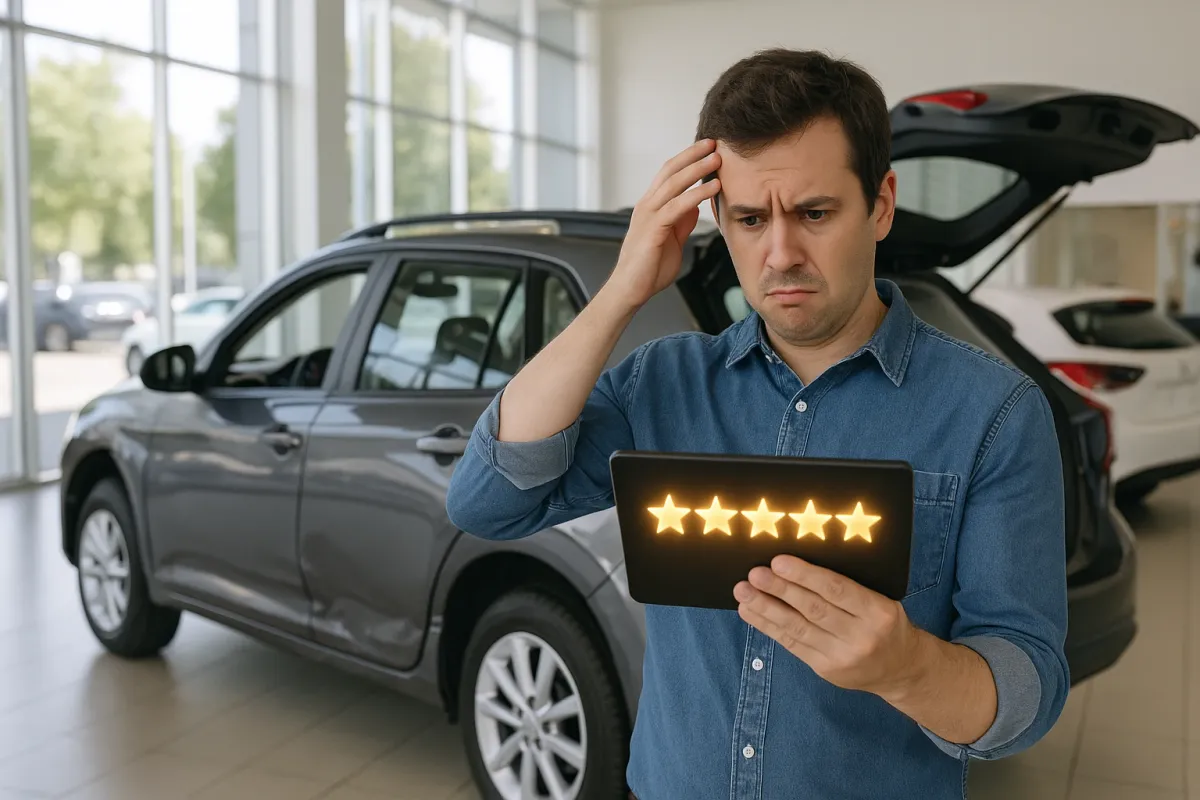
If your social feeds lately have been full of “Wait… what?” posts—where a photo looks like one thing at first glance and something totally different a second later—you’re not alone. A recent viral roundup of these optical-illusion style posts has been making the rounds, and it’s a perfect metaphor for what’s happening in SUV reviews right now.
On paper, many of today’s crossovers and SUVs look nearly identical: similar power figures, similar 0–60 times, the same alphabet soup of safety tech, and increasingly similar “lifestyle” marketing. But when you live with these vehicles, the story can be very different than what the glossy review thumbnails suggest. Just as those “Wait… what?” images reward a second look, shopper-savvy SUV reviews in 2025 demand that you learn how to look past the first impression.
Below are five critical lenses that help you decode modern SUV reviews so you’re not caught off guard once you’re actually behind the wheel—or a few years into ownership.
1. Spec Sheet vs. Real-World Performance: Why 0–60 Isn’t the Whole Story
Modern SUV reviews often lead with headline numbers: horsepower, torque, and the all-important 0–60 mph time. These specs are attention-grabbing and shareable, but the real “feel” of an SUV is more nuanced.
A 2025 compact SUV with 250 hp and an 8-speed automatic might look similar on paper to a rival with 241 hp and a CVT, but how the power is delivered matters more than the numbers alone. Look for reviewers who describe where in the rev range the torque comes in—does it feel responsive in the 20–50 mph range where you do most of your driving, or only wake up when floored? Pay attention to mentions of throttle calibration and transmission behavior: frequent hunting for gears, laggy kickdowns, or aggressive stop/start systems can make a “quick” SUV feel frustrating in traffic.
Curb weight and tire choice also quietly shape real-world performance. Many electric SUVs now push well over 5,000 lbs; if a review notes strong acceleration but vague steering and long stopping distances, you’re seeing the trade-off of that mass. Similarly, reviews that praise a “plush ride” yet mention excessive body roll in corners may be flagging a suspension tune that favors comfort over control. The best reviewers will connect these dots rather than just quoting acceleration tests, giving you a clearer sense of how the SUV behaves in the everyday scenarios that matter—merging, passing, braking on wet roads, and navigating tight parking structures.
2. Cabin Tech and UX: Beyond the “Wow” Factor Screens
In 2025, the flashiest part of an SUV interior is often the screen—or several of them. Automakers are racing to outdo each other with panoramic displays, touch-only dashboards, and increasingly smartphone-like interfaces. Reviews tend to highlight these visually, but it’s the interaction design that really determines whether the tech helps or hinders you.
When reading or watching reviews, look for specifics about menu depth and task complexity, not just comments like “the screen is big and bright.” How many taps does it take to adjust the climate or seat heating? Are there physical knobs or shortcuts for high-frequency tasks? If a reviewer mentions that key functions are buried in submenus or that the system is laggy in cold weather, that’s a real-world pain point you’ll notice long after the showroom shine wears off.
Pay attention to how Apple CarPlay and Android Auto are integrated. Is it wireless only, and if so, does the reviewer mention stability issues or higher battery drain? Some newer SUVs are moving toward “phone as key” and app-based vehicle access—great when it works, but you’ll want reviewers to comment on whether the app is reliable and how the system behaves if your phone dies or the app servers are down. Finally, note comments on screen reflections, fingerprint smudging, and nighttime brightness; these subtleties can make a surprisingly big difference in long-distance comfort and perceived quality.
3. Ride, Noise, and Seating: The Long-Trip Reality Check
Many quick-hit reviews focus on acceleration and gadgetry, but what most SUV owners actually care about—often discovered only after purchase—is long-distance comfort. This is where thoughtful reviews move past the first-impression “nice materials” commentary and start sounding more like ergonomic and acoustic engineering reports.
Look for detailed notes on seat shape, not just whether they’re heated or ventilated. Are the cushions long enough to support taller drivers’ thighs? Do reviewers note adjustable lumbar support with sufficient range? If a reviewer mentions hot spots between the shoulder blades or a lack of under-thigh support after a few hours, that’s a significant signal if you routinely take road trips. In three-row SUVs, serious family buyers should focus on second- and third-row observations: can adults actually sit back there for more than 30 minutes, or is it realistically kid-only space?
Noise, vibration, and harshness (NVH) are also crucial. Reviewers who describe wind noise around the A-pillar, tire roar on coarse pavement, or occasional suspension “thumps” over sharp bumps are giving you insight into everyday refinement. Hybrid and electric SUVs add another layer: if the reviewer mentions that road and wind noise become more noticeable in EV mode because there’s no engine masking them, that’s a sign that acoustic insulation may be thin. These details don’t show up in spec sheets, but they dominate your experience at 70 mph on the highway.
4. Practicality Metrics That Matter More Than Cargo Volume Numbers
Cargo volume figures—measured in cubic feet—are a staple of SUV comparisons, but they can be as misleading as a cleverly cropped viral photo. Two SUVs with nearly identical cargo specs on paper can feel radically different in actual use due to shape, loading height, and seat-folding geometry.
In reviews, look for comments on the shape of the cargo area: is it tall but short, or long but low? A boxy rear opening with minimal wheel-well intrusion is far more usable than a sleek, sloping design that steals vertical space. The load floor height matters if you regularly haul heavy items; reviewers who point out a high lift-over or uneven floor when seats are folded are quietly telling you how many times your back will complain during Costco runs.
Split-folding seat configurations and real-world flexibility also deserve attention. Reviews should note whether the second and third rows fold truly flat, whether there is a pass-through for longer items (like skis or lumber), and whether seat operation is manual or power-assisted. Frequent mentions of slow power-folding mechanisms or awkward latches are red flags if you reconfigure seating often. For families, pay close attention to how reviewers describe child-seat installation: are there easily accessible ISOFIX/LATCH points, enough room for rear-facing seats without crushing front passengers, and simple top-tether routing? These are the kinds of “practical surprises” that don’t emerge until someone actually uses the SUV as a family hauler—precisely the kind of deeper look you want from a useful review.
5. Ownership Economics and Software: The New Fine Print
One of the most important shifts in SUV reviews over the past few years is the addition of software, subscriptions, and evolving ownership costs to the conversation. The initial MSRP is no longer a reliable proxy for what the vehicle will cost—and deliver—over time.
Pay special attention to reviewers who break down standard vs. subscription features. Are heated seats, remote start, or advanced driver-assistance capabilities locked behind ongoing fees? If a review notes that a key safety feature is only available via a subscription-based connected services suite after a trial period, factor that into your long-term math. With over-the-air (OTA) updates now common, reviewers may reference recent software changes that improve (or occasionally degrade) performance, range, or user experience. An SUV that launches with a rough infotainment system but has a demonstrated track record of OTA fixes may be a better bet than one with static, outdated software.
Maintenance and energy cost commentary is also increasingly valuable. For plug-in hybrids and EV SUVs, reviewers who share observed energy consumption, realistic electric range vs. EPA estimates, and charging curve behavior at DC fast chargers are telling you what your monthly costs and trip-planning reality will look like. On the insurance and resale front, long-term test reviews or ownership reports that mention parts availability, brand reliability data, and early depreciation trends can help you avoid models that look appealing now but might be expensive to keep on the road—or difficult to sell later.
Conclusion
The viral popularity of those “Wait… what?” posts—where a photo reveals a completely different story on second glance—is a reminder that first impressions can be deceptive. SUV reviews in 2025 work the same way: the thumbnail, the spec sheet, and the launch hype are only the starting point.
When you focus on how power is delivered rather than just how much there is, how the tech feels instead of how big the screens are, how quiet and comfortable the cabin is over hours not minutes, how usable the cargo space actually proves, and how software and subscriptions will shape ownership costs, you start to see the full picture. Approach SUV reviews with that deeper lens, and you’ll be far less likely to have your own “Wait… what?” moment in the driveway a year after you buy.
Key Takeaway
The most important thing to remember from this article is that following these steps can lead to great results.