The SUV market is shifting faster than many enthusiasts realize—and the most dramatic changes are happening at the performance end of the spectrum. From emissions rules forcing clever engineering to software-defined powertrains and track-ready family haulers, 2026 is shaping up to be an inflection point. For buyers who care about acceleration as much as cargo space, understanding what’s coming now can help avoid a short-sighted purchase.
This deep dive looks at five industry shifts that are quietly redefining performance SUVs: new emissions strategies, the rise of “software horsepower,” advanced chassis tech, changing fuel realities, and how brands are repositioning their halo models. If you’re planning to buy—or hold—a performance SUV in the next 3–5 years, these trends matter.
1. Emissions Rules Are Forcing Smarter Performance, Not Just Smaller Engines
Around the world, tightening emissions and efficiency regulations are reshaping how automakers build high-output SUVs. The days of simple “big displacement + more boost = more power” are fading, replaced by integrated hardware–software strategies.
In the U.S., the EPA’s finalized light‑duty vehicle standards through model year 2032 push automakers toward significantly lower fleet emissions, effectively encouraging more electrification—even in performance models. The EU’s Euro 7 framework (and existing Euro 6d) further constrain pollutants like NOx and particulates, particularly under real-world driving, making it harder for traditional high-revving, rich-burning engines to survive in their current form.
For performance SUVs, this has triggered three major responses. First, widespread adoption of mild-hybrid systems (48‑volt setups) that can smooth low‑rpm torque delivery, support start-stop, and allow aggressive cylinder deactivation without compromising drivability. Second, the move to smaller, higher-efficiency turbo engines paired with electric assistance, where an e-motor fills in boost lag and provides short bursts of torque that would have required much more displacement in the past. Third, increasingly complex aftertreatment systems—gasoline particulate filters, sophisticated catalytic converters, and software that constantly balances power requests against emissions constraints.
For buyers, this means the latest performance SUVs often feel more responsive in daily traffic—thanks to instant electrified torque—while posting better official consumption and emissions figures. However, it also means more complexity under the hood and a growing gap between on-paper ratings and what you may experience if you routinely drive in “Sport+” or track modes, where emissions controls are still present but calibrated differently for sustained high load.
2. “Software Horsepower” Is Redefining What Performance Even Means
The most significant performance upgrade in modern SUVs isn’t always hardware—it’s code. Manufacturers are increasingly building vehicles around zonal electrical architectures and powerful central computers, enabling over‑the‑air (OTA) updates that can change the character of an SUV long after it leaves the factory.
Instead of fixed power outputs, we’re seeing tiered performance unlocked via software. Some brands already offer paid upgrades that increase peak kW/horsepower, boost torque over specific speed ranges, or shorten 0–60 mph times by altering inverter maps and torque distribution strategies. Others focus on sharpening throttle response, recalibrating shift logic in performance transmissions, or enabling additional drive modes that alter stability control thresholds and torque vectoring aggressiveness.
This “software horsepower” relies on precise control of electric motors (in hybrids and EVs) and electronically controlled differentials, as well as integrated brake-by-wire systems that can blend mechanical braking with regenerative deceleration. Because electric motors provide maximum torque from near zero rpm, subtle changes to current limits, thermal management, and traction control can transform launch performance and corner exit behavior without touching any physical components.
For enthusiasts, this opens new possibilities—and new questions. On the plus side, you may be able to buy a more affordable trim now and unlock additional performance later, or benefit from improved algorithms that enhance stability, ride, or range over time. On the downside, performance becomes partially subscription-based, residual values could be affected by what’s “unlocked,” and tuning becomes more about reverse-engineering encrypted software than swapping hardware. Potential buyers should pay close attention to what OTA capabilities are included, how long they’re supported, and what performance features are one-time purchases versus recurring fees.
3. Chassis Tech Is Making Big SUVs Corner Like Hot Hatches
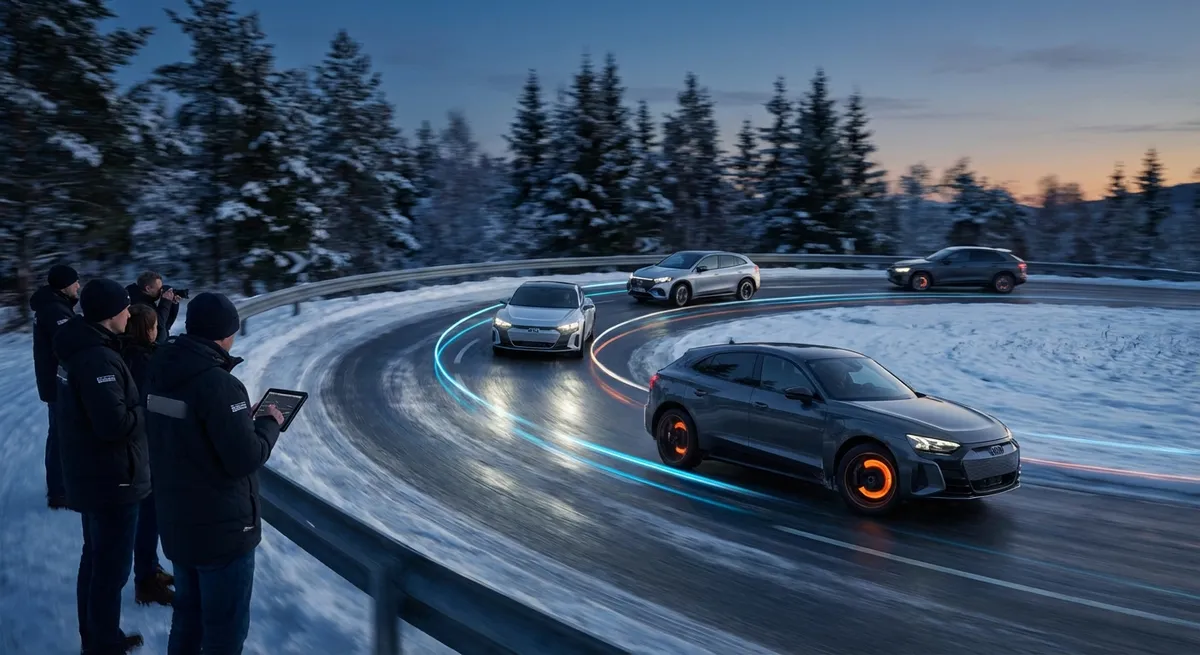
Modern performance SUVs are attacking physics with an arsenal of chassis technologies that were once reserved for six‑figure sports cars. As we approach 2026, several advanced systems are converging to help tall, heavy vehicles corner flatter, brake harder, and put power down more effectively—all critical for performance in a high‑center‑of‑gravity package.
Adaptive dampers are now essentially standard in this segment, but the latest iterations use more sophisticated valve designs, higher‑speed control electronics, and integration with navigation data. In practice, that means the SUV can pre‑condition its suspension for upcoming corners, speed bumps, or known rough patches—reducing body motion while maintaining ride comfort. Air suspension systems add another dimension: variable ride height and spring rates that adjust not only for comfort and load, but also actively lower the vehicle in dynamic modes to improve aerodynamics and reduce roll.
Active anti-roll bars (often powered by 48‑volt systems) can almost eliminate body roll in corners and then decouple during straight‑line cruising to enhance comfort and efficiency. Combine this with torque vectoring—either via electronically controlled clutches in the rear differential or through independent dual rear motors in EV-based SUVs—and you get an ability to rotate the vehicle into a corner using power, not just steering angle.
Advanced braking systems complete the picture. Larger multi‑piston calipers and high‑friction pads are paired with brake‑by‑wire systems that can finely control pressure at each wheel while blending in regenerative braking for hybrids and EVs. This allows repeatable high‑speed stops on track while still reclaiming significant energy in daily use. When evaluating a performance SUV, it’s no longer enough to look at horsepower; understanding whether it has true torque vectoring, active roll control, and a well-integrated brake system is critical to predicting how it will feel on a demanding road.
4. Fuel, Charging, and Range Reality Are Rewriting What “Usable” Performance Is
Performance is no longer just about peak power figures; it’s about how long that performance can be sustained—and at what cost. Changing fuel economics and the rapid build‑out of charging infrastructure are quietly influencing how automakers tune performance SUVs and how owners will actually use them.
In many markets, high‑octane gasoline (often required to hit advertised performance numbers) is becoming more expensive relative to regular fuel, and some regions are experimenting with higher biofuel blends. For high‑output turbocharged engines, this pushes automakers to design more robust knock control strategies and fuel systems capable of handling varying fuel qualities. Owners who care about consistent performance will need to pay more attention to octane recommendations and possibly accept higher running costs to access the top of the performance envelope.
On the electrified side, DC fast‑charging networks are expanding, but charging curve behavior is as important as peak kW numbers. A performance SUV that can briefly accept 270 kW but quickly tapers may be less practical on road trips than one that sustains 150–200 kW over a broader state‑of‑charge range. Thermal management is crucial: repeated performance runs generate heat in both battery and motors, potentially triggering power limitations to protect components.
This is pushing manufacturers to invest heavily in battery cooling architectures, from sandwich-style cooling plates to immersion cooling concepts, and to use advanced chemistries that balance power density and cycle life. For plug‑in hybrid performance SUVs, the challenge is different: maintaining strong performance even when the battery is depleted. Many newer designs reserve a buffer of battery capacity and electric power specifically to ensure consistent acceleration and response, though efficiency may drop once that buffer is all that remains.
For buyers, “usable performance” now includes: how the SUV performs on low‑grade fuel, how reliably it can deliver peak acceleration after multiple runs, how quickly it recovers power after prolonged spirited driving, and how predictable its fast‑charging behavior is on a long journey. Test drives rarely reveal these aspects, so researching independent range and fast‑charge tests—and real-world owner reports—has become a vital step.
5. Brand Strategies Are Shifting: Fewer Pure Gas Flagships, More Electrified Halos
Performance SUVs are also strategic brand statements, and many automakers are rethinking what their halo models should look like by the late 2020s. While some are doubling down on the last generation of pure internal-combustion performance, the broader movement is toward electrified flagships that showcase technology as much as raw power.
Luxury and premium brands increasingly treat their fastest SUVs as rolling tech demonstrators. High‑performance plug-in hybrids combine large combustion engines with powerful e‑motors and big battery packs, not just for acceleration, but to enable features like electric‑only urban modes (for city regulations), geofenced zero‑emission operation, and predictive energy management using map data and traffic forecasts. The message: performance and responsibility can coexist, at least on the spec sheet.
At the same time, full‑electric performance SUVs are emerging as the new halo products for several major manufacturers. Their instant torque, low noise, and impressive straight-line speed make for compelling marketing. However, to satisfy enthusiasts, brands are working to synthesize more emotional engagement—through carefully tuned artificial soundscapes, simulated gearshifts, and highly configurable drive modes that adjust steering weight, torque distribution, and even pedal feel.
For more mainstream brands, “performance” is being reframed slightly: instead of chasing outrageous horsepower numbers, they’re emphasizing real-world drivability, towing confidence, and overtaking performance while loaded—often using turbocharged four‑cylinders and compact hybrid systems. This creates a wider price spread between attainable “warm” SUVs (sporty but not extreme) and high‑dollar halo machines packed with advanced tech.
If you’re considering a performance SUV as a long-term keeper, understanding your chosen brand’s roadmap is critical. A final‑generation pure-ICE performance model might become a future classic but could face tightening urban access rules or higher taxation. An early high‑performance EV or PHEV might age more gracefully with software improvements, but hardware repair and battery replacement economics are still evolving. Researching brand statements, concept vehicles, and announced timelines can provide clues about long-term support and where the real engineering effort is going.
Conclusion
Performance SUVs are entering a new era where engineering brilliance is as much about software, systems integration, and energy management as it is about engines and exhaust notes. Emissions rules are forcing smarter rather than simpler solutions; chassis technology is overcoming much of the traditional handling penalty of size and weight; and electrification is redefining what “fast” and “usable” look like in daily life.
For enthusiasts and serious buyers, the most informed decisions over the next few years will come from looking beyond headline horsepower numbers. Pay attention to how performance is delivered (and for how long), how much of it is software-controlled, what chassis systems underpin it, and how a given brand’s strategy fits your long-term expectations. The 2026 model year and beyond won’t just separate good SUVs from great ones—it will separate those designed for a transitional moment from those engineered for the next decade of performance.
Sources
- [EPA Finalizes New Greenhouse Gas Standards for Passenger Vehicles](https://www.epa.gov/regulations-emissions-vehicles-and-engines/final-rule-greenhouse-gas-emissions-standards-model-year-2027-2032) - Details U.S. emissions rules influencing powertrain and electrification strategies
- [European Commission – Euro 7 Vehicle Emission Standards](https://ec.europa.eu/commission/presscorner/detail/en/ip_22_6495) - Overview of upcoming European regulations affecting combustion performance models
- [U.S. Department of Energy – Alternative Fuels Data Center](https://afdc.energy.gov/fuels/electricity_infrastructure.html) - Data on EV charging infrastructure growth and technical considerations
- [Society of Automotive Engineers (SAE) – Brake-by-Wire and Vehicle Dynamics Papers](https://www.sae.org/standards/content/j2909_201006/) - Technical background on brake‑by‑wire systems used in modern performance vehicles
- [International Energy Agency – Global EV Outlook](https://www.iea.org/reports/global-ev-outlook-2024) - Market and technology trends relevant to high-performance electrified SUVs
Key Takeaway
The most important thing to remember from this article is that this information can change how you think about Industry News.