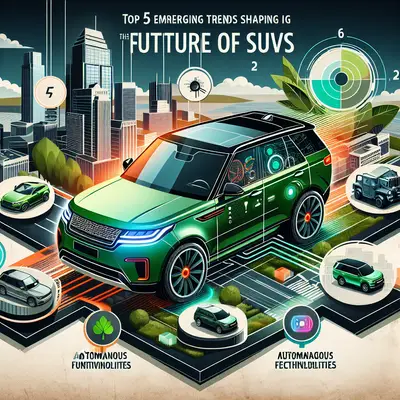
Over the last 18 months, SUV headlines have been dominated by splashy EV launches, record sales, and bold concept reveals. Under the surface, however, a quieter transformation is underway—one that will shape what ends up in your driveway between 2026 and 2030 far more than any single model debut. Automakers, regulators, and suppliers are all retooling around a new reality: SUVs must get cleaner, smarter, more efficient, and more profitable at the same time.
For SUV shoppers and enthusiasts, this behind-the-scenes shift is not just industry chatter. It directly affects which models survive, how they drive, what they tow, how they’re powered, and even what you’ll pay to insure and maintain them. Below is a deep look at the key under‑the‑radar industry trends reshaping SUVs right now—and what they mean when you’re comparing window stickers in the next few years.
Platform Consolidation: Why Your Next SUV Will Share More Than You Think
Across the industry, manufacturers are accelerating a move toward “multi‑energy” platforms—single architectures that can underpin gas, hybrid, plug‑in hybrid (PHEV), and full battery‑electric SUVs. Instead of designing separate chassis for each powertrain, brands are standardizing wheelbases, crash structures, suspension mounting points, and electrical backbones. The goal is to slash development costs and get new SUVs to market faster, while staying flexible as buyer demand shifts between gas and electrified models. For buyers, this means that the gas and hybrid versions of an SUV might feel more similar than ever, because they’re literally built on the same bones.
Technically, this is driving a shift toward “skateboard‑inspired” underbodies with flattened floors, straight frame rails, and modular battery tunnels. Even traditional body‑on‑frame SUV makers are adopting partially modular frames that can support both conventional fuel tanks and battery packs without a total redesign. Expect more SUVs where the difference between trims is not the basic structure, but how that structure is populated: rear‑drive vs. all‑wheel drive, single vs. dual electric motors, small vs. large battery, standard vs. heavy‑duty cooling for towing. For enthusiasts, platform consolidation can mean more stable handling and better crash performance as engineering resources focus on a single architecture.
There are trade‑offs. Multi‑energy platforms rarely match the packaging efficiency of dedicated EV-only platforms, which is why some electric SUVs have higher floors or slightly compromised third‑row space. On the upside, this approach helps preserve diverse model lineups—rugged off‑road variants, performance trims, and long‑range cruisers—because the core engineering is shared. Over the next few years, you’ll see more SUVs where gas, hybrid, and EV siblings coexist in the showroom under the same nameplate, allowing you to choose a powertrain without losing the design and feature set you prefer.
Battery Tech and Charging Infrastructure: The Next Wave Favors Long‑Trip SUVs
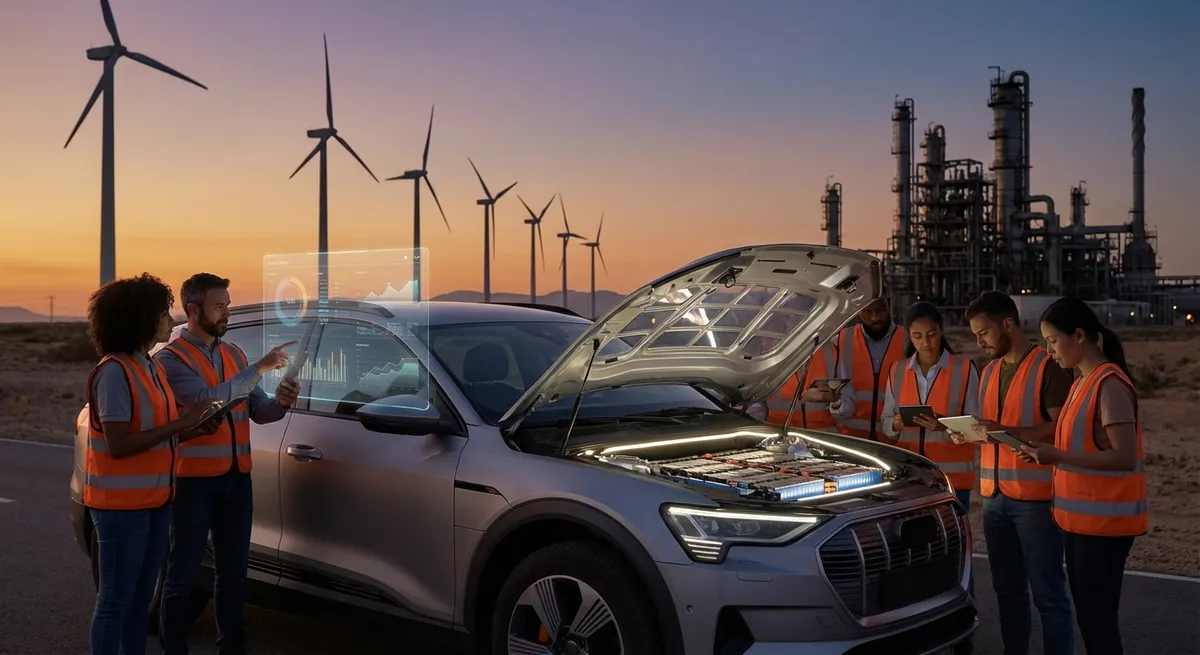
Battery technology is entering a practical maturation phase that specifically benefits SUVs, which are heavier, taller, and often expected to tow. Industry suppliers are deploying high‑nickel NMC and increasingly high‑manganese chemistries tuned for better energy density per kilogram, allowing manufacturers to shrink pack size without sacrificing range. Simultaneously, lithium‑iron‑phosphate (LFP) packs are expanding from compact crossovers into midsize SUVs, trading ultimate range for lower cost, higher cycle life, and improved thermal stability. The result is a two‑track strategy: premium long‑haul SUVs with denser packs and mainstream family SUVs using robust, value‑oriented chemistries.
On the charging side, the biggest change for SUV owners isn’t just faster DC charging—it’s greater standardization. With multiple legacy automakers committing to interoperable charging standards and access agreements, the industry is moving toward a world where a large portion of new electric SUVs sold in North America will be able to use the same high‑power infrastructure. Technically, that means 400‑volt systems are being engineered for sustained 200–250 kW charging, while high‑end SUVs flirt with 800‑volt architectures that cut charging times dramatically when connected to capable hardware. Heat management—liquid‑cooled cables, advanced pack preconditioning, and multi‑zone thermal loops—is now a core differentiator in long‑trip usability.
This next wave is especially important for towing and mountain driving, two weak points for early EV SUVs. More manufacturers are integrating predictive energy management tied to navigation data, topography, and trailer profiles. Think of systems that will pre‑condition the battery for fast charging as you approach a DC station with a trailer, or that adjust regenerative braking and coolant flow as you descend long grades. For buyers, watch for spec sheets that go beyond “EPA range” to include rated tow range estimates, peak and sustained charging rates, and integrated trailer‑routing in the navigation suite. Those granular details are where the most meaningful SUV‑specific battery and charging upgrades are happening.
Software‑Defined SUVs: From Over‑the‑Air Fixes to Revenue Engines
The most transformative change in SUVs right now is not visible in the bodywork but in the software stacks that run everything from throttle response to seat ventilation. The industry is migrating to centralized computing architectures with a handful of powerful domain controllers replacing dozens of small, isolated ECUs. In practice, this makes SUVs “software‑defined”: core functions can be added, removed, or heavily revised via over‑the‑air (OTA) updates without touching the hardware. For example, a stability control algorithm can be re‑tuned for a new all‑terrain tire option, or a tow‑mode shift map can be refined based on real‑world logged data.
For enthusiasts, this opens intriguing possibilities. Performance‑oriented SUVs may get factory‑developed powertrain maps, off‑road drive modes, and launch‑control updates years after purchase. Camera‑based trail‑view systems, hill‑descent tuning, and torque vectoring strategies can all evolve as the manufacturer collects more data. Some brands are already delivering post‑sale upgrades that improve 0–60 times or raise top speed limiters—legally, with warranty backing. On the comfort and convenience side, OTA updates can refine active safety behavior, improve voice recognition, add new infotainment apps, and even fix bugs in driver‑assistance features that once would’ve required a dealership visit.
However, the software‑defined model also introduces subscription pressure. Automakers see SUVs as rolling platforms for recurring revenue: connected services, advanced driver assistance “unlocks,” hands‑free highway driving, premium navigation, and even heated seat functions have been paywalled in some regions. From an ownership perspective, this makes the long‑term value calculus more complex. A lower base price might conceal a long list of monthly‑billed capabilities. When comparing SUVs, it’s increasingly important to distinguish what’s permanently included in the purchase from what is “feature‑complete only with a subscription.” Over a typical 8–10‑year ownership, that distinction could add up to thousands of dollars.
Emerging Safety and ADAS Standards: From Optional Extras to Baseline Expectations
Regulators in North America, Europe, and key Asian markets are tightening safety and driver‑assistance expectations, and SUVs are at the center of that push due to their popularity and weight. Industry‑wide, automakers are aligning around next‑generation sensor suites that blend high‑resolution radar, wide‑field cameras, and, on some higher‑end models, solid‑state lidar. The trend is toward 360‑degree perception with overlapping coverage zones so that an SUV can maintain environmental awareness even if one sensor is compromised by weather or debris. This multi‑sensor redundancy is crucial for advanced lane‑keeping and automatic emergency braking, especially when towing or driving on poorly marked rural roads.
In the near term, you’ll see more SUVs shipping with active safety features as standard rather than bundled in expensive option packages. Automatic emergency braking with pedestrian and cyclist detection, lane‑keeping assist, adaptive cruise control, and blind‑spot monitoring are increasingly being treated as minimum viable equipment in new platforms. Some manufacturers are moving toward hands‑free highway systems that rely on high‑definition map data, driver‑monitoring cameras, and continuous connectivity to operate in defined “blue zones” where road conditions and signage are carefully mapped. For buyers, the key difference is between lane‑centering assist (which still expects your hands on the wheel) and true supervised hands‑free operation in supported areas.
Another under‑reported shift involves passive safety design tailored specifically to SUVs. As vehicle front ends grow taller, engineers are re‑profiling hoods, bumpers, and subframes to manage impact forces more safely for pedestrians and occupants of smaller vehicles. There’s also growing attention to rear‑seat occupant protection: energy‑managing seatbelt systems, more robust side‑curtain airbag coverage in three‑row SUVs, and restraint strategies that account for multiple seating configurations and child seats. When reading safety reports or IIHS/Euro NCAP ratings, pay attention not only to crash test scores but also to test notes about small‑overlap performance, rear‑occupant protection, and the real‑world behavior of automatic braking systems at night or in adverse weather.
Supply Chain Shifts: How Sourcing and Manufacturing Will Shape Your Choices
Geopolitical tensions, material price volatility, and new environmental rules are forcing automakers to re‑think where and how they build SUVs. One major consequence is the regionalization of supply chains: more SUVs destined for North America will be assembled in North America, often with engines, motors, and battery components sourced from a more localized network. This isn’t just about politics—it directly impacts eligibility for local incentives, import tariffs, and shipping costs, all of which flow through to MSRP and lease rates. For example, some midsize and compact SUVs are already being repositioned or quietly re‑engineered to qualify for specific regional content thresholds tied to tax credits.
Battery raw materials—lithium, cobalt, nickel, and manganese—are at the core of this shift. Automakers are signing long‑term contracts with mining and refining companies or investing directly in upstream operations to secure supply and stabilize pricing. Technically, this is pushing more brands toward chemistries that use less or no cobalt, and toward recycling strategies that recover a high percentage of valuable metals from end‑of‑life packs. As large‑scale recycling plants ramp up, the “second‑life” value of SUV battery packs is becoming part of the business model, which in turn can influence residual values and leasing structures.
For consumers, the most immediate effect will be noticeable in model availability and trim strategy. Manufacturers may limit certain specialized trims or low‑volume powertrains in markets where they cannot be built or sourced economically under new rules. Conversely, you might see more “regional special” SUVs optimized for a specific market’s fuel economy tests, towing regulations, and incentive structures. It’s worth paying attention not only to the features you get, but where your SUV is assembled and how that affects warranty provisions, parts availability, and long‑term support for complex components such as high‑voltage batteries and dual‑clutch transmissions.
Conclusion
SUVs are entering a transitional era where the most important changes are structural, not superficial. Platform consolidation is redefining how multiple powertrains can coexist under a single nameplate. Battery and charging advancements are finally being tuned for real‑world SUV use cases like towing and long‑distance family travel. Software‑defined architectures are turning SUVs into evolving products—capable of upgrades but also susceptible to creeping subscription costs. Safety systems are moving from optional extras to embedded expectations, underpinned by more sophisticated sensor fusion and crash engineering. And a rapidly changing supply chain is reshaping which SUVs are built where, with what materials, and at what final cost.
For enthusiasts and serious shoppers, staying ahead of these shifts means looking beyond headline horsepower and touchscreen size. Ask how the platform is engineered, what the charging and battery strategy looks like, which features are permanently included, how advanced the safety and ADAS stack really is, and where the vehicle fits into its manufacturer’s long‑term sourcing and regulatory plans. Those answers will tell you far more about how your next SUV will drive, age, and hold its value than any single spec on the brochure—especially as the industry quietly steers toward a very different SUV landscape by 2027.
Key Takeaway
The most important thing to remember from this article is that this information can change how you think about Industry News.