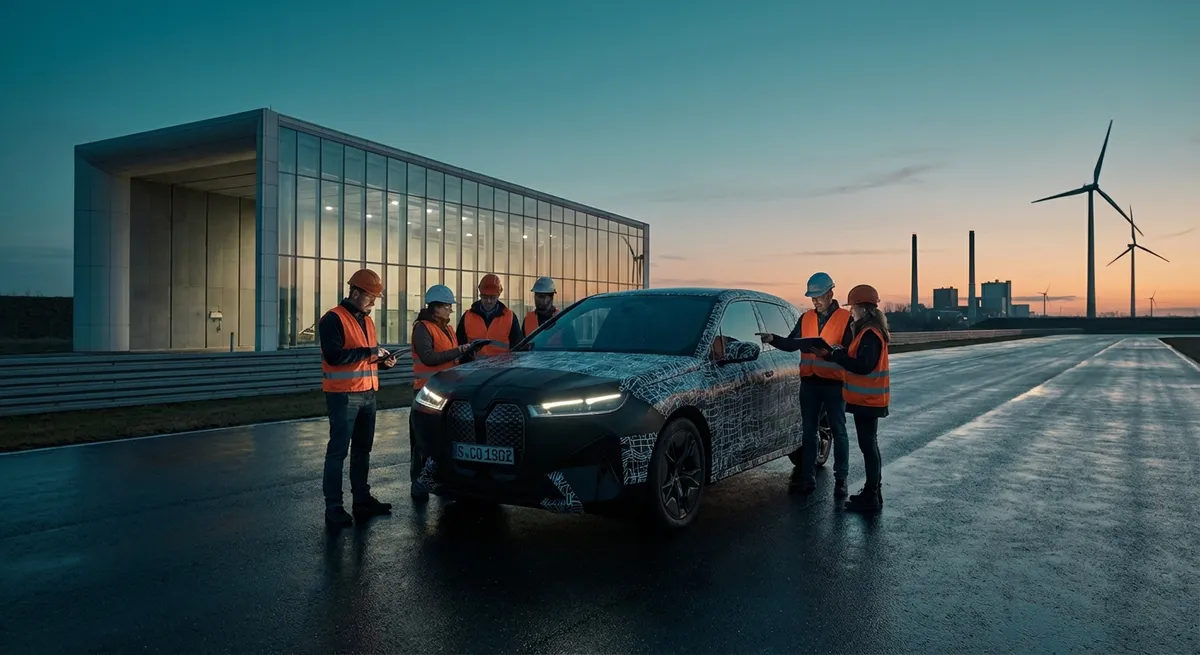
The SUV market is shifting again—but this time, the buzzwords aren’t just “electric” and “luxury.” Automakers are pouring billions into what they’re calling “ultra‑efficient” SUVs: models that promise meaningful gains in range, fuel economy, aerodynamics, and software‑driven efficiency, without abandoning the space, comfort, and capability that made SUVs dominant in the first place. For buyers, this isn’t just marketing—it’s reshaping what to expect from a family hauler or weekend adventure rig over the next five years.
Below, we unpack five key industry developments behind this push toward ultra‑efficient SUVs and what they actually mean for enthusiasts and shoppers who care about performance, running costs, and long‑term value.
1. Aerodynamics Are Becoming a Core Selling Feature
SUVs have traditionally sacrificed aerodynamic efficiency for upright cabins, blocky front ends, and aggressive styling. That trade‑off is no longer sustainable as regulations tighten and energy costs rise. Across the industry, brands are quietly treating aerodynamics like a powertrain component—something they actively “engineer for performance” rather than accept as a design compromise.
New‑generation SUVs increasingly feature:
- Lower drag coefficients (Cd): Where mainstream SUVs used to sit around 0.34–0.36 Cd, new electric and hybrid SUVs are targeting 0.25–0.29. That may sound minor, but at highway speeds, aerodynamic drag is the dominant load—especially for EVs.
- Active grille shutters and air curtains: These systems open for cooling under heavy load but stay closed at cruising speed, smoothing airflow around the nose.
- Flush door handles and tighter panel gaps: Common in premium EVs, these cut turbulence along the sides of the vehicle.
- Functional roof and rear design: Subtle roof spoilers, carefully sculpted tailgates, and reshaped rear lights minimize the low‑pressure wake behind the SUV, which reduces drag and improves stability.
For buyers comparing spec sheets, drag coefficient + frontal area is a critical efficiency duo. Two SUVs can share the same Cd, but the one with a larger frontal area will still need more energy per mile at speed. Automakers rarely publish frontal area, but they increasingly highlight drag coefficients in press material—especially for all‑electric and plug‑in hybrid SUVs.
The bottom line: If you do mostly highway commuting or long‑distance travel, the move to aero‑focused SUV design can translate into noticeably lower fuel use or better EV range, even before powertrain changes come into play.
2. Next‑Gen Platforms: One Architecture, Multiple Powertrains
Another major industry shift is the rollout of modular, multi‑energy platforms specifically optimized for SUVs. Instead of developing separate architectures for gas, hybrid, and electric models, manufacturers are standardizing on flexible underpinnings that can support all three with minimal re‑engineering.
Key technical trends:
- Flat‑floor battery packaging: New platforms are designed from day one to house battery packs in a flat “skateboard” layout between the axles. Even when configured as hybrids or ICE‑only SUVs, that packaging approach improves interior space and lowers the center of gravity.
- Scalable wheelbases and track widths: Engineers can stretch or shrink the same basic skeleton to serve compact crossovers, three‑row family SUVs, or premium performance models. That reduces development cost and accelerates time‑to‑market.
- High‑voltage readiness (400V to 800V): Future‑proofing is a priority. Platforms are being engineered to support both mainstream 400‑volt and high‑performance 800‑volt electrical systems, enabling faster charging and higher power outputs without a full redesign.
- Shared crash structures and safety systems: With a single architecture, automakers can engineer one robust crash structure and deploy it across multiple nameplates, simplifying regulatory certification in major markets.
- More variants (gas, mild hybrid, full hybrid, plug‑in hybrid, and pure EV) built off the same basic SUV, giving you multiple efficiency and price points.
- Faster roll‑out of updated tech—when the platform evolves (better high‑voltage inverters, more efficient cooling), multiple SUVs benefit at once.
- Potentially better long‑term parts availability, as components are shared across a broad portfolio.
For buyers, this platform strategy means:
When you see a new SUV launch, look for references to “dedicated SUV platform,” “multi‑energy architecture,” or similar language. Those phrases signal that the model is part of this industry‑wide pivot to flexible, efficiency‑oriented engineering.
3. Hybrids and Plug‑In Hybrids Are Being Re‑Positioned
The early EV wave had many predicting a straightforward, rapid transition from gas to full electric. Industry reality has proven more complex. Infrastructure gaps, charging concerns, and cost pressures are prompting automakers to refine—and in some cases expand—their hybrid and plug‑in hybrid SUV portfolios, particularly in markets where charging networks are uneven.
What’s changing under the hood:
- Higher‑efficiency Atkinson/Miller‑cycle engines: These engines trade peak power for thermal efficiency, using longer expansion strokes and optimized valve timing to extract more energy per unit of fuel. In hybrid SUVs, that loss of raw power is offset by electric motors.
- Larger but smarter battery packs: PHEV SUVs are moving from “token” electric ranges to more meaningful daily‑use distances, often targeting 30–60 miles (50–95 km) on a full charge, depending on regulations and market.
- More capable electric motors: Instead of using electric drive strictly as an assist, newer systems can deliver sustained EV‑only performance at urban and suburban speeds, turning hybrids into true gas‑optional commuters.
- Advanced energy management software: Predictive hybrid control can use navigation data, topography, and traffic information to decide when to prioritize electric drive versus engine operation for maximum overall efficiency.
Industry data suggests hybrids and PHEVs are serving as a bridge technology while charging infrastructure catches up and battery costs continue to fall. For buyers, this period may actually be a sweet spot:
- If you can’t reliably charge at home, a highly efficient conventional or full hybrid SUV may deliver best‑in‑class total running cost.
- If you commute within a modest radius and can plug in nightly, a PHEV SUV can cover most daily use on electricity while retaining long‑range gasoline flexibility.
Expect manufacturers to advertise “combined system efficiency” more aggressively—blending MPG or L/100km data with electric range and net CO₂ emissions—to better position hybrids within the broader SUV landscape.
4. Software‑Driven Efficiency Is Quietly Reshaping Performance
Beyond hardware, software is becoming a decisive factor in SUV efficiency. While marketing tends to focus on big infotainment screens and app connectivity, the more consequential shift for enthusiasts and technical buyers is the rise of software‑defined drivetrains.
Modern SUVs increasingly rely on:
- Adaptive drive modes that do more than tweak throttle mapping. In EVs and hybrids, these can adjust inverter behavior, motor cooling strategies, and regen braking intensity based on driving style and conditions.
- Smart all‑wheel drive: Instead of mechanically coupling axles, many SUVs now employ electronically controlled clutches or dual‑motor setups. Software determines when the rear axle is needed for traction and when it can be disengaged to reduce parasitic loss and save energy.
- Predictive thermal management: Using navigation and real‑time traffic data, the vehicle can pre‑condition battery temperature and coolant circuits before a known fast‑charge stop or high‑load driving segment, improving both performance and efficiency.
- Over‑the‑air (OTA) efficiency updates: Manufacturers can refine shift logic, regen tuning, or torque distribution strategies after launch. Some EV SUVs have already seen measurable range increases simply from post‑sale software optimization.
From an ownership perspective, this has several implications:
- The SUV you buy today may perform differently a year from now—sometimes better—if your automaker actively deploys OTA improvements.
- Efficiency gaps between brands will not just be about hardware specifications; they’ll increasingly revolve around how aggressively each company invests in control‑software R&D.
- Performance tuning and aftermarket modifications become more complex, as critical behavior is locked behind encrypted software and cloud‑linked control modules.
When evaluating a new SUV, it’s worth checking how the manufacturer talks about OTA capability and control‑software updates. Some treat it as a core product promise; others still see it as a minor add‑on.
5. Lightweighting and Materials Strategy Return to Center Stage
SUVs are heavy—by definition. That extra mass hurts acceleration, braking, handling, and efficiency. With battery packs adding hundreds of kilograms to electric SUVs, the industry is doubling down on lightweighting and materials engineering to claw back performance and range.
Key developments you’ll see more of:
- Mixed‑material bodies: Automakers are combining ultra‑high‑strength steels, aluminum, and in some cases magnesium or composite panels to remove weight where crash loads permit it while reinforcing key load paths.
- Structural battery integration: Next‑gen EV SUVs are beginning to treat battery packs as part of the load‑bearing structure rather than a simple bolt‑in box, reducing redundancy in floor crossmembers and side rails.
- Optimized suspension components: Hollow stabilizer bars, forged aluminum control arms, and lightweight subframes help counteract the mass penalty of larger wheels and tires.
- Targeted sound insulation: Instead of layering on weighty insulation throughout the cabin, manufacturers are using acoustic glass, strategic damping, and active noise cancellation to keep NVH (noise, vibration, harshness) under control without adding unnecessary kilograms.
For buyers, this materially influences how an SUV feels on the road. A lighter, well‑engineered SUV with the same power output as a heavier rival will:
- Accelerate more responsively
- Brake with more confidence
- Change direction more cleanly
- Consume less energy per mile or kilometer
Look beyond curb weight alone and pay attention to power‑to‑weight ratio (hp per kg or kW per tonne) and payload. An efficient SUV that is significantly lighter than the competition but still offers strong towing or cargo capability reflects deeper engineering rather than surface‑level styling tweaks.
Conclusion
SUVs are not shrinking in popularity—but they are being fundamentally re‑engineered. Aerodynamic optimization, multi‑powertrain platforms, re‑positioned hybrids, software‑defined drivetrains, and aggressive lightweighting are converging to form a new generation of ultra‑efficient SUVs that can deliver familiar space and capability with lower operating costs and sharper dynamics.
For enthusiasts, this era rewards technical literacy. Understanding drag coefficients, platform strategy, hybrid system design, control software, and materials choices can help you see past the marketing language and identify which SUVs genuinely push the segment forward. For everyday buyers, it means more options that match real‑world use: from long‑range EVs to smartly calibrated hybrids and refined, lighter‑weight gas models that still make sense where infrastructure or budgets set practical limits.
The next time an automaker touts efficiency in its latest SUV, it’s worth asking: Is it just about the engine—or is the entire vehicle, from its software and structure to its shape and materials, truly engineered for efficiency? Increasingly, the most interesting answers are coming from brands treating efficiency as a system, not a spec line.
Sources
- U.S. Department of Energy – Fuel Economy and Aerodynamics - Explains how aerodynamic drag and vehicle design affect fuel consumption, especially at highway speeds
- International Energy Agency (IEA) – Global EV Outlook - Provides data and analysis on EV and plug‑in hybrid adoption trends, including SUV segments
- National Highway Traffic Safety Administration – CAFE Standards - Outlines U.S. fuel economy regulations that are driving more efficient SUV powertrains and designs
- Toyota Global Newsroom – Hybrid System Technical Overview - Offers insight into hybrid system architecture and efficiency strategies used in SUV platforms
- Ford Media – Next‑Generation Vehicle Platforms and OTA Strategy - Details how modern platforms and software updates shape performance and efficiency in SUVs
Key Takeaway
The most important thing to remember from this article is that this information can change how you think about Industry News.