SUV headlines are dominated by electric flagships and concept crossovers—but behind the scenes, the most dramatic shift in the industry is happening somewhere less flashy: in the architecture of gasoline and hybrid SUVs. Major automakers are quietly redesigning platforms, powertrains, and electronics so today’s gas-powered models can become tomorrow’s hybrids or full EVs with minimal reinvestment. For SUV shoppers and enthusiasts, understanding this transition helps make sense of current model updates, pricing, and what to expect over the next product cycle.
This isn’t just inside-baseball for engineers. The way brands are future‑proofing their SUV lineups will influence resale values, upgrade paths, towing capabilities, and how long today’s “last generation” combustion SUVs remain truly competitive.
Multi‑Energy Platforms: One Chassis, Several Powertrains
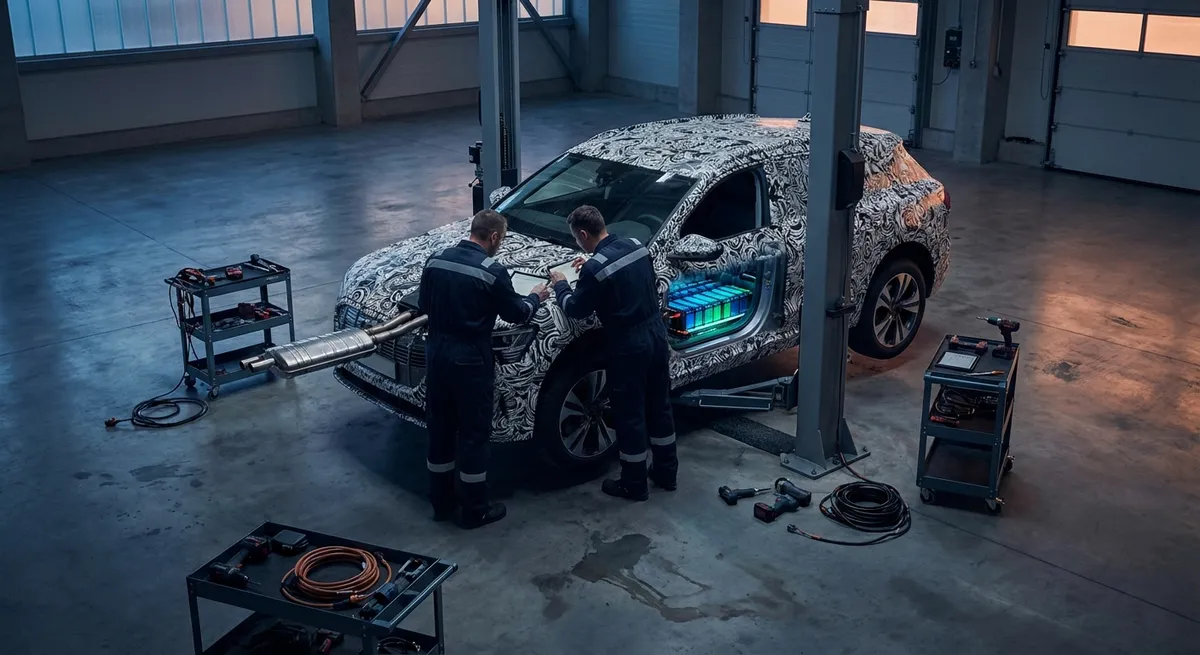
A defining technical trend in the SUV segment is the shift to “multi-energy” or “multi‑powertrain” platforms—engineering bases that can support internal combustion (ICE), hybrid, plug‑in hybrid (PHEV), and in some cases full battery electric (BEV) variants on a shared architecture.
From a hardware perspective, this means:
- Scalable floorpan geometry that can accept either a traditional driveshaft and fuel tank or, alternatively, a structural battery pack integrated into the floor.
- Modular front and rear subframes capable of mounting either ICE-focused drivetrains (engine + transmission + differential) or electric drive units with integrated inverters.
- Flexible crash structures designed to protect both fuel systems and high-voltage battery packs, with differing load paths and deformation zones.
- Shared hard points for suspension geometry such as control arm pickups and damper mounts, so tuning can be adapted without re-engineering the entire body-in-white.
Volkswagen’s MQB and MLB families foreshadowed this approach for combustion variants; Stellantis’ STLA platforms and Hyundai Motor Group’s latest SUV architectures are pushing it further by planning from day one for hybrid and electric packaging. This architectural commonality reduces development costs and shortens time-to-market for derivative models, which is why you’re seeing faster refresh cadences and more powertrain variety within a single SUV nameplate.
For buyers, the practical implication is that a current ICE-based SUV might share structure, electronics, and even crash performance targets with a future hybrid or EV you haven’t seen yet. That can translate into more robust bodies, stiffer chassis (good for handling, towing, and NVH), and a greater likelihood that the model line will be supported longer with software and parts.
Hybrids as a Strategic Bridge, Not a Side Show
Hybrids were once niche variants; they are now becoming central to SUV portfolio strategy. Automakers are using them as a bridge between traditional ICE and full EV in multiple ways:
- Regulatory compliance: Tightening CO₂ and fuel-economy targets in the U.S., EU, and China are forcing OEMs to improve fleet averages. Hybrids and PHEVs allow brands to keep selling high-margin SUVs while meeting these rules.
- Power density: Electric assistance boosts low‑rpm torque, allowing smaller displacement engines or leaner calibrations while maintaining performance that SUV buyers expect for merging, passing, and light towing.
- Real‑world efficiency: In stop‑and‑go urban driving—where many crossovers spend their lives—recuperative braking and engine stop‑start strategies can deliver efficiency gains that turbodiesels once provided, but with fewer emissions challenges.
- Towing and load management: Parallel and power‑split hybrid systems can assist during high-load situations (towing uphill, full passenger/cargo loads), flattening thermal and mechanical stress on the combustion engine.
Technically, there are important distinctions between mild hybrids (typically 48‑volt starter‑generators offering modest torque fill), full hybrids (high‑voltage systems capable of limited EV-only driving), and PHEVs (with larger batteries and grid charging). Industry news around battery sourcing constraints and incentive changes shapes how aggressively each type is pushed in different markets.
Enthusiasts should pay attention to battery chemistry (lithium‑ion NMC vs. LFP), system voltage (400V vs. 800V hybrids), and thermal management strategies, as these factors influence durability under repeated towing, spirited driving, and hot‑climate usage. As hybrids become more central, automakers are engineering them less as retrofit solutions and more as core drivetrains—often with bespoke transmission designs and dedicated engine cycles optimized for hybrid duty rather than stand‑alone ICE performance.
The New Towing and Payload Calculus in an Electrifying Era
SUVs have long been defined by their ability to tow and haul, but electrification—full or partial—is reshaping how those ratings are engineered and marketed.
Key technical changes include:
- Revised duty cycles for cooling systems. Hybrid and EV-enabled SUVs may see significantly higher peak loads on inverters, motors, and battery packs when towing at highway speeds, especially in hot conditions. Manufacturers are upgrading radiators, intercoolers, and coolant loops specifically for these scenarios.
- Battery‑influenced GVWR (gross vehicle weight rating). Large battery packs add mass. To maintain legal and structural limits, some EV SUVs see reduced payload capacity compared with ICE equivalents, even if power outputs are much higher.
- Software‑defined tow modes. Advanced stability control, trailer sway control, and torque-vectoring strategies can now be updated or retuned via over‑the‑air (OTA) updates. As more SUVs share electronics with EV siblings, even ICE models are gaining these smarter, software-heavy towing aids.
- Range vs. load trade‑offs for PHEVs and BEVs. While PHEVs offer strong low‑end torque from electric motors, heavy towing can deplete batteries quickly, shifting more work to the combustion engine. For full BEV SUVs, towing can cut effective range by 40–50% or more, driving manufacturers to emphasize fast-charging capabilities and thermal robustness of the battery pack.
From an engineering perspective, towing ratings are increasingly software‑validated as much as mechanically validated. Torque limits, transmission shift maps, and cooling thresholds are calibrated with specific weight assumptions. This means that industry changes—such as new SAE or UNECE test procedures—can directly influence the tow figures you see on spec sheets without any visible mechanical changes.
For buyers who intend to tow regularly, it’s now important to look beyond peak power and torque. Consider continuous power ratings, thermal derating behavior (how the vehicle reduces output when hot), and whether the automaker publishes explicit towing guidance for grades, temperatures, and speed.
Software‑Centric Electrical Architectures: ICE SUVs Go Digital‑First
A major, often under‑reported shift affecting SUVs is the migration from distributed electronic control units (ECUs) to centralized or domain‑based electrical architectures. Electrified SUVs require high‑bandwidth, low‑latency networks to coordinate power electronics, ADAS sensors, infotainment, and energy management. Automakers are now rolling these architectures into combustion and hybrid SUVs as well.
Technically, this looks like:
- Ethernet‑based in‑vehicle networks replacing or supplementing legacy CAN and LIN buses to handle high data throughput for cameras, radar, LiDAR, and high‑resolution displays.
- Zone controllers or domain controllers consolidating functions that were previously handled by dozens of discrete ECUs, simplifying wiring harnesses and enabling more sophisticated diagnostics.
- Service‑oriented software architectures (SOA) that allow features—like adaptive damping maps, traction control logic, or driver-assistance behavior—to be updated independently over time.
This is why new‑generation SUVs, even with conventional engines, increasingly support OTA updates, app‑based access, and feature unlocks (e.g., adding trailer assist or advanced off‑road modes post‑purchase). In some portfolios, a gas SUV and an EV SUV share essentially the same electrical backbone but different propulsion modules.
For enthusiasts, this brings both upside and new risks. Upside: better stability control, more adaptable off-road modes, smarter torque vectoring, and evolving feature sets without changing hardware. Risks: greater dependence on cloud services, potential subscription models for capabilities that used to be standard, and long‑term support questions once vehicles age beyond the OTA support window.
Reading the fine print on software update policies, data handling, and feature subscription terms is becoming as important as traditional spec-sheet comparisons. The industry’s pivot to software‑centric SUVs means even purely mechanical performance is now inseparable from the code that governs it.
Supply Chains, Policy Shifts, and What They Mean for Your Next SUV
Behind every new SUV launch is a supply chain story—especially around batteries, semiconductors, and emissions hardware. Industry news over the past few years highlights how these less visible forces shape what ends up in showrooms.
Several dynamics matter directly to SUV shoppers:
- Battery sourcing and trade rules. In the U.S., the Inflation Reduction Act (IRA) ties consumer tax credits for EVs and PHEVs to battery mineral and component sourcing. As automakers localize battery manufacturing and adjust chemistries, certain SUV trims may gain or lose eligibility for incentives from one model year to the next.
- Semiconductor availability and design choices. Past chip shortages pushed automakers to redesign modules, simplify option packages, and sometimes remove features mid‑cycle. Many are now adopting more scalable, higher-performance automotive‑grade chips, which enable advanced driver assistance and infotainment features across more trims.
- Emissions and safety regulations. Stricter NOx and particulate limits, as well as evolving safety standards for crash performance and active safety, can prompt engine downsizing, widespread adoption of gasoline particulate filters, or a shift toward hybridization to hit compliance targets without sacrificing performance.
- Longevity and parts support. As platforms become multi‑energy and software‑heavy, long-term parts support will increasingly depend on whether an architecture is widely adopted across an automaker’s lineup. SUVs sharing global platforms with significant volume are likely to see stronger support well into the 2030s.
Potential buyers should watch not just the individual model, but the platform and powertrain family it belongs to. A mid‑size SUV built on a global, multi‑energy platform that underpins both hybrids and EVs is more likely to receive robust software support, future‑proofed safety updates, and continued parts availability than a low‑volume niche chassis.
For enthusiasts who keep vehicles long-term, staying informed about policy timelines (such as target dates for phasing out pure ICE sales in certain markets) can help gauge which SUVs are being engineered as transitional stopgaps versus long‑term mainstays in a brand’s roadmap.
Conclusion
The SUV segment is in the middle of a structural transformation that goes far beyond swapping gas tanks for battery packs. Multi‑energy platforms, hybrid-centric strategies, rethought towing benchmarks, software‑defined architectures, and shifting supply-chain realities are all converging to reshape what “mainstream” SUVs look and feel like over the next decade.
For car enthusiasts and serious buyers, this transition offers an opportunity: by understanding how and why automakers are reengineering their SUV lineups today, you can better judge which models are built to thrive in an electrified future—and which may age quickly as regulations, software capabilities, and consumer expectations continue to evolve.
Sources
- U.S. Department of Energy – Vehicle Technologies Office - Technical overview of hybrid and plug-in hybrid powertrain architectures and efficiency strategies
- European Commission – CO₂ emission performance standards for cars and vans - Details on regulatory targets driving electrification and hybridization in SUVs sold in Europe
- International Energy Agency (IEA) – Global EV Outlook - Industry-wide data on electrification trends, battery supply chains, and policy impacts on light-duty vehicles, including SUVs
- National Highway Traffic Safety Administration (NHTSA) – Towing and Safety Guidance - Background on towing considerations, weight ratings, and safety factors relevant to SUV capability
- IEEE Spectrum – Automotive Ethernet and Software-Defined Vehicles - Explains the shift to Ethernet-based, software-centric vehicle architectures that are increasingly used in modern SUVs
Key Takeaway
The most important thing to remember from this article is that this information can change how you think about Industry News.