The SUV market is no longer driven only by engines, towing ratings, and badge prestige. In 2024–2025, some of the most aggressive moves in the auto industry are coming from technology companies, chipmakers, and software platforms that see your future SUV as a mobile computing hub. For SUV shoppers and enthusiasts, that means product cycles, feature sets, and even brand loyalty are being rewritten in real time. This shift isn’t theoretical—it’s already shaping what’s in dealer showrooms and what’s on the engineering roadmap through 2030.
Below are five industry developments that are quietly, but decisively, changing what your next SUV will look like, feel like, and how it will be updated and supported over its life.
Tech-Backed Platforms Are Replacing Traditional Model Cycles
For decades, automakers designed an SUV platform, refreshed it after a few years, and replaced it roughly every 6–8 years. That rhythm is now being disrupted by software-defined vehicle (SDV) architectures and centralized computing. Instead of each model being a standalone hardware package with limited upgradeability, many new SUVs are being engineered on “compute-first” platforms that support continuous software evolution.
Automakers like Mercedes-Benz, Stellantis, and General Motors are consolidating dozens of electronic control units (ECUs) into a handful of high-performance domain or central controllers. This reduces wiring complexity, weight, and failure points, but more importantly, it allows them to push system-wide updates over the air (OTA). The same SUV you buy in 2025 may be running a substantially different software stack by 2028—with improved driver-assistance behavior, new infotainment capabilities, or even revised energy management strategies that change real-world fuel economy or EV range.
For buyers, this alters the value equation: the underlying hardware—chassis, battery pack, high-voltage architecture—must be robust enough to support several “software generations.” If you’re comparing SUVs today, one of the most impactful questions is: how modern is the electrical/electronic (E/E) architecture, and how long is the brand committing to software support and feature rollouts? Vehicles on legacy electrical platforms may age more quickly from a digital perspective, even if they drive well.
Silicon Wars: Why Chip Partnerships Matter for SUV Performance
SUV specs used to be a straightforward mix of displacement, horsepower, torque, and maybe a tow rating. Now, you increasingly need to pay attention to whose chips and software stack underpin the vehicle. Cabin experiences, driver-assistance features, and even fast charging performance are strongly influenced by silicon and system integration.
NVIDIA, Qualcomm, Intel, and other chipmakers are racing to secure multi-year, multi-billion-dollar deals with global automakers. NVIDIA’s DRIVE platforms, for instance, power advanced driver-assistance and visualization in several premium SUVs, using high-performance GPUs for real-time sensor fusion and perception. Qualcomm’s Snapdragon Digital Chassis targets infotainment, connectivity, and ADAS across mass-market and premium segments, showing up in everything from compact crossovers to three-row family SUVs.
Practically, this affects how responsive your digital cluster is, how smooth augmented-reality navigation appears on the head-up display, and how reliably driver-assist systems interpret complex traffic scenarios. It also affects compute headroom—whether the SUV has sufficient processing margin to support more advanced features via OTA updates without requiring hardware retrofits. Enthusiasts comparing two similarly priced SUVs should look beyond screen size and ask: which silicon platform is this running, and what future features has the automaker promised on this hardware?
Operating Systems in the Cabin: Google, Apple, and the Auto-Branded Layer
Another major shift: the battle over in-vehicle operating systems. Many new SUVs are adopting embedded platforms such as Android Automotive OS with Google built-in, while others are moving to custom Linux-based systems (often with overlaid user interfaces branded by the automaker). Meanwhile, Apple is advancing the next generation of CarPlay, aimed at deeper integration with vehicle functions and displays.
The distinction between “projection” (traditional Apple CarPlay/Android Auto using your phone) and “embedded OS” (Android Automotive or similar running natively in the vehicle) is critical. Embedded platforms can tap directly into vehicle data—battery state, climate controls, drive modes—allowing integrated energy routing, more contextual navigation, and tighter voice control. They can also be updated independently of your smartphone lifecycle. However, they increase reliance on a specific software ecosystem and its app store, and they may require data subscriptions for full functionality.
For buyers, this raises several questions worth factoring into a purchase decision:
- Does the SUV run a major tech OS (e.g., Android Automotive) or a proprietary system?
- How many years of connectivity and cloud services are included before subscription fees begin?
- Can essential features—navigation, HVAC control, audio—still be used with limited or no connectivity?
- How often does the brand historically update its in-vehicle software, and do those updates actually add capabilities rather than just bug fixes?
Enthusiasts who keep vehicles for 8–10 years should evaluate infotainment like they do powertrain warranties: this is a long-term usability issue, not a cosmetic one.
ADAS Arms Race: From Lane-Keeping to Highway “Co-Pilots”
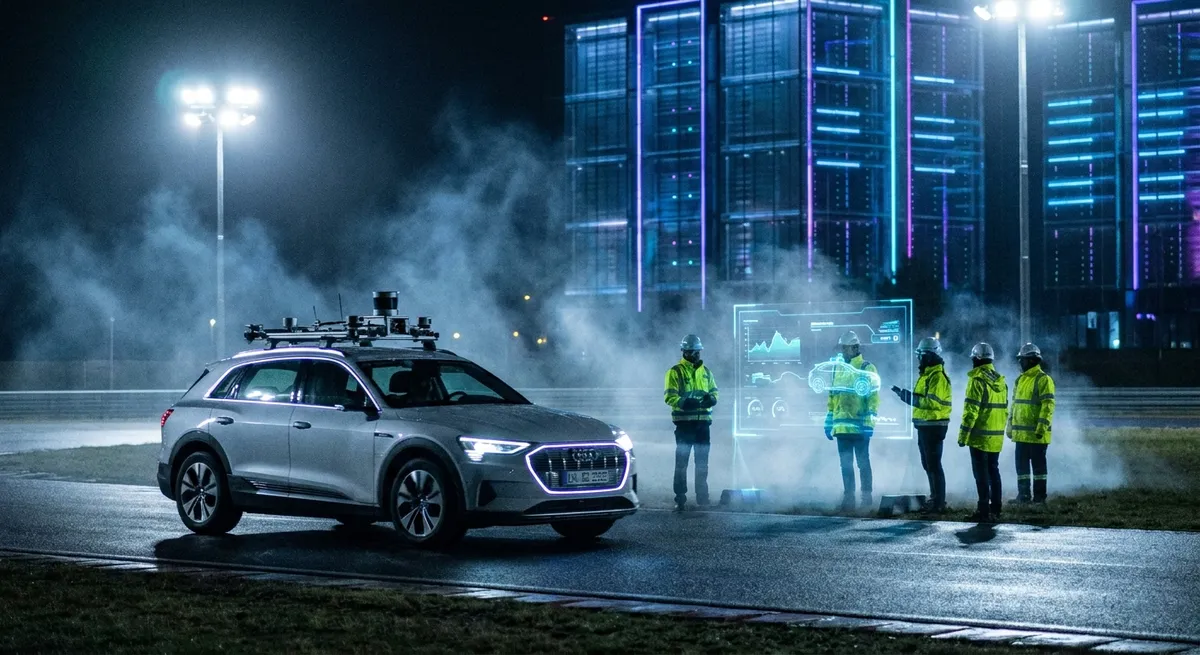
Advanced driver-assistance systems (ADAS) have moved from optional extras to a central battleground for both legacy automakers and tech-centric entrants. Most new SUVs now ship with some form of adaptive cruise control, lane-centering, and automatic emergency braking. But the industry news that matters is happening one level up: supervised hands-off systems, expanding use of high-definition maps, and camera/LiDAR/radar sensor suites that anticipate future automation capabilities.
General Motors’ Super Cruise, Ford’s BlueCruise, and Mercedes-Benz Drive Pilot (certified for conditional automation in specific jurisdictions) signal a clear trend: highway “co-pilot” features are becoming a key differentiator, especially in family and long-distance SUVs. These systems rely on high-fidelity maps, redundant sensors, robust compute, and continuous data validation—areas where partnerships with tech and mapping companies are crucial. As regulatory frameworks evolve, some of these systems may gain expanded operational design domains (ODDs), such as urban arterials or complex interchanges.
For prospective SUV buyers, the important technical details go beyond the marketing name:
- What is the officially defined ODD (road type, speed range, weather conditions)?
- Does the system support true hands-off operation, or only light-touch lane keeping?
- What driver monitoring technology is used (camera-based, steering torque, or both)?
- How are updates deployed, and has the automaker publicly committed to broadening capabilities over time?
Industry trends suggest a two-tier future: baseline safety suites that are mandatory from a regulatory and competitive standpoint, and premium ADAS “layers” that may be offered via subscription or one-time unlocks. Understanding where your preferred SUV sits on that spectrum will help you avoid paying for features that don’t match your driving environment or comfort level.
Data, Subscriptions, and Ownership: The New Economics of SUVs
As SUVs become rolling software platforms, the business model around them is evolving just as quickly as the technology. Automakers and tech partners see recurring software and service revenue—connected services, premium driver-assist tiers, enhanced navigation, advanced diagnostics—as key to profitability in an era of high EV and battery development costs. This shift has sparked debate over what constitutes the base vehicle and what should be “optional software.”
In practice, buyers are encountering features that are technically present in the vehicle hardware but gated behind software codes or subscription models. Examples include higher-performance DC fast-charging curves, extra drive modes, more sophisticated parking assistants, or extended connectivity for cloud-based voice assistants. While this offers flexibility—some owners may never need, say, enhanced trailer reversing aids—it also means the sticker price no longer captures the full “cost of ownership” of an SUV’s capabilities.
From a technical and consumer-rights perspective, several issues are worth watching:
- Data ownership and privacy: what vehicle and driver data is collected, how long it is stored, and who it is shared with (insurers, third-party service providers, or tech partners).
- Feature permanence: whether purchased software features are tied to the vehicle, the owner’s account, or both—and what happens on resale.
- Cybersecurity and lifecycle support: how long security patches and compatibility updates will be provided, especially as SUVs increasingly integrate with home ecosystems, smartphones, and public charging infrastructure.
Regulators in North America, Europe, and Asia are actively examining connected vehicle data, cybersecurity requirements, and software update practices. For SUV enthusiasts, staying informed about these policy debates is becoming as relevant as watching horsepower trends or off-road hardware updates. The “best” SUV may soon be defined as much by transparent, consumer-friendly digital policies as by its suspension geometry or torque curve.
Conclusion
The SUV segment is in the middle of a structural shift where technology firms, chipmakers, and software ecosystems are central players, not just background suppliers. For buyers and enthusiasts, this means learning a new vocabulary—centralized compute, software-defined vehicles, embedded OS, ODD, data governance—alongside traditional metrics like ground clearance, cargo volume, and torque.
The upside is significant: better driver assistance, richer infotainment, improved efficiency via smarter energy management, and vehicles that can meaningfully improve over time. The risk is lock-in, subscription creep, and ambiguity around long-term support and data use. As you evaluate current and upcoming SUVs, looking “under the software hood” is no longer optional. The most satisfying long-term ownership experiences will come from brands that pair solid mechanical engineering with transparent, future-proof digital strategies.
Sources
- [NVIDIA DRIVE: Software-Defined Vehicle Platform](https://www.nvidia.com/en-us/self-driving-cars/drive-platform/) - Overview of NVIDIA’s automotive compute platforms and their role in centralized, software-defined vehicle architectures
- [Qualcomm Snapdragon Digital Chassis](https://www.qualcomm.com/products/automotive/digital-chassis) - Details on Qualcomm’s integrated approach to in-car connectivity, infotainment, and driver-assistance systems
- [U.S. NHTSA – Overview of Advanced Driver Assistance Systems (ADAS)]https://www.nhtsa.gov/equipment/driver-assistance-technologies - U.S. safety regulator’s explanation of current ADAS technologies and their functions in modern vehicles
- [Mercedes-Benz Operating System and Software-Defined Vehicle Strategy](https://group.mercedes-benz.com/innovation/digitalisation/mb-os.html) - Manufacturer’s roadmap for in-house operating systems, centralized computing, and long-term software support
- [European Commission – Regulation on Type-Approval for Motor Vehicles’ Cybersecurity and Software Updates](https://eur-lex.europa.eu/legal-content/EN/TXT/?uri=CELEX:32021R0387) - Regulatory framework outlining cybersecurity and software update requirements for connected vehicles in the EU
Key Takeaway
The most important thing to remember from this article is that this information can change how you think about Industry News.