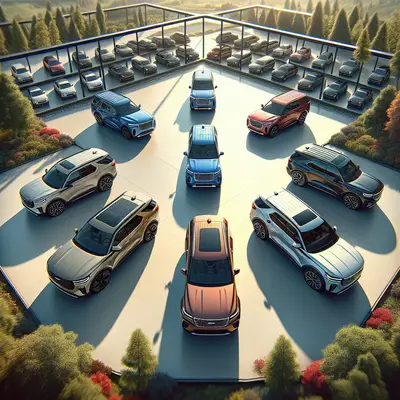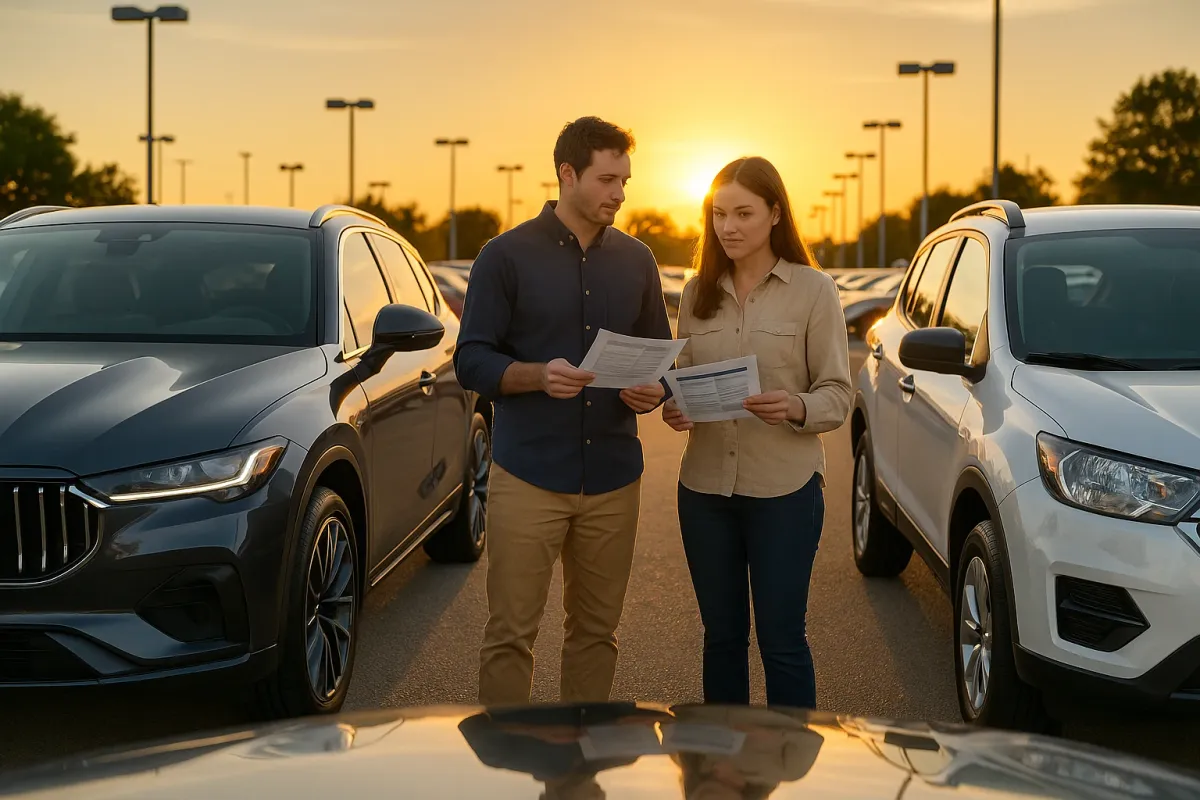
Scrolling through today’s trending stories, one theme stands out: people love comparing how much value they’re really getting for their money. Viral pieces like “20 Toys Under $20 That Look Way More Expensive” are exploding because they tap into the same instinct that drives SUV shoppers right now—nobody wants to overpay for what feels like the same experience.
That exact budget-vs-luxury tension is reshaping the SUV market in real time. From Toyota and Hyundai loading mainstream models with high-end tech, to BMW, Mercedes-Benz, and Lexus doubling down on refinement and performance, the line between “affordable” and “premium” has never been more blurred. For buyers, that creates both opportunity and confusion.
Below is a deep dive into how “budget” and “premium” SUVs truly compare in 2025—and what actually matters when you’re deciding where to spend your money.
Powertrain and Performance: How Much Are You Really Gaining?
The classic assumption has been simple: premium badge, premium performance. In 2025, that’s only partly true.
On the mainstream side, models like the Toyota RAV4 Hybrid, Honda CR‑V Hybrid, and Hyundai Tucson Hybrid are delivering real-world performance that would have been “premium-only” a decade ago. A RAV4 Hybrid (219 hp combined) or Tucson Hybrid (up to 226 hp) accelerates briskly enough for everyday driving, with electric torque filling in low-speed gaps and fuel economy that often beats luxury competitors by 10–15 mpg in mixed use.
Compare that with a premium compact SUV like the BMW X3 xDrive30i (~248 hp) or Mercedes‑Benz GLC 300 (~255 hp). On paper the power difference isn’t enormous, but the way these SUVs deliver it is different:
- Engine smoothness and sound
Premium SUVs typically use more advanced balancing, better engine mounts, and additional sound insulation. The result is less vibration and a more refined engine note—especially noticeable at highway speeds or under hard acceleration.
- Transmission tuning
BMW’s ZF 8‑speed and Mercedes’ 9‑speed automatics shift faster and more intelligently than many CVTs or budget 8‑speeds. Downshifts under passing, smooth low-speed behavior in traffic, and response to paddle inputs are where the extra engineering shows.
- Performance variants
Mainstream brands do offer hotter versions (e.g., Hyundai Kona N, Kia EV6 GT in crossover form), but the premium segment scales higher: Mercedes‑AMG GLC 63, BMW X3 M40i, Audi SQ5. These bring higher-output engines, upgraded cooling, stronger driveline components, and software-tuned dynamics that mainstream brands rarely match at scale.
For most buyers, a well‑specced mainstream hybrid will feel “fast enough” and significantly cheaper to run. But if you’re sensitive to drivetrain smoothness, shift quality, or truly high-performance capability, the premium segment still has a meaningful edge.
Ride, Handling, and Noise: The Real Luxury You Notice Every Day
The “toys under $20” trend works because those products feel more expensive than they are. In SUVs, that perception is super sensitive to suspension tuning, noise levels, and chassis rigidity—areas where hidden engineering has huge impact.
Mainstream crossovers like the Mazda CX‑5, Honda CR‑V, and Hyundai Santa Fe have made huge strides. Recent redesigns focus on:
- Stiffer platforms for better crash safety and sharper handling
- Multi-link rear suspensions to improve ride comfort and wheel control
- Structural adhesives and foam fillers to reduce body flex and some noise paths
Despite that, when you directly compare them with premium players—Audi Q5, Volvo XC60, Lexus NX, Genesis GV70—clear differences emerge:
- Noise, Vibration, Harshness (NVH)
Premium SUVs typically use thicker acoustic glass (sometimes laminated front and side), more extensive underbody shielding, and additional isolation at suspension mounting points. The result is a quieter cabin at 70+ mph, less tire roar on coarse pavement, and fewer “shocks” from potholes.
- Suspension sophistication
Adaptive dampers, air suspensions, and active anti-roll systems are now relatively common in mid‑to‑upper premium trims (e.g., Mercedes GLE AIRMATIC, Range Rover Sport, BMW X5 with Dynamic Handling Package). Mainstream SUVs rarely offer these; when they do, they’re usually simpler, single-parameter adaptive systems rather than truly predictive or multi‑chamber setups.
- Steering and chassis feel
Premium brands invest more in steering rack tuning, bushing compounds, and subframe isolation. The result is more precise turn‑in, better straight-line stability, and less “head toss” on broken roads. Mazda is one of the few mainstream brands closing that gap, which is why the CX‑5 and CX‑70 often get “feels premium to drive” in reviews.
If you mainly commute in smooth suburban environments, a modern mainstream SUV may feel surprisingly close to premium. But if you regularly log long highway miles, drive on rougher surfaces, or care deeply about road feel and cabin quiet, premium tuning is still consistently superior.
Cabin Tech and Infotainment: When Mainstream Looks More “High-End” Than Luxury
This is where the “under $20 but looks expensive” parallel is most obvious: many mainstream SUVs now look more high-tech inside than their luxury counterparts.
Just in the last product cycle:
- Hyundai/Kia have rolled out wide, curved displays and high-res digital clusters across models like the Hyundai Santa Fe, Tucson, and Kia Sportage.
- Toyota has finally moved to larger, faster infotainment systems in the RAV4, Highlander, and Grand Highlander with standard wireless Apple CarPlay and Android Auto on most trims.
- Ford offers huge portrait or landscape screens in the Explorer and Bronco Sport family.
Many premium brands are actually playing catch-up or intentionally taking a more conservative approach:
- Some BMW iDrive 8/8.5 and Mercedes MBUX users complain about feature overload and menu complexity.
- Lexus infamously kept its touchpad interface for far too long before switching to a more conventional touchscreen system.
- Audi’s once-class-leading MMI now competes with mainstream systems that are just as sharp and often more intuitive.
Where premium still differentiates itself:
- Graphics fluidity and integration
Smooth animations, higher frame rates, and tighter integration between cluster, head-up display, and center screen are common in premium SUVs. Navigation guidance, drive mode info, and ADAS status tend to present more cohesively.
- Audio quality
Optional branded systems—Bowers & Wilkins (Volvo/BMW), Burmester (Mercedes), Mark Levinson (Lexus), Bang & Olufsen (Audi, Genesis)—use higher-quality amplification, more speakers, and better cabin tuning. Mid-level premium audio will still outperform most mainstream “upgraded” stereos.
- Connected services
Remote software updates, predictive maintenance alerts, cloud-based navigation, and deeper app ecosystems are more robust in the premium sphere, though Hyundai/Kia and Tesla-like OTA strategies are starting to narrow that gap.
Bottom line: visually and functionally, mainstream infotainment no longer looks “cheap.” For many buyers—especially those who live in CarPlay/Android Auto—the premium advantage is shrinking to audio quality and interface polish rather than headline specs.
Safety, Driver Assistance, and Autonomy: The Gap Is Narrower Than You Think
One of the biggest surprises for shoppers cross-shopping mainstream and premium SUVs in 2025 is how similar the spec sheets look for safety and driver assistance.
Mainstream brands like Toyota (TSS 3.0), Honda (Sensing), Hyundai (SmartSense), and Subaru (EyeSight) are now offering:
- Automatic emergency braking with pedestrian and cyclist detection
- Lane keep assist and lane centering
- Adaptive cruise control with stop-and-go
- Traffic sign recognition (on many trims)
- Rear cross-traffic alert and blind-spot monitoring
Premium brands—Mercedes (Driving Assistance Plus), BMW (Driving Assistant Professional), Volvo Pilot Assist, Lexus Teammate, Genesis Highway Driving Assist—add more layers:
- Smoother, more natural lane-centering performance on highways
- Better curve-handling with predictive cruise control
- More sophisticated driver-attention monitoring
- Higher-resolution cameras and LiDAR/Radar fusion in some models
However, from a pure safety-outcome perspective, many mainstream SUVs score as well as, or better than, premium models in IIHS and NHTSA testing. High structural scores, standard active safety, and improved restraint systems mean a Toyota Highlander, Kia Telluride, or Honda Pilot can be just as safe as a more expensive Audi Q7 or Mercedes GLE in real-world scenarios.
Where premium still stands out:
- System refinement – fewer false alerts, smoother interventions, better integration between lane and distance control.
- New feature rollout pace – premium often debuts innovations (more advanced intersection assist, lane-change assist, augmented-reality navigation) 1–2 model cycles before they filter down.
For buyers evaluating safety as a primary factor, a well-equipped mainstream SUV is not a compromise. You’re mainly paying extra in the premium space for how these systems behave, not whether they exist.
Materials, Design, and Long-Term Perception of Value
In the viral “looks expensive” genre, what wins isn’t just function—it’s perceived quality: textures, colors, weight, and detailing. SUVs are no different.
Mainstream cabins have improved dramatically:
- Soft-touch surfaces in upper dash and door areas
- Faux leather (or synthetic “vegan” leather) with surprisingly good feel
- Ambient lighting, metallic-look trim, and two‑tone color schemes
- Panoramic roofs, stitched dashboard elements, and contrasting piping on higher trims
Examples like the Hyundai Palisade, Kia Telluride, and Mazda CX‑90 regularly get “near-luxury” praise. But with careful inspection, premium differences emerge:
- Material consistency
Premium SUVs use real metal switches more often, less hollow-feeling plastic, and more uniform graining and color matching. Touchpoints—steering wheel, stalks, scroll wheels, climate knobs—tend to have tighter tolerances and more satisfying weight.
- Seat construction
Premium brands invest more in foam density layering, adjustable bolsters, thigh support extenders, and multi-way lumbar. Long-distance comfort in a Volvo XC90, BMW X5, or Lexus RX often exceeds that of even well-upholstered mainstream competitors.
- Aging and wear
Over 5–10 years, premium leathers and switchgear typically resist shine, sagging, and squeaks better. Mainstream interiors can look excellent when new but sometimes reveal harder plastics and faster wear in high-contact areas.
There’s also the intangible aspect: brand cachet and resale value. Premium SUVs like the Lexus RX, Toyota-affiliated but premium Lexus GX, Porsche Macan, and Mercedes G‑Class hold value not only because of engineering, but because of brand narrative and demand. Some mainstream SUVs—Toyota 4Runner, Toyota RAV4, Honda CR‑V—match or beat them on residuals, but that’s the exception, not the rule.
For a buyer, this comes down to priorities:
- If you want the best finish, feel, and long-term “solid” impression, premium still delivers more consistently.
- If you want most of that experience at a substantially lower entry price, the latest mainstream models now offer genuinely convincing alternatives.
Conclusion
Today’s fascination with finding budget items that “look way more expensive than they are” mirrors exactly what’s happening in the SUV world. Mainstream automakers have pushed so far upmarket in technology, safety, and perceived quality that the old “you get what you pay for” equation no longer tells the full story.
- Powertrain and performance gaps are smaller than ever for everyday driving.
- Ride, handling, and noise still tilt meaningfully in favor of premium brands—especially on long journeys.
- Infotainment and cabin tech are now a genuine toss-up, with mainstream sometimes looking more futuristic.
- Safety and driver assistance are no longer a premium-only selling point.
- Materials, design cohesion, and long-term refinement remain core premium advantages, but they’re being challenged from below.
For SUV shoppers right now, the smartest move is to test mainstream and premium options back-to-back with the same use case in mind: how you drive, where you drive, and how long you intend to keep the vehicle. You may find that, like those under‑$20 viral products, the SUV that feels the most expensive isn’t always the one with the highest price tag on the window.
Key Takeaway
The most important thing to remember from this article is that this information can change how you think about Comparisons.