The SUV market is no longer a simple contest of size, price, and horsepower. Automakers are racing to turn their SUVs into “lifestyle platforms” — vehicles that promise a particular way of living as much as a way of driving. From adventure-branded off-roaders to tech-centric family haulers, this shift is reshaping design, features, and pricing across the industry. For enthusiasts and shoppers, understanding this trend is key to predicting which SUVs will hold their value, stay enjoyable to drive, and remain relevant as regulations and technology evolve.
From Utility Vehicle to Lifestyle Platform
In the 1990s and early 2000s, SUVs were largely defined by capability: body-on-frame construction, ladder frames, towing ratings, and off-road geometry. Today, the conversation has shifted toward identity and use-case storytelling. Automakers are segmenting SUV lineups by lifestyle archetypes — “overlanding,” “urban premium,” “active family,” and “performance commuter” — and backing that up with specific hardware and software.
This is why you now see multiple trims of a single model with dramatically different personalities. The same underlying platform might yield a rugged, lifted variant with all-terrain tires and skid plates, a tech-lux trim with adaptive air suspension and high-end audio, and a sporty variant tuned for on-road dynamics. Instead of designing one SUV for everyone, brands are building modular architectures and then “skinning” them with different equipment, styling, and software behaviors that speak to distinct lifestyles.
For buyers, this creates more precise matches between real-world needs and factory configurations — but it also requires a more critical look at what’s marketing and what’s meaningful. An “Adventure” badge and roof rails don’t automatically equate to true off-road capability, just as a “Sport” package doesn’t guarantee improved lap times or braking performance.
Point 1: Off-Road Branding vs. Real Capability
One of the clearest expressions of the lifestyle push is the explosion of off-road or “adventure” sub-brands and trims. Automakers are responding to growing interest in overlanding, camping, and outdoor travel, but the technical underpinnings vary widely.
True off-road capability still depends on core engineering elements:
- Approach, breakover, and departure angles: These determine how steep an obstacle your SUV can climb or descend without scraping bumpers or underbody components.
- Ground clearance: Genuine off-road variants often exceed 8.5–9 inches (216–229 mm) and may offer adjustable air suspension to increase clearance in rough terrain.
- Drivetrain architecture: A real off-road platform typically offers a dual-range transfer case (with low range), as well as mechanical or electronically controlled locking differentials.
- Underbody protection: Functional skid plates, rock rails, and protected fuel/EV battery enclosures separate serious off-roaders from purely cosmetic “rugged” trims.
- Tires: All-terrain or mud-terrain tires with reinforced sidewalls dramatically change performance versus standard highway tires, but they also impact noise, rolling resistance, and efficiency.
Many “adventure” trims stop at cosmetic cues: blacked-out trim, roof racks, and mildly more aggressive tires. Others, including certain 4x4-focused brands, pair visual differentiation with meaningful hardware upgrades and specially calibrated traction software modes (e.g., sand, mud, rock, or snow).
For shoppers, the key is to compare spec sheets and technical diagrams, not just marketing language. Verify whether there is a low-range gearbox, what the real approach/departure angles are, and if the traction-control or terrain-management system adjusts throttle mapping, ABS, and drivetrain torque split in a significant way.
Point 2: Software-Defined SUVs and Subscription Features
The industry is rapidly moving toward “software-defined vehicles,” and SUVs are prime targets because of their broad use cases and high option content. This evolution is more than just upgraded infotainment; it’s a fundamental change in how features are delivered, updated, and monetized.
Modern SUVs increasingly use centralized computing architectures that allow:
- Over-the-air (OTA) updates: Automakers can push new driver-assistance algorithms, battery management improvements, suspension calibrations, or infotainment features without a dealer visit.
- Feature-on-demand: Hardware may be pre-installed at the factory (heated seats, advanced driver assistance, even more powerful motor mappings in some EVs), but access is unlocked via software purchase or subscription.
- Driving-character customization: Drive modes can meaningfully alter steering weight, damper stiffness (if adaptive), throttle response, shift strategy for automatics, and even AWD/4WD torque split logic.
For enthusiasts, this opens up the possibility that an SUV can actually improve over time. Tuning updates might enhance low-end torque responses, refine lane-keeping systems, or expand fast-charging capability in electrified models.
The trade-off is complexity and cost of ownership. Buyers must consider:
- How long the automaker guarantees software support and security patches.
- Whether key comfort or performance features are locked behind ongoing subscription fees.
- How OTA updates might affect aftermarket modifications or tuning strategies.
A future-resilient SUV isn’t just about having every feature today; it’s about buying into a software ecosystem that the manufacturer is likely to support and evolve for 8–10 years.
Point 3: Interior Architecture as a Reflection of Real-World Use
The shift toward lifestyle branding is most visible inside the cabin. Rather than offering generic interiors, automakers are tailoring materials, layout, and storage to specific use profiles — a major development for families and enthusiasts alike.
Some trends shaping SUV interiors:
- Configurable seating systems: Sliding and reclining second rows, optional captain’s chairs, and 60/40 or 40/20/40 split-fold configurations allow passengers and cargo to coexist more flexibly. In three-row SUVs, pay attention to how easily third-row seats fold, and whether cargo space remains usable with all rows up.
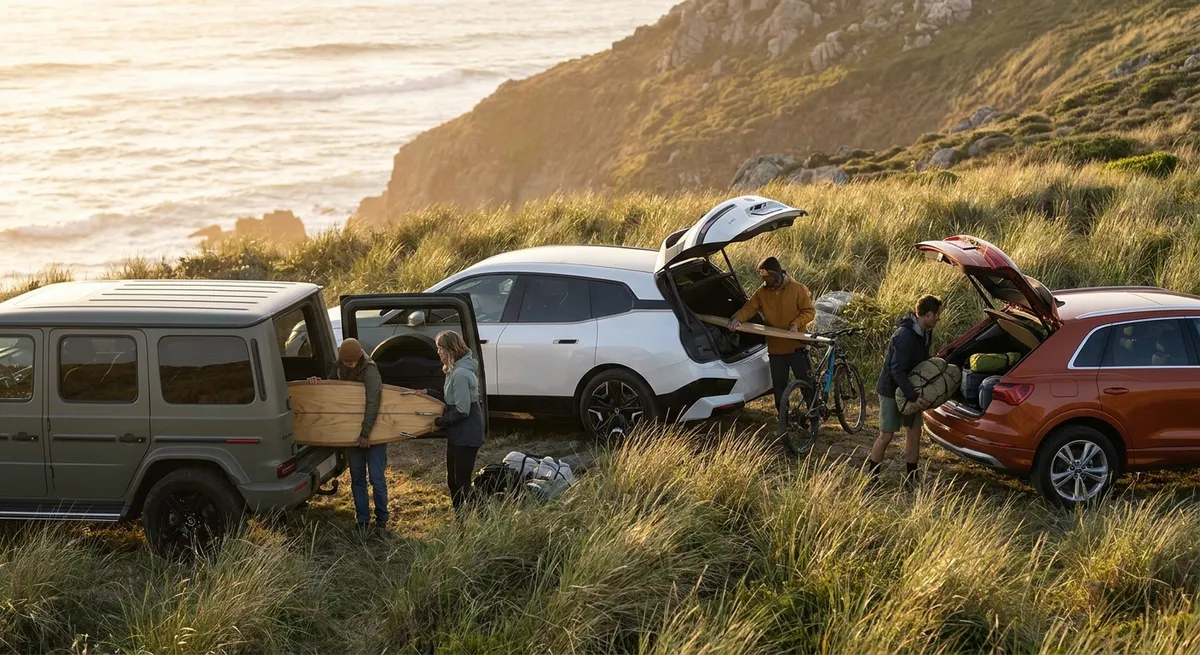
- Smart cargo management: Recessed tie-down points, adjustable load floors, integrated storage bins, and factory accessory mounting rails make a bigger difference than a glossy brochure suggests. For outdoor-focused SUVs, look for washable cargo mats, drain plugs, and 12V/120V outlets in the rear.
- Material strategy: Lifestyle positioning influences fabric and trim choices. “Adventure” models may use more durable, easy-clean surfaces and rubberized control areas, while “urban premium” trims lean on open-pore wood, metal accents, and soft-touch plastics. Be aware of how glossy surfaces age and how quickly light-colored upholstery can stain.
- Human-machine interface (HMI): The balance of physical buttons versus touch controls is becoming a defining characteristic. Off-road and towing-focused SUVs increasingly retain physical switches for critical functions (traction control, four-wheel drive modes, tow/haul), while minimalistic designs move nearly everything into touchscreen menus.
- Acoustic and thermal comfort: Laminated glass, extensive cabin insulation, and multi-zone climate systems differentiate daily-driving comfort. Enthusiasts should compare published interior noise levels, HVAC performance, and real-world owner feedback rather than relying on showroom impressions alone.
The deeper question is whether the interior layout is engineered around real usage patterns or simply styled for showroom appeal. Features like one-touch fold-and-tumble second rows for third-row access, bag hooks that support real loads, and robust seat mechanisms matter more than ambient lighting and decorative stitching for long-term satisfaction.
Point 4: Towing, Payload, and the New Emphasis on “Do-It-All” Capability
Lifestyle marketing increasingly presents SUVs as ultimate “do-it-all” tools — commuting, family hauling, towing, and weekend recreation in one package. That’s possible, but only if the engineering underneath supports the promise.
Key technical metrics every SUV shopper should scrutinize:
- Towing capacity vs. payload: Published maximum tow ratings often assume a driver and no cargo. Payload (the combined weight of passengers, cargo, and tongue weight) is just as critical. For example, a 5,000 lb towing rating with a 1,200 lb payload limit can be quickly consumed by a full cabin and proper tongue weight (typically 10–15% of trailer weight).
- Wheelbase and chassis stiffness: Longer wheelbases and stiffer structures contribute to towing stability and ride quality, especially under load. Unibody SUVs can tow competently when properly engineered, but buyers expecting frequent heavy towing should examine gross combined weight ratings (GCWR) and hitch class details.
- Powertrain cooling and braking: Dedicated tow packages often include upgraded radiators, transmission coolers, higher output alternators, and integrated trailer brake controllers. These are more important than decorative “trailering” badges. Regenerative braking in hybrids and EVs can help with downhill speed control, but they may still rely heavily on friction brakes under sustained descents.
- Suspension calibration: Air suspension with self-leveling functionality can help maintain proper rake and headlight alignment while towing, but adds complexity and cost. Conventional coil-spring setups with properly tuned shocks may be more robust for long-term heavy use.
The push to market SUVs as lifestyle Swiss Army knives has encouraged some brands to overemphasize maximum tow figures while under-communicating payload, cooling, and stability dynamics. Enthusiasts and serious recreational users should consult towing and payload labels on the driver’s door jamb and confirm what’s actually included with factory tow packages.
Point 5: Electrification, Range Reality, and Charging for SUV Use-Cases
As regulations tighten and consumer expectations for efficiency evolve, automakers are rapidly electrifying their SUV lineups with hybrids, plug-in hybrids (PHEVs), and full battery-electric vehicles (BEVs). The way these technologies are positioned—and their real-world performance—directly intersects with lifestyle branding.
Key considerations:
- Hybrid vs. PHEV vs. BEV for SUV duty
- Conventional hybrids excel in stop-and-go city driving and can significantly improve fuel economy without plugging in.
- PHEVs offer electric-only range for daily commuting, plus a combustion engine for long trips, but towing and sustained high-speed driving can drastically reduce electric range.
- BEV SUVs deliver instant torque, quiet operation, and potentially lower running costs, but their utility depends heavily on charging access and how load and weather affect range.
- Range under real-world SUV loads: Official test cycles often underestimate the impact of roof racks, cargo weight, towing, and winter temperatures on range and fuel use. For EV SUVs, towing can sometimes cut range roughly in half, and roof-mounted accessories can significantly increase aerodynamic drag. Lifestyle-focused marketing images of fully loaded roof boxes and bike racks must be weighed against the physics of drag and weight.
- Charging and infrastructure: For BEV SUVs intended for road trips or outdoor adventures, DC fast-charging speed (peak and sustained) is as important as the nominal battery capacity. Buyers should evaluate:
- Whether the vehicle supports high-voltage fast charging (400V vs. 800V architectures).
- The availability of brand-partner charging networks on typical travel routes.
- How charging speed tapers as the battery fills, which affects real-world trip times.
- Thermal management and longevity: Liquid-cooled battery packs and sophisticated thermal management systems are especially important in SUVs that will tow or operate in hot or cold climates. Heat from heavy load usage can affect both performance and long-term battery health.
Automakers are aligning electrification strategies with lifestyle narratives — trail-focused EVs with “power export” for camping, urban crossovers with compact footprints and fast-charge emphasis, and plug-in hybrids positioned as the best of both worlds. Careful shoppers should decode how those narratives align with real efficiencies, charging specs, and engineering details.
Conclusion
The modern SUV market is increasingly shaped by lifestyle positioning, but beneath the branding lies a complex mix of hardware, software, and long-term ownership considerations. Off-road packages can range from cosmetic to genuinely trail-ready. Software-defined features create opportunities for future enhancements but introduce subscription and support questions. Interiors are more tailored to specific use-cases, yet not all solutions are equally durable or practical. Towing and payload capabilities are more critical than ever as SUVs are pitched as all-purpose vehicles, and electrification adds another layer of nuance to performance, range, and real-world usability.
For enthusiasts and buyers, the most powerful strategy is to look past the lifestyle story and interrogate the engineering: angles and clearances, payload labels, thermal management, software support windows, and charging curves. The SUVs that will remain satisfying years from now are the ones where the technical foundations and the lifestyle promises truly align.
Sources
- [U.S. Environmental Protection Agency – Vehicle Emissions and Fuel Economy](https://www.epa.gov/greenvehicles) - Official information on fuel economy ratings, test cycles, and emissions regulations that shape SUV powertrain and efficiency strategies
- [National Highway Traffic Safety Administration – Vehicle Safety Ratings](https://www.nhtsa.gov/ratings) - Crash test data and safety evaluations relevant to SUV buyers assessing structural integrity and safety tech
- [U.S. Department of Energy – Alternative Fuels Data Center](https://afdc.energy.gov/vehicles/electric.html) - Technical background on EVs, hybrids, PHEVs, and their operating characteristics, including range and charging considerations for SUVs
- [J.D. Power Automotive Research](https://www.jdpower.com/cars) - Owner satisfaction, quality, and dependability studies offering insight into real-world SUV reliability, towing, and feature performance
- [Society of Automotive Engineers (SAE) – Technical Papers and Standards](https://www.sae.org/standards/content/j2807_201607/) - SAE J2807 towing standard and related documents detailing how manufacturers determine and validate tow ratings for SUVs and trucks
Key Takeaway
The most important thing to remember from this article is that this information can change how you think about Industry News.