The SUV market is entering a new phase where headlines about electric transitions and flashy tech are only half the story. Behind the scenes, supplier contracts, battery material sourcing, and regional manufacturing reshuffles are quietly reshaping what SUVs cost, how they’re built, and which models actually make it to your local dealer. For enthusiasts and serious buyers, understanding these industry moves is becoming as important as comparing horsepower or cargo volume. This isn’t about hype; it’s about how global supply and policy decisions are already influencing which SUVs offer real value in the next 3–5 years.
Critical Minerals and Battery Contracts Are Steering Future SUV Lineups
The most consequential change in SUV development is being driven by battery chemistry and where the raw materials come from.
Automakers are signing decade‑long contracts for lithium, nickel, cobalt, and manganese, often tied to specific chemistries such as NMC (nickel manganese cobalt) or LFP (lithium iron phosphate). These deals lock in not just battery costs, but also the performance profile of upcoming electric and plug‑in hybrid SUVs. For example, NMC chemistries typically favor higher energy density (longer range, more performance) but with more exposure to price volatility in nickel and cobalt. LFP packs, increasingly used in mainstream EV SUVs, offer lower cost, longer cycle life, and less thermal sensitivity—at the expense of some energy density.
Policy is pushing this even further. In the U.S., the Inflation Reduction Act ties EV tax credits to where battery materials are processed and where packs are assembled. That’s driving OEMs to shift supply chains closer to North America or allied regions, which directly affects which SUVs qualify for full incentives and which don’t. If you’re cross‑shopping electric SUVs, this is why two seemingly similar models can differ by thousands of dollars in effective price when you factor in incentives.
Enthusiasts should pay attention to how brands publicly talk about their battery roadmaps. Companies investing in future solid‑state or high‑manganese chemistries are signaling a long‑term commitment to performance‑oriented SUVs with faster charging and less weight. In contrast, brands standardizing on LFP for volume models are prioritizing cost and durability, which may translate into very competitive pricing on compact and midsize electric crossovers.
Platform Consolidation Is Redefining What “All‑New” Really Means
The auto industry is in the middle of a massive platform consolidation, and SUVs are front and center. Where brands once supported dozens of unique platforms, most are moving to a handful of modular architectures that can accommodate internal combustion, hybrid, and full electric powertrains.
From a product standpoint, that means an “all‑new” SUV may actually be the third or fourth model riding on the same core structure and electronics, just with different tuning, dimensions, and bodywork. For buyers, this can be good news: platforms that are widely shared tend to benefit from more rapid refinement, stronger aftermarket support, and better parts availability. It also means you can reasonably infer ride quality, NVH (noise, vibration, harshness), and crash performance for a new SUV by looking at how sibling models on the same architecture have performed.
However, there’s a strategic angle: investments are being concentrated where OEMs see long‑term demand. Versatile platforms designed to handle both ICE and EV powertrains may signal a brand hedging its bets—expect those SUVs to stick around in multiple powertrain flavors. Dedicated EV architectures, by contrast, require enormous up‑front spend; when a manufacturer commits to one for SUVs, it’s betting heavily on future electric demand in that segment.
Enthusiasts should scrutinize wheelbase flexibility, maximum battery pack thickness, and suspension layouts when these platforms are announced. An architecture with multi‑link rear suspension, generous underfloor battery capacity, and towing‑optimized cooling systems will produce very different SUVs than a cost‑down front‑drive platform stretched to mimic ruggedness.
Regional Production Moves Are Quietly Changing Price and Availability
Production location used to be something only industry analysts tracked; now it directly affects pricing, lead times, and even which trims you can buy.
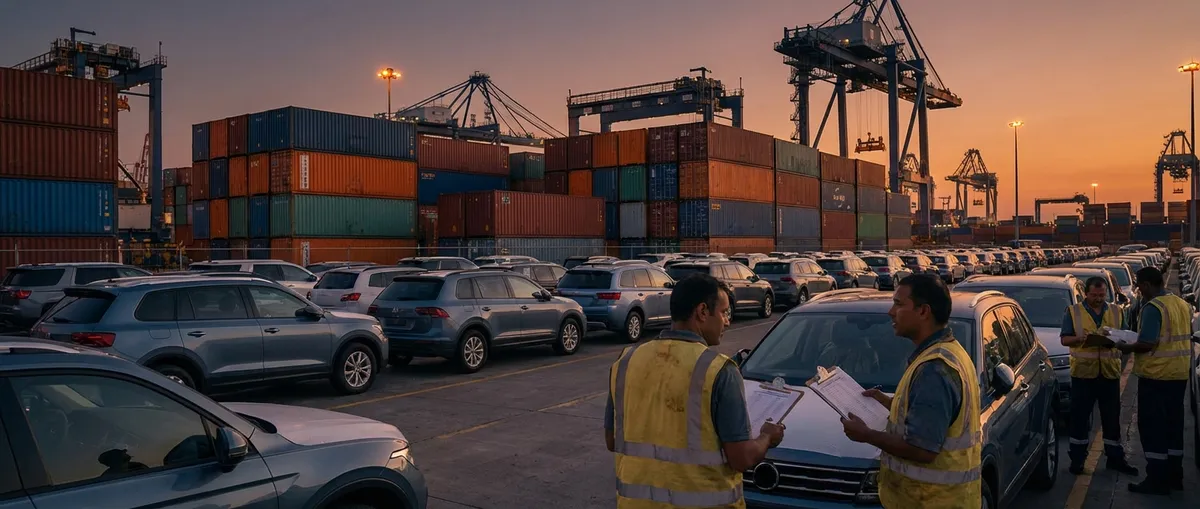
Tariffs, shipping costs, and regional trade agreements are driving automakers to localize SUV production more aggressively. For example, moving a popular compact SUV from an overseas plant to a North American or European facility can reduce logistics risk and improve supply stability, but it can also temporarily cap output while new lines ramp up. During those transitions, certain trims or option packages may be constrained or dropped entirely.
For potential buyers, this explains why some models see sudden price increases, reduced incentives, or limited colors and options even without a formal refresh. If a plant is retooled to support both ICE and hybrid variants of the same SUV, the production mix might favor higher‑margin trims—often hybrids or well‑equipped models—leaving budget‑oriented configurations in shorter supply.
There’s also an engineering upside to localization. Region‑specific tuning for suspension, steering, and climate systems often happens when production is closer to core markets. SUVs built specifically for North America, for instance, may receive heavier‑duty cooling, tow packages calibrated for local trailer standards, and corrosion protection tuned for road salt usage. Enthusiasts who care about long‑term durability in harsh climates should pay attention to where a particular SUV is built and which market it’s primarily engineered for.
Software‑Defined SUVs Are Shifting Value From Hardware to Code
A less visible but profound change is the industry‑wide move to “software‑defined” vehicles—SUVs whose key functions and features are increasingly controlled by centralized computing and over‑the‑air (OTA) updates rather than discrete electronic modules.
This architecture allows manufacturers to update powertrain maps, traction control logic, battery management, and even suspension damping after the SUV leaves the factory. For performance‑minded owners, that means torque delivery, accelerator response, shift strategy in automatics, and off‑road drive modes can all be materially improved (or altered) post‑purchase as OEMs refine their calibrations. For EV and hybrid SUVs, OTA updates can unlock additional range or charging optimization by tweaking thermal management and regenerative braking algorithms.
At the same time, this software‑centric approach changes the economic model. Some brands are experimenting with subscription‑based or one‑time paid activation for features such as advanced driver assistance, enhanced navigation, or performance‑oriented drive modes. The hardware may already be present in every SUV rolling off the line, with software gating its full capability.
Serious buyers should think of software support the way they think of powertrain warranties. A brand with a clear, public roadmap for long‑term software updates—especially security patches, ADAS (advanced driver-assistance system) improvements, and infotainment integration—offers a more future‑proof ownership experience. Conversely, limited or uncertain software support can date an SUV in only a few years, regardless of how robust its hardware is.
Towing, Range, and Real‑World Efficiency Are the New Battlegrounds
As SUVs diversify into gasoline, hybrid, plug‑in hybrid, and full electric variants, real‑world efficiency under load is emerging as a critical differentiator—especially for buyers who tow or regularly carry heavy cargo.
For traditional ICE SUVs, towing ratings have long been a headline figure, but the testing and cooling requirements behind those numbers are becoming more stringent in major markets. Thermal management upgrades, higher‑capacity transmissions, and improved aero are being quietly introduced to maintain consistent performance on long grades and in high ambient temperatures. Enthusiasts should watch for details such as transmission oil coolers, integrated trailer brake control, and alternator capacity when evaluating tow‑friendly SUVs.
In the EV and PHEV space, the industry is still converging on best practices for range under load. Towing with an electric SUV can reduce range by 40–60% depending on trailer frontal area and weight, which has huge implications for trip planning and charging strategy. Manufacturers are responding by developing specialized tow/haul drive modes that adjust thermal targets, regenerative braking behavior, and state‑of‑charge buffers to preserve drivability and component life.
Industry news increasingly includes more transparent testing around these scenarios—highway efficiency at realistic speeds, range with cargo or trailers, and DC fast‑charging curves when the battery is not at ideal temperature. As more standardized data emerges, the competitive focus is likely to shift from brochure range numbers to “usable range at 70 mph with passengers and gear,” a metric that matters far more to real‑world SUV owners.
Conclusion
The SUV landscape is being reshaped less by a single breakthrough and more by a convergence of supply chains, software, manufacturing strategy, and new performance metrics. Battery contracts are determining which electric and hybrid SUVs will offer the best mix of cost and capability. Consolidated platforms are redefining what “new” actually means. Production shifts are influencing which trims you can realistically buy and how they’re tuned. Software‑defined architectures are turning SUVs into updatable platforms rather than static products, while towing and efficiency under realistic conditions are emerging as the true performance yardsticks.
For enthusiasts and serious buyers, following these industry undercurrents turns shopping from a snapshot decision into a strategic one. Paying attention to where an SUV is built, what platform it rides on, its battery chemistry or engine family, and the brand’s software roadmap will increasingly matter as much as horsepower or leather quality. The models that age best in the coming decade are likely to be those whose underlying industrial story is as strong as their spec sheet.
Sources
- U.S. Department of Energy – Lithium-Ion Battery Supply Chain Report – Overview of U.S. efforts to secure and localize battery material supply chains
- International Energy Agency – Global EV Outlook – Data and analysis on EV adoption, battery chemistry trends, and policy impacts worldwide
- U.S. Department of the Treasury – Inflation Reduction Act Clean Vehicle Credits – Official guidance on how sourcing and manufacturing affect EV tax credit eligibility
- McKinsey & Company – The Software-Defined Vehicle – Industry analysis of the shift toward centralized computing and OTA updates in vehicles
- National Highway Traffic Safety Administration – Towing and Vehicle Ratings Information – Technical background on towing ratings, safety considerations, and regulatory standards
Key Takeaway
The most important thing to remember from this article is that this information can change how you think about Industry News.